apparently keeping revenue private was too normal, so i put mine on a public dashboard
$1.26m collected across my products so far
next update pulls in agency invoices and the income that never touches stripe
bmw lets you control individual lights over uds.
open sourced it:
https://t.co/bvEpGKVEJn
currently built/tested for the f82, other platforms later.
brake lights, indicators, high beams, drls, pretty much every lamp on the car. the led headlight modules even take pwm values, so you can fade them instead of just toggling them on/off.
how it works:
1. the obd port exposes ethernet. the gateway speaks hsfz on older cars, doip on newer ones
2. every module behind it answers uds requests by address. 0x40 = fem, 0x43/0x44 = headlights
3. fem has a "control lamp function for n ms" command, which gives you on/off control over individual lamps
4. the led headlight modules accept pwm levels, so those can actually fade
i also wrapped it in a tiny ios app and threw it on testflight for myself.
high beam for 300ms is literally 7 bytes:
2e d5 42 00 05 00 1e
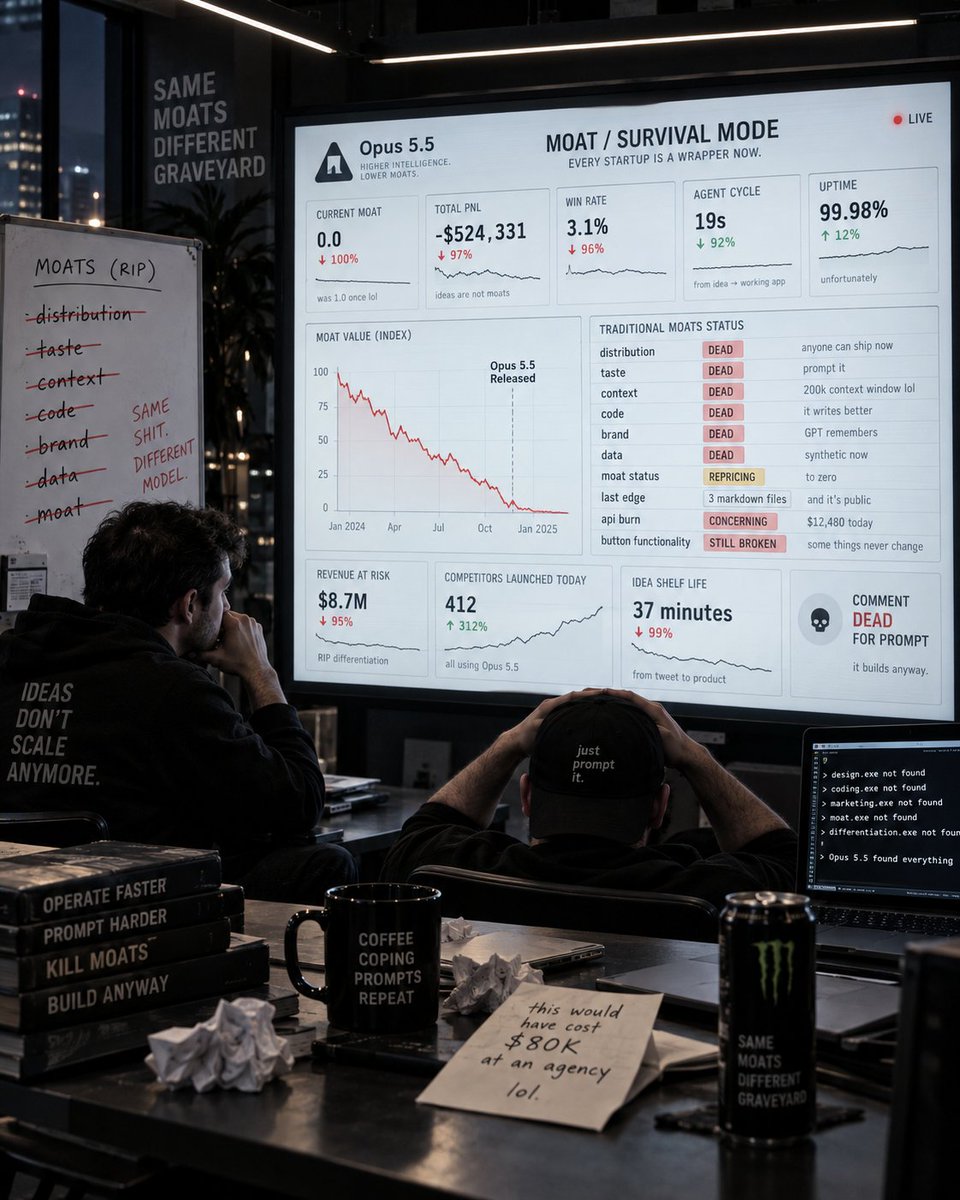
opus 5.5 just dropped
design is dead
coding is dead
saas is dead
agencies are dead
your degree is worthless
junior developers have been dead for 3 years but we're killing them again just in case
i've been testing it for 11 minutes and can confidently say you need to rethink your entire career.
code is no longer a moat. distribution is the moat. actually distribution is commoditized too. taste is the moat. no wait, context. proprietary context.
it's three markdown files. one of them says “you are an expert.”
meanwhile a simulated fly brain is playing doom so we should probably reconsider biology as well. i've connected it to an mcp server and put it in charge of our agent team. the fly reviews the code, another agent reviews the fly, and i post screenshots of them agreeing with each other.
we don't sell software anymore. we're a vertically integrated insect intelligence company.
the fly is our moat.
update: someone forked the fly.
anyway, here's the landing page that made me realize all of this. the company doesn't exist, the testimonials are made up and none of the buttons work, but the hero section follows your mouse.
this would have cost $80,000 at an agency. i know because i typed “$80,000 agency website” into the prompt.
built the whole thing with 14 agents while i slept. woke up to $230 in api charges and a message saying the task was complete. the button still doesn't work but apparently that's a harness problem.
we're moving so fast that asking whether anything works is now considered resistance to change.
incredible time to be a guy who announces that things are dead.
comment DEAD and i'll send you the exact prompt.
must be following.
distribution is the moat.
People think the minions router being baller as a joke. But I have extensively tested it and it is one of the best possible Wifi 6E routers money can buy. Like someone at Illumination Studios was like "idk $80" and the router manufacturer was like gotchu fam.
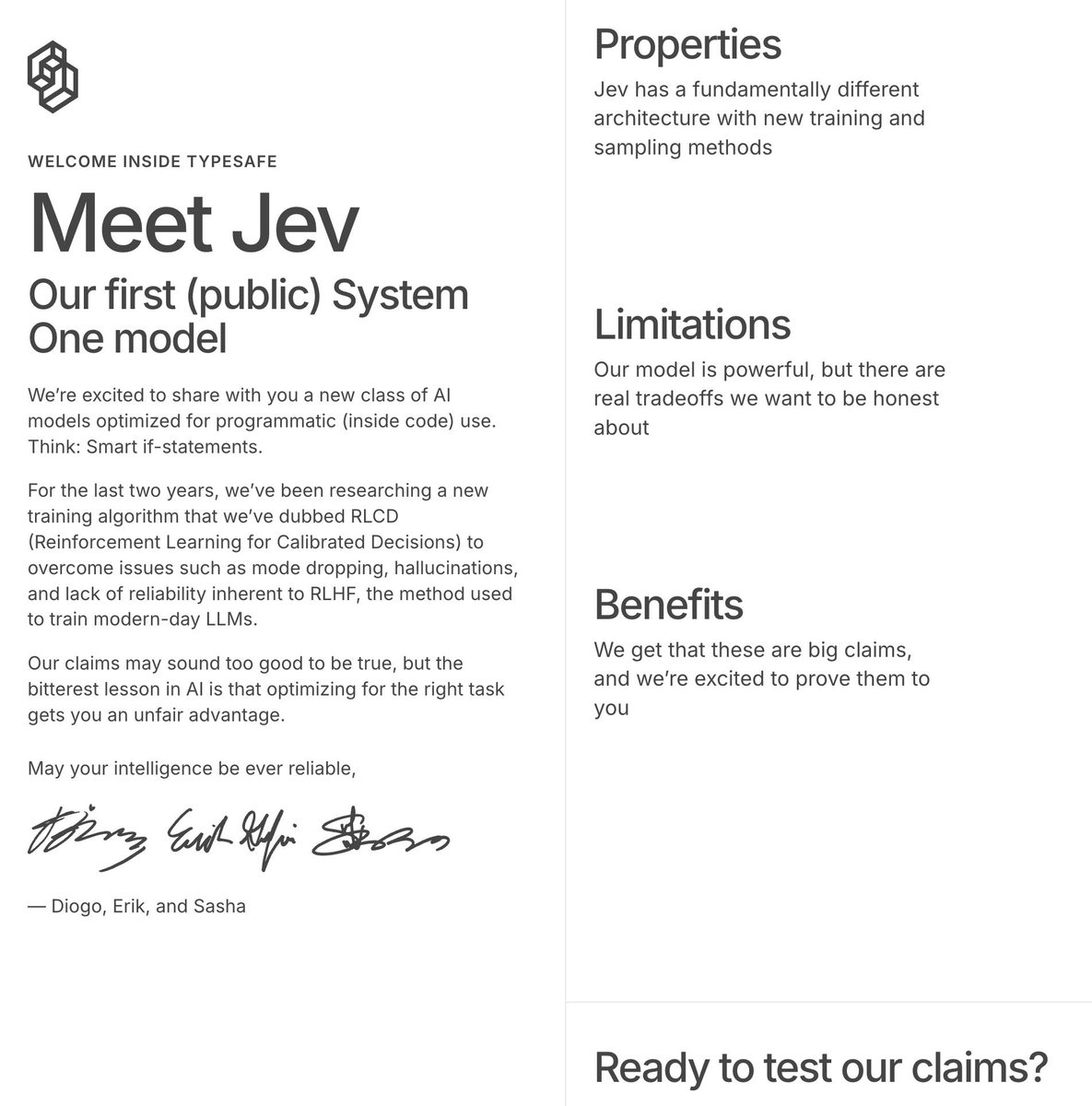
jev somehow brought us back to selenium
we spent years teaching models to see screens, move mice and use computers like humans
now we’re back to reading the DOM and clicking indexed elements, just with a 100ms model deciding what to click
this feels exactly like the NFT era when we kept reinventing things that already existed, but with a new name
we already have a small brand-aware ai studio we use with a few existing software house clients, mostly as a playground for different models + their actual brand context/assets.
not sure it'll become something challenge-worthy that quickly, but this post is a pretty good excuse to push it further.
genuinely cool initiative btw.
https://t.co/6PU3GianuV
when ai took off, i realized pretty quickly we weren't going to win by fighting it.
(not sure if this is interesting to anyone here, but our clients are getting surprisingly excited about this)
some are already buying extra credits. one client basically uses it as his on-brand facebook creative machine.
the idea came from something we kept seeing after finishing projects.
we'd build the brand, website, creatives, design system, everything.
then the client would inevitably open chatgpt, upload a few screenshots and try to extend the brand on their own.
which is completely fair.
the problem wasn't that they were using ai.
the problem was that the ai had almost none of the context we had when designing the brand in the first place.
so instead of fighting that behavior, we built around it.
after we finish a project, clients can get access to their own marketing studio.
it has their actual brand assets, design system, visual references and project context already built in, with different models available depending on what they're trying to make.
they can use it to explore a new ad creative, draft some ugc, test a campaign idea or even visualize a new section of their website before asking us to build it properly.
the underlying models aren't the interesting part.
models are becoming commodities.
context isn't.
the useful part is giving the client ai that starts from the same system we designed for them, instead of starting from a blank chat window and a logo upload.
it doesn't replace the agency work.
it gives clients a much better way to extend, experiment with and communicate around the work we've already done.
and, as a nice side effect, considerably less ai slop.
you can just hallucinate the entire internet with Qwen 3.8 27b running at 2,000 tokens/second?
part 2 of turning @cerebras + @Alibaba_Qwen 3.8 27B into an OS:
built an offline browser with zero network calls and mounted it directly the JIT ubuntu desktop.
no wifi. no scraping. zero packets sent to external CDNs.
you search a site, set a year, and qwen 27b at 1,950 tok/s synthesizes the entire DOM on the fly.
here is youtube in 2045 vs 1999:
→ search google for youtube inside the OS
→ scrub to 2045: instant futuristic feed
→ scrub to 1999: raw web 1.0 time capsule in seconds
at this speed, browsing isn't retrieving files from a server, it's querying an alternate reality.
a 2D browser window is just step zero.
imagine full operating systems, virtual worlds, and complex simulation engines existing purely as model weights. zero gigabytes stored on disk, just pure interactive reality streamed on demand.
What else becomes a possibility with the qwen 3.8 27b (dense) at 2000 tokens/sec?
@iisken_ u mnie głównie agenci ai / inference + kodowanie. właśnie odpisując na ten komentarz wpiąłem programistów przez tailscale, żeby też mogli kodować na lokalnym modelu :D
docelowo pewnie też będę miał podobne zastosowanie minipc co Ty, czyli jellyfin etc. @jakubszturomski
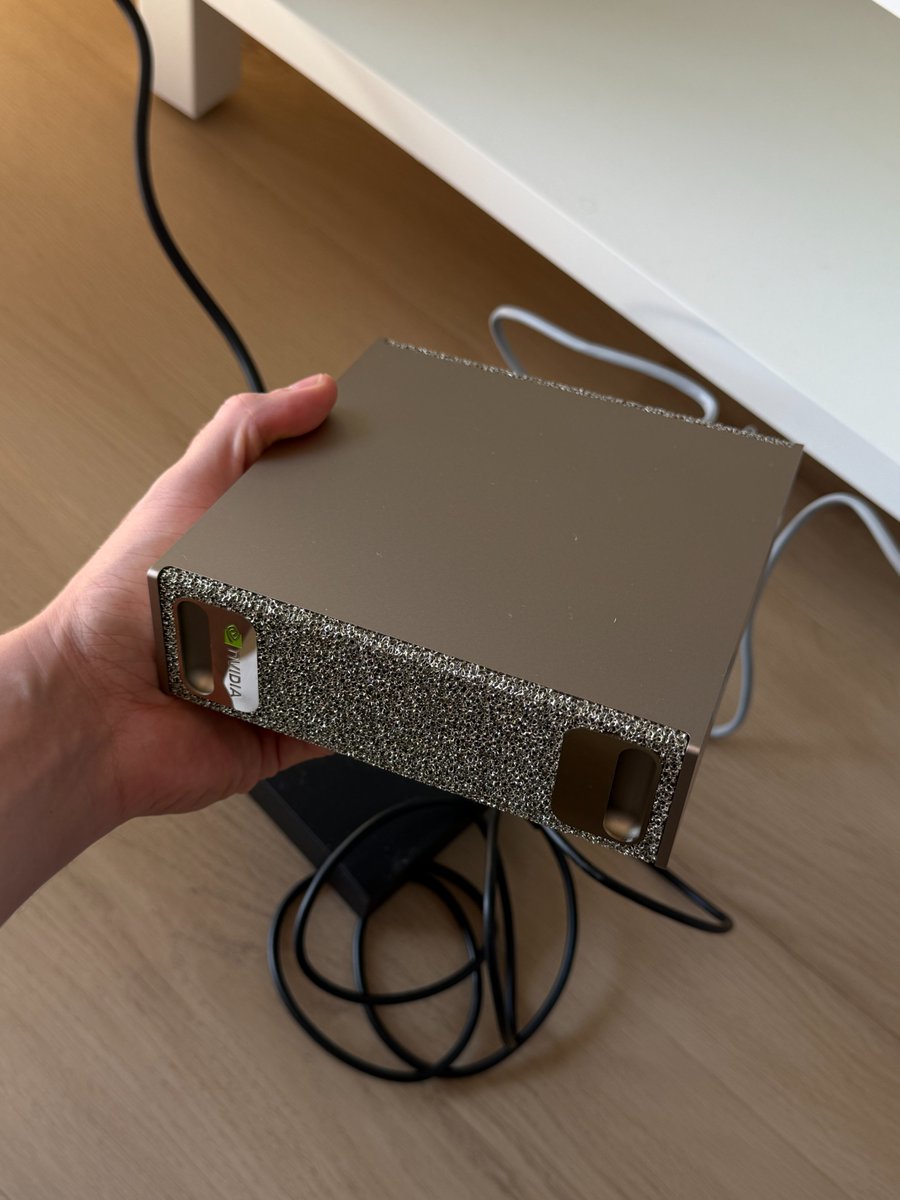
@xmichimx jeśli to co robię się rozwinie, to pewnie dorzucę jeszcze maca studio. tutaj bardziej kupowałem ekosystem (jak w apple xd). vllm, cuda/blackwell, no i nvfp4, więc na ten moment wolę odpalać rzeczy niż je portować ;p
production side is mostly ai agents / inference for my own stuff, so i optimised for concurrency rather than single-stream speed.
second box is coming soon, then i'm linking both nodes and running tp=2 across them over the connectx/qsfp link. that lets me run models like deepseek-v4-flash that simply don't fit on a single node (284b moe, ~167gb of weights vs 128gb per box), while still leaving some headroom for concurrent workloads. that interconnect is the main reason i went this route
also planning to mess around more with comfyui for ai ugc, lora training, evals, model serving experiments etc. eventually i want to point the models at our internal company (XD) files too, so they actually have context instead of guessing.
- https://t.co/Pzcc2tiUNm
- https://t.co/mYi2HPjdz9
telegram mini apps make a lot more sense for small saas products than people think
if most of your internet bubble is american, telegram probably means crypto bots and shady groups
in eastern europe, it’s just an app millions of people already use every day
built-in identity
instant notifications
native payments
almost zero onboarding friction
you’re building inside an app your customers already use
this one made $347,75 last week. nothing crazy, but enough to prove the model works.