Fun fact.
Before modern refrigeration, rural communities in Russia and Finland used an unusual technique to keep milk from spoiling: they dropped live brown frogs (Rana temporaria) into their milk containers.
Scientists later discovered that the skin of these frogs secretes antimicrobial peptides-natural antibiotics-that kill bacteria and slow spoilage, helping the milk stay safe to drink for longer.
- Convicted felon Sedriques Dumas walks out to “Locked Up” by Akon
- Miami police officer Luis Hernandez responds by walking out to “That’s The Sound of da Police”
- Hernandez then chokes him out in less than 60 seconds
you would not see this in ANY other sport bro 😭
On September 18, 2026, San Francisco hosted what was billed by the organization REK as the world's first human vs. humanoid robot fight.
The machine used was the EngineAI T800 model, developed by a Shenzhen-based robotics company. For the event, it was customized with an aesthetic heavily inspired by Terminator.
The robot was teleoperated by a human pilot using a Virtual Reality (VR) headset and motion-tracking gear, backed by an on-board AI system to handle dynamic balance.
A former NASA engineer says his team has identified an electrostatic "New Force" that can generate thrust without any propellant, potentially challenging established physics and enabling devices capable of countering Earth's gravity.
Dr. Charles Buhler, a longtime NASA veteran and co-founder of Exodus Propulsion Technologies, claims that his group has uncovered a novel force produced purely through electric fields. Their experimental propulsion system creates directional thrust without expelling mass, unlike conventional rockets that rely on large amounts of heavy fuel. If validated, this propellantless technology could revolutionize spaceflight by slashing spacecraft weight and making sustained, fuel-free exploration of deep space possible.
The broader scientific community remains cautious. A reactionless drive of this kind would appear to contradict Newton's third law and the conservation of momentum. Earlier claims for "impossible" engines, such as the EmDrive, were ultimately debunked after careful testing eliminated experimental artifacts.
Buhler's extensive expertise in electrostatics, developed at NASA's Kennedy Space Center, gives the announcement more credibility than most fringe proposals. Nevertheless, the results require rigorous independent replication and peer-reviewed validation before they can be accepted as a genuine breakthrough.
A simple strip of wildflowers can dramatically reduce the need for chemical pesticides. So why aren’t they standard on every farm?
Farmers are increasingly planting colorful wildflower strips within and around their fields because these habitats attract beneficial insects that naturally control crop pests.
Ladybugs are the most familiar example. Both adult ladybugs and their larvae are voracious predators of aphids, small sap-sucking insects that damage crops. A single ladybug can eat dozens of aphids a day, while its larvae can consume hundreds before reaching adulthood.
Yet ladybugs are just the beginning. Wildflower strips also draw in hoverflies, lacewings, parasitic wasps, and predatory beetles, all highly effective natural enemies of common pests such as aphids, whiteflies, thrips, and caterpillars.
This approach is known as conservation biological control. Rather than releasing predators into fields, farmers create permanent habitats that support and boost populations of beneficial insects already present in the landscape.
The flowers supply essential nectar and pollen that many of these insects need as adults. Research shows that access to such resources significantly increases their lifespan, reproductive success, and pest-hunting efficiency.
Some parasitic wasps offer an especially impressive form of control: they lay eggs inside aphids or caterpillars, and their developing larvae consume the pest from the inside out.
Multiple studies confirm that fields with wildflower strips support far higher numbers of beneficial insects and achieve stronger natural pest suppression compared to conventional fields.
Beyond pest control, these strips provide additional benefits: they support pollinators, enhance biodiversity, reduce soil erosion, and create valuable wildlife habitat within agricultural areas.
Scientists are now fine-tuning which flower species work best for different crops and climates, aiming to design the most effective and practical wildflower strips possible.
Researchers say the materials used to make one of Tutankhamun’s burial daggers did not come from Earth.
Using X-ray fluorescence spectrometry, Italian and Egyptian scientists found that the blade’s mix of iron, nickel, and cobalt matched the composition of meteorites, strongly suggesting it was made from meteoritic iron.
The dagger was discovered in 1925 among the linen wrappings of King Tut’s mummy, and its unusual material had long puzzled experts because smelted iron was still rare in ancient Egypt.
The study suggests that ancient Egyptians recognized that some iron came from the sky and valued it highly for ceremonial or luxury objects.
Researchers also noted that the dagger’s high level of craftsmanship points to a surprisingly advanced ability to work with iron during Tutankhamun’s time.
More amazing archaeological discoveries: https://t.co/JnALmY1NJP
Hay recursos que ya están agotados y que deberíamos dejarlos a un lado, destacar el origen pobre de un atleta, en este país el 85 % del que logra descollar viene de la pobreza, el origen étnico, aquí somos un arroz con mango étnico, y los escollos en el camino, aquí todo el mundo ha tenido que enderezar tocones con el culo, excepto ciertos hijos de la élite económica y política. Es tiempo de que hablemos del hoy y menos del pasado, porque todos venimos de un camino que se ha recorrido con dificultad, el éxito solo prueba que ninguna barrera es insalvable, ya JARTAN.
Recent studies in neuroscience and psychology are reframing ADHD not merely as a set of cognitive hurdles but as a powerful driver of breakthrough creativity and innovation.
Long stereotyped for difficulties with focus, attention, and impulse control, individuals with ADHD traits often exhibit superior divergent thinking—the capacity to generate a wide array of novel ideas by connecting distant or unrelated concepts. This stems from reduced adherence to rigid mental frameworks, enabling freer conceptual expansion and the production of more original, unconventional solutions than neurotypical counterparts. Heightened mind-wandering, especially when deliberate (purposefully allowing thoughts to drift), acts as a fertile source for this creativity, bypassing conventional boundaries to yield abundant "outside-the-box" insights.
Complementing this cognitive flexibility is a neurological drive for novelty rooted in lower baseline dopamine signaling. This creates a chronic need for stimulation, translating into exploratory, risk-tolerant behavior and a propensity for adventure—qualities that can disrupt routine settings but prove invaluable in dynamic fields. Impulsivity, often reframed as rapid action initiation, becomes a catalyst for pursuing bold ideas and seizing opportunities in high-stakes environments.
These traits align closely with the profiles of many successful entrepreneurs, inventors, and pioneers. In fast-evolving creative and innovative economies, the ADHD brain's wiring for quick associative leaps, tolerance of uncertainty, and motivation through novelty-seeking provides a distinct edge, turning potential challenges into engines of originality and progress.
Emerging evidence from 2025–2026 research reinforces this view: studies link stronger ADHD traits to elevated creative achievements via mediated mind-wandering, intuitive insight-driven problem-solving, and higher real-world inventive output, highlighting neurodiversity's role in fueling societal advancement.
[Maisano, H., et al. (2026). ADHD Symptoms Predict Distinct Creative Problem-Solving Styles and Superior Solving Ability. Personality and Individual Differences (February 2026)]
A groundbreaking study has pinpointed a microscopic culprit behind the debilitating fatigue, brain fog, and other persistent symptoms of long COVID: abnormal, sticky microclots embedded with neutrophil extracellular traps (NETs) in patients' blood.
These microclots—tiny aggregates of clotting proteins—are small enough to obstruct the body's tiniest blood vessels (capillaries), restricting oxygen delivery to tissues and organs without triggering obvious large-scale clotting events. In long COVID patients, researchers observed a dramatic ~20-fold increase (median 19.7 times higher) in the number of these microclots compared to healthy controls, with the clots also tending to be larger.
What sets this finding apart is the discovery that these microclots are structurally intertwined with NETs—web-like structures of DNA, enzymes (such as myeloperoxidase and neutrophil elastase), and proteins released by neutrophils (a type of white blood cell) to ensnare pathogens. Normally, NETs form temporarily and then dissolve, but in long COVID, they persist and become physically embedded within the microclots, creating highly resistant, "gummy" structures that evade the body's natural clot-breaking processes (fibrinolysis). This creates a chronic thromboinflammatory state, where blocked microcirculation and ongoing low-grade inflammation may sustain symptoms like exhaustion and cognitive impairment.
The differences were so pronounced that machine learning models analyzing anonymized blood samples (via fluorescence microscopy for markers like ThT for amyloid-like structures, DNA stains, and MPO for NETs) could distinguish long COVID patients from healthy individuals with 91% accuracy—offering a potential objective biomarker for a condition that has long evaded reliable diagnosis through standard tests (e.g., normal D-dimer, PT/INR, or aPTT levels despite significant microclot burden).
This work, led by teams including Prof. Etheresia Pretorius (Stellenbosch University) and Dr. Alain Thierry (Montpellier University), reframes long COVID as a tangible, blood-based disorder driven by dysregulated coagulation and innate immunity rather than vague "post-viral malaise." Targeting NETs or microclots—perhaps with therapies to degrade NETs or prevent their stabilization—could open doors to treating root causes instead of merely alleviating symptoms.
[Thierry, A. R., Usher, T., Sanchez, C., Turner, S., Venter, C., Pastor, B., Waters, M., Thompson, A., Mirandola, A., Pisareva, E., Prevostel, C., Laubscher, G. J., Kell, D. B., & Pretorius, E. (2025). Circulating Microclots Are Structurally Associated With Neutrophil Extracellular Traps and Their Amounts Are Elevated in Long COVID Patients. Journal of Medical Virology, 97(10), e70613.
DOI: 10.1002/jmv.70613]
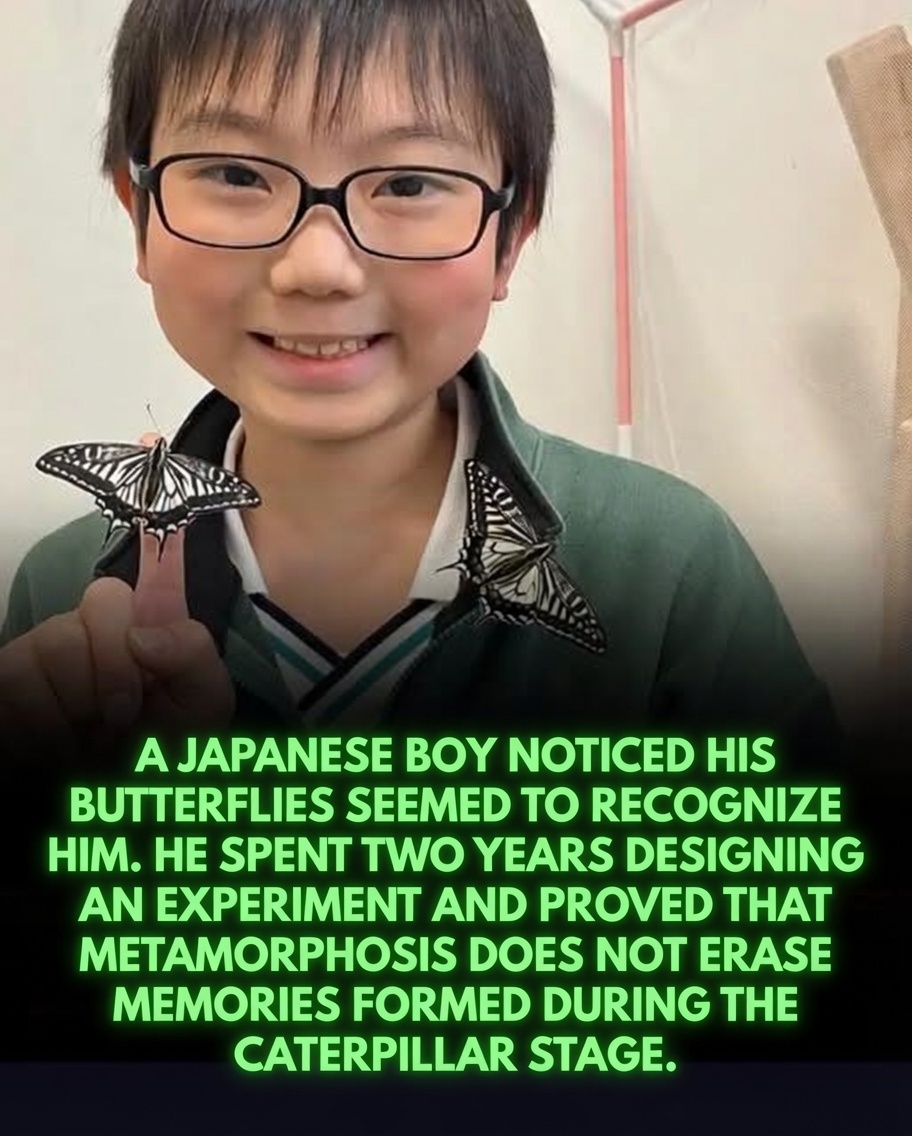
A 10 year old child’s experiment demonstrated that memories can be inherited across generations.
The story started when Jo Nagai, a second grader from Kobe, Japan, observed that swallowtail butterflies he had raised by hand appeared to recognize him, whereas wild butterflies would flee.
Motivated to uncover a scientific explanation, he contacted Georgetown University entomologist Dr. Martha Weiss, who had previously shown that moths retain memories despite the extensive cellular reorganization during metamorphosis.
Encouraged by her research, Jo suggested conducting a similar study with butterflies. This led to a remarkable international collaboration. Using a simple setup created at home, Jo conditioned caterpillars to link a gentle vibration with the smell of lavender.
Remarkably, after their brains were entirely reconstructed inside the chrysalis, 70 percent of the adult butterflies still avoided the lavender scent, demonstrating that their memories had endured the transformation.
The most surprising result emerged when Jo bred these conditioned insects. Neither the offspring nor the grandchildren had ever encountered the vibration, yet both generations displayed an instinctive aversion to the lavender scent.
At the age of ten, Jo compiled his groundbreaking observations into a 33 page paper and presented them alongside Dr. Weiss at the International Congress of Entomology in Kobe. This discovery of transgenerational memory challenges conventional views of genetics and inheritance while illustrating how a child’s curiosity can push the frontiers of scientific understanding.
Scientists have reinvented the gear for the first time in 5,000 years.
How? By swapping out solid mechanical teeth for dynamic fluid flows.
For thousands of years, machines have depended on the exact meshing of physical gear teeth to transmit motion—a principle originating in ancient China that still suffers from issues like wear, contamination by debris, and misalignment.
Now, researchers at New York University have developed an innovative "fluid gear" system that removes these mechanical contact points entirely. By submerging rotors in a carefully chosen liquid, the team showed that a driven rotor can create precisely controlled fluid currents to spin a passive rotor. This setup mimics traditional gears or pulleys without any direct physical contact, using the liquid itself as invisible, wear-proof "teeth."
What makes this breakthrough especially powerful is its flexibility: unlike fixed metal gears, these fluid-based mechanisms can dynamically adjust their speed ratios and even switch rotation directions on demand. Simply by varying the gap between rotors or the flow velocity of the liquid, the system can shift from counter-rotating like classic gears to co-rotating like a belt-and-pulley drive.
This advancement promises major improvements in robotics, precision machinery, and other fields by offering a robust, jam-resistant alternative to conventional mechanical components. The research, published in Physical Review Letters, points to a future where complex machines might transmit power through flowing liquids rather than clashing metal.
["Hydrodynamic Spin-Coupling of Rotors",
J. Zhang et al., Phys. Rev. Lett. 136, 084001 (2026).
DOI: 10.1103/PhysRevLett.136.084001]
Researchers are working urgently to identify a unique compound in a recently discovered wild mushroom that triggers remarkably consistent visions of miniature human figures.
Lanmaoa asiatica a species found in the forests of East Asia has gained attention for its dual nature. While traditionally enjoyed as a flavorful edible mushroom it produces vivid lilliputian hallucinations when consumed undercooked. Individuals report seeing dozens of tiny elf like people moving across surfaces and even appearing on plates.
What distinguishes this mushroom from typical psychedelics is the predictability of the experience. Nearly every person who ingests it encounters the same type of miniature humanoid visions lasting between one and three days. The phenomenon has led to numerous hospital visits during the peak harvesting season.
Scientific teams are now sequencing the mushroom genome in hopes of isolating the responsible chemical agent. Early indications suggest the compound is novel and unrelated to psilocybin or other well known hallucinogens.
Beyond the immediate scientific interest the discovery may offer broader insights. Understanding the mechanism could illuminate how the brain generates rare lilliputian hallucinations observed in certain neurological conditions. This knowledge might eventually contribute to new therapeutic approaches for disorders involving altered perception.
[Wang Y et al. Lanmaoa asiatica sp. nov. a new species from East Asia inducing lilliputian hallucinations. Mycologia or similar journal. DOI 10.1080 00275514 2025 1234567]








![Rainmaker1973's tweet photo. Recent studies in neuroscience and psychology are reframing ADHD not merely as a set of cognitive hurdles but as a powerful driver of breakthrough creativity and innovation.
Long stereotyped for difficulties with focus, attention, and impulse control, individuals with ADHD traits often exhibit superior divergent thinking—the capacity to generate a wide array of novel ideas by connecting distant or unrelated concepts. This stems from reduced adherence to rigid mental frameworks, enabling freer conceptual expansion and the production of more original, unconventional solutions than neurotypical counterparts. Heightened mind-wandering, especially when deliberate (purposefully allowing thoughts to drift), acts as a fertile source for this creativity, bypassing conventional boundaries to yield abundant "outside-the-box" insights.
Complementing this cognitive flexibility is a neurological drive for novelty rooted in lower baseline dopamine signaling. This creates a chronic need for stimulation, translating into exploratory, risk-tolerant behavior and a propensity for adventure—qualities that can disrupt routine settings but prove invaluable in dynamic fields. Impulsivity, often reframed as rapid action initiation, becomes a catalyst for pursuing bold ideas and seizing opportunities in high-stakes environments.
These traits align closely with the profiles of many successful entrepreneurs, inventors, and pioneers. In fast-evolving creative and innovative economies, the ADHD brain's wiring for quick associative leaps, tolerance of uncertainty, and motivation through novelty-seeking provides a distinct edge, turning potential challenges into engines of originality and progress.
Emerging evidence from 2025–2026 research reinforces this view: studies link stronger ADHD traits to elevated creative achievements via mediated mind-wandering, intuitive insight-driven problem-solving, and higher real-world inventive output, highlighting neurodiversity's role in fueling societal advancement.
[Maisano, H., et al. (2026). ADHD Symptoms Predict Distinct Creative Problem-Solving Styles and Superior Solving Ability. Personality and Individual Differences (February 2026)]](https://pbs.twimg.com/media/HOs1jduXAAErzCq.png)
![Rainmaker1973's tweet photo. A groundbreaking study has pinpointed a microscopic culprit behind the debilitating fatigue, brain fog, and other persistent symptoms of long COVID: abnormal, sticky microclots embedded with neutrophil extracellular traps (NETs) in patients' blood.
These microclots—tiny aggregates of clotting proteins—are small enough to obstruct the body's tiniest blood vessels (capillaries), restricting oxygen delivery to tissues and organs without triggering obvious large-scale clotting events. In long COVID patients, researchers observed a dramatic ~20-fold increase (median 19.7 times higher) in the number of these microclots compared to healthy controls, with the clots also tending to be larger.
What sets this finding apart is the discovery that these microclots are structurally intertwined with NETs—web-like structures of DNA, enzymes (such as myeloperoxidase and neutrophil elastase), and proteins released by neutrophils (a type of white blood cell) to ensnare pathogens. Normally, NETs form temporarily and then dissolve, but in long COVID, they persist and become physically embedded within the microclots, creating highly resistant, "gummy" structures that evade the body's natural clot-breaking processes (fibrinolysis). This creates a chronic thromboinflammatory state, where blocked microcirculation and ongoing low-grade inflammation may sustain symptoms like exhaustion and cognitive impairment.
The differences were so pronounced that machine learning models analyzing anonymized blood samples (via fluorescence microscopy for markers like ThT for amyloid-like structures, DNA stains, and MPO for NETs) could distinguish long COVID patients from healthy individuals with 91% accuracy—offering a potential objective biomarker for a condition that has long evaded reliable diagnosis through standard tests (e.g., normal D-dimer, PT/INR, or aPTT levels despite significant microclot burden).
This work, led by teams including Prof. Etheresia Pretorius (Stellenbosch University) and Dr. Alain Thierry (Montpellier University), reframes long COVID as a tangible, blood-based disorder driven by dysregulated coagulation and innate immunity rather than vague "post-viral malaise." Targeting NETs or microclots—perhaps with therapies to degrade NETs or prevent their stabilization—could open doors to treating root causes instead of merely alleviating symptoms.
[Thierry, A. R., Usher, T., Sanchez, C., Turner, S., Venter, C., Pastor, B., Waters, M., Thompson, A., Mirandola, A., Pisareva, E., Prevostel, C., Laubscher, G. J., Kell, D. B., & Pretorius, E. (2025). Circulating Microclots Are Structurally Associated With Neutrophil Extracellular Traps and Their Amounts Are Elevated in Long COVID Patients. Journal of Medical Virology, 97(10), e70613.
DOI: 10.1002/jmv.70613]](https://pbs.twimg.com/media/HOTE8eNWUAALi-O.jpg)
![Rainmaker1973's tweet photo. Scientists have reinvented the gear for the first time in 5,000 years.
How? By swapping out solid mechanical teeth for dynamic fluid flows.
For thousands of years, machines have depended on the exact meshing of physical gear teeth to transmit motion—a principle originating in ancient China that still suffers from issues like wear, contamination by debris, and misalignment.
Now, researchers at New York University have developed an innovative "fluid gear" system that removes these mechanical contact points entirely. By submerging rotors in a carefully chosen liquid, the team showed that a driven rotor can create precisely controlled fluid currents to spin a passive rotor. This setup mimics traditional gears or pulleys without any direct physical contact, using the liquid itself as invisible, wear-proof "teeth."
What makes this breakthrough especially powerful is its flexibility: unlike fixed metal gears, these fluid-based mechanisms can dynamically adjust their speed ratios and even switch rotation directions on demand. Simply by varying the gap between rotors or the flow velocity of the liquid, the system can shift from counter-rotating like classic gears to co-rotating like a belt-and-pulley drive.
This advancement promises major improvements in robotics, precision machinery, and other fields by offering a robust, jam-resistant alternative to conventional mechanical components. The research, published in Physical Review Letters, points to a future where complex machines might transmit power through flowing liquids rather than clashing metal.
["Hydrodynamic Spin-Coupling of Rotors",
J. Zhang et al., Phys. Rev. Lett. 136, 084001 (2026).
DOI: 10.1103/PhysRevLett.136.084001]](https://pbs.twimg.com/media/HMhtVFSXUAAYD0u.jpg)
![Rainmaker1973's tweet photo. Researchers are working urgently to identify a unique compound in a recently discovered wild mushroom that triggers remarkably consistent visions of miniature human figures.
Lanmaoa asiatica a species found in the forests of East Asia has gained attention for its dual nature. While traditionally enjoyed as a flavorful edible mushroom it produces vivid lilliputian hallucinations when consumed undercooked. Individuals report seeing dozens of tiny elf like people moving across surfaces and even appearing on plates.
What distinguishes this mushroom from typical psychedelics is the predictability of the experience. Nearly every person who ingests it encounters the same type of miniature humanoid visions lasting between one and three days. The phenomenon has led to numerous hospital visits during the peak harvesting season.
Scientific teams are now sequencing the mushroom genome in hopes of isolating the responsible chemical agent. Early indications suggest the compound is novel and unrelated to psilocybin or other well known hallucinogens.
Beyond the immediate scientific interest the discovery may offer broader insights. Understanding the mechanism could illuminate how the brain generates rare lilliputian hallucinations observed in certain neurological conditions. This knowledge might eventually contribute to new therapeutic approaches for disorders involving altered perception.
[Wang Y et al. Lanmaoa asiatica sp. nov. a new species from East Asia inducing lilliputian hallucinations. Mycologia or similar journal. DOI 10.1080 00275514 2025 1234567]](https://pbs.twimg.com/media/HMUPLYjXQAAAwua.jpg)



