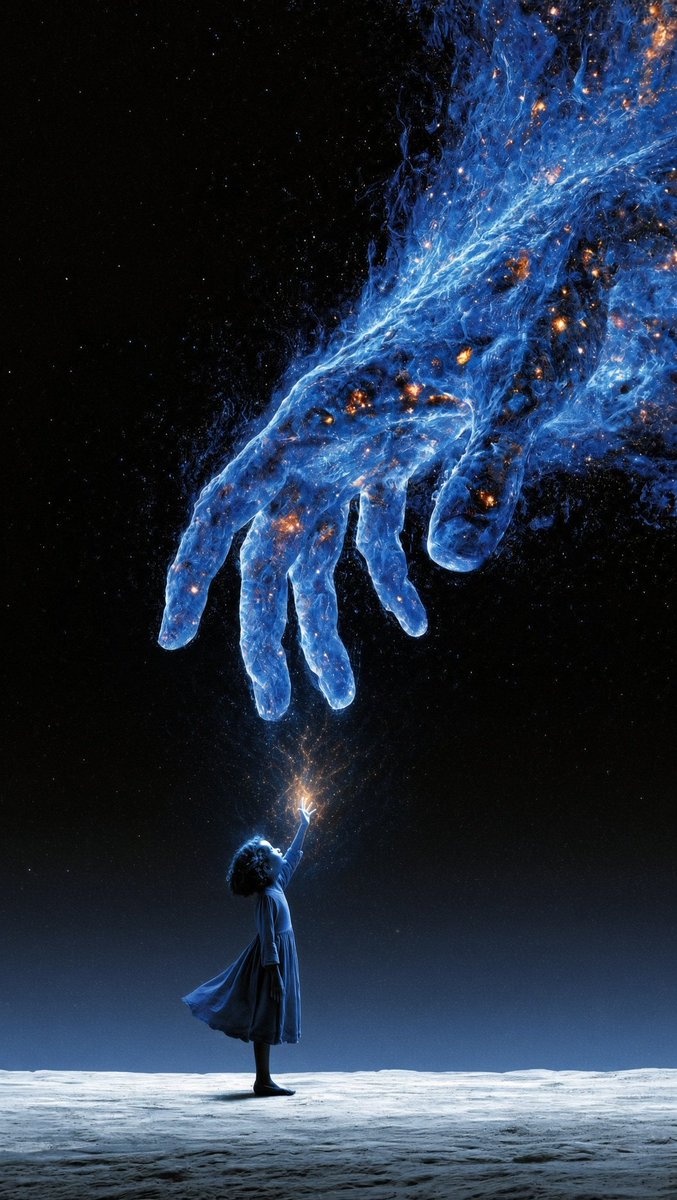
Physics already told us time isn’t fixed. Einstein proved it bends near gravity, stretches at speed, moves differently depending on where you’re standing. But here’s the version nobody puts in the textbooks: your brain does the exact same thing.
When you’re bored, a minute feels like an hour. When you’re in flow — completely locked into something — hours vanish like seconds. When you’re a kid experiencing everything for the first time, summers feel infinite. When you’re an adult running the same routine on autopilot, entire years disappear before you notice.
The scary truth? Most people aren’t running out of time. They’re running out of moments worth remembering.
Your brain doesn’t store time. It stores experiences. A year of the same routine gets compressed into almost nothing in memory. A single fully-present afternoon can feel like it lasted forever.
So the actual hack for a longer life isn’t a supplement or a sleep tracker. It’s attention. Novelty. Presence. Doing things that force your brain to actually pay attention instead of running on autopilot.
The more you notice, the longer you live. Not in years — in depth.
👁️ Scientists have unlocked the secret to natural eye repair by removing a single protein that blocks the retina from regenerating.
For decades, medical science operated on the assumption that mammalian eyes could not repair themselves once vision loss occurred. Unlike zebrafish or amphibians, human retinas lack the innate ability to regrow damaged cells, rendering conditions like macular degeneration and glaucoma largely irreversible.
However, researchers have identified a key biological obstacle preventing this natural repair process: a protein named PROX1 that acts as a strict molecular stop sign inside retinal support cells.
By developing a targeted therapy to neutralize this protein, scientists successfully prompted mouse retinas to reprogram their own cells and naturally rebuild light-sensing tissue.
The intervention led to long-term vision recovery, proving that the cellular machinery for eye regeneration was merely dormant rather than lost. This breakthrough marks a monumental shift in ophthalmology, offering real hope that future treatments could actively restore sight rather than simply slowing down its decay.
source: Kim, M., Lee, E. J., & Kim, J. W. PROX1 inhibition restores vision through retinal neural regeneration. Nature Communications.
The power to create life will expose the darkness within its creator.
We already command the mineral world.
We bend metals, build cities, launch machines into the sky.
But when it comes to life, we still rely on nature’s pre‑existing processes.
We do not yet create a living organism from nonliving matter.
Dr Steiner foresaw a future in which this boundary dissolves.
A time when human beings would consciously penetrate the etheric formative forces responsible for growth, regeneration, and living organization.
In the future, plants will be generated without seeds.
Life would no longer be merely found.
It would be brought forth.
The creation of life is not like building a machine.
A corrupt person can construct an engine as well as a saint.
But when a human being consciously brings forth life, his inner nature enters the act itself.
The creator’s intentions, moral qualities, and spiritual condition imprint themselves upon the being he produces.
This is why the premature creation of life through such powers would constitute a form of black magic.
The living being would bear the imprint of the creator's own inner nature.
“Only then will men produce living beings on the experimental table, as they produce mineral products today, when the laboratory table has become an altar and the chemical work has become a sacramental act.”
To create life, the scientist must purify his lower nature.
The laboratory must become an altar.
Scientific activity must be united with reverence, responsibility, and inner transformation.
This destiny extends to the animal kingdom through mastery of the forces of sensation, and eventually to the human kingdom itself.
Humanity is not meant to remain a passive inhabitant of a finished world.
We are beings learning to participate consciously in creation.
What happens if humanity gains the power of a creator while still possessing the morality of a destroyer?
What if the glitches in your life aren’t mistakes — they’re the proof something real is happening?
Every plan that fell apart. Every person who showed up at the wrong time. Every door that closed right before a better one opened. None of it was random noise — it was the system showing its seams.
The Matrix wasn’t scary because it was fake. It was scary because the glitches were the only honest moments in it.
Same goes for real life. The moments that don’t make sense, the coincidences too specific to be accidents, the gut feelings that turned out to be right for reasons you couldn’t explain — that’s reality failing to stay perfectly scripted.
And here’s the thing about glitches: you can’t unsee them once you start looking.
Most people smooth them over. Call it bad luck. Call it coincidence. Go back to sleep.
The ones who don’t? They’re the ones who end up rewriting the rules.
Newton locked himself in a room for 18 months during a plague and invented calculus, gravity, and optics. Tesla spent entire days alone in his lab talking to pigeons. Einstein would disappear into his own head mid-conversation and forget you existed.
Solitude wasn’t their weakness. It was their weapon.
The world calls it antisocial. History calls it genius. Because the same brain that can’t handle a crowded party is often the one running twenty parallel thoughts simultaneously — and needs the silence to sort through all of them.
Most people are terrified of being alone with their own mind. Geniuses are terrified of not getting enough time with it.
The loneliness wasn’t a side effect of their greatness. It was probably the source of it.
President Trump praised Elon Musk’s next-generation Tesla Roadster unveiling, calling it “very impressive” and saying America is achieving things nobody ever thought possible.
“I’m very happy for Elon. And he deserves it. No, it’s great. I don’t know from a standpoint whether or not you’re going to see me in that car, but it’s pretty impressive. Very impressive. We’re doing, as a country, things that nobody ever thought possible.”
— President Donald J. Trump