@Ma_WuKong Ahí está el resumen del encuentro. Argentina intento quitarle posesión de balón saliendo en corto pero no pudo. Portugal sí que lo consiguió y estuvo mucho mas cerca de ganarnos, aunque la criticaron mucho.
I joined @Rory_Johnston on the Oil Ground Up podcast to discuss oil market price formation, the current geopolitical backdrop, and why this environment looks very different to anything we’ve seen in decades.
One of the key points is this: commodities are not anticipatory assets.
The front of the curve has to price today’s fundamentals. It cannot carry expectations. If it did, the market would arbitrage it out immediately.
Time spreads don’t lie.
When you see the curve move, particularly at the front, it’s not forecasting what’s coming next. It’s reflecting what is happening right now.
That’s critical in the current environment, because what we’re seeing is less about direction and more about volatility.
The system is struggling to adjust. You have dislocations between crude and refined products, constraints across logistics and refining, and a market that can shift from surplus to tightness very quickly.
Backwardation isn’t a signal that prices are going lower. It’s a signal that there’s a premium on having the commodity today.
At the same time, the broader backdrop is changing. Deglobalisation, energy security, and electrification are all reshaping how these markets function.
This isn’t a typical cycle.
It’s a more fragmented, more volatile system, where price moves are driven by shocks rather than smooth adjustments.
That’s what makes this environment so different.
Listen to the full conversation here: https://t.co/aubIqiUqtt
(Public) The Oil Market Is In The Twilight Zone
Words cannot describe the price action I'm seeing in oil. Even with today's +9% rally, it is still incomprehensible.
https://t.co/wi1LCqJU4J
Wall Street is WRONG about oil.
They spent June convinced the crisis was over and a glut was coming.
But what's actually the case:
OPEC+ opened the taps. Saudi Arabia, the UAE and the rest raised their quotas, Gulf producers ramped output, and the narrative flipped overnight from shortage to oversupply.
Brent slid from its April high near $121 down into the low $70s, and traders decided the war was in the rearview mirror and started betting on cheap oil.
But those extra barrels have to LEAVE the Persian Gulf somehow. And there is only ONE door.
Roughly a fifth of the world's seaborne oil moves through the Strait of Hormuz - about 20 million barrels every single day when things are normal.
Right now nothing is normal.
Even after the June ceasefire supposedly reopened the waterway, traffic is still running at just a third to a fifth of pre-war levels. Iran insists ships use its approved lanes, it wants to charge tolls Washington refuses to pay, and this week it also broke the ceasefire.
3 tankers were hit in a single stretch - a Qatari gas carrier left burning off Oman, a Saudi crude tanker damaged, a third struck by a drone.
The Trump administration tore up the waiver that let Iran sell its own oil, Iran answered by hitting American bases in the Gulf, and crude jumped 5% in a day.
So look at what the market is actually doing:
It's counting on OPEC+ spare capacity to keep a lid on prices, while that spare capacity sits in the exact countries whose only real export route is on fire.
The pipeline workarounds (Saudi Arabia's line to the Red Sea, the UAE's to Fujairah) carry only a fraction of Gulf crude. Everything else has to sail past missiles that can launch on a moment's notice.
So why is crude still in the $70s instead of back at $120? Because two buffers have been absorbing the blow, and both are nearly spent.
The first is China. It slashed crude imports from 11.39 million barrels a day in February, the last pre-war month, down to roughly 6.4 million in June - the lowest in a decade. That's 3 to 4 million barrels a day it simply stopped buying, which JP Morgan estimates is about 74% of the entire drop in global imports.
And Beijing didn't suddenly need less oil...
It leaned on close to a billion barrels it had spent more than a year stockpiling.
But a stockpile runs out, and China has no interest in gutting its reserves the way Washington has gutted ours. The moment Beijing starts refilling later this year, that turns into fresh demand.
The second is the United States. We've drained the SPR down to 319.5 million barrels, the lowest since 1983, after releasing 172 million barrels - around 40% of the stockpile - to hold prices down. Total US oil inventories just hit their lowest level since 1984. And keep in mind that those barrels were LENT out
So they have to be bought back at a premium over the next few years, which is future buying pressure, not supply.
A glut of barrels stranded behind a chokepoint is NOT a glut. It's a shortage the world has been hiding inside its emergency reserves, and those reserves are nearly empty.
I've watched markets misprice geopolitical risk for decades, and it always looks the same.
Everyone extrapolates the calm right up until the calm breaks, because pricing in the tail feels like paying for insurance you'll never use. Then the tail shows up and the move is violent, precisely because nobody was positioned for it.
That's why I still like energy here. The downside is limited - geopolitics puts a floor under the price, and every burning tanker reminds you where that floor is. The upside is a gap higher every time the strait seizes. That's about as asymmetric a setup as this market offers, and Wall Street is busy pricing the opposite.
Open taps mean nothing if the barrels can't reach the sea.
Are you listening?
“But the oil math was always about inbound tankers more than outbound tankers. Without a steady stream of inbound VLCCs, oil production shut-in continues, eating away at the inherent deficit in the global oil balance. It doesn’t matter whether China is reducing imports or refinery runs; the molecule isn’t replaced.
And so far, the inflow is a trickle. No surprise, because the IRGC is firmly aware of the math. During the 60-day negotiation period, they will max out this leverage and throttle the flow under the disguise of granting permits. By throttling permits, they can effectively control who comes in and who goes out. So you would be a fool if you think they don’t know that controlling the inflow of tankers will ultimately decide how much production shut-in returns.
In addition to the logic I explained above, it is now evident, based on discussions with tanker owners, that the tanker rates offered for ships transiting the Strait of Hormuz are astronomical compared with other regions. Not only is the price insanely high, but operators are having trouble assembling crews willing to take the risk of going in.
So no, the issue is far from resolved, yet everyone still thinks it will somehow be resolved because both sides signed an MOU. Just wait until Trump finds out that IRGC is throttling flows and not actually de-mining the Strait of Hormuz. Will he just ignore this reality and play along or will he have to face the inevitable choice of escalation?
I don’t know, and I don’t really care. What I do care is the number of tankers going in, and right now, the market is going to be very wrong about this because the IRGC is going to throttle flows.”
PetroChina couldn't find a tanker.
Neither could Indian Oil.
Here's what actually happened this week:
PetroChina tried to hire a Very Large Crude Carrier a ship that holds 2 million barrels to load Iraqi crude between June 25-30.
Got 6 offers.
All at freight rates nearly triple pre war levels.
Still couldn't close a deal.
Why?
In PetroChina's own words:
"There are tankers available, but the problem is it's too expensive and there is no guarantee you can exit the strait."
Indian Oil ran a tender for the same period.
Received zero offers.
Sinochem is still hunting.
PetroChina, Indian Oil, and Sinochem are 3 of the largest state oil companies on earth.
If they can't get tankers through Hormuz at any reasonable price, nobody can.
This is the gap between the headline and the reality.
Financial markets priced the peace deal.
Shipping markets priced the risk.
Freight rates 3x pre-war.
Insurance clauses requiring special Hormuz guarantees. No assurance a loaded 2-million-barrel ship can exit safely.
MAY 13 IEA WAS BULLISH FOR OIL — THE NEXT REPORT WILL BE A GAME CHANGER WITH HORMUZ STILL CLOSED
The May 13 IEA report already delivered a strongly bullish message on oil with massive supply losses and record inventory draws. Since then the Strait of Hormuz has remained completely closed and the hoped-for June resumption has not materialized. The next IEA report will have to confront a much harsher reality — and the numbers will be even more supportive of higher oil prices.
THE MAY 13 BULLISH FOUNDATION
➡️ The report showed Gulf output 14.4 mb/d below pre-war levels with cumulative supply losses already exceeding 1 billion barrels.
➡️ Global inventories drew a staggering 250 mb in just two months at a rate of 4 mb/d.
➡️ North Sea Dated averaged $120.36 per barrel after surging to $144 while the market was projected to stay in deficit until the fourth quarter even with June flows assumed.
THE REALITY TWO WEEKS LATER
➡️ The Strait of Hormuz is still fully closed with no tanker traffic resumption in sight.
➡️ Supply losses have continued to mount well beyond the 12.8 mb/d mark recorded in April.
➡️ The optimistic June restart assumption built into the May 13 forecast has already failed.
THE NEXT REPORT'S REVISED NUMBERS
➡️ Global oil supply decline for 2026 will be revised significantly higher than the 3.9 mb/d projected on May 13.
➡️ Inventory draw forecasts will be increased sharply as the market remains in deeper structural deficit.
➡️ Even under a peace deal scenario the report will assume only partial and slow flow restoration through Hormuz lasting years not months.
➡️ Full pre-war capacity is no longer expected to return anytime soon due to infrastructure damage and lasting geopolitical constraints.
THE PROLONGED STRUCTURAL TIGHTNESS
➡️ This transforms what was seen as a temporary disruption into a multi-year supply constraint.
➡️ Refinery throughputs will stay suppressed and product market tightness will extend far longer than previously modeled.
➡️ Peak summer demand will now collide with even lower inventories than the May 13 baseline already anticipated.
➡️ Higher prices and accelerated demand destruction will become the new normal for an extended period.
THE BOTTOM LINE
The May 13 IEA report was already quite bullish for oil. The next one, with Hormuz still closed and full pre-war flows off the table for a long time even after any deal, will be dramatically more bullish.
This is the setup for a sustained super-cycle in oil prices that will reward those who recognize the structural shift early.
#NextIEAReport #HormuzStillClosed #OilSupplyShock #StructuralDeficit #BullishOil #PriceSuperCycle #EnergyScarcity
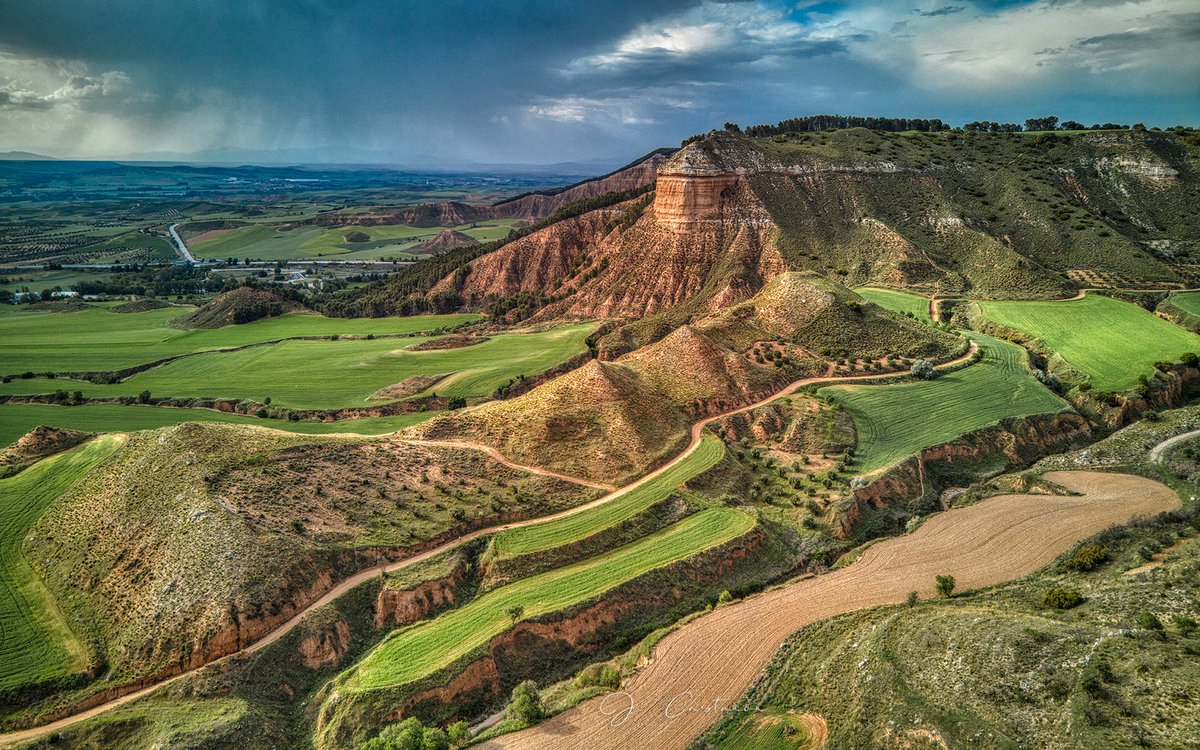
Como dice Jesús Campoamor: «El arte tiene que ser algo más que lo que vemos con los ojos». Quizás un fotógrafo deba retorcer la realidad para encontrar una narrativa distinta en la imagen.
La Peña Hueva, como monumento natural, ha sido interpretada por incontables artistas de esta provincia; cada cual aportando su visión personal. Para mí, desde niño, la primera vez que vi esta formación junto al Pico del Águila, ambas quedaron grabadas para siempre como el icono que custodia la entrada al páramo de la Alcarria.
No es el Everest, no son los Alpes ni Sierra Nevada: es tierra roja, tomillos y aliagas.
@SrCuevas1974@deporcaracol Hay personas que son capaces de engañar a todo el mundo durante mucho tiempo, quizás este es ese tipo de persona. Decir que no se ha hecho la venta por temas de abogados es una mentira. No te pones de acuerdo en el precio o las condiciones. Ya no escuché más a este sujeto.
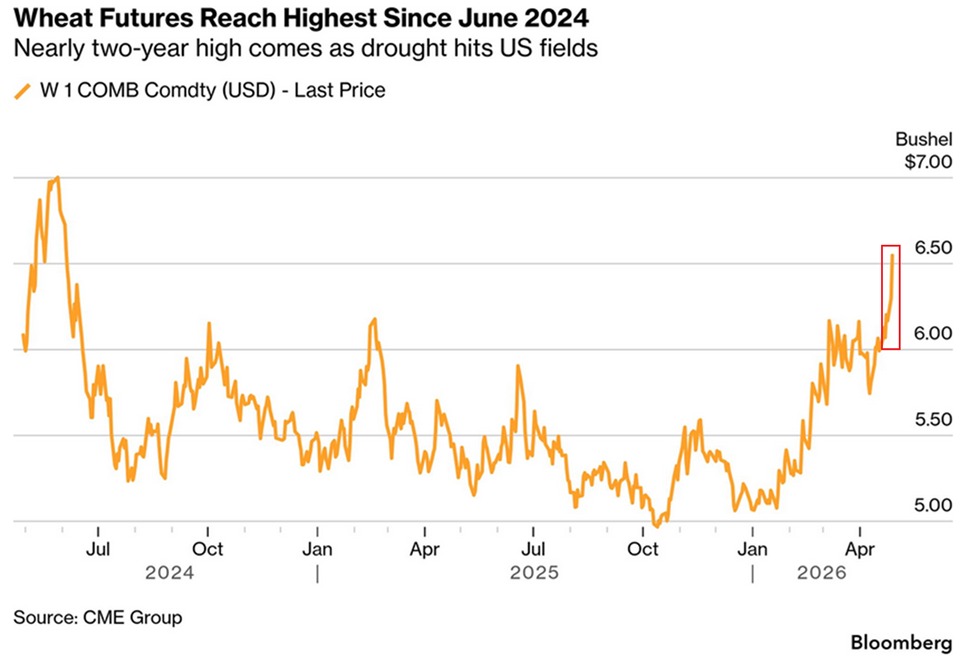
US wheat prices are surging:
US wheat futures prices jumped +4.1% on Tuesday, to ~$6.58 per bushel, the highest since June 2024.
Prices have risen +30% since the start of the year, driven by persistent drought across the US Plains farming region and soaring fertilizer costs.
Only 30% of the US wheat crop is currently rated good or excellent by the USDA, while the proportion rated poor or very poor continues to rise.
Wheat plants are also maturing too early due to drought stress, with 34% already forming grain heads versus the 5-year average of 21%, a sign the harvest could be significantly smaller than usual.
Meanwhile, US farmers are set to plant the least wheat since records began in 1919, as high costs for fertilizer, seeds, and equipment have made the crop increasingly difficult to grow profitably.
Food inflation pressures are set to accelerate.
@Vadebaggers La segunda ronda de negociación será muy probablemente en Rusia y China y después de que desaparezca el bloqueo. Los negociadores iranís temieron por su vida en Islamabad,y eso que los pakistaníes hicieron todo lo por cuidar su seguridad.
Global oil demand is always harder to track than global oil supply. In order to track demand, you use refinery runs, check product storage, imports/exports, and then back in an implied demand figure.
Since refineries are now cutting runs, the base assumption is that this is reduced demand. But that’s not entirely the case. There are only four regions that report weekly oil inventories.
Europe, US, Fujairah, and Japan. Well, Japan stopped, so it’s only 3 of them now.
On the satellite side, you can see floating storage tanks. So most service providers can only give you crude data and not products.
What am I trying to say?
It’s hard to know the impact on demand. The best and most efficient way has been to use refining margins as a proxy. Everything is subject to data fluctuation. That has been the most effective in my experience.
So there is demand loss now, but I don’t know if it’s 1.5 or 4.5 million b/d. Oil specialists are already at the point of not even bothering with the differences of a few million barrels because the supply outage is too large to matter.
It is what it is.