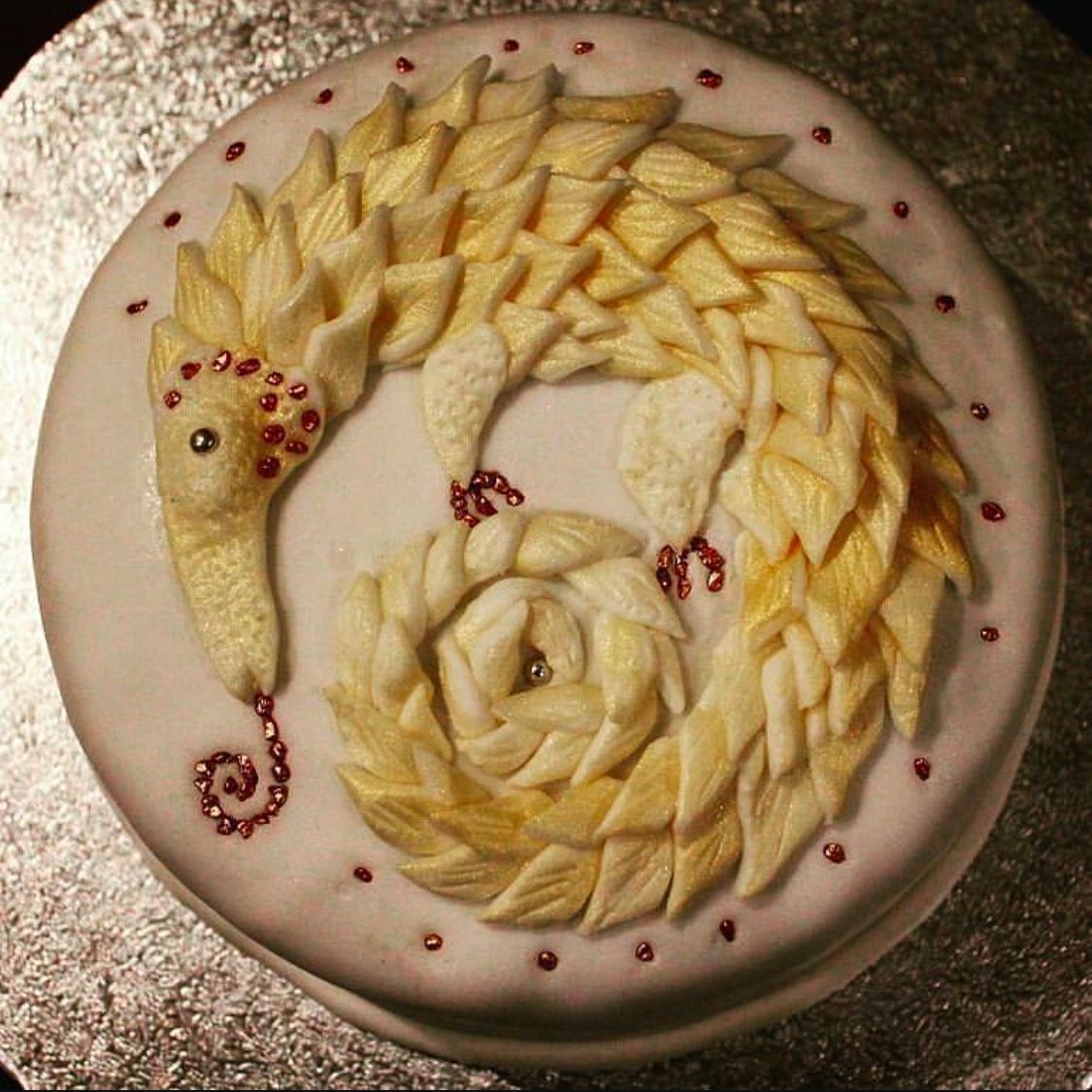
The number of cake eaters in my life has declined to such a small number that I’ve entirely stopped baking. But I’ve been reminiscing about some of the fantastical royal icing creatures I’ve made at this time of year. Because a Christmas pangolin is usual bill of fare- right?
In our newest installment of 'The Zoo Review', we talk about the Birmingham Wildlife Conservation Park, a tiny hidden gem of a zoo in Edgbaston, Birmingham. Read it here:
https://t.co/1xTXFKBL4p
This is not a drill, a mummified #sabretooth cat has been published from the #Pleistocene permafrost of Russia. It's a Homotherium cub! The team (Lopatin et al.) reckon it's Homotherium latidens. Paper is OA: https://t.co/ihzAggBM9y ... cont...
Happy Halloween from the Devilled Toad! As a special treat, there’s a new blog article out, where Eleanor talks about her favourite science and nature blogs, including @Ologies and @PangolinPodcast. Read it at https://t.co/fjc1cpI9jl
Happy International Sloth Day!
Did you know two Sloth species are also EDGE species? Both are listed on our EDGE mammals list 🦥
Featured today is the Pygmy Three-toed Sloth, a species still actively protected by EDGE alumna Diorene Smith Cabellos.
#InternationalSlothDay
Just two women, Elizabeth Philpot and Mary Buckland, writing to each other on December of 1833, at the eve of palaeontology, exchanging pictures of Ichthyosaur skulls drawn with ink from fossilised squids. Life was good.
[Buckland archive, Oxford Museum of Natural History]
Have you ever been to @TwycrossZoo ? Whether you’ve been ten times or zero, head over to https://t.co/HpFwMgqSF0 to read Eleanor’s first zoo review for the blog and find out what she thought.
📢This week - don't miss the Inaugural Lecture of Professor @JuliaPMyatt, entitled 'From Wild Dogs to Wild Ideas: The Power of Collaboration'.
📅Weds 9 October, 4-6pm
📍In-person only - The Murray Learning Centre (UG 09)
🎟️Book your place: https://t.co/heRY7ZKtu9
Have you ever seen a flapjack octopus? Growing up to 1.5 in (3.8 cm) long, this tiny cephalopod isn’t a strong swimmer. Instead, it spends most of its time in pancakey flatness on the seafloor, where it probes the sediment to find worms and small invertebrates to eat.
🎉 Breaking News! 🎉
We are delighted to announce that ZSL and partners have published a conservation action plan for the world’s largest amphibians, the Chinese Giant Salamanders!
To learn more, head to our Facebook page: https://t.co/R6op8a3dJt
Please check out my new blog about the natural world which I’ve been working on with @HarryBridger3. It’s got a review of @TwycrossZoo, my thoughts on @BBCEarth Mammals, and a look at antelope conservation. I’ll be ag TetZooCon if you’d like to chat about it.
Devilled Toads is now live, check us out at https://t.co/Hjsi0u6G1t
This is a soft launch so bear with us while we get things looking their best. If you spot any bugs let us know so Beelzebufo can eat them.
#scienceblog#palaeontology#biology
Look what our geladas dug up! 😮
Geladas often display stone handling, which is a play and foraging behaviour seen in some primates. The geladas at Bristol Zoo Project have dug up this rock to play with from their habitat and uncovered a fossil!
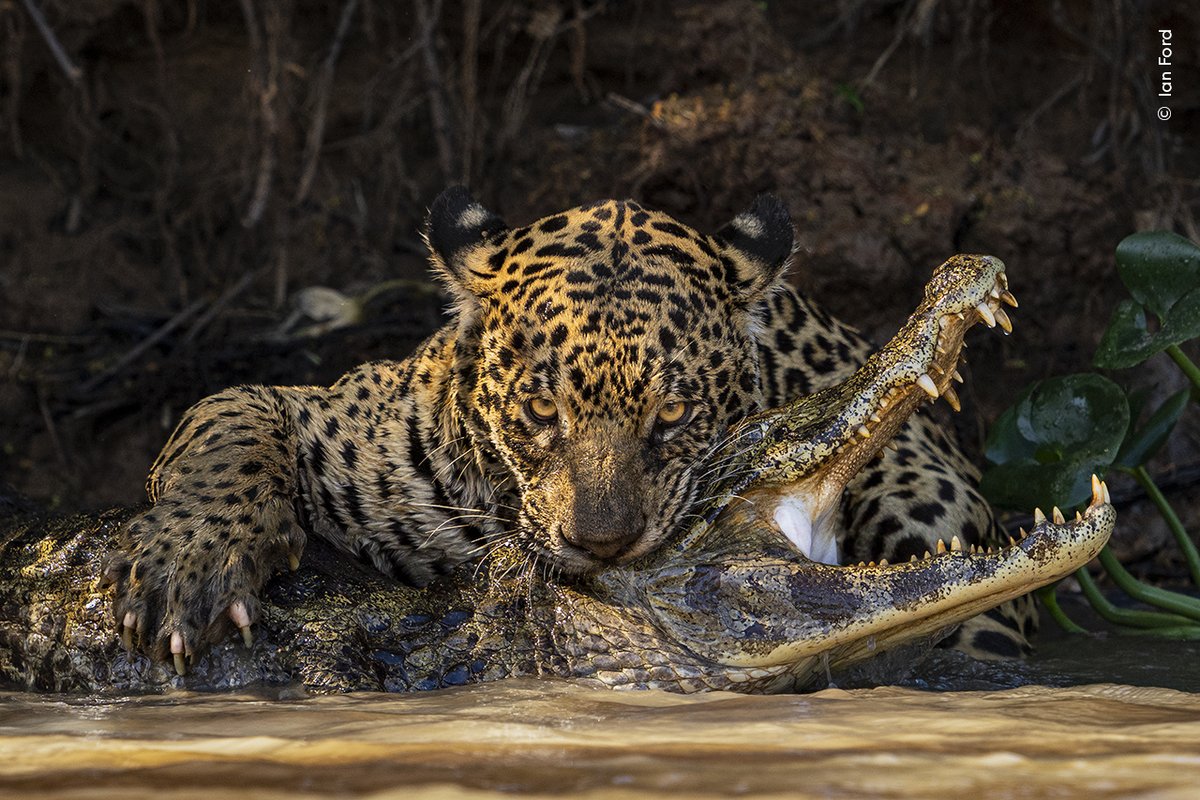
I’m really impressed by all this year’s #WildlifePhotographerOfTheYear entries. I’m especially excited to see both manatees and Pallas’s cats featuring, though I think this one of a jaguar hunting a caiman is spectacular!
First look at this year's #WildlifePhotographerOfTheYear entries! 😮
Celebrating the wonder of the natural world, take a look at some of the most extraordinary images of our planet and book your tickets now 👇
https://t.co/TGE0laoIrv
Meet the gold-mouth sea squirt! This filter-feeder draws in water through an opening known as a siphon to devour phytoplankton and bacteria. It can be found in waters off of Southeast Asia and Australia.
I found this on the beach today in Rhyl and believe it to be sea pork (a washed up tunicate). Tunicates are cool because they’re invertebrates but also Chordata.
Meet the giant rain frog! To survive the summer heat, this amphibian burrows underground. At about 1.8 in (4.5cm) long, it’s the largest of all rain frogs. When threatened, it can blow up like a balloon, intimidating foes with sudden roundness.
So proud of my younger sister for her amazing A-level results today! Excited for her to be joining me @unibirmingham where she’ll be studying English Literature and Creative Writing.





![Pteroterror's tweet photo. Just two women, Elizabeth Philpot and Mary Buckland, writing to each other on December of 1833, at the eve of palaeontology, exchanging pictures of Ichthyosaur skulls drawn with ink from fossilised squids. Life was good.
[Buckland archive, Oxford Museum of Natural History] https://t.co/ybuX3uGzXC](https://pbs.twimg.com/media/GZo0nyFWcBMaJd8.jpg)