This holiday season, we extend our heartfelt gratitude to the election administrators, poll workers, public servants, and community partners who safeguard our democracy every day. Your commitment to ensuring free, fair, and accessible elections is not only essential, but deeply appreciated.
With a busy midterm year ahead, we know the work will be demanding. But we also know that our democracy is stronger because of your dedication, professionalism, and resilience.
Thank you from all of us at the National Task Force on Election Crises.
As the nation looks ahead to midterms in 2026 and the next presidential race in 2028, conversations like this remind us that safeguarding free, fair, and peaceful elections is a shared responsibility — one that depends on strong institutions, transparent processes, and a commitment to uphold democratic norms.
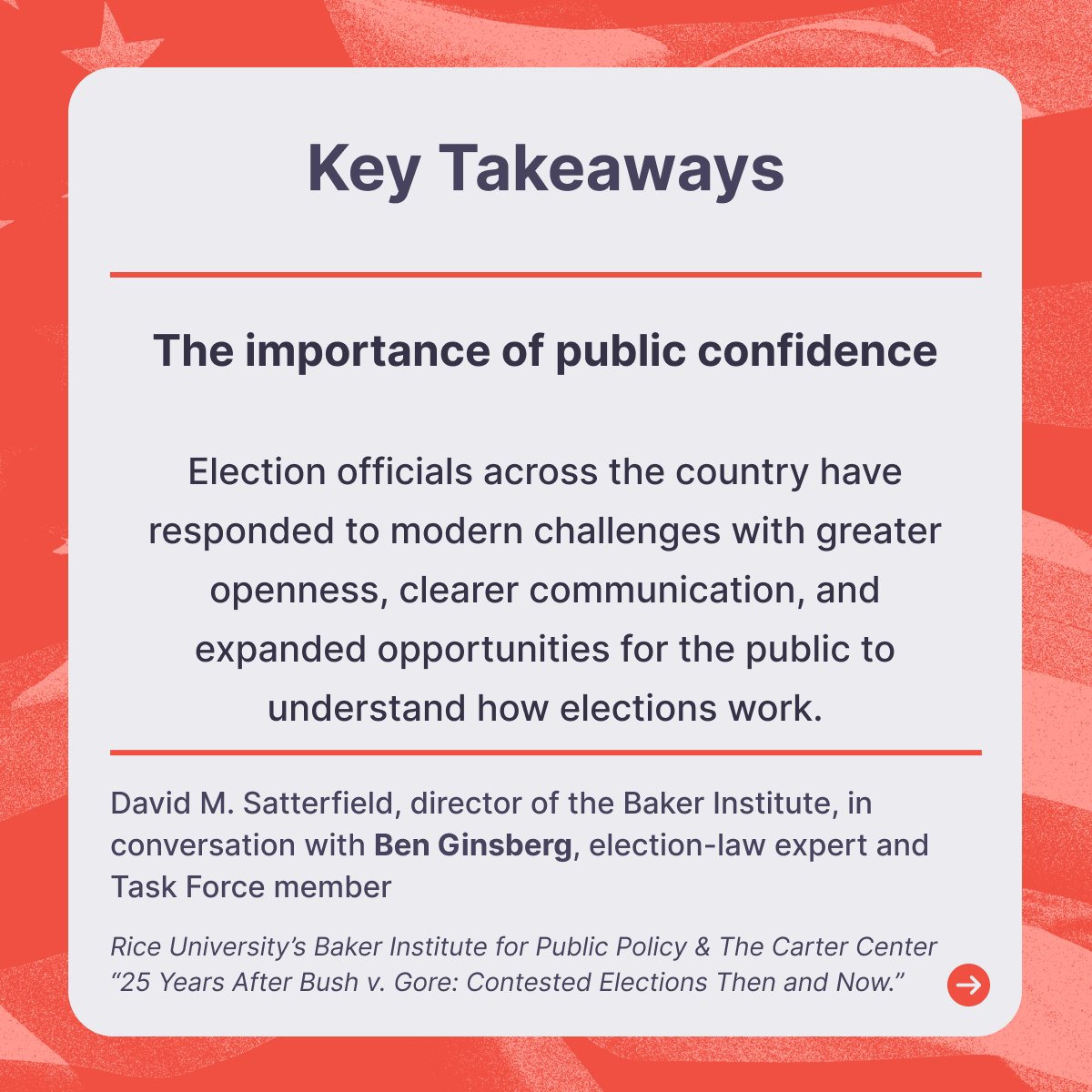
Last week, Rice University’s @BakerInstitute and @CarterCenter co-hosted their fifth annual elections conference, “25 Years After Bush v. Gore: Contested Elections Then and Now,” bringing together election experts and Task Force members — including David Carroll, Tammy Patrick, and Ben Ginsberg — for timely discussions on democracy and the rule of law. https://t.co/zIC5nijPi9
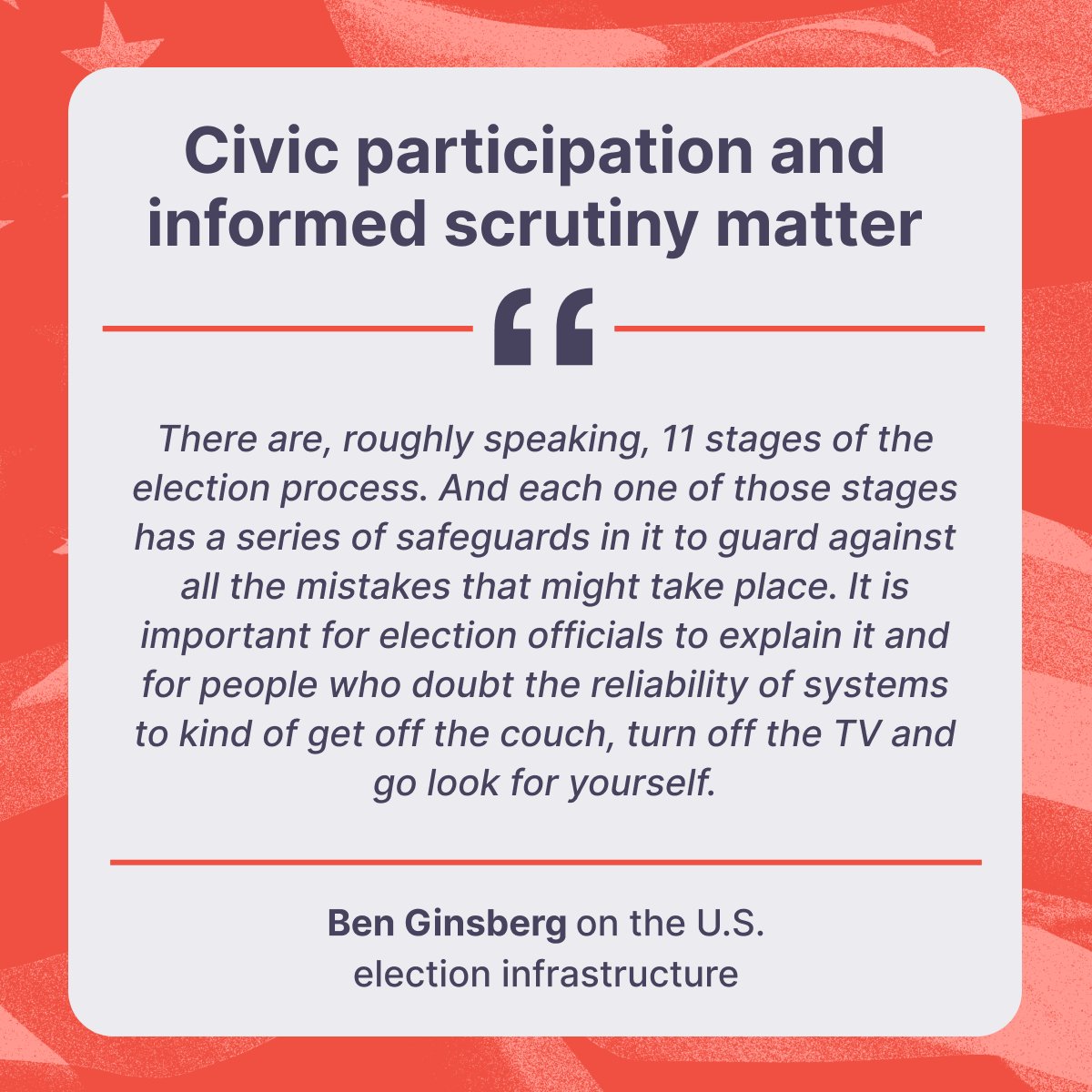
Ginsberg reflected on how close, contested races test public confidence in the election process itself. He emphasized both the strength of U.S. election infrastructure and the importance of transparency and engagement from the public.
One outcome Yasmin highlights: “We asked people going in, ‘Do you feel heard by fellow Americans?’ And 40% of people said yes. After just an hour in this virtual conversation, that number jumped to 68%.”
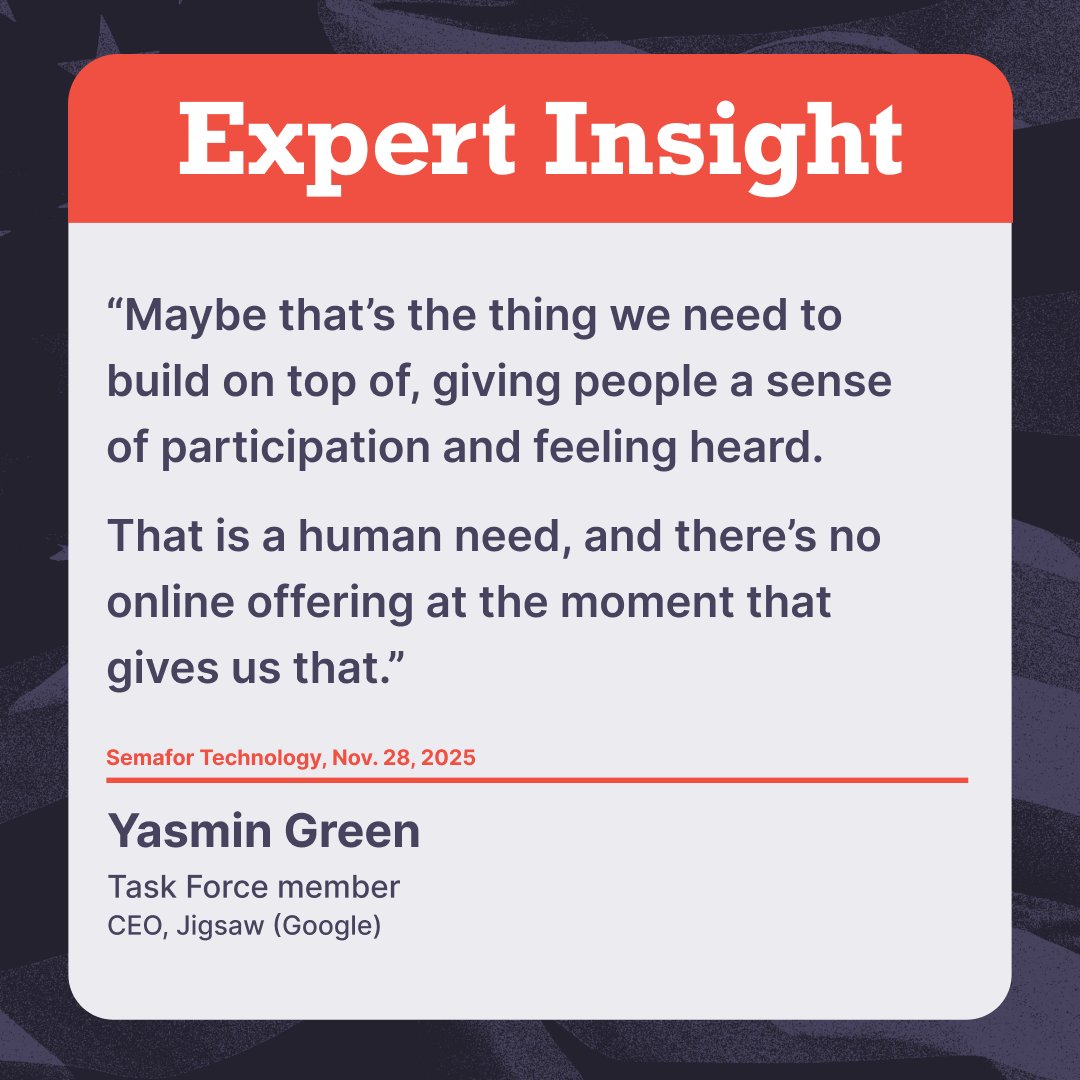
In a recent conversation, Task Force member and Google Jigsaw CEO Yasmin Green discussed a new approach to “AI polling” that could improve political discourse in America. https://t.co/K8FUQifipu
That work inspired We the People – a project that brought together 2,400 Americans from all 435 congressional districts for an AI-supported “national conversation," generating more than 1.6 million words and dozens of shared statements of principle. https://t.co/19WhsNLXiv
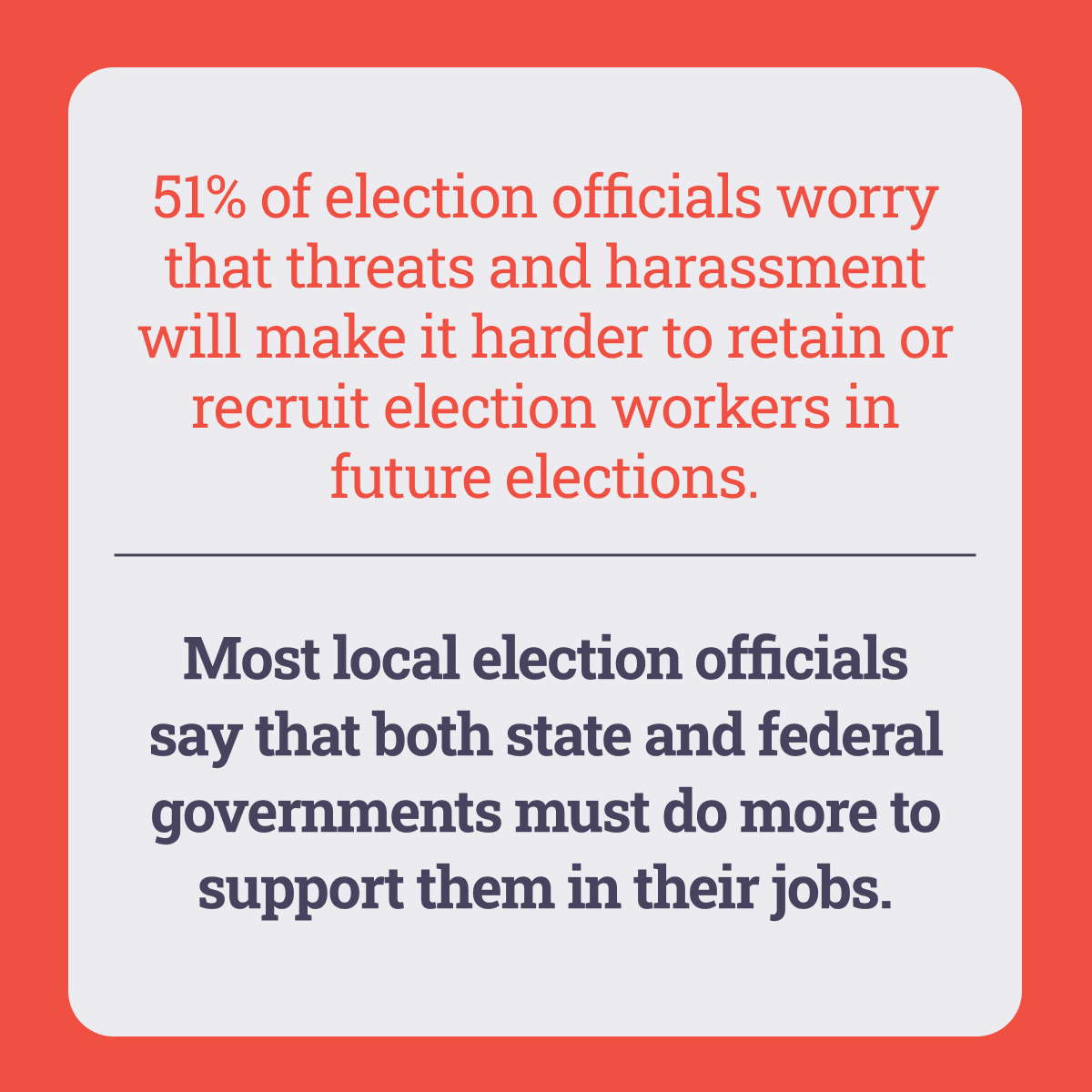
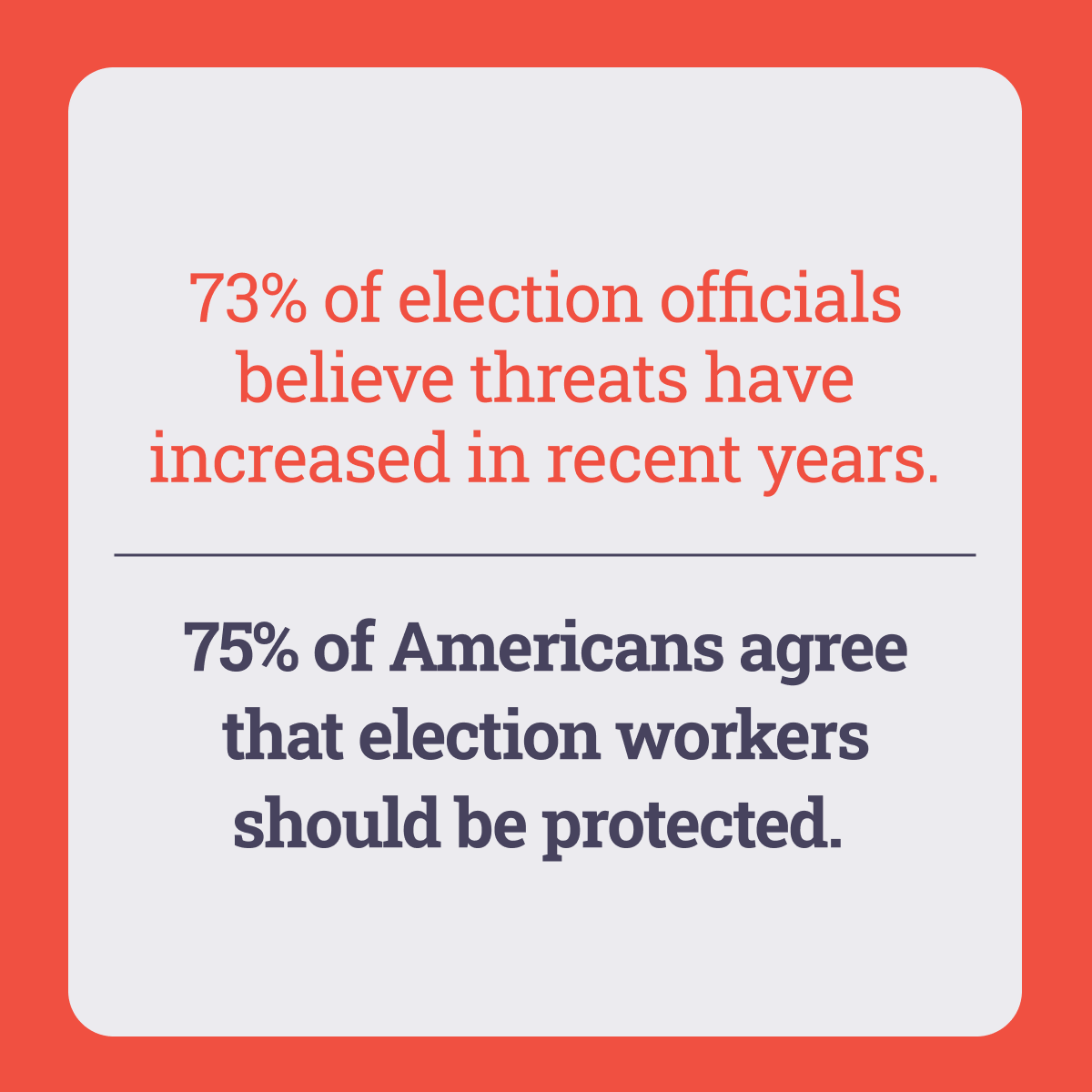
Since 2020, nearly 4 in 10 election workers have faced intimidation attempts.
Intimidation makes it harder to run secure, fair elections – but state and federal leaders can protect workers through privacy protections, clearer legal remedies, and better funding. Follow our newsletter to learn more: https://t.co/gpQnBYEatM
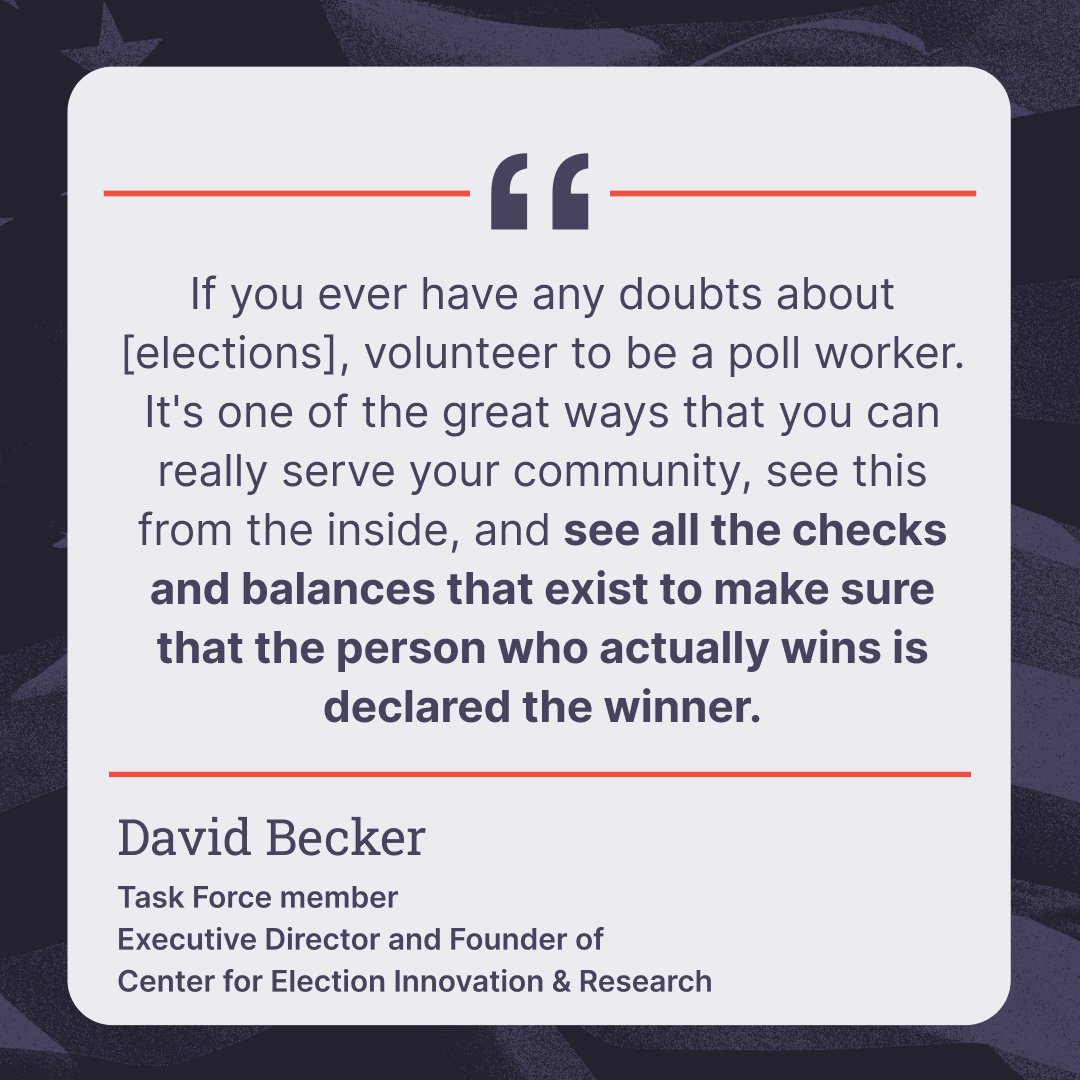
Want to get involved in your local elections? Serving as a poll worker is one of the most meaningful ways to support your community and see firsthand the checks and balances that ensure every legitimate vote is counted.
More Americans have access to early and mail voting than ever before, and recent elections have seen record-high turnout.
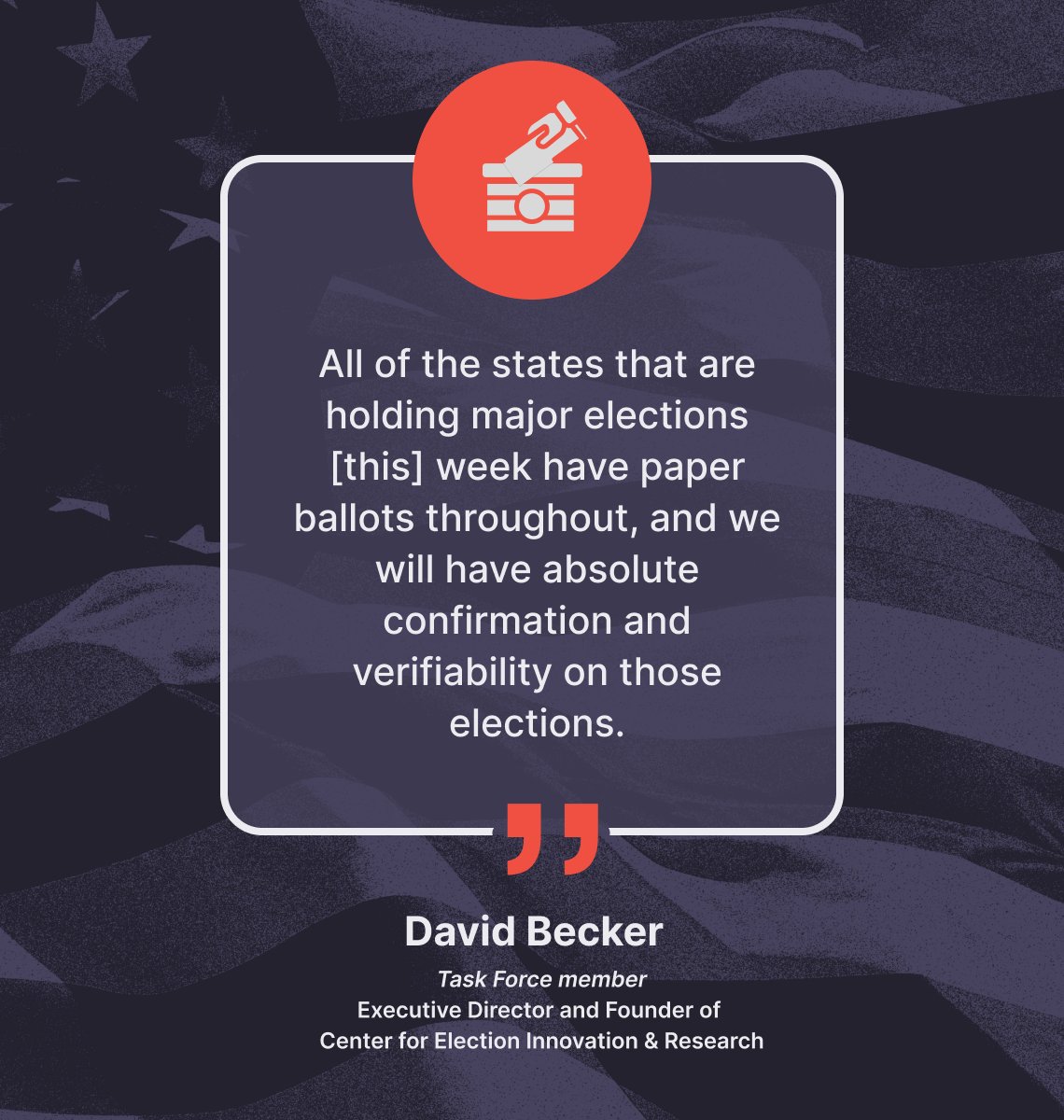
As David Becker reminds us in this Task Force briefing, it’s never been easier or more secure to vote by mail. 🗳️
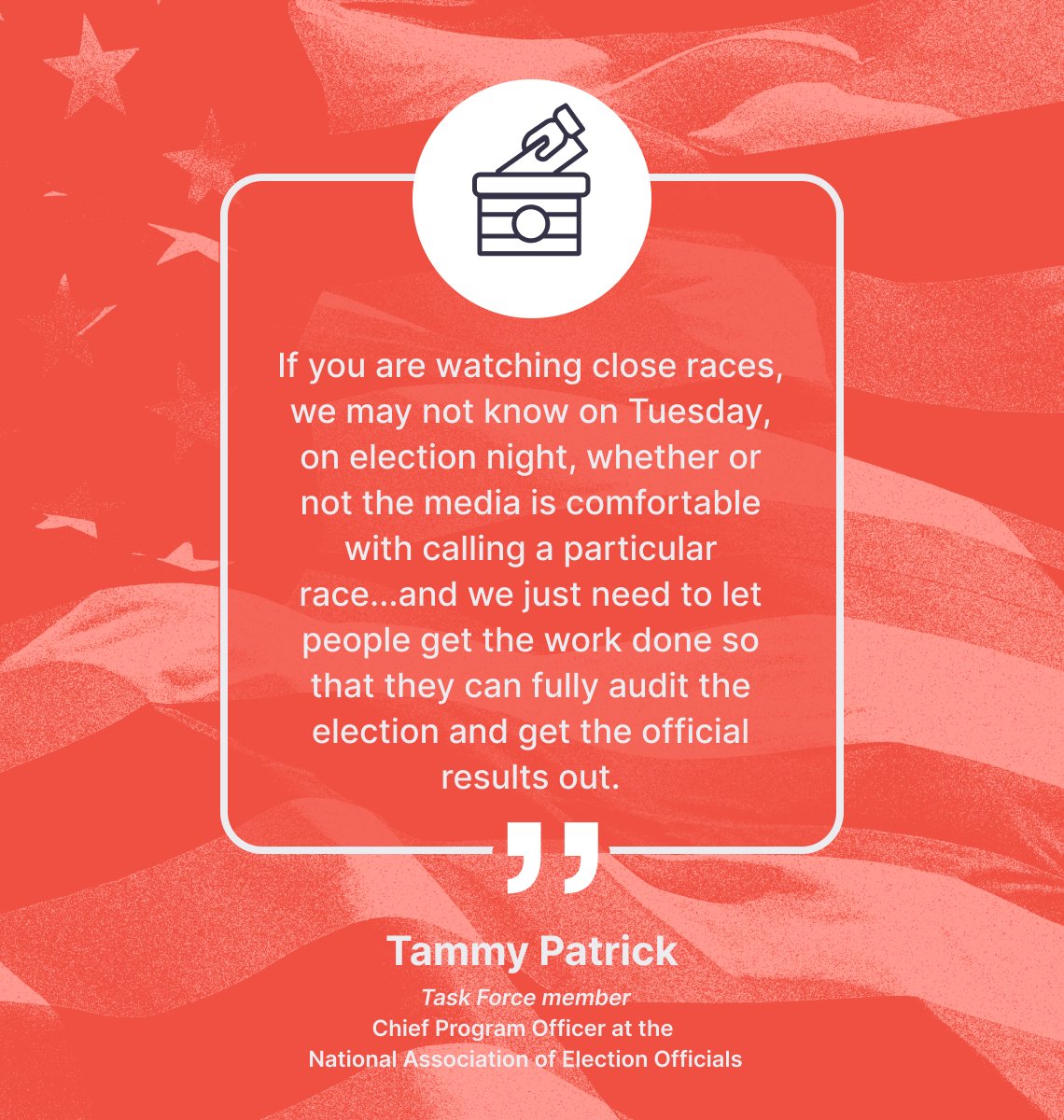
It takes time for election workers to properly count ballots — and that’s a sign of accuracy, not a conspiracy.
@aztammyp of the @ElectionCenter2 reminds voters today that election officials are bound by the law to ensure results are verified, auditable, and correct.
With elections in CA, NJ, NY, PA, and VA, election experts from the National Task Force on Election Crises emphasize the strength and transparency of America’s voting systems.
Behind every secure election are professionals who make it happen.
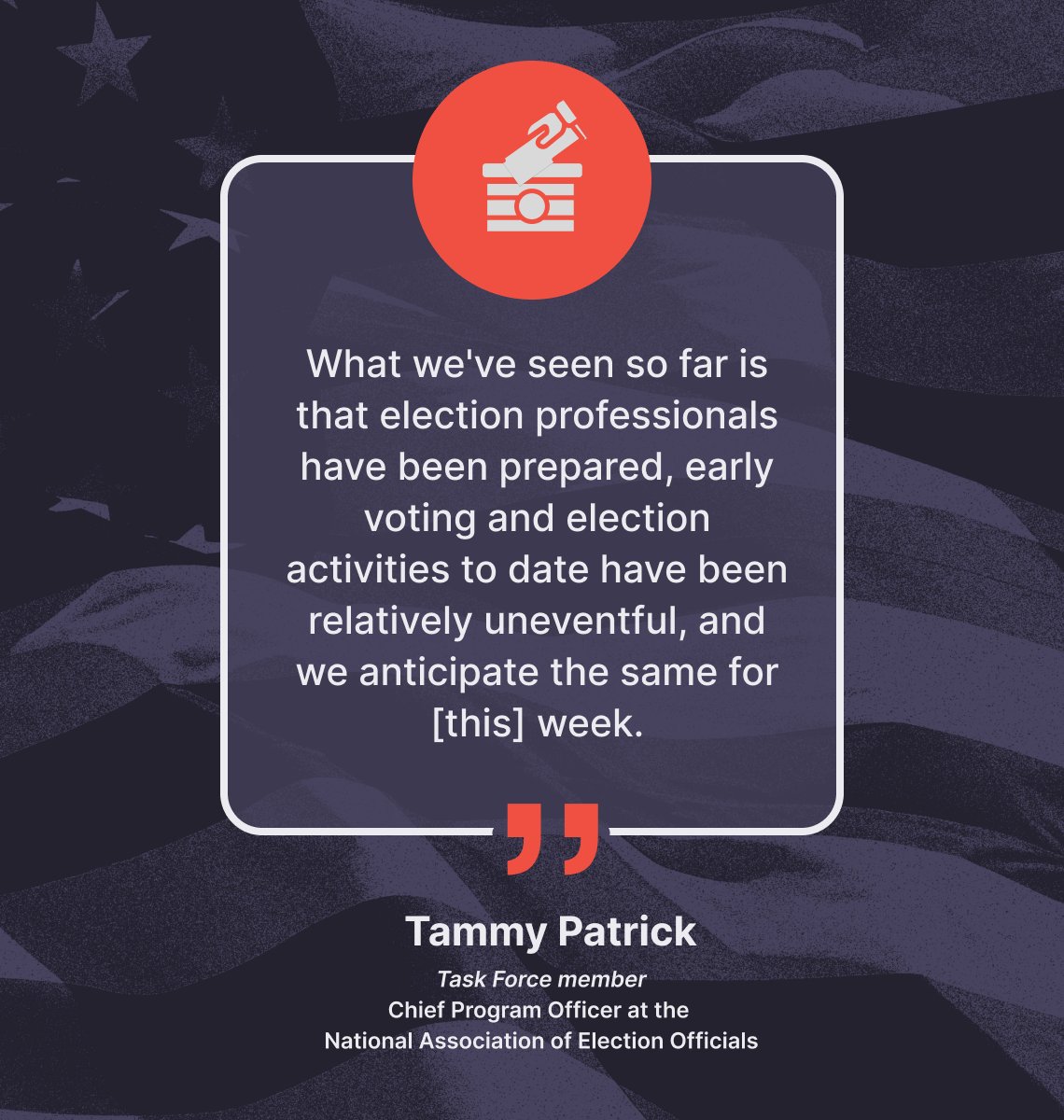
In our latest briefing, @aztammyp of the @ElectionCenter2 highlights the preparation, professionalism, and consistency of local election administrators across the country.
Intimidation toward election workers is a threat to our democracy.
Protecting democracy means protecting the people who make sure every eligible ballot gets counted.
Sign up for our newsletter to learn more: https://t.co/FZLs2it3KJ
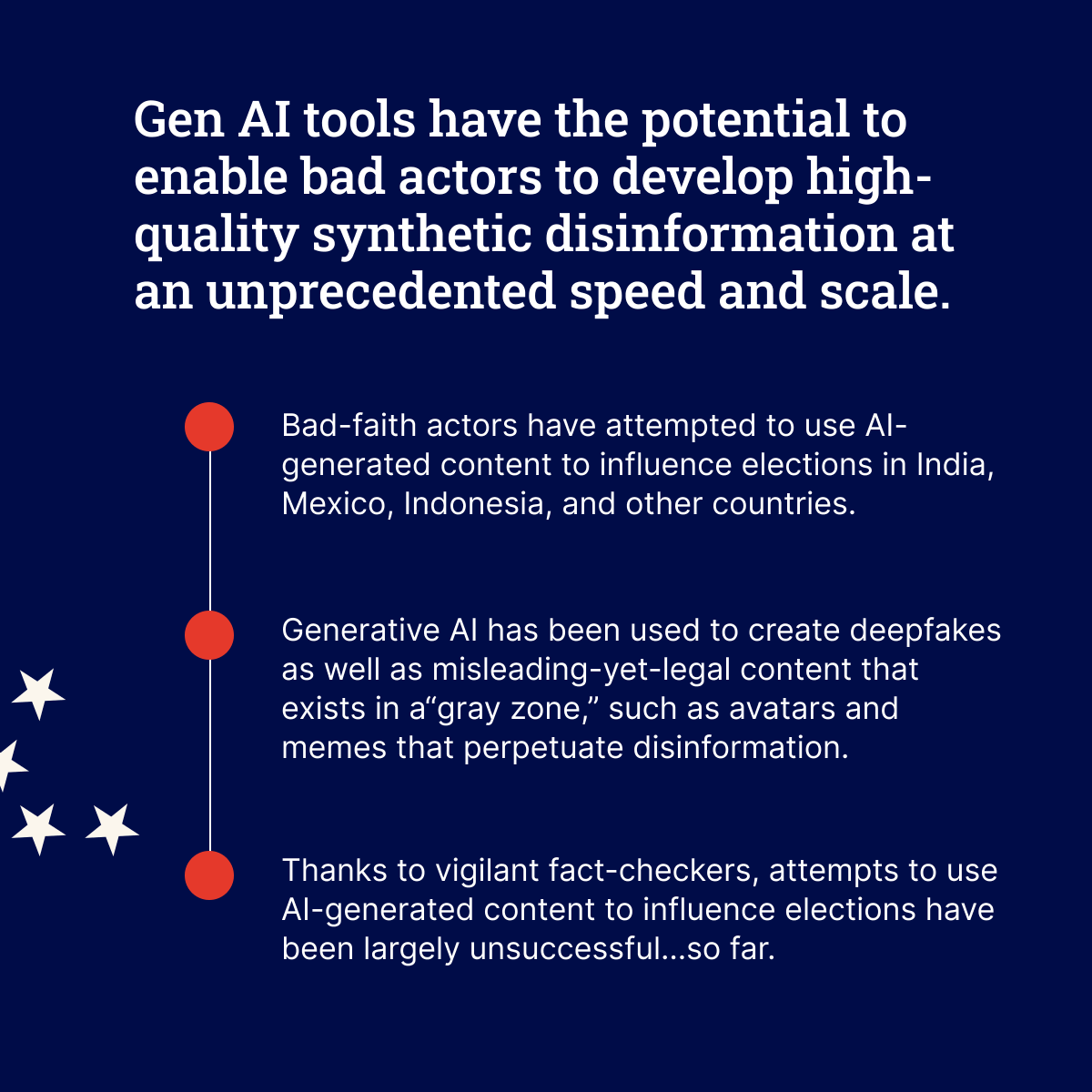
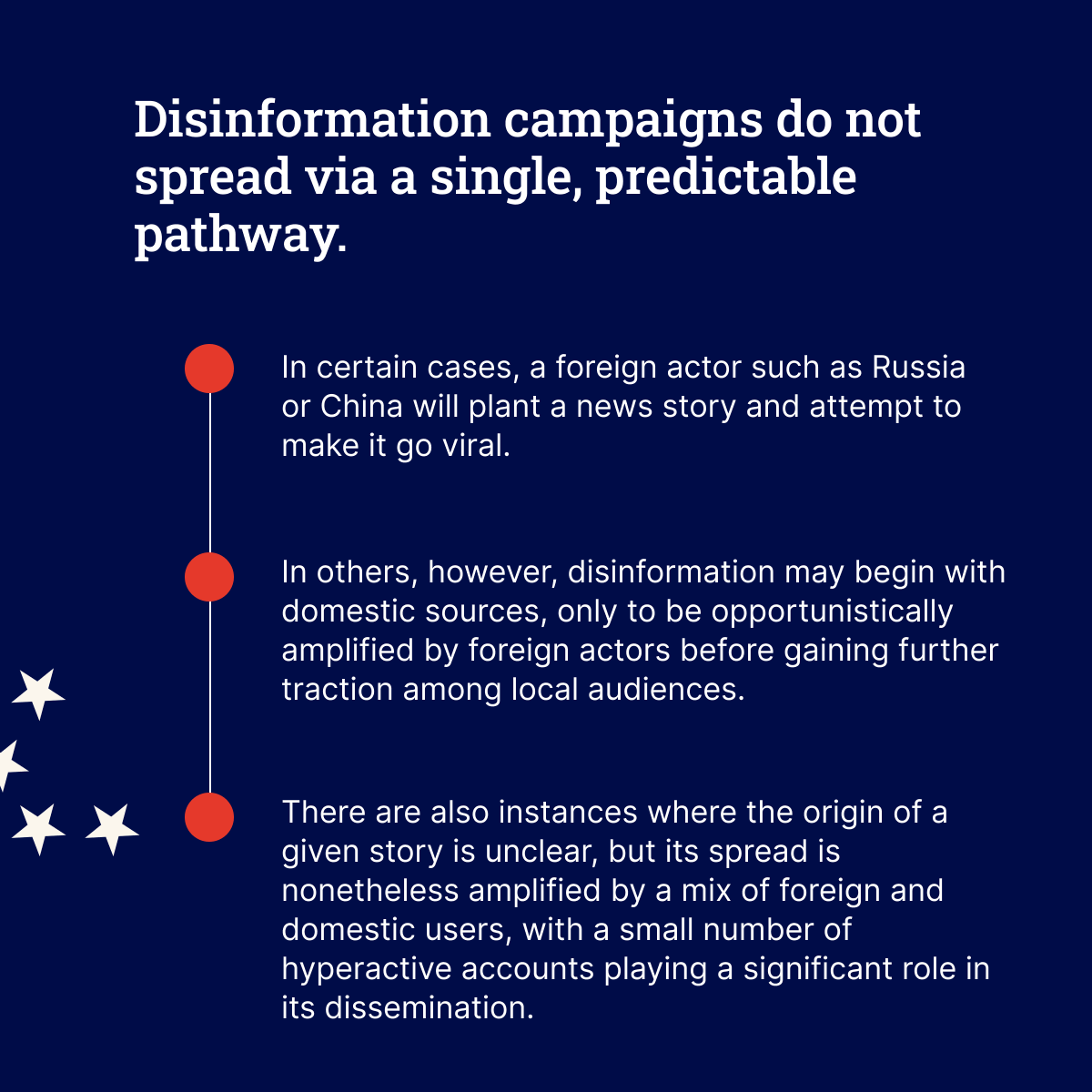
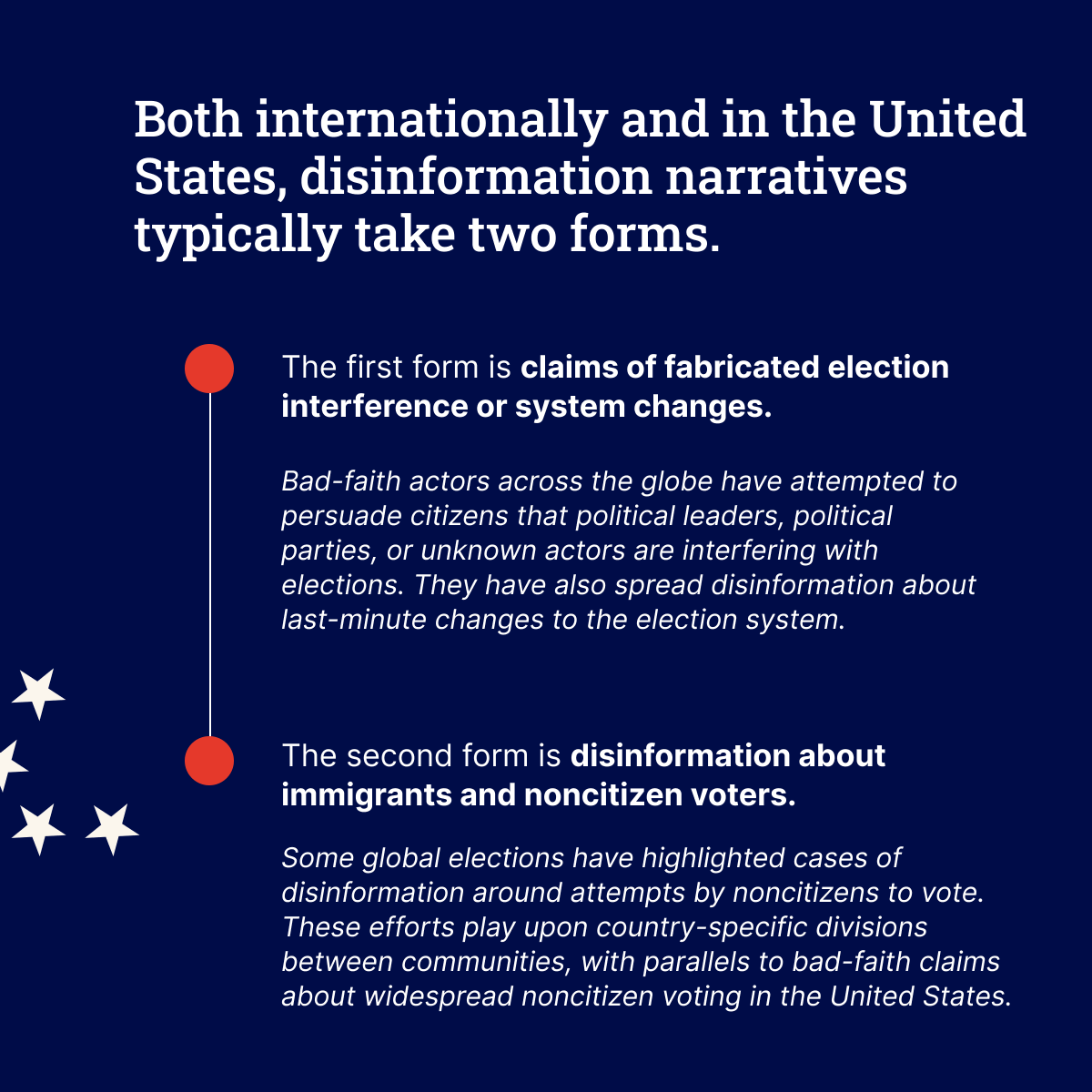
Disinformation, from fake claims about fraud to AI-generated deepfakes, aims to weaken trust in elections.
But the reality is that our elections *are* safe and secure (and our job is to keep them that way).
Get the facts here: https://t.co/FZLs2it3KJ
Free and fair elections are the foundation of democracy.
Threats like intimidation and disinformation won't change that – as long as we continue to support election officials and voters.
Sign up for our newsletter to learn more: https://t.co/FZLs2it3KJ
As we look ahead to special elections, @michaelmorley11’s recent @cspan interview offers a key structural point: the President does not have unilateral authority to restrict how states conduct elections. That responsibility belongs primarily to the states, within federal law and the Constitution.
@cspan@michaelmorley11@FSUCollegeofLaw Michael currently directs FSU’s Election Law Center, which was recently codified in Florida law, underscoring the Center’s growing role in research and public understanding of election administration. https://t.co/5pAnCTLTcV
In a recent @cspan interview, @michaelmorley11 — National Task Force member and election law expert at @FSUCollegeofLaw — discussed how state election laws shape the timing of election results.