It was a pleasure to exhibit at ESTIC 2026 and be among India's innovative researchers, nobel laureates and deep-tech developers.
Thank you to IPTIF IIT Palakkad for giving us the opportunity to exhibit our technological products and services.
@Akhil_g0809@meitystartuphub
🗓️ We’re exhibiting at ESTIC 2026 in New Delhi, from 27 to 29 October
📍Visit us at Hall 1, Stall 116, Bharat Mandapam
We are showcasing our work in Physical AI and Electric Vehicles sector.
@estic_2026
Our research aims to explore graphene-based antenna technologies with potential applications in Physical AI, space, and defence, contributing to India's growing deep-tech innovation ecosystem.
We are pleased to announce that we have commenced work on an exciting project, “Design of Graphene-Based Omnidirectional Radiation Arrays for Sub-6 GHz Antenna Applications,” in collaboration with the C-MET, Thrissur and IICG, supported by MeitY.
@GoI_MeitY
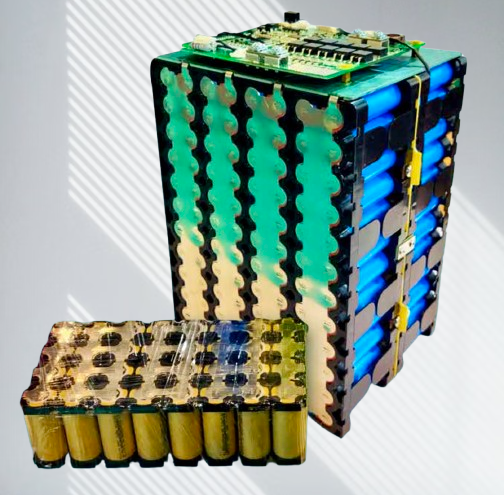
India manufactures 60GWh of batteries every year, of which interestingly more than 80% is either semi-organized or completely manual.
That makes this market perfect for egocentric data collection for automating the process of battery manufacturing for the world using physical AI and robots.
All off-grid applications use lithium-ion batteries in varying form factors. A robot that has the required intelligence and capability to replicate the manual work on subscription would solve for consistent battery packs and increased throughput on the assembly line.
I wondered why no one is working on this, and hence I decided to dive deeper.
In the last few weeks, I have spoken to 10+ battery OEMs, worked out egocentric data collection process on the same assembly line, without affecting the efficiency, finalized VLA models for training AI, and even partnered with a humanoid company - Starforge USA.
Out of the 60GWh of battery capacity, around 18GWh comes under 5kWh or less and can be completely assembled on a bench top, to start with.
These are used in robotics, electric scooters, drones, solar street lights and other modular applications.
Doing these assemblies using robots will help manufacturers reach far better consistency across packs, compliance, and scale with higher throughput without ever investing in high CAPEX automatic battery assembly equipment.
If this space excites you let us connect!
Demonstration of a simple VLA model operating on the edge trained purely using simulation data.
Next, we'll use real images and annotation to train the VLA model.
It was great to be back at my alma mater, DTU, for a session recently.
The gap between academia and industry is still very huge as per what I understood from my interaction with the students.
In 2015, in Paris, the world came together and pledge to try to limit global warming to 1.5 degrees.
1.5 to stay alive was the slogan.
That meant radically transforming our energy systems from fossil fuels to wind and sun, which is totally doable 'technically'.
At that point Earth had only warmed by 1 degree Celcius, and it was already wreaking havoc. 1.5 degrees was decided to be the absolute limit of a sane and safe Earth. If we go over 1.5 all hell breaks lose.
Scientists knew every fraction of a degree represents a tipping point somewhere on Earth. The point where ice tips to become water, water tips to become a flood. A tree tips into fire, a wind tips into torrent. A town is reduced to ash. A landslide affects a whole neighborhood.
Even though 200 nations pledged, the pledges were not observed. Scientists believed and projected then that we would only breach 1.5 degrees by 2050.
But they were 26 years off! Because in 2024, we breached and smashed the 1.5-degree threshold and brought the world to 1.6 degrees Celcius. And now at current rate we are moving towards 3-degree mark by 2050, which would be an apocalyptic hell. That's where we are headed.
There was no immediate solution to this in 2015, and nor it will exist in future. But timely and strict actions towards climate needs to be taken to avert the imminent apocalypse.
#climatechange
Building in India has its own challenges but there are a lot more opportunities at the same time. There is an open field to try out different products, different markets and even significant export opportunities.
Traditionally market has favored traders, but in new India, there are serious opportunities in building and selling from India to global markets, which is where I find my personal interest too.
Coming 2026 and beyond I look forward to playing my part in India's technological prowess towards making it a serious global force in advancing civilizations.
Happy Independence Day! 🇮🇳🇮🇳
PS. I am building robotic actuators, for physical AI training. Check them out @ElectricMazout
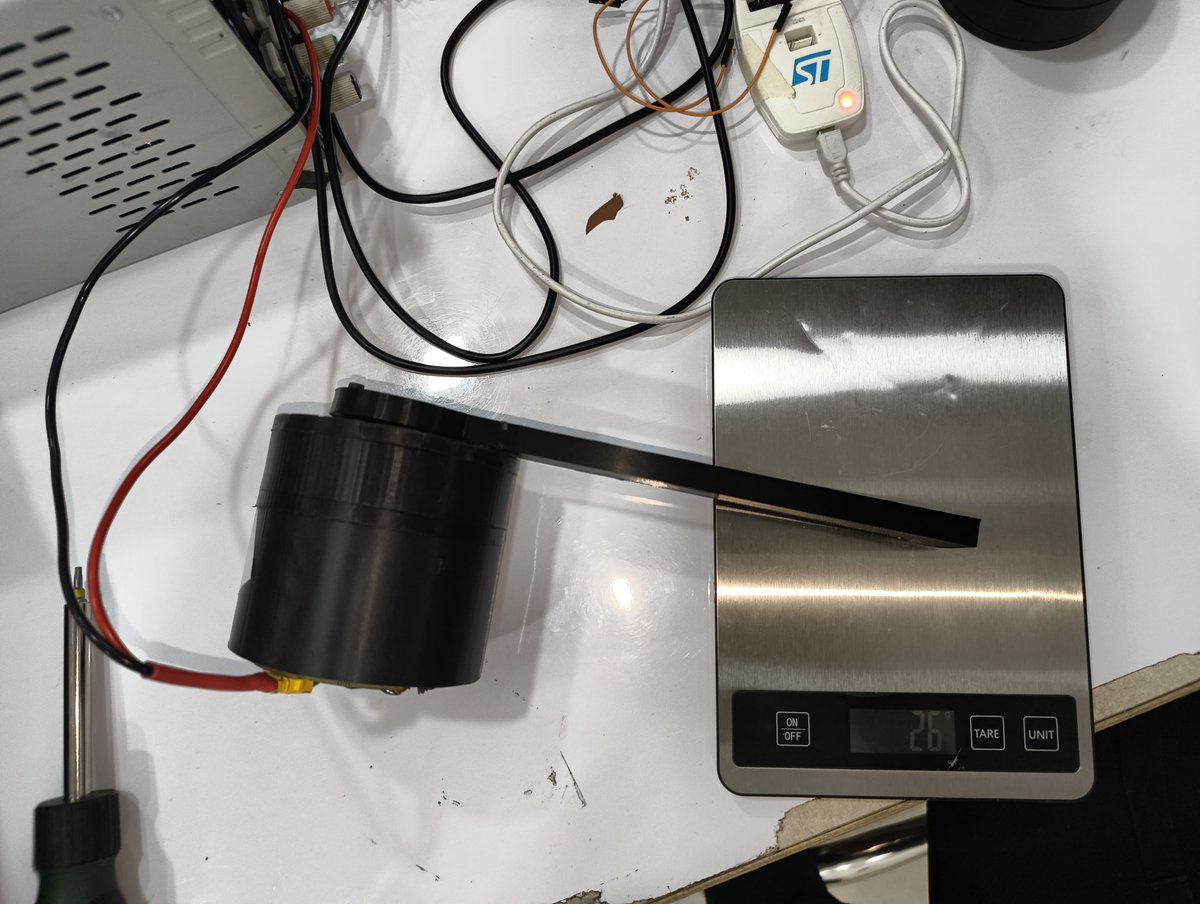
Setup and demo of Mazout's cycloidal rotary robotic actuator, FOC based BLDC control, easy to setup and to get started.
Build applications in robotics such as robotic arms and humanoids, and start physical AI training with teleoperation.
Actuator Weight: 800 gms
Diameter: 88mm
Peak Torque: 15Nm
Magnetic Encoder: 12-bit
Gear Ratio: 15:1
Check out - https://t.co/Hh3ntSkB0m
@ElectricMazout
Actuators form more than 50% of BOM of a humanoid/robot.
They genuinely are the differentiator between a robot that moves well and can do useful things versus one that doesn’t.
Building and testing rotary actuators in-house
Learn more: https://t.co/RisCtPD3g8
Satish Dhawan Space Center, Sriharikota - a place from where a billion dreams have emerged
Latest - A private company @SkyrootA just launched Vikram-1 rocket successfully, on their first attempt!
This would bring the attention back to the deep-tech startups of India and its massive potential.
PS. this pic is from 2021, when @isro was the only active Indian org in space race with ISRO's PSLV and GSLV in the background.
I started my startup @electricmazout in EVs and Robotics just a few months after visiting this center. Truly inspiring and much to look forward to.
Vande Mataram 🇮🇳
The most important bottleneck in humanoids is the actuator stack - the robot’s “muscle.”
Every joint requires localized, custom engineered actuator, for example :
The Wrist requires a low-torque, highly compact, and lightweight motor optimized for fine motor precision.
The Shoulder demands massive torque ratings, rugged reinforcement, and high power to manage leverage and lift heavy payloads.
Shipping soon 🛳️
@ElectricMazout
Actuators can be built from ground-up, fully indigenous, tailored to custom application -
Standard actuators often tie you to complex international supply chains.
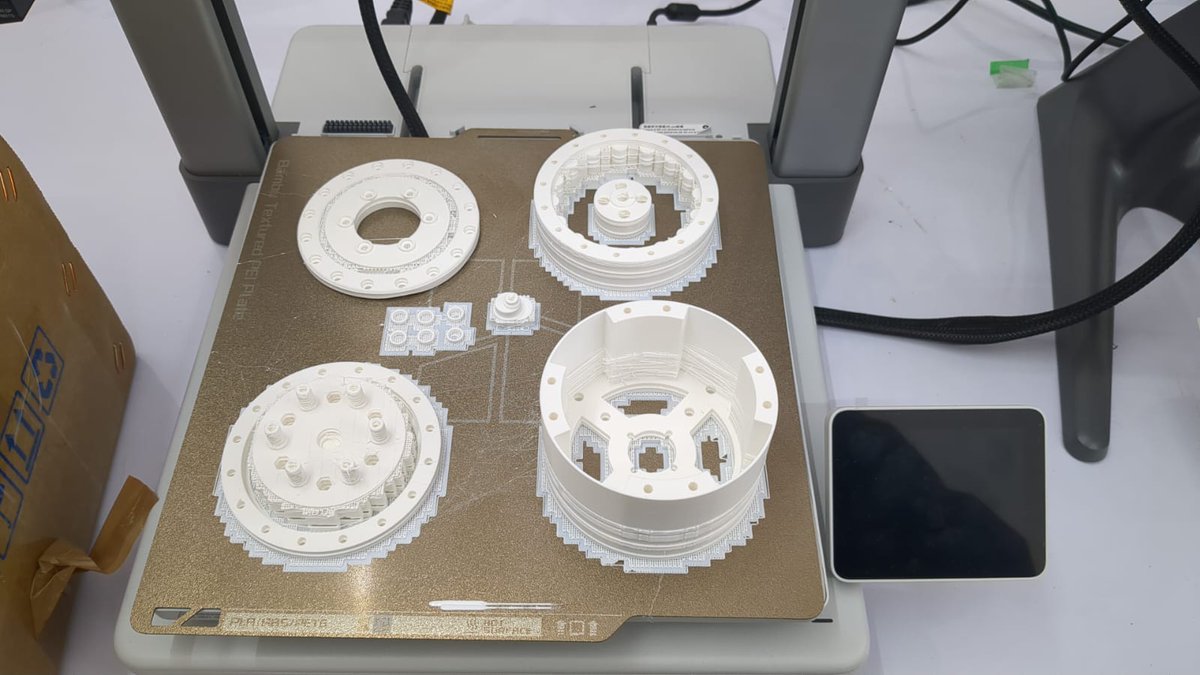
By customizing the actuator housing by utilizing 3D printing for rapid iteration/prototyping and pairing it with an indigenous BLDC motor, locally sourced bearings, and a custom-designed Indian controller, you build a resilient, 100% localized supply chain.
Desired torque to speed ratio - Off the shelf options force your design to adapt to their limitations. Custom engineering ensures that the exact torque, speed, and power requirements of your specific application are met effortlessly.
We have designed, built and tested actuators for autonomous electric scooter and robotic arm. If you wanna test them or want an actuator built for your robot, contact me on DM
@ElectricMazout
#actuator #robotics
Why off-the-shelf actuators seldom work for most custom robotics applications:
1. Unmatched Torque-to-Weight Ratios
Standard actuators are often too heavy and bulky, whereas robotics demands maximized power with minimal mass to prevent cascading weight issues.
2. Inflexible Form Factors
Off-the-shelf options come in rigid, blocky shapes that rarely fit the highly integrated, compact structural footprints required by custom robot joints.
3. Lack of Back-drivability
Industrial actuators rely on high-friction gearing that prevents back-drivability, which is essential for safe, compliant human-robot interaction and legged locomotion.
4. Backlash and Precision Mismatches
Standard gears introduce too much mechanical "slop" (backlash) for precision tasks, while high-precision alternatives are often too fragile or prohibitively expensive.
5. Unoptimized Thermal Dissipation
Every actuator application requires its own thermal considerations depending on the usage and environment its set in. Proper thermal dissipation is essential to avoid frequent overheating.
Let me know if you need help in designing custom actuators for your application.
@ElectricMazout
The future isn't just autonomous vehicles.
It's software-defined mobility.
Vehicles that can be remotely operated, monitored, updated, analyzed, and continuously improved through software.
Zooty is our step toward that future.
Built by Mazout, for a better future.
This changes everything. To build physical Al you need real-time data with near-zero latency. Here's our teleoperate an EV platform - and we're among the first in India to enable fully remote operation with live control and monitoring at this scale.