Encouraging all DReps to take a look at @eternlwallet's treasury proposal. Projects like this, operating in the utility and experiences layer, are exactly what the ecosystem needs funded.
What stands out is the funding model: subscription-based revenue approach with a repayment plan built in. Good to see projects getting creative about how they tap treasury funding, and in this case, building toward real sustainability.
https://t.co/B7JSY1CJTB
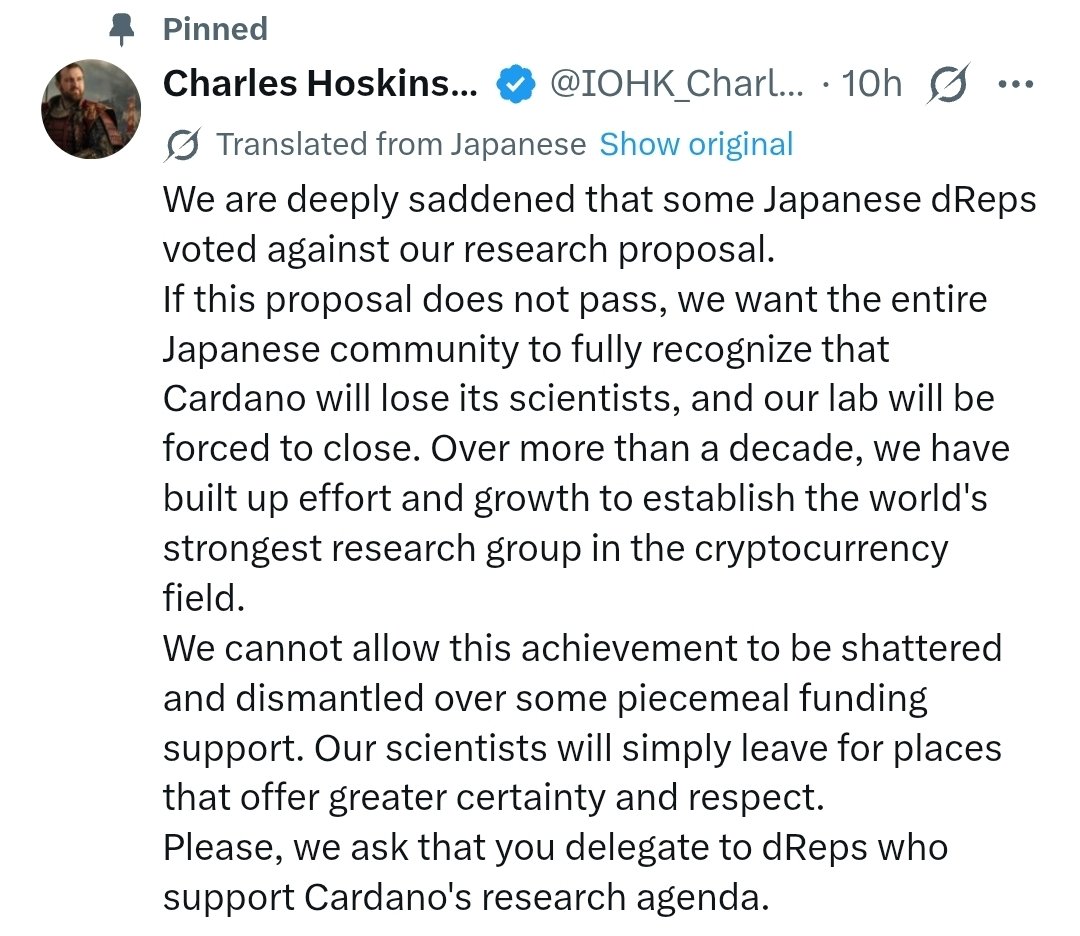
Charles isn’t threatening the community. He’s explaining reality.
Elite researchers and engineers do not stay without stable funding and long term support.
You cannot demand world class innovation while voting against the teams building the foundation of Cardano.
This is a race we can win. It's the single largest area of growth for DeFi and no one is the market leader. Some of the best and brightest teams are chasing it. We have a head start and the right tech
The best way to describe it is the CEO decided to work the drive thru of one of his McDonald’s and he selling hamburgers.
The humility and grace of @IOHK_Charles must be studied!
Protect that man at all cost! 😂
BREAKING: 🔮 Pyth PRO Oracle is now officially LIVE on Cardano $ADA mainnet.
This brings institutional-grade pricing layer to Cardano for perpetuals, synthetics, lending, and RWAs.
Cardano just got a huge upgrade for DeFi.
ONWARDS.
They called it a “dinosaur coin.”
Now $LTC has a spot ETF on Nasdaq, 14+ years of ZERO downtime, LitVM DeFi launching, and 981 people already talking about it TODAY.
Digital Silver doesn’t rust. It compounds. 🪙
🗺️ @IOHK_Charles: "We're not here to go make the people who blew up the world economy in 2008 even bigger and even richer. We're here to change the world."
The Cardano founder reminds the room what crypto was for, on the @Anchorage Digital Mainstage at @consensus2026.
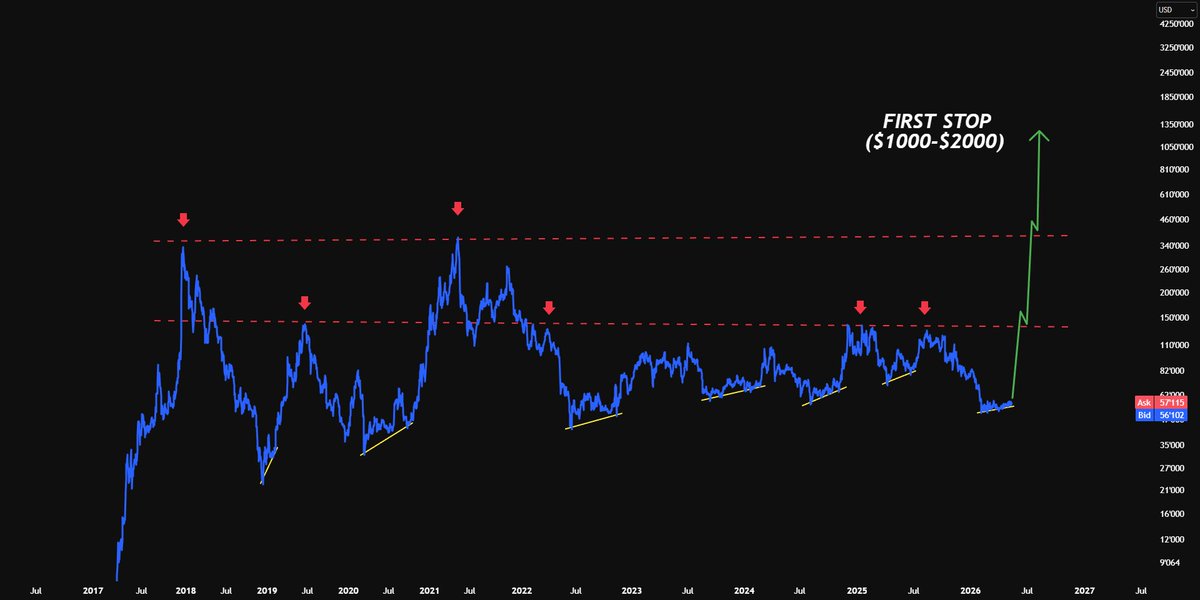
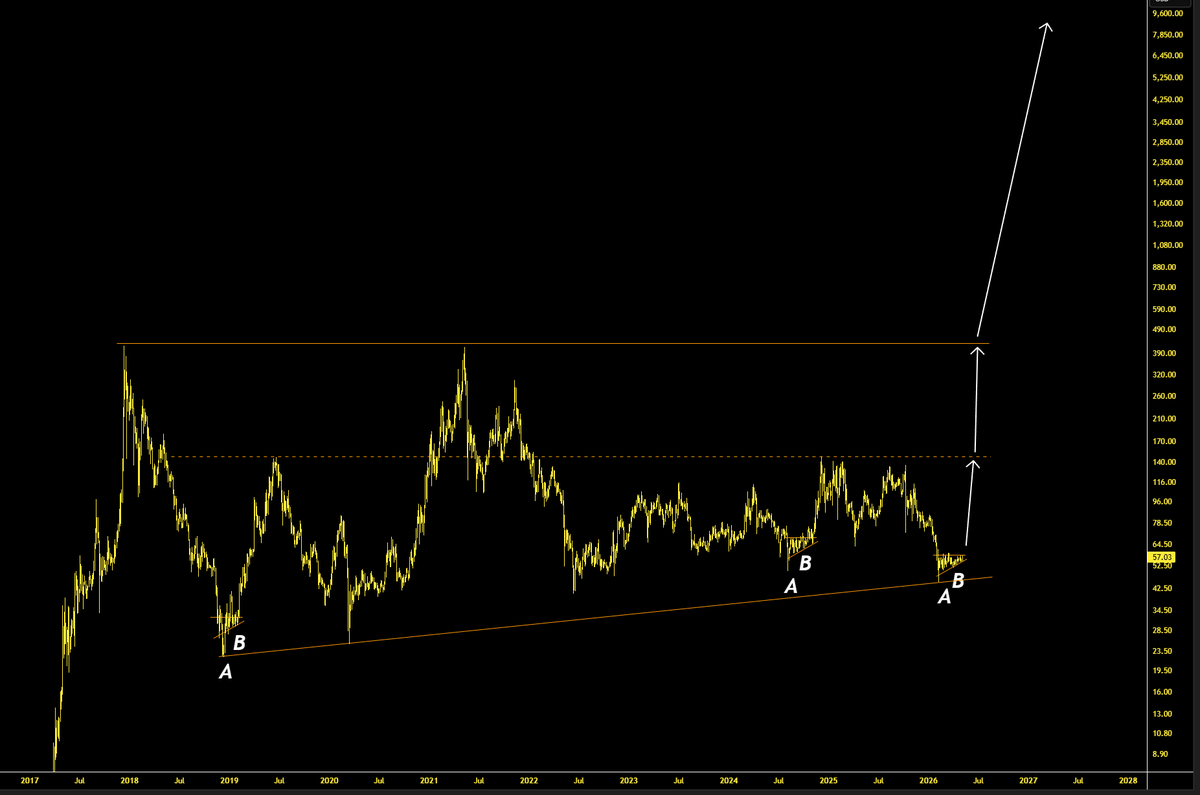
$LTC first stop at $1000-$2000.
If Litecoin pulls the Zcash move with the same speed, something like this could be the outcome.
The two red lines are the key resistance.
.@IOHK_Charles just delivered "Agents, Privacy & Blockchain" on the Anchorage Mainstage at @Consensus2026.
The 25-minute case for what this industry needs to ship next, summarized below. 🧵
#ConsensusMiami2026
🎙️ "Back when we started, JP Morgan was turning people's bank accounts off and now they have a blockchain product," Charles Hoskinson said at Consensus 2026.
"How about that? That's winning," adds @IOHK_Charles.
#Litecoin $ 55 to $10,000 ➡️ 18,081%
15% APR stablecoin (similar to $strc) is NO-BRAINER!
Build on #LitVM, backed by $LTC ( $zkLTC), deposits and yield paid in solana:EPjFWdd5AufqSSqeM2qN1xzybapC8G4wEGGkZwyTDt1v
Only 8.17% #Litecoin left to mine
Satoshi left Bitcoin early on and it became very chaotic with the direction of the coin. There's a lot of fighting amongst developers and core contributors about direction of where the coin should go and because no one's around to dictate things, it was very inefficient and very chaotic.
- Charlie Lee
This is still true thats why eCash is happening soon long after BCH and BSV...
I am getting insanely tired of hearing a false narrative that we abandoned scaling in favor of governance. There was continuous effort and work from before even Shelley on scaling (for example https://t.co/jPnHnG8BbG)
It was an enormously challenging problem that we relentlessly attacked from many different angles including L2 innovations, a brand new accounting model- eutxo- zero knowledge ideas, partnerchains, and capstoning with Leios.
Many of these ideas required deep r&d and original publications. This cannot be made faster by throwing more people at it. It's research. In the meantime while the research was being done, we implemented Voltaire because it unlocks the treasury for the entire community to use thereby making Cardano stronger and also scaling will require many parameter changes we cannot unilaterally make.
No one was pulled from scaling research and development. There were dozens of scientists and engineers brainstorming and prototyping for years. A semi-centralized and not secure halfway house could have been implemented that crashed all the time like other blockchains. Or we could do it right like we've always done things with the Cardano ecosystem. We chose the latter.
We now have a full design for Leios, Peras, and a great L2 strategy. They are elegant and future proof. We now have the best scaling strategy in the entire cryptocurrency space. That's what the time bought us.
Implementing Voltaire means that every single one of you has a voice and vote on when and how to turn that on. You also exercised that vote and voice on a desire for a multi-client ecosystem. So it's going to be turned on multiple times by independent teams. That's the point of governance.
Critics somehow argue that we should have just made a mad rush for scalability, robbed everybody of a voice, and somehow we would be ahead today.
What that means in practice is none of you would be dreps, there would no constitution, no constitutional committee, you would have no say when and how we upgrade the network, you would have no say on client diversity, there would be no legitimate members-based organizations, we would have no legitimate- community endorsed- road map, and over a billion Ada would be locked for no one to use.
The very fact that Bitcoin is having an issue trying to figure out whether to steal Satoshi's money for the "greater good" (BIP361) or just simply let someone else steal it (BIP360) is the single greatest endorsement of the value of governance. It's going to literally break their ecosystem into two halves and cause catastrophic economic harm. We will completely sidestep this issue thanks to governance.