Ten Points for Students and Young Practitioners of Clinical Medicine**: Embracing the Art of Medical Practice
1. Never underestimate "The Healing Power of Empathy." In an era where investigations and diagnosis matter, remember the patient is a person and sometimes requires only kindness in the face of sickness.
2. Always trust in "The Power of Listening." Sometimes the greatest medicine is the time given or spend. Listen, rather than speak. Hear, rather than raise.
3. Indulge in "The Art of Communication." It is easy to break the good news, but learn how to do the same with bad news, in the most comforting way possible. Discuss the challenges, but also provide solutions - some may not be treatments at all, but assurances, such as a dignified death or great comfort in end of life care.
4. Master the art of "The Gentle Touch." Some patients require a pat of the back or a light squeeze on the hands, or a resting hand on their shoulders - it can be deeply therapeutic. Nothing can replace a thorough physical examination, but amidst a busy schedule, when words are seldom and prescriptions are quick, spend a moment to connect with gentleness.
5. Get acquainted with "The Wisdom of Patience." Patients and family have doubts. They may have the same doubts another time. And then again. There will always be new doubts, more questions. Never lose your patience. Discuss and assure - short, concise and simplify. Master it by getting comfortable with it. A calm doctor is half the therapy completed.
6. Learn the "The Art of Adaptability." Certain patients deeply connect when the doctor adapt to their needs without them asking for it. Talk about routines, ask about dietary practices, find what comforts them, even if it has nothing to do with the treatment being offered. Answer the common healthcare myths that are pertinent without them asking about it. They'll be glad you did.
7. Be aware of "The Role of Intuition." Not all patients walk out from the textbooks. Keep seeing more patients. Never let a complex case go. Do not miss an opportunity to gain more clinical experience. When science, logic and reasoning collide, great things take shape.
8. Always provide "The Gift of Hope." Never fearmonger with patients. Do not be blunt. Never be blank. Give them hope in the face of death. Assurance is a great healer. Tell them, their burden is yours. Carry their excess baggage. Because there can still be gratitude even in death.
9. Understand the value of "Strength in Vulnerability." Doctors are humans too. Doctors make mistakes. Accept it, change and never make one a second time. It is ok to cry. Keep it personal. Carry your demons, but do not let them win. Nurture your scars in a corner of your heart. They are the greatest of teachers. Convert present losses to future wins.
10. Dive deep into and experience the power of "Legacy of Compassion." A doctor's impact extends beyond the boundaries of the clinic or hospital. The compassion you show today will echo in the lives of your patients, their families, and the community at large, leaving an indelible mark for generations to come. Be kind to patients and family. Always.
**including myself, a reminder for everyday.
That’s a wrap! 🎬
Thank you very much🙏
➡️ the course organisers and local team of the Hospital Universitario Ramón y Cajal👨⚕️
➡️ our group of international students, coming from 15 different countries 🌍 for this #EASLSchool on cirrhosis
➡️ special guest @ReibergerThomas
About last night 🌙
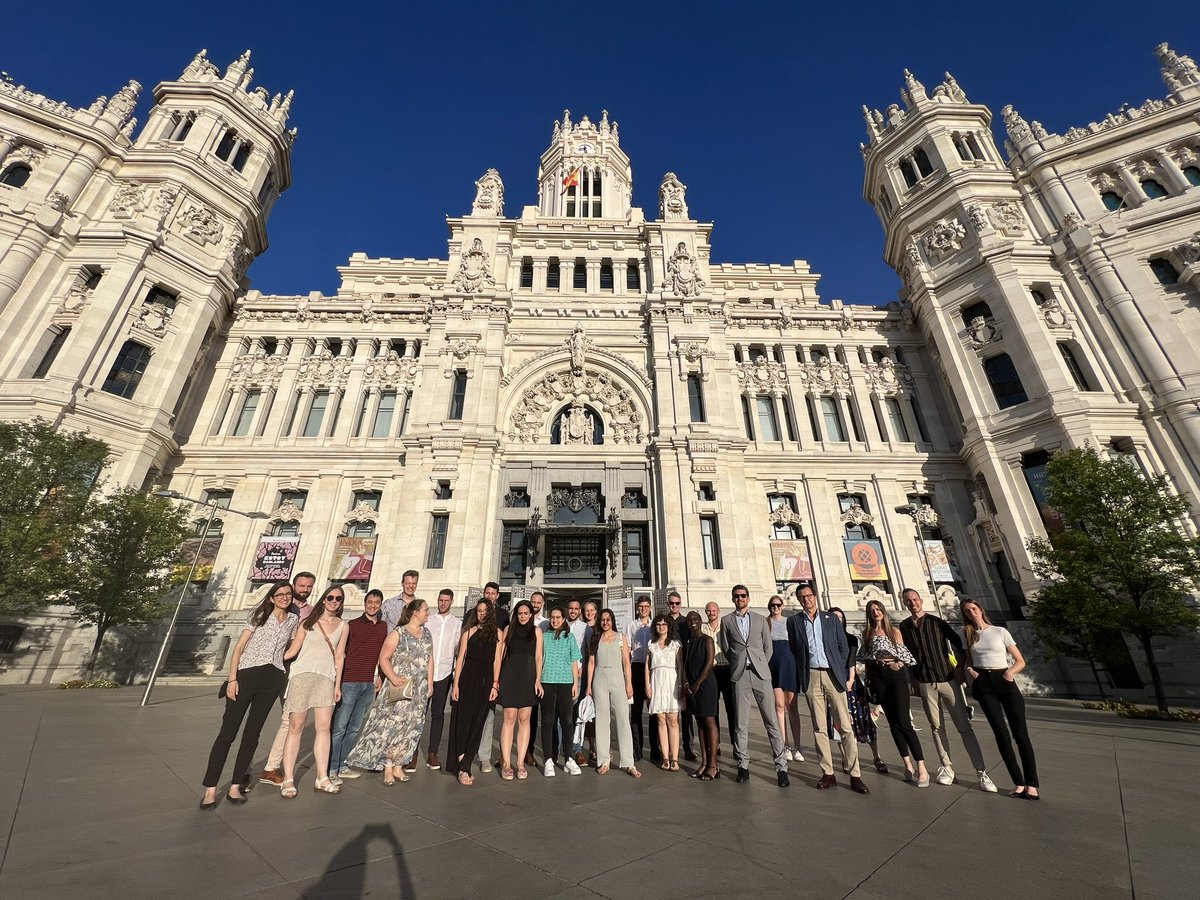
Walking city tour of Madrid lead by Prof. Agustín Albillos 👣🇪🇸
Visit of Puerta del Sol, Plaza Mayor, Plaza de España and much more 👀🙌
@EASLnews@DigestivoHRyC