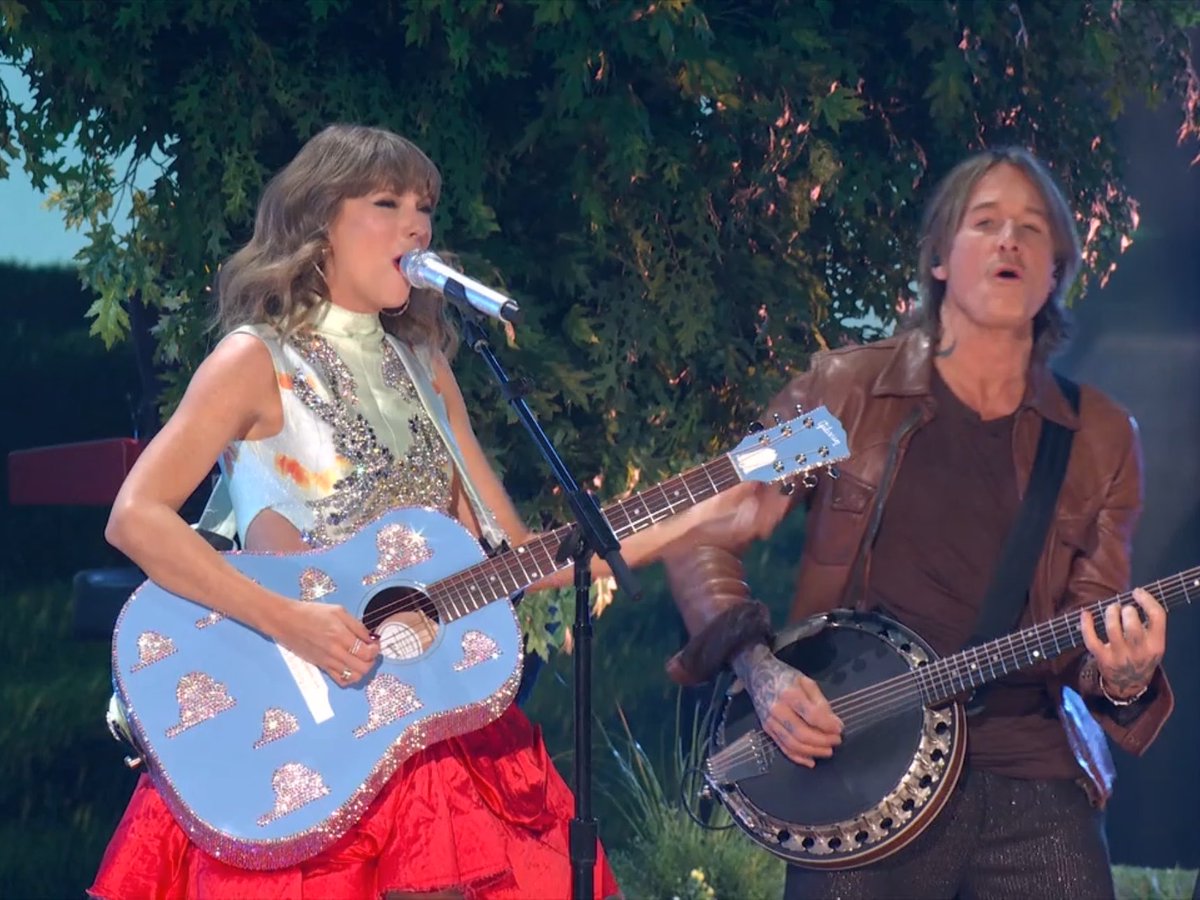
Back in 2004, I was desperately trying to fit in as a lower middle class Midwesterner at an SEC school (Vandy) and I bought Uggs instead of groceries. So whatever Taylor is guilty of. I am too.
Guys, this is very serious and you have to read this right now. The Riemann Hypothesis may have just been solved, and if the claim holds, it's an insane achievement.
In mathematics there is a famous problem called the Riemann Hypothesis, and it's about prime numbers. Primes are numbers like 2, 3, 5 and 7 that can only be divided by 1 and themselves. Every other number is built by multiplying them together, so they're the building blocks of all numbers. You can never tell exactly where the next prime will show up, but if you step back, there's a pattern.
Around 1,000, about 1 in 7 numbers is prime. Around a million, about 1 in 14. Around a billion, about 1 in 21. Primes get rarer at a steady, predictable pace.
Because of that pattern, mathematicians can estimate how many primes there are below any number. But the estimate is never exactly right. It's always a little off, and the big question is how far off it can get. Think of flipping a coin 1,000 times. You expect 500 heads, but you'll get something like 480 or 520. It's a little off, but never wildly, and you can predict how far off it will be.
In 1859 a mathematician named Bernhard Riemann found that the prime estimate's error isn't random. It's controlled by a hidden set of special numbers. Where those numbers sit decides how big the error gets. Riemann guessed that every single one of them sits on one straight line. If he's right, the error always stays small, just like the coin, and primes are as orderly as they could possibly be. If even one of those numbers is off the line, the error can grow much bigger, and primes are far messier than we think.
So far computers have found trillions of these special numbers, and every single one is on the line. But there are infinitely many, so checking will never be enough. You need a proof that covers all of them at once. For 167 years nobody has found one. It's one of the seven hardest unsolved problems in mathematics, with a million dollar prize attached.
Now a mathematician has posted a note saying that, working with Claude, he believes he has that proof. He says a computer has already checked every step, and that Claude raced ahead of him near the end. Experts still need to confirm it, but this isn't a random internet claim.
If it holds, it doesn't mean we can predict every prime. It means we finally know the pattern can never go wildly wrong. Thousands of math papers that begin "assuming the Riemann Hypothesis is true" become proven fact overnight. We'd also get firm limits on how far apart primes can be, and a guarantee that a fast method for testing whether a huge number is prime always works. And no, your bank account isn't in danger. Online security depends on how hard it is to break a huge number into its prime factors, and this proof doesn't make that any easier. If anything, it gives the math behind encryption a stronger foundation.
If it holds, this is bigger than one math problem. A question that beat the greatest minds in history for 167 years would have been cracked by a human and an AI in a matter of weeks. If AI can find answers and computers can check them, the limit on science is no longer how smart we are. It's how many good questions we can ask.
@yoesbeforebros I think you should start *jumping* randomly, like jumping in the air wildly, which is what I first thought this meant and is what they deserve
I know this is not what people want to hear, and I want to add the caveat that I don’t have any inside information.
But I think it’s always important in these situations to offer some perspective for people to consider.
The frequency illusion is real.
Last week, two major outages affecting the FAA’s air traffic systems and Microsoft Outlook caused substantial disruption and impacted many people.
After two outages on that scale, we’re primed to notice other outages we might otherwise overlook.
That’s where the frequency illusion can come in.
And news organizations and reporters are more likely to cover outages that otherwise might attract little attention.
Hundreds of network outages occur worldwide each week, many without attracting widespread attention.
When they follow two major outages with significant consequences — especially when one of those consequences is the longest nationwide ground stop since 9/11 — they become much more noticeable.
For all I know, we could learn tomorrow that a foreign adversary has launched a cyberattack, but I don’t think there’s anything wrong with pausing for a second and putting everything into context.
When you get a man as an Instacart shopper, you can expect to get a text saying the store doesn’t have any Diet Coke. Could you pick another flavor…. I said no, I cannot, but any size pack is fine. He tried to insist there was none.
@alittleleader Yes! John, so wanted to make it about the texts and Sarah was so clearly signaling that they were not what mattered. Emotional/verbal abuse is a hard topic to address in a format like that because the abuser is usually a master of spin, but what a missed opportunity.
BREAKING: #SCOTUS, 8-1, green lights Trump admin's border wall construction in Big Bend preserve in Texas, lifts district judge's order blocking project. Justice Jackson dissents. Doc: https://t.co/haqFDKHvRi
My takeaway from love is blind, and my only takeaway every season in recent memory, is how much better women are than men in general. Sorry. It is literally just facts.