A single like on this tweet will be your ticket to ride at the Annual $BELLS International Exclusive in Miami. 💰
no like - no ticket. 🎟️
(Retweets get VIP)
This tweet will self destruct in:
T Minus 10 ████'s 👇
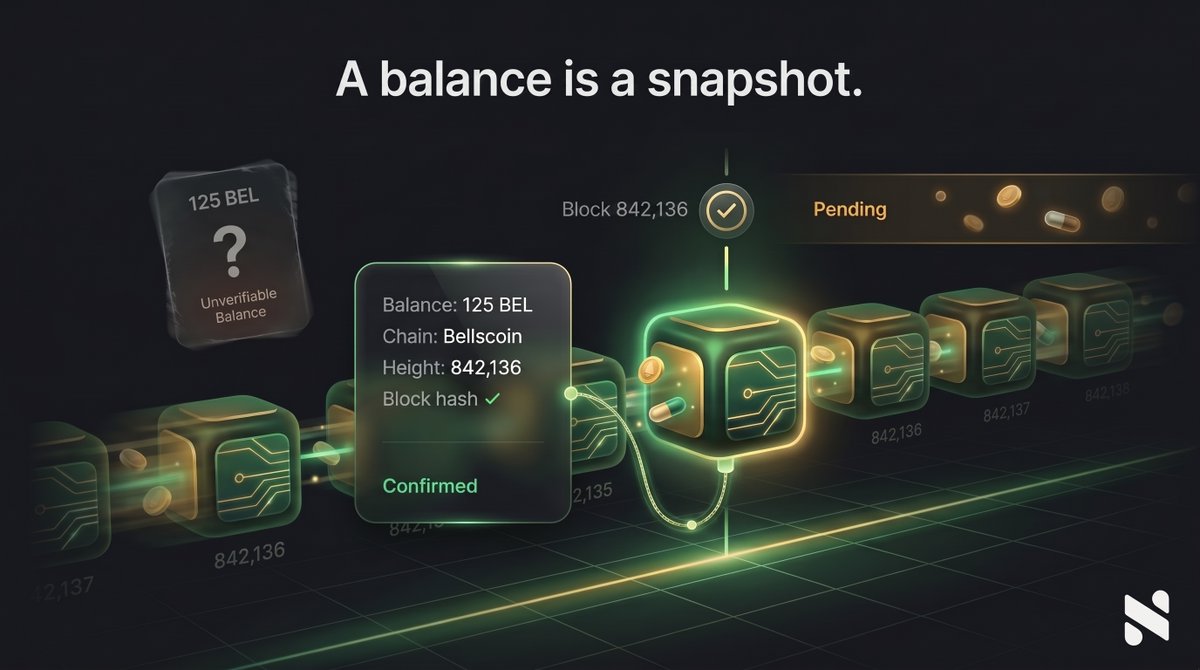
If you store a balance, store the chain and block height with it.
Any tool that records balances or UTXOs - a wallet, a dashboard, a bot, an API cache - is taking a snapshot of something that's always moving. And a snapshot without its chain position isn't really comparable to anything.
On a UTXO chain, the useful anchor isn't just the clock. It's the chain, block height, and ideally the block hash at that height.
Why it matters:
→ Two balance reads taken at different heights aren't directly comparable - the chain moved between them. The difference might be real activity, or just one snapshot being newer.
→ "This address had X" is incomplete. "This address had X on Bellscoin as of block N" is a fact you can verify and reproduce.
→ When your data disagrees with someone else's, the first question is "which chain, and at what height?" Often you're both right, just reading different points.
→ If you include pending transactions, label them separately. Unconfirmed state is not the same as a confirmed block snapshot.
So store the chain and height next to the value. It's one extra field, and it turns a drifting number into a value with context.
A balance is a snapshot. Chain + height tells you where in history the photo was taken.
A collection page isn't just a gallery. It's an onboarding surface.
For most outsiders, it's the first - and maybe only - thing they see before deciding whether to look closer. If they can't understand the collection from the page itself, the community has to do the onboarding manually - one reply, one DM, one explanation at a time.
What an outsider should be able to figure out in ten seconds, without asking anyone:
→ what this collection actually is - the idea, not just the picture
→ which chain it lives on (Bellscoin, Dogecoin, or Pepecoin L1 - they're not interchangeable)
→ what is currently listed, and at what visible asks
→ what makes one piece differ from another - traits, rarity, history, or whatever collectors care about
→ where to verify the piece - inscription ID, collection link, and chain history
When the page answers those, new people can start orienting themselves. When it doesn't, newcomers have to find someone already inside to explain the basics.
Art gets the attention. The page helps turn attention into understanding. And understanding is what turns a visitor into a holder. Treat the collection page like the front door. For people outside the community, that's often where the collection starts.
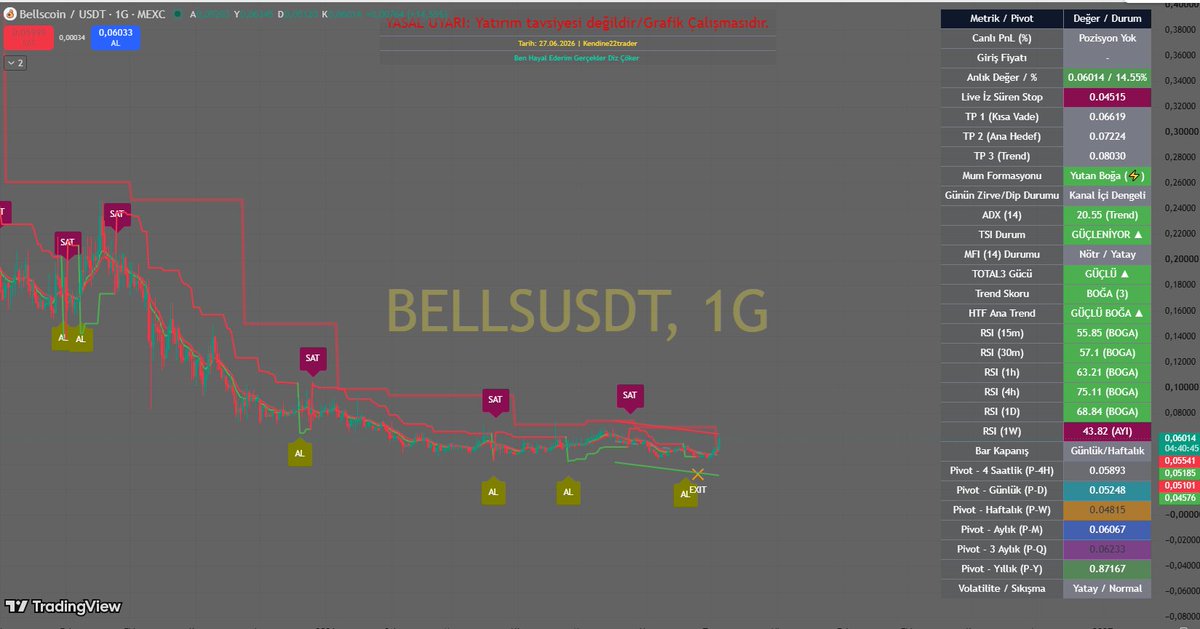
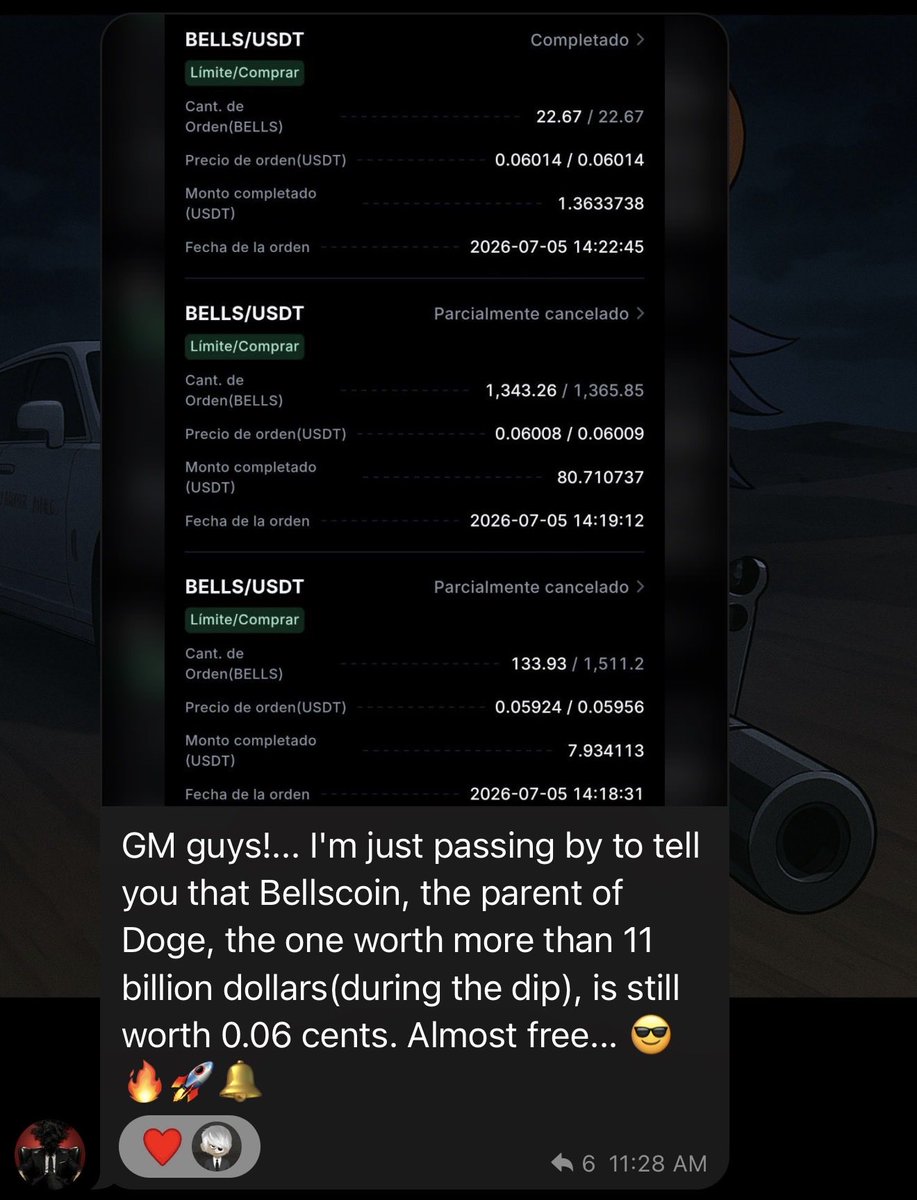
$Bells has seen such a significant increase when it gained just a little bit of liquidity; its price will rise even more dramatically when it gets more liquidity. When BTC resumes its upward trend, the value of bells could reach billions.
Your wallet can receive funds while it's closed.
This sounds wrong if you think of a wallet as an app you have to "be in" for things to happen. But receiving isn't an app session. It's a chain event.
Here's the actual sequence:
→ Someone sends to your address on the correct chain.
→ Their transaction is broadcast to the network, may sit pending, then gets confirmed into a block.
→ That record now exists on-chain - whether your wallet is open, closed, or uninstalled.
→ Next time you open the wallet, it reads the updated chain state and shows the funds that arrived.
Your wallet didn't "miss" anything by being closed. It wasn't needed. The address is just a destination on the chain, and the chain doesn't care whether you're watching.
What does need the app open is sending - because that requires your keys to sign. Receiving needs nothing from you but the correct address on the correct chain.
So no, you don't have to sit with the wallet open waiting for a payment. Share the address, close the app, come back later. The chain holds the record until you do.
One caveat: uninstalling the app doesn't move funds - but if you lose the seed or imported-key backups, you can lose access.