A reputable cardiac hospital has the senior surgeons doing the STS cases and all the junior surgeons doing high risk non STS index cases. Combined with near 0 teaching and an attached “rehab” facility classified as a different entity, this guarantees 3 star STS ratings throughout
IF I GET DEMENTIA…..
I’d like my family to hang this wish list up on the wall where I live. I want them to remember these things.
1a. Every time you enter the room announce yourself. “Hi Dad - it’s Amanda.”
NEVER ask- Do you know who I am??? That causes anxiety.
• If I get dementia, I want my friends and family to embrace my reality.
• If I think my spouse is still alive, or if I think we’re visiting my parents for dinner, let me believe those things. I’ll be much happier for it.
• If I get dementia, don’t argue with me about what is true for me versus what is true for you.
• If I get dementia, and I am not sure who you are, do not take it personally. My timeline is confusing to me.
• If I get dementia, and can no longer use utensils, do not start feeding me. Instead, switch me to a finger-food diet, and see if I can still feed myself.
• If I get dementia, and I am sad or anxious, hold my hand and listen. Do not tell me that my feelings are unfounded.
• If I get dementia, I don’t want to be treated like a child. Talk to me like the adult that I am.
• If I get dementia, I still want to enjoy the things that I’ve always enjoyed. Help me find a way to exercise, read, and visit with friends.
• If I get dementia, ask me to tell you a story from my past.
• If I get dementia, and I become agitated, take the time to figure out what is bothering me.
• If I get dementia, treat me the way that you would want to be treated.
• If I get dementia, make sure that there are plenty of snacks for me in the house. Even now if I don’t eat I get angry, and if I have dementia, I may have trouble explaining what I need.
• If I get dementia, don’t talk about me as if I’m not in the room.
• If I get dementia, don’t feel guilty if you cannot care for me 24 hours a day, 7 days a week. It’s not your fault, and you’ve done your best. Find someone who can help you, or choose a great new place for me to live. With a bus and activities!!
• If I get dementia, and I live in a dementia care community, please visit me often.
• If I get dementia, don’t act frustrated if I mix up names, events, or places.
Take a deep breath. It’s not my fault.
• If I get dementia, make sure I always have my favorite music playing within earshot.
• If I get dementia, and I like to pick up items and carry them around, help me return those items to their original place.
• If I get dementia, don’t exclude me from parties and family gatherings.
• If I get dementia, know that I still like receiving hugs or handshakes.
• If I get dementia, remember that I am still the person you know and love.”
ᴄᴏᴘʏ ᴀɴᴅ ᴘᴀsᴛᴇ in Honor of someone you know or knew who has dementia. In Honor of all those I know and love and lost who are fighting Dementia/Alzheimer’s.
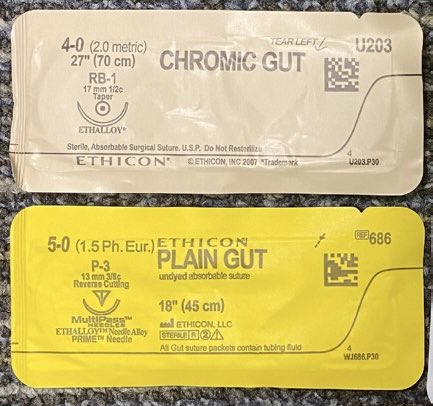
🧵 on the upcoming disappearance of Chromic and Gut sutures (at least from Ethicon). We’re told these sutures may be gone forever by September.
Only a few surgeons use these fast-absorbing sutures, but for those who do, we’ll go over an alternative.
(1/ )
Think Shark Tank but for trauma surgery. 🦈
Future Trauma Leaders took the stage to pitch innovative projects and refine them with guidance from trauma experts.
Learn how @acsTrauma is investing in the next generation of surgical leaders: https://t.co/OKaKF7BtNJ
The Society for Vascular Surgery mourns the passing of Bruce A. Perler, MD, MBA, FACS, DFSVS, a past president of SVS and a leader whose contributions helped shape the future of vascular surgery.
During his 44-year tenure as a surgeon at The Johns Hopkins Hospital, Dr. Perler established the Division of Vascular Surgery and Endovascular Therapy. He trained generations of surgeons in the art and science of vascular surgery. His humble demeanor, prodigious skill and evident mastery are cherished by all the Halsted residents who knew him and live on as his legacy in American surgery.
Dr. Perler was internationally recognized for his clinical expertise in carotid arterial disease, having delivered nearly 400 lectures nationally and internationally. His hundreds of publications, research and chapters have been cited over 12,000 times.
In addition, he served as Senior Editor of the Journal of Vascular Surgery, co-edited three editions of Rutherford’s Vascular Surgery and Endovascular Therapy and held leadership roles with the American Board of Surgery and several vascular societies.
Dr. Perler received the 2025 SVS Lifetime Achievement Award, the Society’s highest honor, recognizing a career defined by exceptional clinical care, academic leadership and enduring contributions to the advancement of vascular surgery. This was his third lifetime achievement awarded by his colleagues in surgical and interventional societies, a fitting tribute for a career that reflected not only clinical excellence and international leadership, but a deep understanding of the evolution of the field of vascular surgery over the past decades.
Dr. Perler is survived by his wife Patti and his daughter Rachel. His son Mason passed away in 2024. SVS extends its deepest condolences to his family, friends and colleagues.
@elliotthaut@pbatesmurphy@AmCollSurgeons@acsJACS Totally agree. Still so many questions. How long is a “work period”? Like you said, how does it annualize? Are vacation/CME included? Does this include only direct clinical work? And how should nights, weekends, 24s, and recovery time count? Such an important topic.
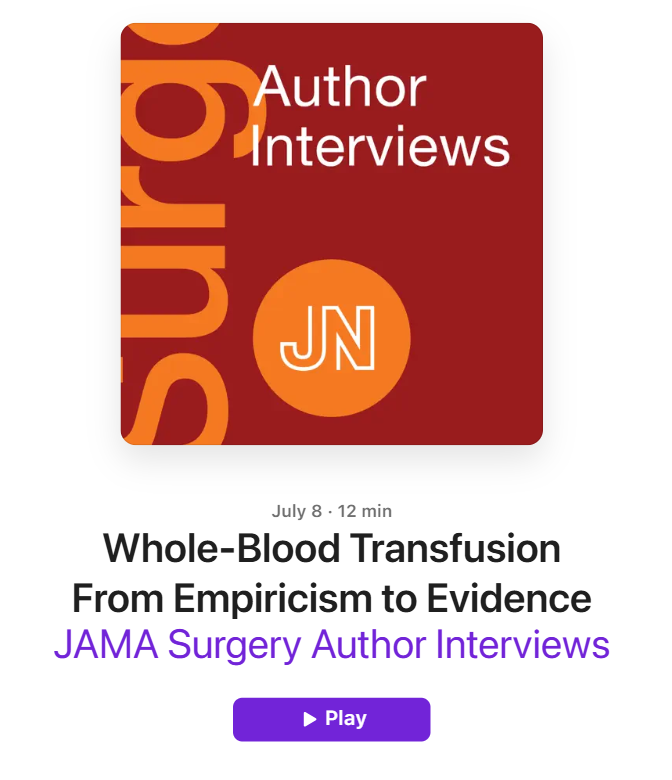
Crisanto Torres, MD, MPH, and Jamie Coleman, MD, discussed how whole blood has comparable safety to component therapy and offers practical advantages for emergency teams, including simplified logistics and reduced transfusion requirements.
🎧 Listen now: https://t.co/0a09mTiWXW
@elliotthaut@bryanacotton1 Surgeons are the only physicians who take care of pt in all venues: outpt, OR, floor, ICU. We are uniquely positioned to understand all phases of disease and the consequences of intervention. This is why surgeon science is critical.