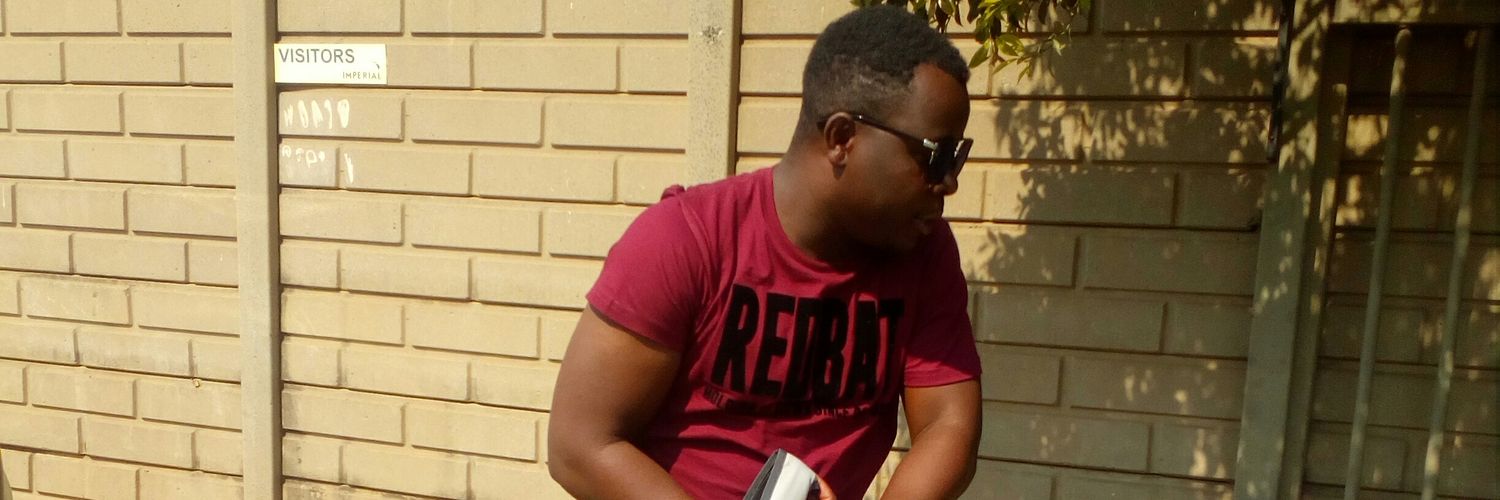
People ask why they want to kill me, it’s because of this land. They sold it to the company that owns Century City and partnered with an Australian firm to develop a seafront estate for rich whites only, cutting Black people off from the ocean. I mobilised our people, we took the land back by force, and we compelled the Western Cape government to buy it back for the people.
Since then, they’ve brought trumped-up charges of incitement and public violence. When they realised they were losing, they started hiring people to assassinate me.
One day our people will get fed up and repay them in kind. We’ll see how the state responds then. It’s not that I’m unable to do what they’re doing, I simply choose to protect myself instead of allowing the masses to avenge me. But I’m only human. My patience will eventually run out.
Since we're gushing about Benin and its amazing roads, let me inform all of you that Patrice Talon is currently in the process of approving the sale of a part of Benin to a consortium of billionaire racist bros led by Peter Thiel, for them to build a private sovereign city with its private own laws and police, which will not be subject to the laws of Benin or the African Union.
It is called Prospera Africa and it is meant to follow the template of the same project funded by the same people in Central America called Prospera Honduras. If you Google what Prospera Honduras uses its sovereignty to do, you'll see the commercial investment into it is primarily for the purpose of "Biotechnology", i.e drug testing and human experimentation that would be extremely illegal anywhere there is an actual government.
These racist billionaire bros are trying to build a sovereign colony in Benin where they can legally experiment on Africans and do whatever other Epstein Island activities that eventually got them into a dispute with the government in Honduras. It's called Prospera Africa. Google it, it's not hard to find.
Take this very seriously. It is not something a little birdie told me - I myself almost ended up working on this project a couple of years ago before I started to understand what it was and who was behind it.
When you're done congratulating Patrice Talon for his smooth roads, please beg him not to give Peter Thiel an Epstein Island in West Africa for Elon Musk's friends to legally use Africans as live experiments.
Thank you.
2022: No salary increase
2023: No salary increase
2024: No salary increase
2025: No salary increase
2026 :
Employee: Please accept my resignation.
Boss: You’re doing great. Why are you resigning?
Employee: I accepted an offer with a 95% base salary increase and guaranteed yearly salary cycles as long as I meet my performance goals set by my manager.
48 hours later...
Boss: We will match the 95%, please stay, we need your work!
Employee: Unfortunately, it’s too late. Friday is my last day.
Leaders of organizations need to understand their teams’ motivation every month. Every employee is motivated by different things in different periods. Take care of your good employees before it is too late
A Kenyan court has suspended the implementation of the US$2.5 billion health “aid” deal signed with the US government last week over serious data privacy concerns.
This deal is terrible not only for Kenya but for the entire African continent because it hands over sensitive health and genomic data to a foreign government without proper safeguards, and it exposes millions of Africans to potential surveillance and data exploitation. It is sad that the Kenyan government did so little thinking before signing such a treacherous and dangerous agreement.
On 4 December 2025, Kenya and the United States signed a five-year Health Cooperation Framework in Washington. The agreement, worth up to US$1.6 billion, directs new funding toward HIV, malaria, maternal health and disease surveillance. Many have celebrated it as a major investment in Kenya’s overstretched health sector.
Yet across Africa, the deal has triggered serious concern because of provisions that grant long-term access to Kenya’s biological samples, genomic data (all the information contained in an organism’s DNA) and surveillance information. That issue, more than the money itself, has now become the centre of the debate.
The questions arise from clauses that reportedly sought multi-decade rights over Kenyan pathogen samples and related data. Even in revised form, the agreement’s language remains vague enough to raise fears of long-term commitments that outlive the funding cycle.
These concerns are sharpened by the continent’s past experiences. In 2007, Indonesia challenged the global health system after discovering that its shared H5N1 samples were being used to develop vaccines it could not afford.
In 2021, South Africa and Botswana were punished with travel bans immediately after openly sharing genomic data on the Omicron variant (a highly mutated strain of the virus that causes COVID-19).
During the West African Ebola crisis, biological samples left the continent without any assurance that affected countries would benefit from the discoveries or intellectual property that emerged later. These precedents cast a long shadow over today’s negotiations and deal between Kenya and America.
What is happening in Kenya fits into a much larger global contest. Biological samples, genomic data and pathogen information have become strategic assets, capable of driving the next generation of vaccines, diagnostics, therapeutics and artificial intelligence models in health.
This has drawn intense interest from major powers. China, through BGI (one of the world’s biggest genomics and biotechnology companies), has invested in genomic laboratories across Africa. European institutions are building deeper data partnerships, while private technology and pharmaceutical companies see immense value in Africa’s large and genetically diverse populations.
Kenya is therefore not negotiating a quiet bilateral agreement. It is operating at the centre of a geopolitical struggle over who will shape the future of biotechnology.
For Africa, the implications go beyond Kenya. The African Union’s New Health Security and Sovereignty Agenda aims to strengthen public health institutions, govern data responsibly and expand local manufacturing so that the continent can produce 60 percent of its vaccines by 2040. So any agreement that gives external partners preferential access to Africa’s biological resources undermines that vision.
It also risks weakening domestic research institutions. In Kenya’s case, the Kenya Medical Research Institute could find itself competing with foreign partners who enjoy privileged access to samples or who set the direction of research. And because these deals are rarely subjected to parliamentary scrutiny, decisions with profound long-term implications for Kenya’s biological sovereignty will be made without public oversight.
The stakes become even higher when considering the rest of the continent. Kenya has stronger negotiating capacity than many African states. If Nairobi accepts terms that compromise long-term sovereignty, poorer and more vulnerable nations will feel compelled to follow suit, especially when offered short-term financial support.
This could create a pattern in which African health priorities are increasingly shaped by external actors rather than by national and continental interests.
Africa must now recognise that fragmented national bargaining over biological resources is no longer sustainable. The African Union and Africa CDC need to establish enforceable continental rules that protect sovereignty while enabling fair and transparent partnerships.
This requires a coherent framework governing pathogen access and benefit sharing, clear rules on technology transfer and intellectual property, mandatory disclosure of all bilateral health agreements that involve samples or data, and stronger domestic laws to ensure that biological material cannot leave the continent without guaranteed African rights over resulting discoveries.
Without such protections, Africa risks becoming a perpetual exporter of raw biological inputs for technologies developed and commercialised elsewhere.
The U.S.–Kenya pact unquestionably brings resources that can strengthen health services and save lives. But it also exposes the next major frontier of African sovereignty, control over the continent’s biological and genomic wealth.
The question emerging from this deal is no longer simply about funding. It is about whether Africa will gain or lose power in the health technologies of the future.
If Africa does not set the rules now, others will, and the continent’s biological destiny will be determined far from African decision-makers.
When Tyla said she is not Black but Coloured, she was not speaking into the American conversation about race at all. She was speaking in the language of her own country, shaped by its own history. Yet her words detonated in America as though they had been aimed there. This is what happens when a nation has spent a century convincing the world that its definitions are the only ones that matter.
America’s greatest export has never been war. It has never been democracy. It has never been freedom. America’s greatest export is the dream of itself.
It is not that the films are inherently better. It is not that the music contains some mystical note absent elsewhere. What America has, and what it has always had, is money, reach, and a machinery built to make its image the centre of the world.
This was not accidental. It was policy. It was the soft arm of empire. To project yourself outward until your face is the first one people recognise in the mirror.
And so the American way of life became the default. Other cultures were filed into two neat drawers: savage if they challenged the story, exotic if they could be sold back to you.
If you are Black, your first cinematic self was likely African American, the rapper, the sitcom character, the hero of a Spike Lee joint. If you are white in Europe or Australia, it was the white faces of American sitcoms and stadium tours. Whoever you were, your first image of yourself came with an American accent.
Over time, Americans began to believe the story they had written. When you grow up in the country that built itself into the cultural Mecca, it is easy to think you are the best simply because you are on top. You forget, or never know, that the game was fixed long before you played it.
But the monopoly is breaking. Nigeria’s Nollywood now speaks across oceans. South Korean dramas leap borders. India’s Bollywood never needed permission to fill theatres. Spanish thrillers keep strangers awake at night. Slumdog Millionaire, Squid Game, Money Heist, Shōgun — all aimed partly at the American market because that is where the money is, but no longer about America.
And here is the thing. Black Americans, who fought to be seen in their own country, became the global face of Blackness. That is a remarkable achievement. It was also made possible by the same system that excluded everyone else. Now Africans, Caribbeans, and Afro-Latins tell their own stories without making room for American centrality, and the absence is noticed.
We grew up watching you. You did not grow up watching us. And now the internet has levelled the ground just enough for others to speak without hesitation. Tyla’s words land differently because the world no longer accepts America as the only arbiter of meaning.
America’s greatest export was never its art. It was the power to decide which art, and which identities, the world would see. That power is no longer yours alone. There is both justice and loss in that.