We don’t solve humanity’s toughest problems. You do.
Our leading scientific knowledge base, precision AI and expert assessment work together to support your judgment.
Knowledge, technology and expertise in lockstep: that’s our commitment: https://t.co/p0Y2RnpgnQ
We don’t find the next big thing. You do.
A child’s diagnosis. Clues to neurodegenerative disease. Evidence hidden in patent diagrams.
In each case, people made the call.
Knowledge, technology and expertise gave them more to work with.
More: https://t.co/33aQdfjQFd
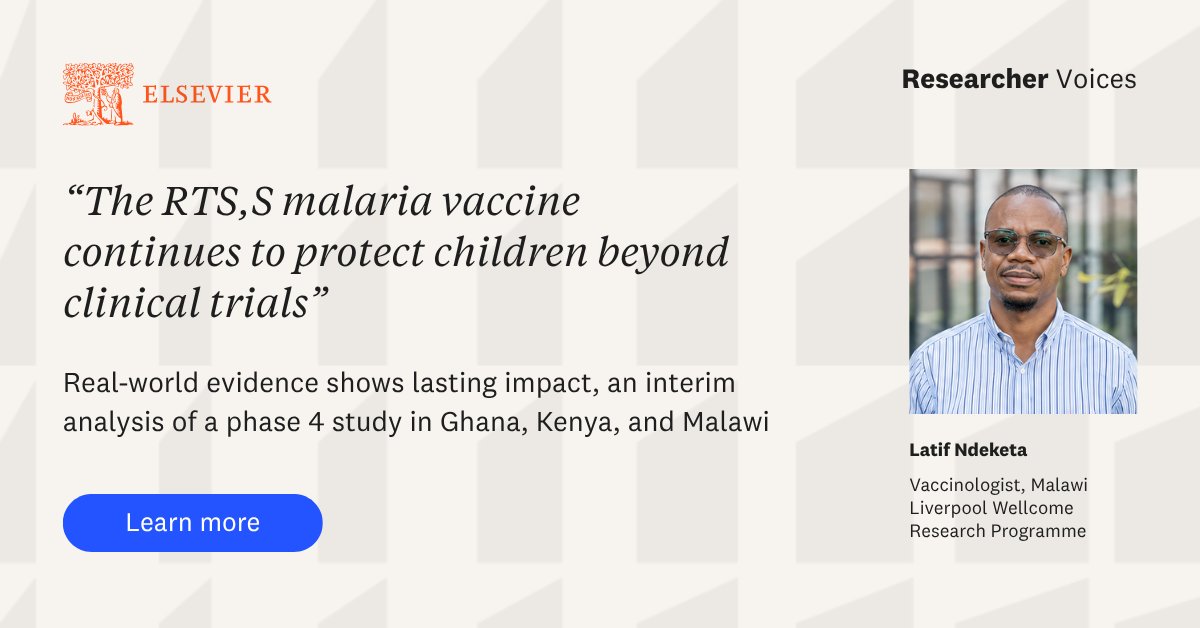
The RTS,S malaria vaccine continues to protect children beyond clinical trials,” says Latif Ndeketa of @MLW_Programme.
A new study found lower malaria rates among vaccinated children after rollout in Ghana, Kenya, and Malawi.
https://t.co/B0xZPaCWbv
#ResearcherVoices
🎧 New Not Alone episode: Prof Rafael Bras speaks with Dr Karin Markides on trust in higher education, sustainability, AI, university-industry collaboration and the role of universities in regional innovation.
Listen and follow: https://t.co/xutXVaGaDq
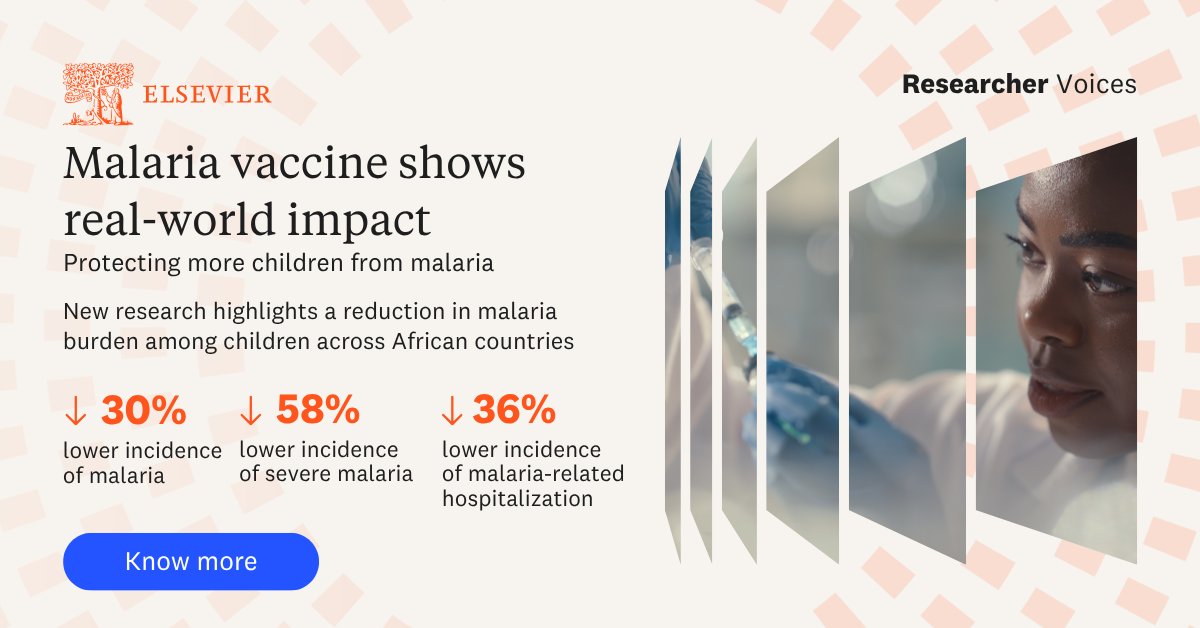
The world's first malaria vaccine is delivering in the real world.
Early findings from a study of nearly 40,000 children found those who received RTS,S malaria vaccine had lower rates of malaria after rollout in Ghana, Kenya, and Malawi. https://t.co/AkuNesGXHJ
#ResearcherVoices
Elsevier's guidance helps reviewers use AI tools with confidence.
This article summarizes what it means for you as a reviewer: https://t.co/DMkyKu1SeZ.
🧠Don't forget to take the short quiz at the end to check how well you know the policy!
🎓 As AI makes information more abundant, attention, discernment and judgment become more valuable.
Dr. Chaouki Abdallah, President of Lebanese American University, on what higher education should never outsource to AI: https://t.co/kqEEfhH56O
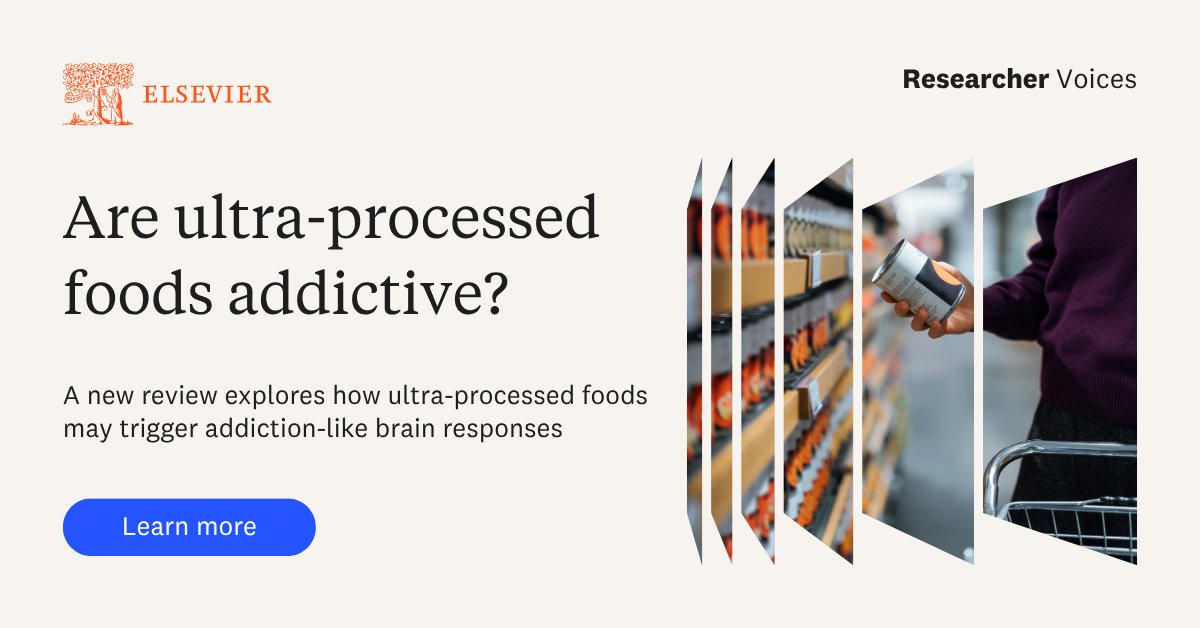
“We need food to survive, but we don't need ultra-processed food,” says neuroscientist Nicole Avena @IcahnMountSinai.
A new review explores how ultra-processed foods may tap into the same brain reward systems involved in addiction.
➡️https://t.co/Ch7MpjsjPC
#ResearcherVoices
We’re continuing to invest in a better peer review experience, exploring how AI and technology can make the process more efficient while keeping reviewers and their judgment at the center.
Learn more: https://t.co/4r82NCTNOO
Elsevier LeapSpace™ is setting a new standard for research-grade AI.
The workspace now draws on 23M+ full-text peer-reviewed articles and books, covering 56% of recent global research citations, plus 2.6B cited references from Scopus.
Learn more: https://t.co/xK8bF9LTuP
Peer review works best when feedback helps authors move forward.
For Peer Review Week, Julio Torales and Bang Nguyen-Viet share what they’ve learned from being both reviewers and authors.
Learn more: https://t.co/dOLhFDQIDO
#PeerReviewWeek2026
🌡️ Is it too hot to play?
Researchers from the University of Sydney developed a free web tool that helps recreational athletes assess and forecast their heat risk and receive safety tips based on local weather conditions and the sport they play.
🔗 https://t.co/T29PwSc21x
Nurses deliver most patient care, but many feel left out of decisions about it.
41% say nurses’ views are never or rarely represented in organizational decision-making.
Dr. Terri Glessner on why having nurses at the table matters. 👇
Explore more: https://t.co/nJ5rOuFzZy
Is it too hot to play?
Researchers at @sydney_uni developed a free web tool that helps recreational athletes assess and forecast their heat risk and receive safety tips based on local weather conditions and the sport they play: https://t.co/etuhoKe4Ga
#ResearcherVoices
Elsevier’s GenAI policies for journals help researchers use AI tools with confidence.
This article summarizes what it means for you as an author. ⬇️ https://t.co/0bSosneyF8
🎓 How can education help rebuild dialogue in polarized societies?
Dr. Darío Valencia-Restrepo argues for reasoned discussion, self-criticism and critical thinking as foundations for trust and democracy.
Read more: https://t.co/YaFCpLW0od
🎧 New Not Alone episode: Prof Rafael Bras speaks with Prof Andrew Hamilton, President Emeritus of NYU and former Vice-Chancellor of Oxford, on university leadership, public trust, international collaboration and leading through complexity.
Listen: https://t.co/4WFrhtsjpk
In the latest Not Alone: Leaders in Focus, Sir Edward Byrne, President of @KAUST_News, argues that universities must move beyond describing what they do and demonstrate the tangible value they create for society.
📖 👉 Read the full article: https://t.co/TKWYy0v09T