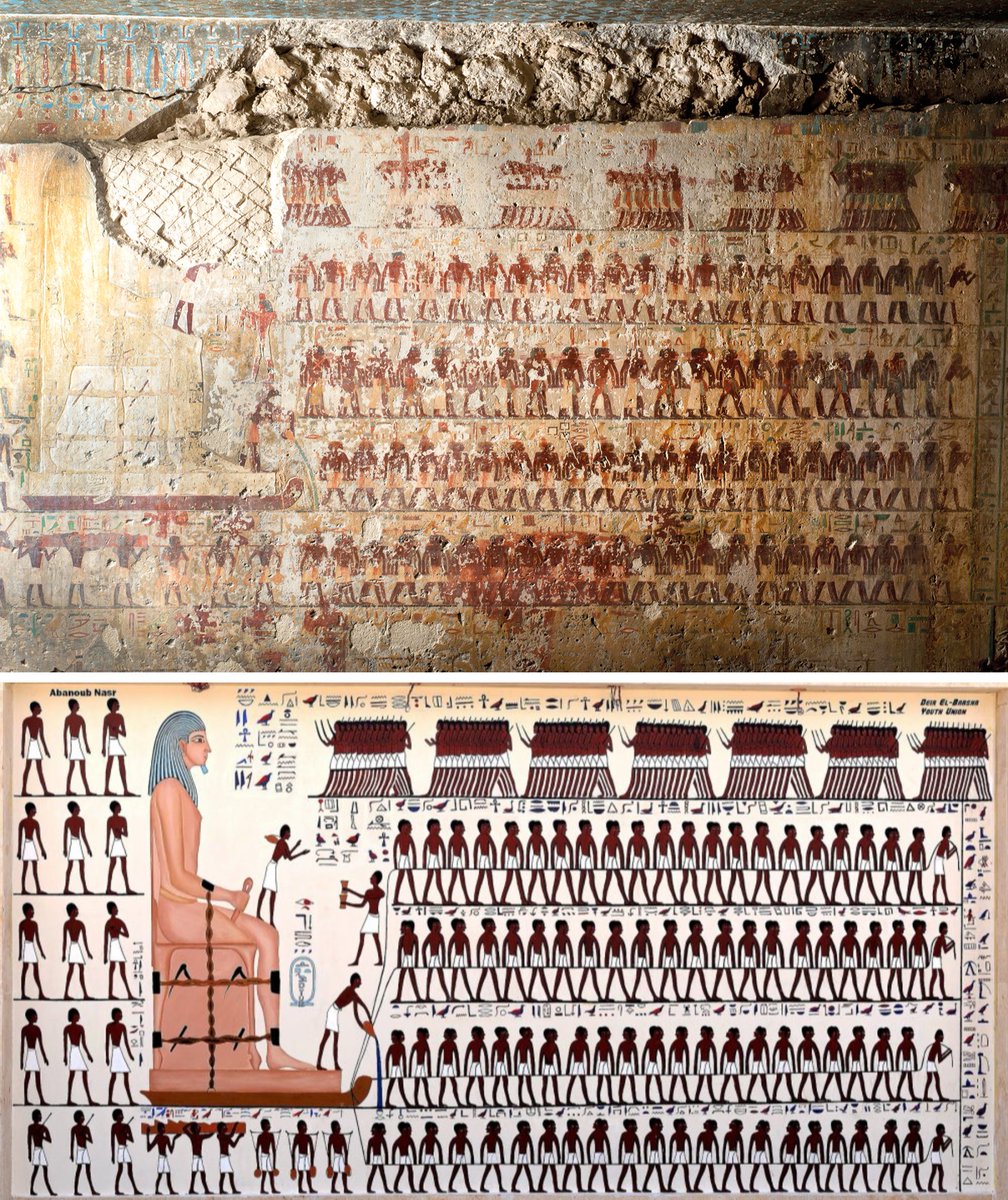
An ancient Egyptian wall painting shows the transport of a colossal statue of the nomarch Djehutihotep in his tomb at Deir el-Bersha, dating to around 1900–1880 BC (Twelfth Dynasty)...
The artwork depicts 172 men hauling the heavy statue of Djehutihotep on a large wooden sledge. Standing on the front of the sledge is a worker pouring water (or a liquid) directly onto the sand in front of the runners.
. . .
The artwork comes from the tomb of Djehutihotep, a powerful governor in Middle Egypt. It depicts hundreds of workers hauling a colossal statue while one man stands at the front pouring liquid onto the sand, a detail that puzzled historians for generations. For years, many believed the water was part of a ritual ceremony or simply meant to reduce dust. The scene became one of the most famous depictions of ancient Egyptian engineering, offering a rare glimpse into how massive monuments were transported across the desert.
In 2014, physicists tested the idea and found the Egyptians may have understood a practical trick thousands of years before modern science explained it. Damp sand forms firmer tracks in front of a sled, reducing drag and cutting the force needed to pull heavy loads by roughly half.
The giant statue in the tomb painting is believed to weigh around 60 tons, and the figure pouring water is one of only a few people depicted at work rather than pulling the sledge, suggesting his role was specialized and crucial to the transport operation.
#archaeohistories
التوراتين نهبوا الانعام وسرفوا خير البلاد بقوه السلاح وقت الساعه
ده بيحصل الان
الانعام اي البقره وامام التوراه مايمثل الخير عند الفراعنه بينما الساعه تحت قدم توراه ، وذلك في عدم حضور اي من الملائكه ، عشان زعلانين من المصريين لذك حورس معطي ظهره للمهزله حتي يرجع المصريين لربهم
🚨🇮🇹 Meanwhile in Italy
Mount Etna is erupting again.
Millions more tonnes of Co2 spewing into the atmosphere naturally.
But keep thinking that giving up meat & driving an electric car will change the weather.
لا أحد يأتي لي مرة أخرى ليقول لي هناك فرق بين اليهود و الصهاينة😠 . هذا من ذاك.
في توراتهم قتل الصغير قبل الكبير.
لذا يستهدفون الأطفال في المدارس والشوارع و المستشفيات.
الهدف هو القضاء على الجيل الذي سيأتي ويقلق مضجعهم
استيقظوا من نومكم .
@AmyMek During its history, the United Kingdom's forces (or forces with a British mandate) have invaded, had some control over or fought conflicts in 171 of the world's 193 countries.
https://t.co/pkzWeSJXkx.