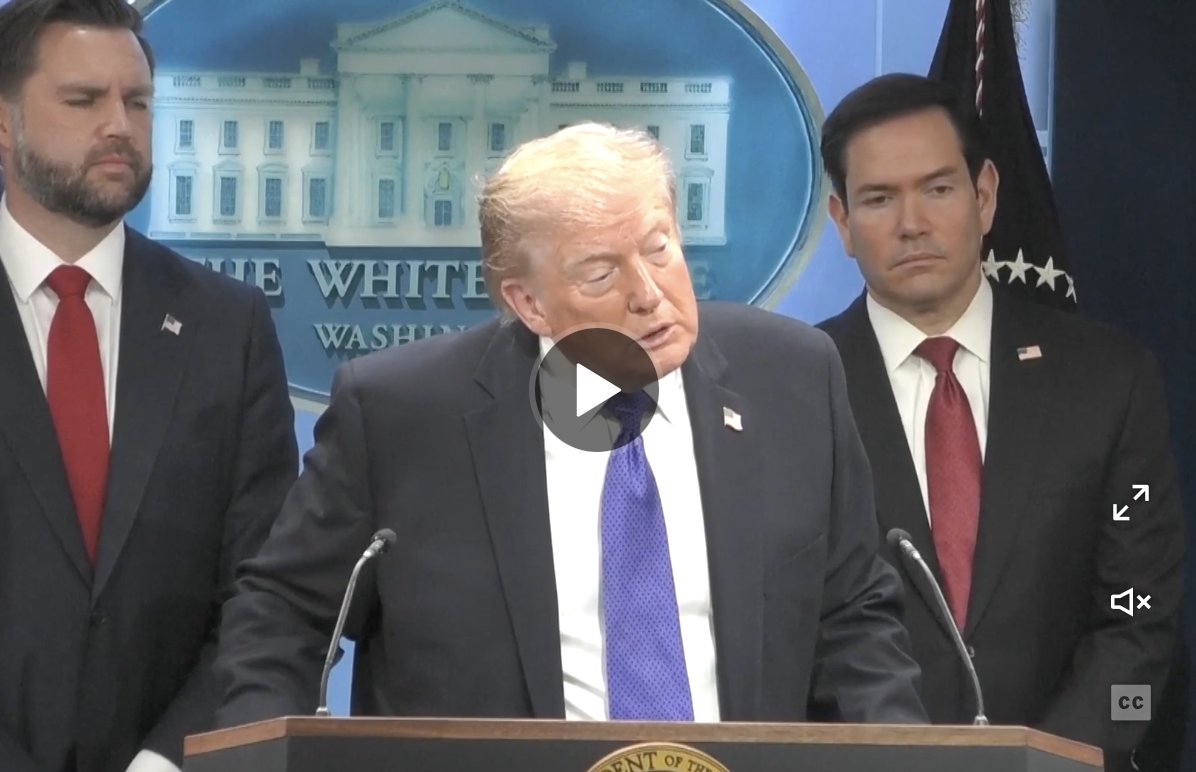
The way Rubio looks increasingly reminds me of the way Deborah Birx (remember her?) looked when Trump was explaining how drinking bleach might cure Covid 19
.@TheEconomist has a piece about how AI has found many top economics papers to be formally flawed.
I've been saying the same thing for many years, without the help of AI.
An example is Bernoulli's bizarre error from 1738, which percolated uncorrected into the 20th century. Menger 1934 is therefore invalid (the wikipedia page on the St. Petersburg discusses his contribution uncorrected; the journal where he published his work was not interested in publishing a correction when I contacted them).
I was told way back when by economists that I seem to be right, but who cares about a 300-year-old error?
(In the foundational work of the discipline. Well...)
How did this error travel? Kahneman and Tversky's foundational paper introducing Prospect theory seems inspired by the error. It starts by defining expected-utility theory in a mathematically implausible way. You can call it `wrong' or `erroneous' if you like.
The weirdness goes back to Bernoulli 300 years ago, and it convinced a whole research field that humans are utterly irrational (because they don't behave as suggested by flawed formal work).
Yes, it's a complete mess. But out of this mess grew the field of behavioral economics, with several Swedish Bank Prizes for Economic Science in Memory of Alred Nobel (the name changes every few years).
The basis of this field is formally off.
Over the last decade or so, economists working in behavioral economics noticed that practically nothing in their field replicates, and worse that the whole philosophy is deeply flawed -- seeing solutions to structural problems in affected people just changing their attitudes to the problems. Instead of fixing the problems.
Many of the most famous findings of the field turned out to be literally made up. Fabricated data, invented experiments that never took place.
Slowly but surely this is all coming out. Developing ergodicity economics acted as an early-warning system. We who worked on it had deep suspicions, to put it mildly, about behavioral economics.
@JDVance DJT is a natural -- does what he does without thinking. With Vance one can hear the clock ticking inside as he thinks, like Tick-Tock the crocodile in Peter Pan that ate Captain Hook's hand and clock. The ticking clock now acs as an early warning system.
“Your trip has ended.
How would you like to pay? “
This is the concluding coda to a taxi trip in New York City, but it sounds like a good coda to a lot of things in life.
🧵Not everyone sees even those facts the same; there is Rashomon and skill in choosing them; skill in grouping them; skill in using words to describe them and evoke them. And a bigger picture emerges, different for each participant.
Else, anyone could write.
2/2
🧵Some people claim autofiction isn't really literature if it describes facts.
Memory is not equal to writing.
Else anyone could write.
There are many facts in the world and life; memory chooses some of them and everyone has different important ones.
1/n
@TheStalwart All the chapters in “my life as a quant” had names that were book titles. The chapter about Bell Labs was called “In the penal colony” after Kafka’s story. “investigations of a dog” is good too
Glad to see that my 2012 expose of behavioral nudging
https://t.co/gSyHejsWE0
Is validated 14 y later in @nybooks
“the behavioral science experts have been at best the useful idiots of corporate interests or at worst their paid henchmen”
https://t.co/BrYYR9f24H