New paper!
Are electricity markets aligned with decarbonization goals?
We show how the inadequate long-term contracting in many markets can hinder decarbonization and lead to sub-optimally little clean energy investment.
Open access: https://t.co/Y3ohsuWwpu
Denmark failed to attract bids for offshore wind last week. Why? My research suggests an explanation: countries that do not address investment risk, e.g. via long-term contracting, will see less renewable investment and ultimately slower decarbonization. https://t.co/lyDAMX3ZBk
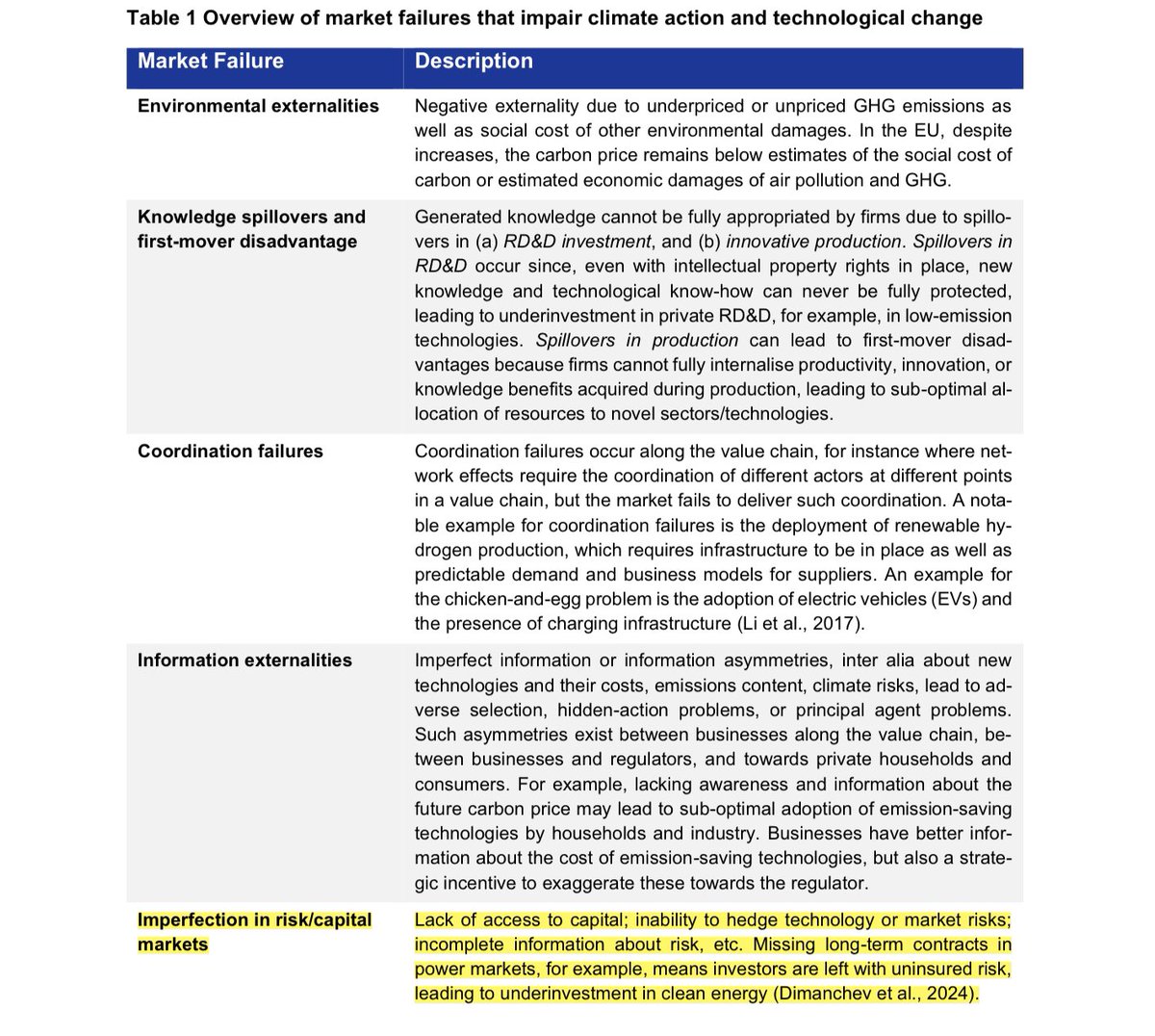
Multiple market failures are hindering decarbonization, including inefficiencies in financial markets.
New @EcologicDC report provides a good synthesis, and details ways to improve climate-related industrial policy in the EU. https://t.co/a4rcQK9an8 #energytwitter#econtwitter
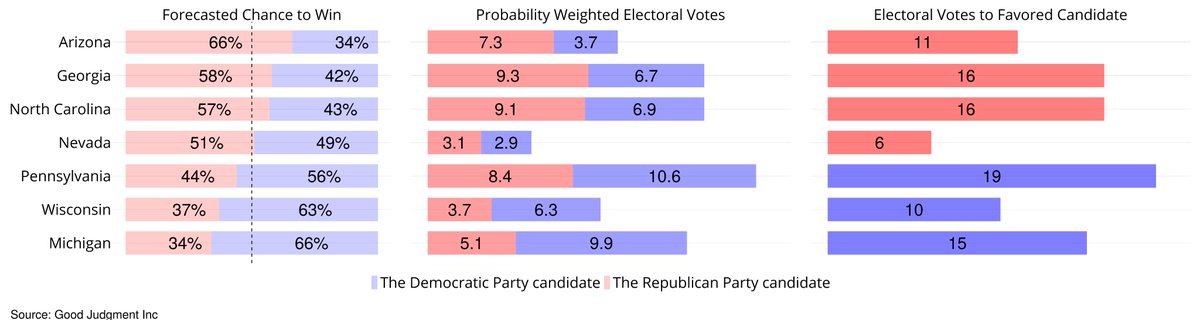
Good Judgment's @superforecaster panel currently has 54% odds that Harris will beat Trump on Tuesday. Of the seven major swing states, Trump is currently ahead in four and Harris leads in three, just pushing Harris to 270 electoral votes if non-swing states go as expected.
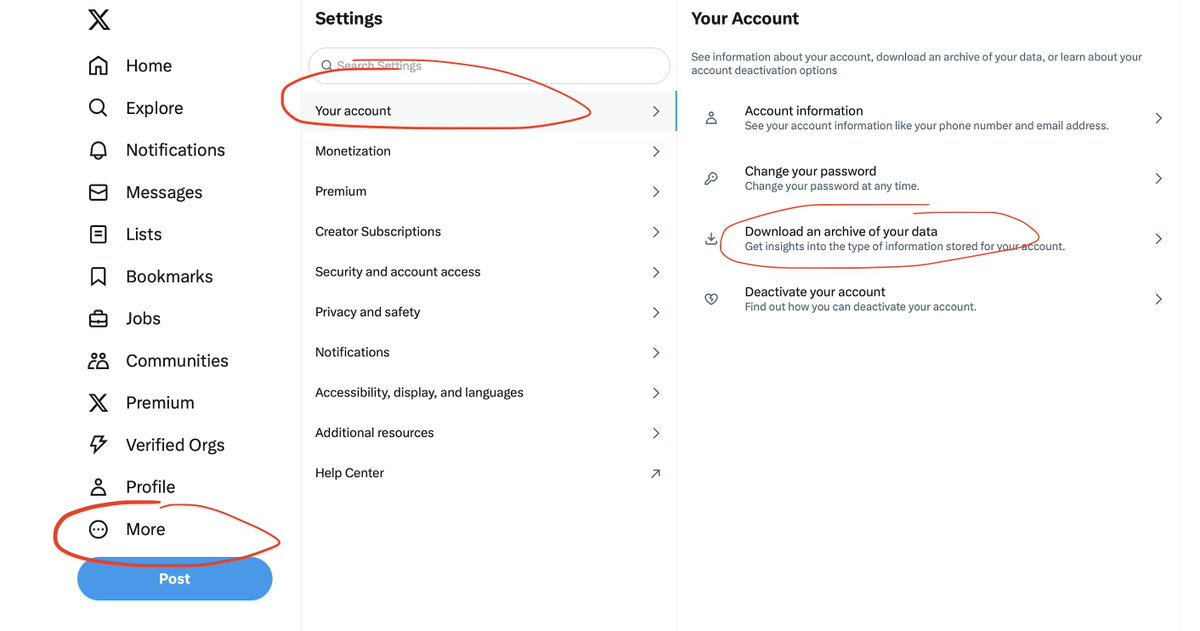
I am posting on other platforms first, but I care that people have chosen to follow me here, so I will be soon sharing some reflections I've written up elsewhere on the latest climate policy paper in Science.
Power demand is growing again! This means added risk from high electricity costs. How can we mitigate such risks?
In a new preprint led by Lars Nygaard, we explore this question and find that risk-aware planning calls for more renewables and storage.
https://t.co/Oe0LSQecWx
@Eamon_Melodies Other colleagues in this field have included various kinds of policy risk though. For example this work showed how risk aversion can lead to more renewables as a hedge against stringent climate policy: https://t.co/QYRkitl4fx