When it comes to immigration, nuance feels nearly impossible. Yet leaders continue to reject a proper debate on the system’s future.
So I feel I must wade in.
Yesterday, IRCC announced changes prioritizing higher-paying jobs within occupations. Many are positive, but we seem to be returning to the prior status quo without any debate on whether the our immigration system serves our national interest.
Immigration has driven Canada’s success, but support for it does not require accepting bad arguments.
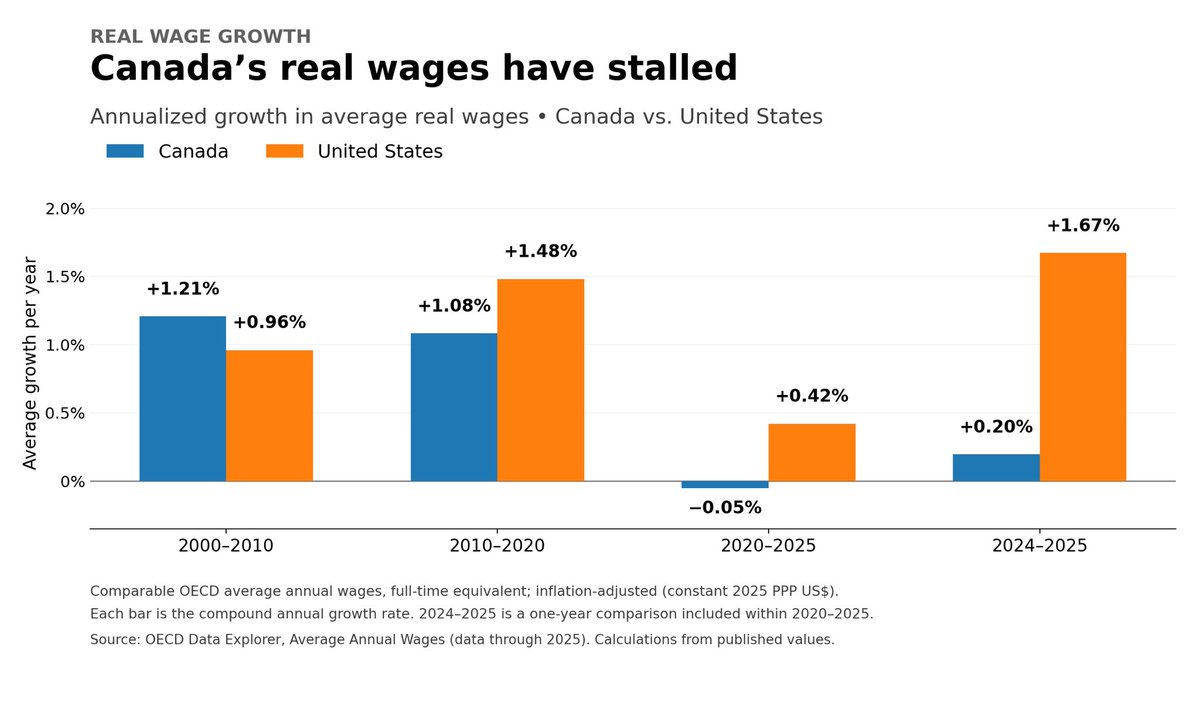
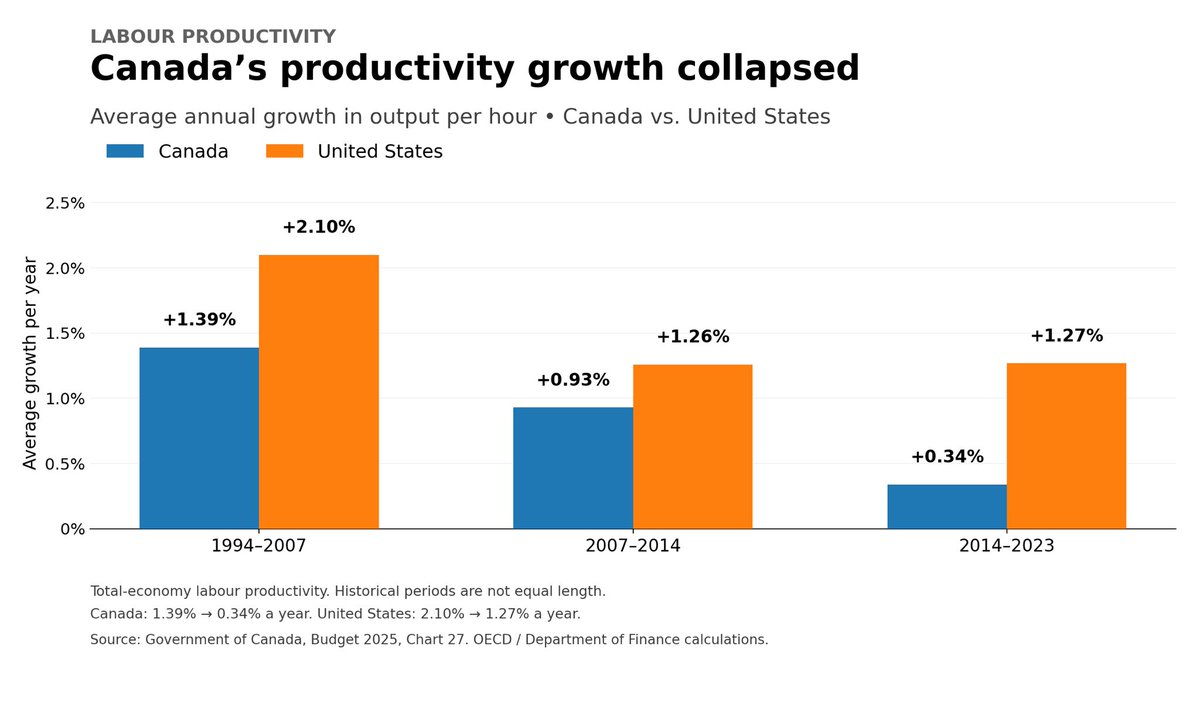
For years, “labour shortages” have justified high rates, yet the sustained real wage growth and productivity investment you’d expect are absent.
Data does not support an economy with real labour shortages, instead, it shows a decades-long struggle to raise living standards.
Even the presentation of these changes continues to show enormous intellectual dishonesty by indicating many designated labour areas as having tight labour supply. It’s not supported by evidence.
More importantly, if a firm or sector cannot attract workers at the wages it offers, that is not a shortage, it is a compensation problem.
We must allow labour markets to work through competition yielding higher wages, training, equipment investment, automation, and better business models. Some firms will adapt and others will fail.
This is how economies grow richer and more productive!
It’s high time Canada stops using immigration to spare businesses from competing for labour.
Instead, I believe that immigration policy should serve the Canada we want to build for the long term.
What industrial advantages should Canada develop? How do we attract exceptional entrepreneurs, researchers and innovators? How do we build a country where productivity rises and working Canadians can earn substantially higher incomes and accumulate more wealth?
These questions are particularly important as AI, robotics and advanced manufacturing begin transforming production. Alongside abundant, affordable electricity, these technologies offer enormous opportunities to improve our productivity and prosperity.
Our policies should encourage businesses to invest in them, rather than making it easier to preserve less productive business models through an ever-expanding supply of labour.
That also means being willing to seriously reconsider the scale of immigration itself.
Canada still plans to admit 380,000 permanent residents annually. But why should we assume that is the right number?
Would a period of more moderate immigration, perhaps 100,000 to 200,000 annually with much more selective economic criteria, help us build a wealthier and more sustainable country?
Furthermore, it’s worth addressing demographic arguments.
Immigration can help offset population aging, but it cannot become a permanent bandage for collapsing fertility. Part of that decline reflects changing preferences, but housing affordability, financial insecurity and the growing difficulty of raising a family also matter.
Similarly, while some reforms have been made to the TFW program, but we still need a serious plan for the temporary residents already here as their permits expire.
Who should receive a pathway to permanent status? Under what conditions? And how do we fairly and consistently ensure that those without authorization to remain actually leave Canada? IRCC has demonstrated no competency it can effectively administer here.
Finally, we can’t ignore the greater political context right now, as many in my political camp seem keen to.
Across the Western world, immigration has become one of the most politically contentious issues of our time. I worry that our political leaders’ unwillingness to have a mature debate about immigration will make the emergence of a much uglier politics increasingly likely over the next decade as people with justified concerns get othered. In their wake, a more openly prejudiced politics feels inevitable.
Most Canadians are ready for this debate, so let’s have it!
A message from a friend working in emergency management in Ontario:
Northwestern Ontario needs your help.
Our region is facing an unprecedented wildfire emergency. Communities across the Northwest are dealing with evacuations, hazardous smoke, extreme heat, and stretched emergency response capacity.
We're hearing one message loud and clear:
Where is Ontario Corps?
Many of the people and organizations who would normally step up to help are themselves affected by the fires, smoke, heat, and emergency social service demands. There simply isn't enough capacity left.
We need the Province to coordinate a regional response that supports all communities; First Nations, municipalities, and unincorporated areas alike. Emergencies don't stop at jurisdictional boundaries, and neither should the response.
Please help amplify this message. Tag Minister Jill Dunlop @JillDunlop1 and the Premier @fordnation and share widely.
We need help. We need coordination. We need it NOW.
Pray for Northern Ontario.
#ONPoli #NorthwesternOntario #OntarioFires #Wildfire #EmergencyManagement #OntarioCorps
*Picture attributed to Stephanie Paavola and her family as they fled their home. I hope you are safe and together. #solidarity
These bills, along with C-22 and C-9 constitute a total erosion in Canada’s basic liberties. They interlock into making Canada essentially unviable for those with choices on where to build.
LISTEN UP ONTARIO:
Something big is happening in Ontario, and almost no one is talking about it.
Premier Ford has quietly passed a law that opens the door to water privatization across Ontario - and he's hoping you won't notice.
The Water and Wastewater Public
Corporations Act lets the government seize your local water system and hand it over to a for-profit corporation without your consent.
History is clear: when for-profit corporations control our water systems, the results are disastrous:
Bigger bills!
Bad service!
Dirty water!
Water is a human right not a commodity. It's not too late to stop this.
& Tell Premier Ford our water is NOT for sale. Take action now!
C-22 is looking like a huge mistake. It worries me a great deal. There is so much nonsense in there that It may well end up dealing a death blow to Canadian tech viability.
@thirdfig@tinndfishmonger You’re not typical.
Canon events list:
- at Bali terror attack
- faced a spitting cobra
- mauled by locals abroad
- mom nearly died during uni interview
- published poet
- stalked by floormate
- Malaysian princess’s bday guest