.@Europol just published a new report on quantum computing and cryptocurrencies.
One of its key recommendations? Blockchain networks should prioritize integrating post-quantum cryptography into their core protocols.
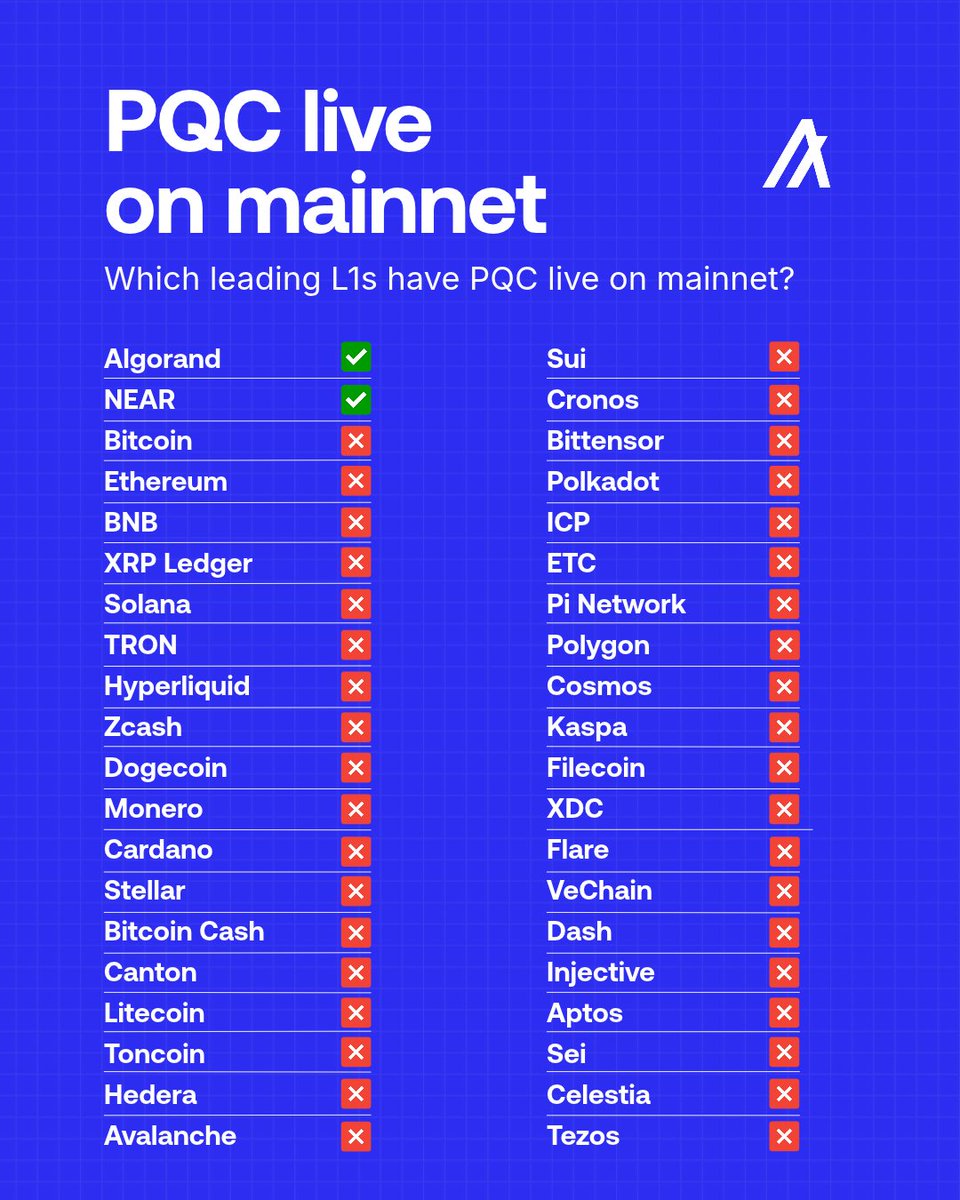
Algorand has had protocol-level PQC on mainnet since 2022 with Falcon-based State Proofs, and now supports native post-quantum accounts powered by Falcon-1024.
Why Is AI the Only Game in Town? The Fed Is Too Tight!
The Fed is too tight. The clearest evidence is the weakness in the market’s most interest-rate-sensitive sectors.
Wall Street complains that the AI trade is the only game in town, yet fails to connect the dots. Interest-rate-sensitive stocks are getting hammered, turning much of the market into a no-go zone. Is it any wonder investors crowd into secular growth?
Pundits want rate hikes and complain about market breadth. The irony is there if you care to open your eyes.
The Fed is failing to distinguish secular growth from cyclical demand. It remains unwilling to accept that supply-side growth is non-inflationary.
Expanding productive capacity is not the same as overheating demand.
Instead, it is using higher rates to fight supply shocks and structural growth trends, neither of which responds readily to monetary tightening, while hammering the sectors that do.
Those sectors did not drive inflation, but they are paying the price for the Fed’s response.
Look at the market’s worst-performing sectors and industry groups. Their common denominator is interest-rate sensitivity: they either depend heavily on borrowing or attract investors with dividends that must now compete with higher yields.
The market is signalling another Fed policy mistake. Remarkably, the pundits complaining about the narrow rally keep missing that message.
Can strong earnings bail out these beaten-down sectors? I doubt it. Until the Fed recognizes its mistake and changes course, those stocks are likely to remain unloved.
But if and when the Fed pivots, which I expect after the midterms, the market will rotate. Investors will sell a portion of their secular-growth holdings and buy beaten-down, interest-rate-sensitive stocks.
Get ready for the rebalance.
The Fed Is Fighting the Last Inflation War
The Federal Reserve’s response to the oil shock reveals a fundamental problem of diagnosis: it risks treating an adverse supply shock as though it were an episode of excess aggregate demand.
An oil-price increase caused by the Iran war raises production costs and reduces households’ real purchasing power. It therefore creates inflationary pressure and weakens growth simultaneously. Higher interest rates cannot restore the lost energy supply. They can, however, further depress consumption and investment, compounding the contraction.
The relevant policy question is not whether oil prices raise headline inflation. It is whether that initial increase will generate persistent second-round effects through wages, broader price-setting and inflation expectations. That requires evidence, not an automatic invocation of the 1970s.
The indicators cited here hardly establish an emerging inflation spiral: trimmed-mean PCE around 2%, two-year inflation breakevens below their level when Trump took office, and five-year, five-year forward inflation compensation anchored at 2.33%. These measures are not infallible, but a central bank proposing to tighten should explain why they are misleading, not simply discount them because they contradict its preferred narrative.
The Fed appears intellectually trapped in the 1970s, applying the lessons of that inflationary regime without establishing that today’s conditions are comparable. If the oil spike is temporary and expectations remain anchored, tightening risks repeating a familiar policy error: aggravating a negative growth shock in an attempt to suppress inflation that monetary policy cannot directly remedy.
Waller’s apparent reversal raises a further question about the consistency of his position. While lobbying Trump and Bessent for the Fed chairmanship, he made the case for easier monetary policy. Having lost that contest, he now advocates rate hikes. What changed: the economic evidence or his professional incentives?
The sequence does not establish political motivation, but it demands a coherent explanation. Without one, his position appears to have shifted with his prospects for the chairmanship. The proposed remedy is now to squeeze the interest-sensitive, cyclical sectors of the economy even though they did not cause the energy shock. That is not monetary discipline. It is reckless.
The broader failure is to distinguish among supply disruption, cyclical excess demand and stronger secular growth. Those conditions have different implications for inflation and require different policy responses. A reflexive preference for restraint is not a substitute for economic analysis.
Hence the bond vigilantes drive yields higher at the long end of the curve, anticipating that the Fed’s policy error will persist. The danger is a reflexive feedback loop: markets price the Fed’s expected response, and the Fed then treats those market prices as independent validation of its original diagnosis. This is precisely the “Hall of Mirrors” problem Warsh wanted to avoid. Policy expectations become market signals, and market signals become the justification for policy.
The conclusion is damning. If the Fed cannot distinguish a temporary supply shock from persistent demand-driven inflation, the problem is incompetence. If it understands the distinction but selectively disregards evidence to serve a political preference, the problem is political bias. Neither is compatible with the analytical discipline expected of an independent central bank.
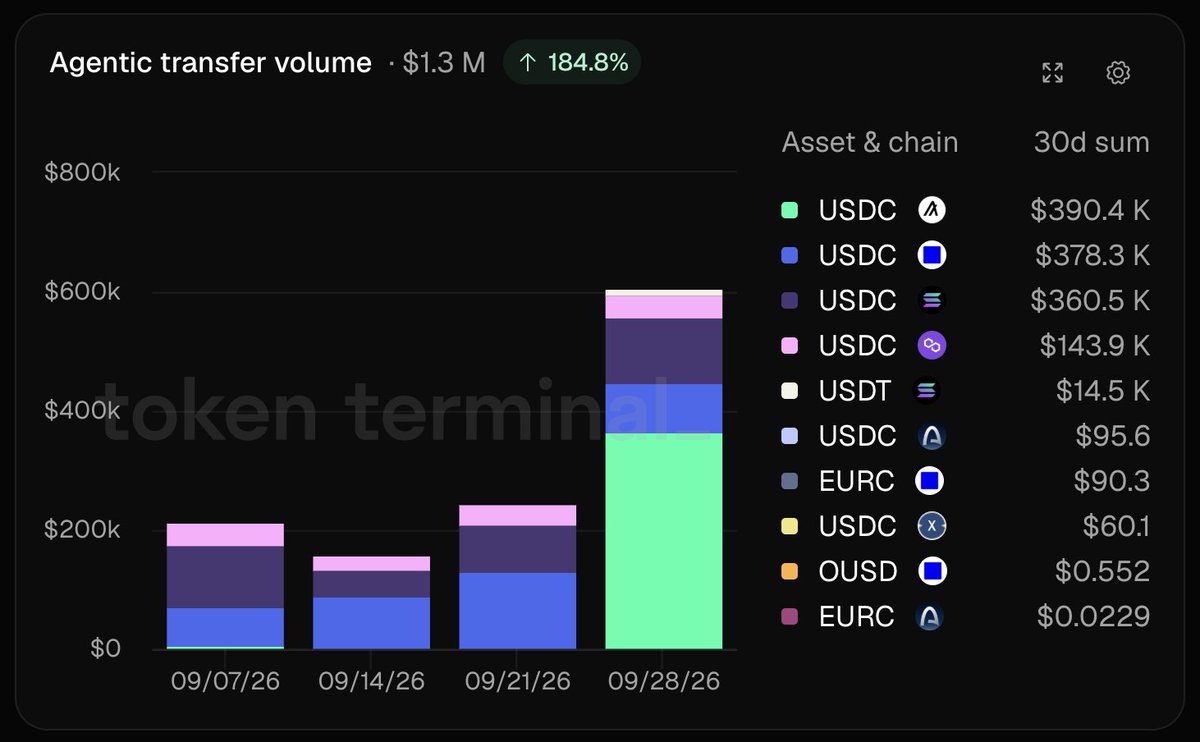
AI agents have been busy on Algorand lately.
According to data from @tokenterminal, x402 @USDC 30d volume reached $390.4K, putting Algorand ahead of Base and Solana over the past 30 days.
When agents need fast, cheap, and reliable payments, they know where to go.
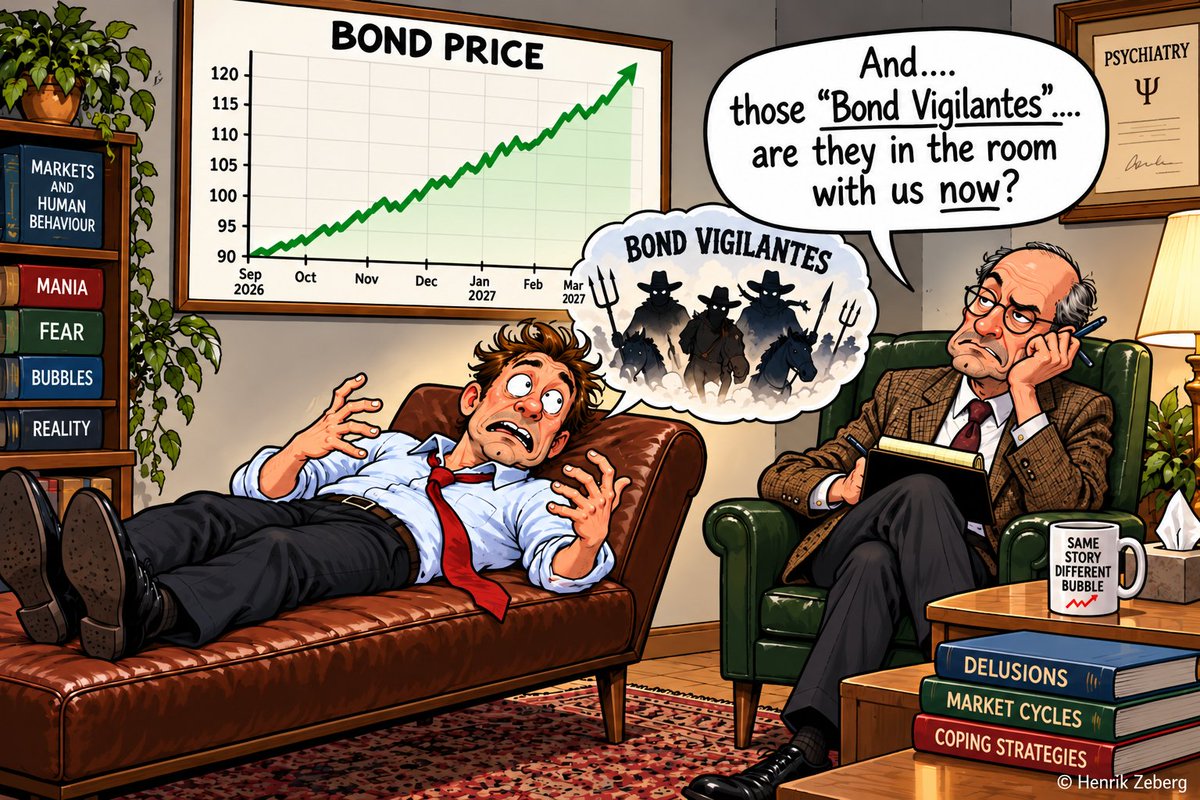
And now.... in the final phase - while the "Bond Vigilantes" - guys realize that Bond market is not crashing.... on the contrary - we can see a massive rally develop while USD and yields plummets
This will go on - until the market suddenly breaks - as it becomes clear.... that the market has outrun the real economy ...by far. But EUPHORIA will be at its highest.
Just watch the Business Cycle Model in real time 😉
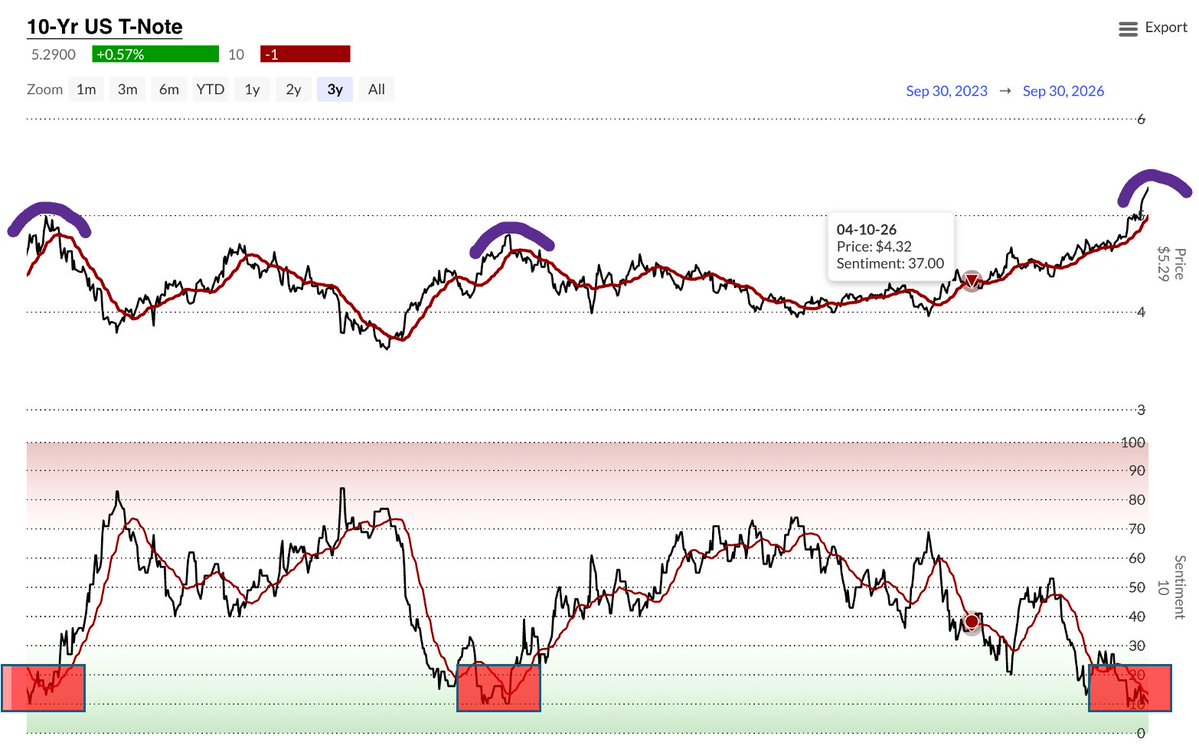
Sentiment - Sentiment 😉
The Bearish sentiment is now at "10" for US 10YR Bonds.
But... surely - bond yields will run higher, right?
This is a Bond Bear Trap. And it is working perfectly 👍
It is needed to send yields plummeting - together with DXY in final phase of the Bull Market.
Chart is from https://t.co/vWODcuJcu8
To stay away from the Chit-chat .... you need to understand SENTIMENT! I use it often.
And now.... let the Lemmings tell us why Bond Yields are going higher from here... while we position ourselves in the opposite camp 😉
Every. Single. Time.
Some kind of story / narrative ... to explain the normal movements in assets during the Business Cycle.
Economy is very weak - and slowing. Inflation drops in that environment. And Bond yields follow.
The Lemmings were out with:
"Bond vigilantes"
"Bond Market Crisis"
"Bond yields will run much higher"
No understanding of the Dynamics of the Economy. Zero!
Now watch Bond Yields and USD beginning their decline... Which will send the next crazy crowd onto the scene:
"The Crypto Guys"
They will be talking about the Death of the USD. And Debasement. And new Reserve Currency.
Wait for it! 😅
Algorand is going to be the next-gen “trust engine” for critical systems that need post-quantum security.
The interviewer raised the obvious objection: does Algorand even have a PQ moat? Doesn’t AI make it trivial for everyone else to catch up?
One underrated factor is that Algorand has already figured out PQ in a **distributed system**.
That's high key a big deal. Distributed systems are extremely hard to scale. They’re full of unknown unknowns that only surface after years of incrementing in production with real nodes and users.
AI isn’t going to magically hand that hard-fought ground to another chain (unless we get ASI, in which case all bets are off anyway).
That makes Algorand pretty unique, and I think it does have a moat.
The bet is that a lot of companies won’t have the time or resources to meet PQ requirements inside their own stack.
A centralized PQ provider doesn’t solve that cleanly either. Every new customer becomes a bilateral relationship -- not just a technical integration, but a trust relationship with a third-party vendor.
Is that tenable in a global, 24/7 financial system?
Algorand already has PQ working today, in production, in a decentralized system. The trust is in the protocol, not a vendor. To integrate, other systems just need compatible APIs.
That’s the scale/moat/pmf.
Arnold Schwarzenegger reveals he built a smoking tent outside his Capitol office to bypass laws and negotiate deals with lawmakers
"The law says that you have to be 20 feet away from the building."
"I have an atrium where my office is, and we have measured 20 feet away from the building from each side of this atrium. And we're building a tent. We built a tent that is big enough so we can have inside meetings and everything like that, and we're going to smoke our cigars in there."
"They sent me a bill to forbid smoking in a smoking tent. And so, of course, I didn't sign it. I vetoed it."
"Democrats and other legislators came down and asked me, begged me, 'Can I come down and smoke?' And that's how I got most of my deals done."
"They came down to smoke, and we found something in common, which is smoking. We smoked our stogies, took our jackets off, took our ties off, and we were sitting there and saying, 'What are you working on?'"
"And so we started working together, and I was able to sign more of their legislation because they were not stubborn about how they wrote the legislation. We got a lot of things done because of the smoking tent."
"Did I mention that #Algorand has partnered with #Google for AI agentic payments and quantum secure commerce?
…and if you don’t know, now you know…
$ALGO 🔥🔥🔥"
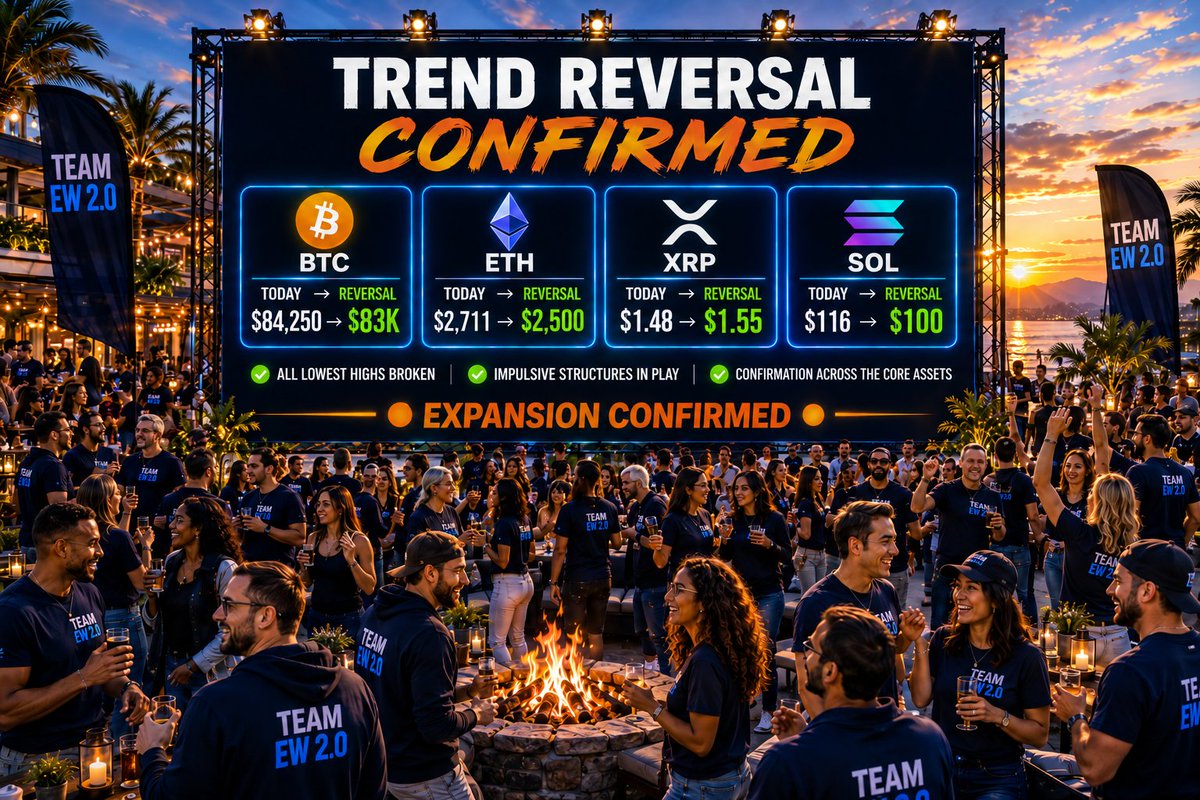
🚨🚨 TREND REVERSAL - CONFIRMED 🚨🚨
TODAY PRICE CONFIRMED THE STRUCTURE
BTC ✔️
ETH ✔️
XRP ✔️
SOL ✔️
4 CORE ASSETS
4 TREND REVERSALS
🔥 ALL MAPPED IN ADVANCE 🔥
Not after the move
Not in hindsight
Not after confirmation
BUT BEFORE
ZERO STRUCTURAL CHANGES THROUGHOUT 2026
50+ Assets
One Complete EW 2.0 Framework
Full documented post 👇🏻
https://t.co/G0nfvwbo1j
🔥 THIS IS EW 2.0 🔥
We prepared
We positioned
We were patient
JUST IN: Bitcoin makes the first ‘Higher High’ and officially kills the bear market.
It’s over.
It’s been over for 3 months.
But now it’s ’over-over’. 😅
You really realize how far ahead Algorand is when you look at post-quantum readiness across the L1s in the CMC Top 100!
$ALGO has had PQC live on mainnet since 2022 with State Proofs, and even native post-quantum accounts since last month! ✅
JUST IN: ALGORAND FOUNDATION CEO WANTS TO BECOME A NET BUYER OF ALGO
Algorand Foundation CEO John Woods said in an interview that the Foundation has so far been a net seller of ALGO, but wants to shift toward becoming a net buyer, stating "we need to shift that narrative."
$ALGO
When the housing market freezes, it doesn’t freeze alone.
No home purchase means fewer:
• Renovations
• Appliances
• Furniture sales
• Moving jobs
• Agent commissions
Housing is an economic engine.
At 7%+ mortgage rates, that engine is stalling.