NEW ARTICLE: https://t.co/fsuLbm1UFd
On October 22, 851, two young Christian sisters named Nunilo and Alodia were beheaded in Muslim-ruled Spain for refusing to abandon Christianity and embrace Islam.
They lived near Huesca and were the daughters of a Muslim father and a Christian mother. After their father’s death their mother remarried another Muslim. Under the rules applied by the authorities the sisters were counted as Muslims because of their father’s religion. Their continued practice of Christianity was therefore treated as apostasy.
Brought before the local governor, they were offered wealth and marriage if they would accept Islam, and death if they refused.
For obvious reasons, they refused.
St. Eulogius of Córdoba, a priest, recorded their reply:
“O Governor, in the same way, we order you to turn to God’s piety! Which holy piety, in viewing things by His Light, made us aware that nobody can be wealthier than Christ, nobody can be happier than a faithful Christian woman. Through whom do the just live? Through whom has the power of the saints conquered? Without Him, life is nothing; without Him, death thrives forever. To abide in Him and live in Him is true comfort. To back away from Him is eternal ruin.“By no means will we abandon partnership with Him while we are in this life, because believing our integrity is from Him, we look forward to someday being admitted into marriage with Him. For you bestow things that perish, of which you speak to entice us. We scorn them, considering them as nothing when one thinks about it; because we were aware that everything under the sun is vanity. Nor are we disturbed by the threat of punishment, which we recognize to be powerful in the short term. Indeed, death itself, which you put forward as the ultimate terror, we long for with the most welcoming love; for through it, we trust to ascend into heaven without delay, to approach Christ, and to be held fast in his embraces, never to be torn apart.”
They were then confined with Muslim women charged with breaking their resolve. The women failed.
The sisters were brought before the authorities again and once more confessed Christ. They were beheaded on October 22, 851.
Their deaths were part of a larger wave of Christian martyrdom in ninth-century Muslim Spain. During those years dozens of Christians were executed for publicly condemning Muhammad or refusing to abandon Christianity.
St. Eulogius of Córdoba, who documented the stories of Christians who confessed Christ and denounced the claims of Muhammad, was himself beheaded by the Muslim authorities on March 11, 859.
Among the best-known were Perfectus and Isaac, whose executions took place shortly before the sisters’ martyrdom.
The story of these executions begins in 850 with a Christian priest named Perfectus.
Perfectus served at the Church of Saint Acisclus in Córdoba when he was stopped by several Muslims who asked him what he thought of Muhammad.
According to St. Eulogius, Perfectus initially refused to answer because he knew that criticizing Islam could cost him his life.
But after the men promised that he could speak freely, he openly criticized Muhammad.
Yeah, Christians took back what was once theirs.
You really want to go down that road? Because by that same logic, what about Morocco, Tunisia, Iraq, and much of the Middle East, where Christianity existed long before Islam?
Read history.
Asking a Christian to think positively about Islam is like asking a Jew to think positively about Nazism. No sensible person would expect such a thing!
How Ruskin divided the books that matter from those that do not:
“All books are divisible into two classes, the books of the hour, and the books of all time. … The good book of the hour, then,—I do not speak of the bad ones,—is simply the useful or pleasant talk of some person whom you cannot otherwise converse with, printed for you. Very useful often, telling you what you need to know; very pleasant often, as a sensible friend’s present talk would be. These bright accounts of travels; good-humoured and witty discussions of question; lively or pathetic story-telling in the form of novel; firm fact-telling, by the real agents concerned in the events of passing history;—all these books of the hour, multiplying among us as education becomes more general, are a peculiar characteristic and possession of the present age: we ought to be entirely thankful for them, and entirely ashamed of ourselves if we make no good use of them. But we make the worst possible use if we allow them to usurp the place of true books: for, strictly speaking, they are not books at all, but merely letters or newspapers in good print. Our friend’s letter may be delightful, or necessary, to-day: whether worth keeping or not, is to be considered. The newspaper may be entirely proper at breakfast time, but assuredly it is not reading for all day. So, though bound up in a volume, the long letter which gives you so pleasant an account of the inns, and roads, and weather last year at such a place, or which tells you that amusing story, or gives you the real circumstances of such and such events, however valuable for occasional reference, may not be, in the real sense of the word, a ‘book’ at all, nor in the real sense, to be ‘read.’ A book is essentially not a talked thing, but a written thing; and written, not with the view of mere communication, but of permanence.”
— John Ruskin, Sesame and Lilies
If you enjoy our posts, consider becoming a paid subscriber. You'll get:
- Live book club discussions (biweekly)
- Access to our incredible community chat
- Essays to guide you through the Great Books
- All past recordings, essays, and podcasts
- The ability to vote on what we read next
Join here: https://t.co/NsgCSF9xbU
Why Montaigne preferred the old books to the new:
“I seek, in the reading of books, only to please myself by an honest diversion; or, if I study, ’tis for no other science than what treats of the knowledge of myself, and instructs me how to die and how to live well. … If one book do not please me, I take another; and I never meddle with any, but at such times as I am weary of doing nothing. I care not much for new ones, because the old seem fuller and stronger. … As to what concerns my other reading, that mixes a little more profit with the pleasure, and whence I learn how to marshal my opinions and conditions, the books that serve me to this purpose are Plutarch, since he has been translated into French, and Seneca. … Now those that write lives, by reason they insist more upon counsels than events, more upon what sallies from within than upon what happens without, are the most proper for my reading; and therefore, above all others, Plutarch is the man for me.”
— Michel de Montaigne, “Of Books”
In 1911 Belloc warned what happens when a people stop reading real books:
“It is an interesting speculation by what means the Book lost its old position in this country. This is not only an interesting speculation, but one which nearly concerns a vital matter. For if men fall into the habit of neglecting true books in an old and traditional civilization, the inaccuracy of their judgments and the illusions to which they will be subject must increase. … The excellence of a book and its value as a book depend upon two factors, which are usually, though not always, united in varied proportions: first, that it should put something of value to the reader, whether of value as a discovery and an enlargement of wisdom or of value as a new emphasis laid upon old and sound morals; secondly, that this thing added or renewed in human life should be presented in such a manner as to give permanent aesthetic pleasure.”
— Hilaire Belloc, First and Last (1911)
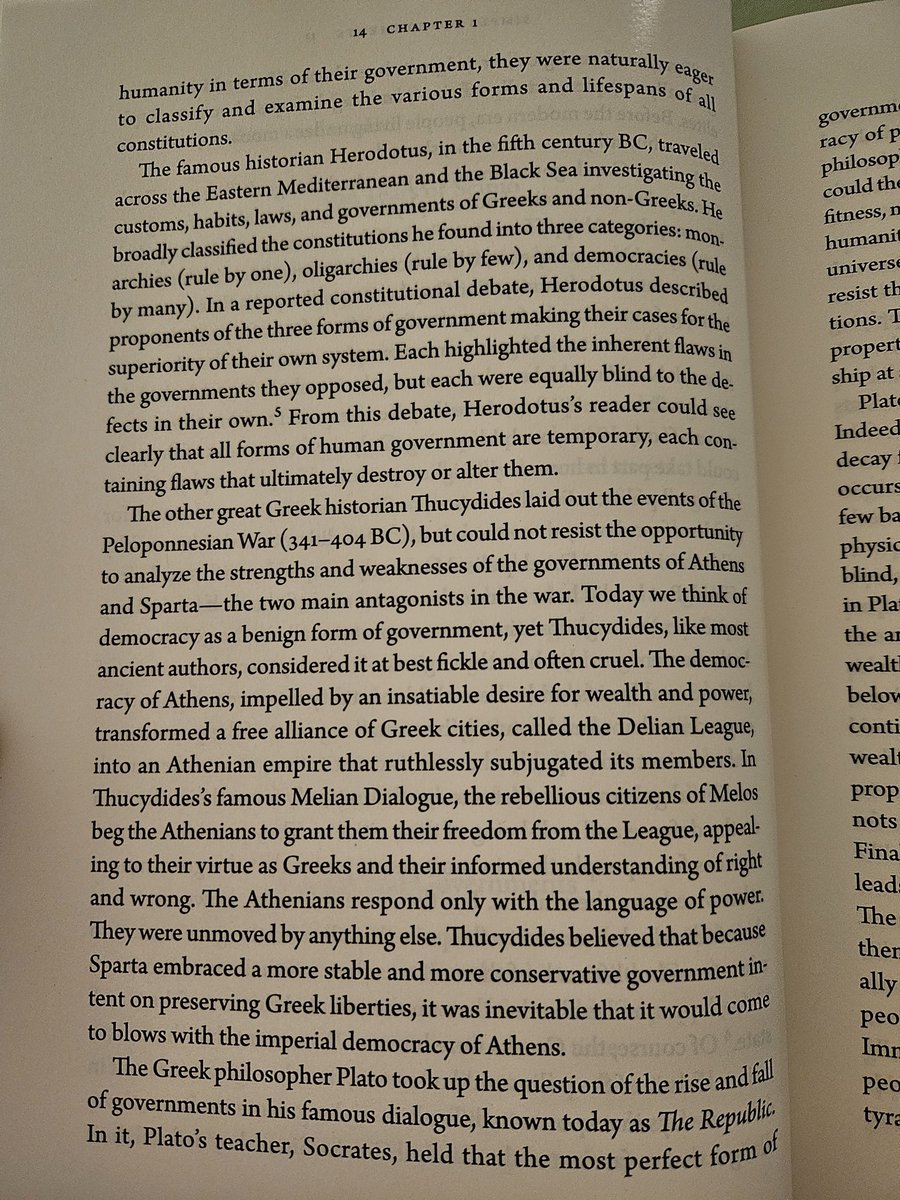
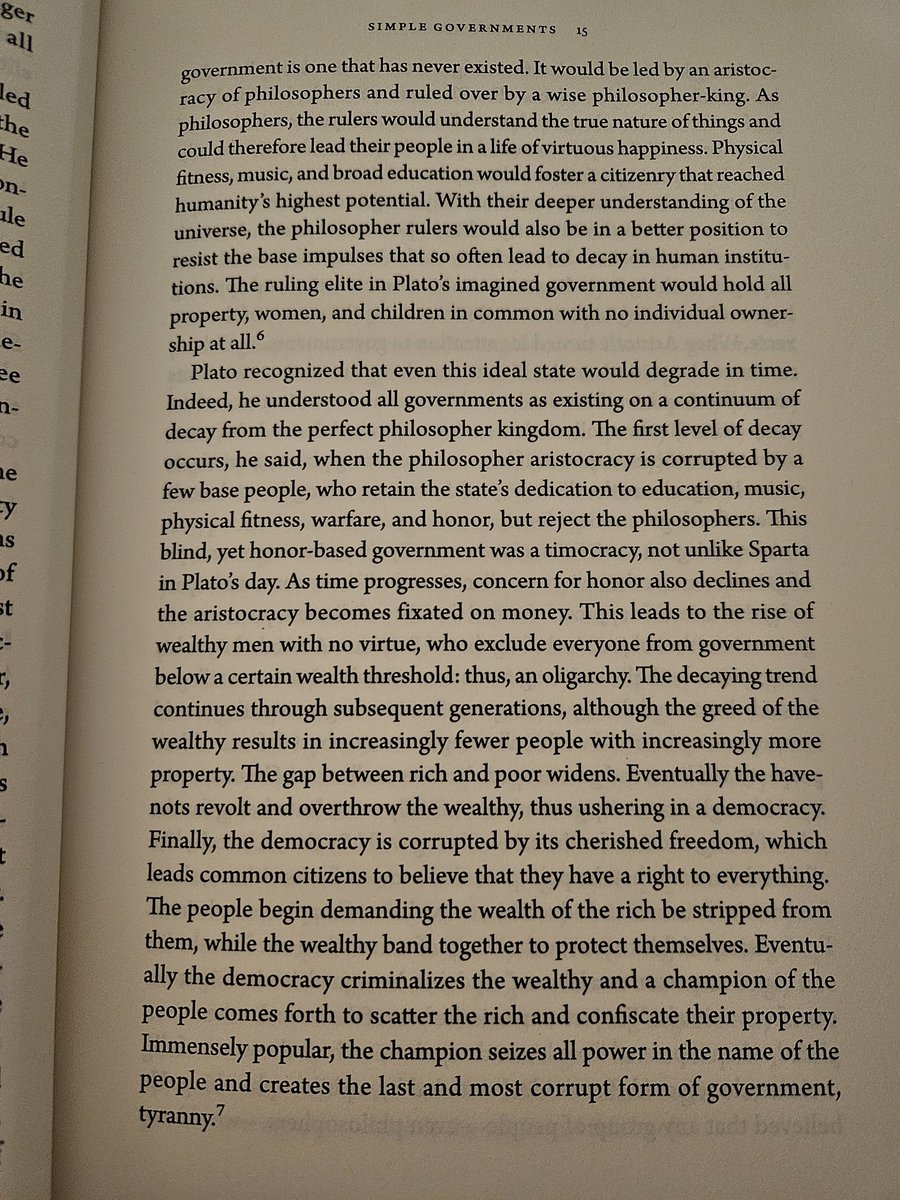
Here's Why Reading Old Books Is More Important Than Ever:
“Every age has its own outlook. It is specially good at seeing certain truths and specially liable to make certain mistakes. We all, therefore, need the books that will correct the characteristic mistakes of our own period. And that means the old books. All contemporary writers share to some extent the contemporary outlook—even those, like myself, who seem most opposed to it. … None of us can fully escape this blindness, but we shall certainly increase it, and weaken our guard against it, if we read only modern books. Where they are true they will give us truths which we half knew already. Where they are false they will aggravate the error with which we are already dangerously ill. The only palliative is to keep the clean sea breeze of the centuries blowing through our minds, and this can be done only by reading old books. Not, of course, that there is any magic about the past. People were no cleverer then than they are now; they made as many mistakes as we. But not the same mistakes. They will not flatter us in the errors we are already committing; and their own errors, being now open and palpable, will not endanger us.”
— C.S. Lewis, On the Reading of Old Books
This is what reading actually does to you:
“Those of us who have been true readers all our life seldom fully realize the enormous extension of our being which we owe to authors. We realize it best when we talk with an unliterary friend. He may be full of goodness and good sense but he inhabits a tiny world. In it, we should be suffocated. The man who is contented to be only himself, and therefore less a self, is in prison. My own eyes are not enough for me, I will see through those of others. Reality, even seen through the eyes of many, is not enough. I will see what others have invented. Even the eyes of all humanity are not enough. I regret that the brutes cannot write books. … Literary experience heals the wound, without undermining the privilege, of individuality. There are mass emotions which heal the wound; but they destroy the privilege. In them our separate selves are pooled and we sink back into sub-individuality. But in reading great literature I become a thousand men and yet remain myself. Like a night sky in the Greek poem, I see with a myriad eyes, but it is still I who see. Here, as in worship, in love, in moral action, and in knowing, I transcend myself; and am never more myself than when I do.”
— C.S. Lewis, An Experiment in Criticism
If you enjoy our posts, consider becoming a paid subscriber. You'll get:
- Live book club discussions (biweekly)
- Access to our incredible community chat
- Essays to guide you through the Great Books
- All past recordings, essays, and podcasts
- The ability to vote on what we read next
Join here: https://t.co/NsgCSFa51s
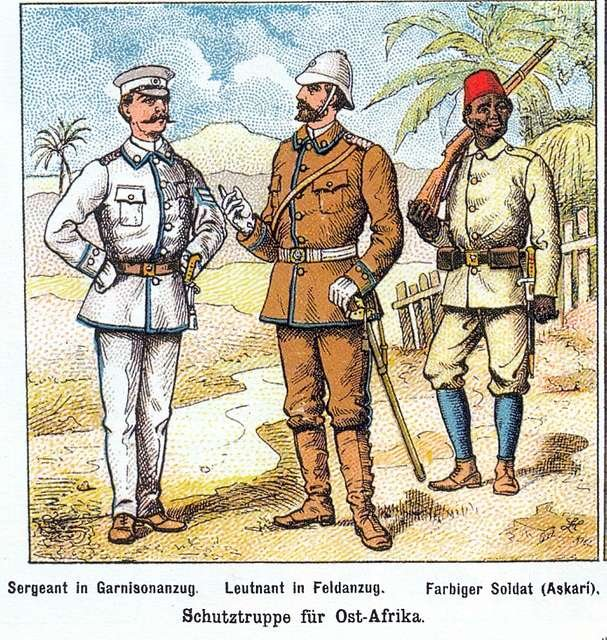
Before the Germans arrived in German East Africa, there was nothing.
People lived in mud houses and huts made of clay, straw, and wood. There were no railways, no ports, no hospitals, no written bureaucracy.
Then Germany showed up and did what Germans do. They built.
“She is a sister. Don’t loot here, let’s go there!”
Muslim rioters in France recognize the shop owner as a fellow Muslim just before nearly destroying her store by accident.
Not a single Muslim-owned business or mosque has been looted in the riots.
We must do more than simply point out what is wrong with our world. We must also remember and cherish the richness of our Christian heritage.
Today, October 19, we celebrate the feast of St. Frideswide of Oxford, a remarkable figure in England’s Christian history.
To mark this special day, I have made my article freely available to everyone, without a paywall, so that all can discover her story and the legacy she left behind.
READ: https://t.co/nvoGiGgZGD