Food safety is an essential part of food security. What is your message to the government of the day on food standards in your area? #FoodStandardsSaveLives
Make sure you're using a secure browser that encrypts your data when accessing your bank's website. Look for the padlock icon in the address bar to ensure the connection is secure. @KenyaBankers#SaveAndGrow#JijengeNaSavings#KaaChonjo#BeAlert
Food safety is a critical aspect of human well-being and is considered a basic human right by many organizations and individuals. Access to safe and nutritious food is essential for maintaining good health and preventing illnesses.
Food safety encompasses various measures and practices aimed at ensuring that the food we consume is free from contaminants, toxins, and harmful microorganisms. This includes proper handling, storage, preparation, and distribution of food products. Governments, regulatory bodies, and international organizations play a crucial role in establishing and enforcing food safety standards to protect public health.
Recognizing food safety as a human right emphasizes the importance of ensuring that everyone has access to safe and healthy food. This concept promotes the idea that individuals should not be exposed to unnecessary risks or hazards when it comes to the food they consume. It also highlights the responsibility of governments and institutions to prioritize food safety and implement measures to safeguard public health.
It is important to note that while food safety is indeed a human right. Efforts should be made to address these underlying issues and promote equitable access to safe and nutritious food for all consumers. #FoodSafety #notsafenotfood
Food is an essential part of human growth and existence. It anchors societies by providing members with identity and sense of culture based on traditional recipes passed down from generation to generation. Food also impacts on nutrition and the environment. Safe and sustainable production methods will help achieve healthy living.
Safety steps to Secure Your Banking
▪️Avoid saving your PIN on your phone or wallet
▪️Don't give your phone, PIN or passwords to anyone
▪️Do not log-on your bank accounts using public WI-FI
▪️Beware of emails & phone scams
▪️Do not use common passwords
#SaveAndGrow #JijengeNaSavings #KaaChonjo #BeAlert @KenyaBankers
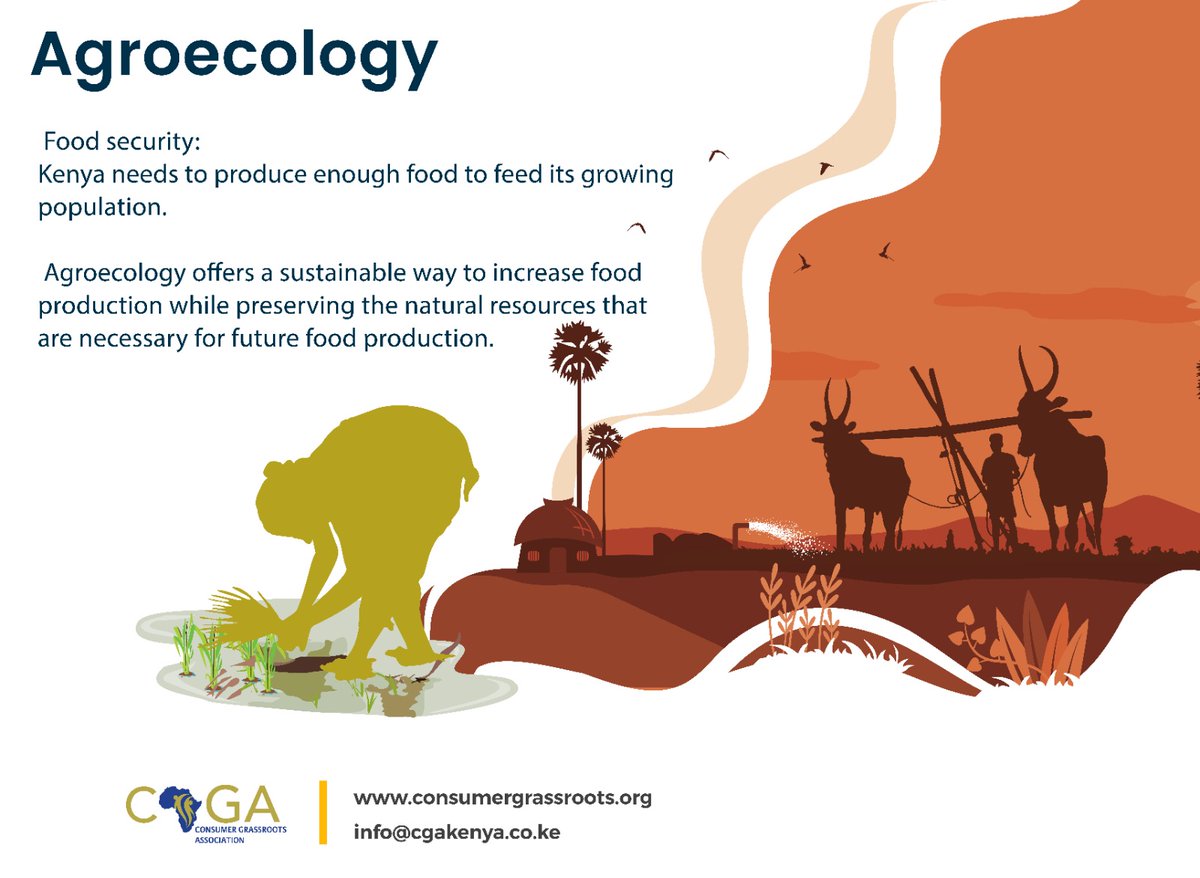
Agroecology is a system of farming that emphasizes the use of ecological principles and practices to enhance agricultural productivity while maintaining the health of the ecosystem. This approach to farming recognizes the interdependence between human beings, plants, animals, and the environment. Agroecology seeks to promote sustainable agriculture by using natural resources efficiently, minimizing the use of synthetic inputs, and fostering biodiversity.
In Kenya, agroecology can help address the food security challenges by providing a sustainable way to increase food production. The country has been facing food shortages due to various factors such as climate change, soil degradation, and population growth. Agroecology offers a viable solution to these challenges by promoting sustainable farming practices that enhance soil fertility, conserve water, and reduce greenhouse gas emissions.
By adopting agroecology, farmers can produce diverse and locally grown food that meets the nutritional needs of consumers. This approach promotes the use of indigenous crops and livestock breeds, which are well adapted to local conditions and have high nutritional value. Consumers can benefit from access to fresh and healthy food that is free from harmful chemicals and pesticides.
In conclusion, agroecology offers a sustainable way to increase food production in Kenya while promoting biodiversity and environmental conservation. This approach can help address the food security challenges by providing consumers with diverse and locally grown food that is healthy and nutritious. By adopting agroecology, farmers can improve their livelihoods while contributing to a more sustainable future for all.
@FundAgroecology@FutureForAll@ESA_Agroecology@BiovisionAfrica@AgroecologyNow@MESPT_ke @Yobike254 @odhiambofellix@VinaigretteGirl@crispus_kinyua @DennisBeth10 @kilimoKE @hivosroea@BeeAsMarine
#NotSafeNotFood #Agroecology
Consumer parliament on the proposed finance bill will take place on 15th June 2023 at 2:00pm. Welcome to the debate.
https://t.co/Rc69E1l8i3
#HighCostOfLiving
#Agroecology is an approach to food production that prioritizes ecological sustainability, social equity, and food security. It involves working with nature rather than against it, using methods such as crop rotation, intercropping, and natural pest control to create healthy and resilient ecosystems.
On World Food Safety Day, agroecology is an important topic to consider because it offers a holistic approach to food safety that addresses not only the physical safety of food but also its social and environmental impacts. By promoting agroecological practices, we can reduce the use of harmful pesticides and fertilizers, protect biodiversity, and support local food systems.
Agroecology also has the potential to improve food security by increasing the resilience of agricultural systems to climate change and other shocks. By diversifying crops and building healthy soil, agroecology can help farmers adapt to changing conditions and maintain productivity over the long term.
Overall, agroecology is an important tool for promoting food safety, sustainability, and equity. On World Food Safety Day, let us recognize the importance of this approach and work to promote its adoption in food systems around the world.
Food safety is a fundamental right of every individual, and it is the responsibility of governments, food producers, and sellers to ensure that the food they provide is safe for consumption. Safe food means that it is free from harmful contaminants, toxins, and pathogens that can cause illness or disease. Consumers have the right to know what is in their food, how it was produced, and where it came from. They also have the right to access information about any potential risks associated with the food they consume. It is essential to ensure that food safety regulations are in place and enforced to protect consumers' health and well-being. @tv47news@foodcoopkenya@FutureForAll #NotSafeNotFood
Addressing the root causes of the high food prices will require a multi-faceted approach that involves government action, private sector investment, and community engagement. It is crucial that all stakeholders work together to ensure that everyone has access to affordable and nutritious food. #LowerFoodPrices
Kenyan consumers face numerous food safety threats such as contaminated vegetables grown along sewer lines & maize flour brands containing aflatoxin, a naturally occurring fungus that is harmful to humans and animals.
Join us this Wednesday for #NotSafeNotFood@DrDennisOuma.
How safe is your food?
A survey conducted by Consumer Grassroots Association (CGA) that got views from 9,592 consumers from Nairobi, Kajiado, and Kirinyaga Counties, shows that nine out of ten Kenyans are worried about the safety of their food. #NotSafeNotFood