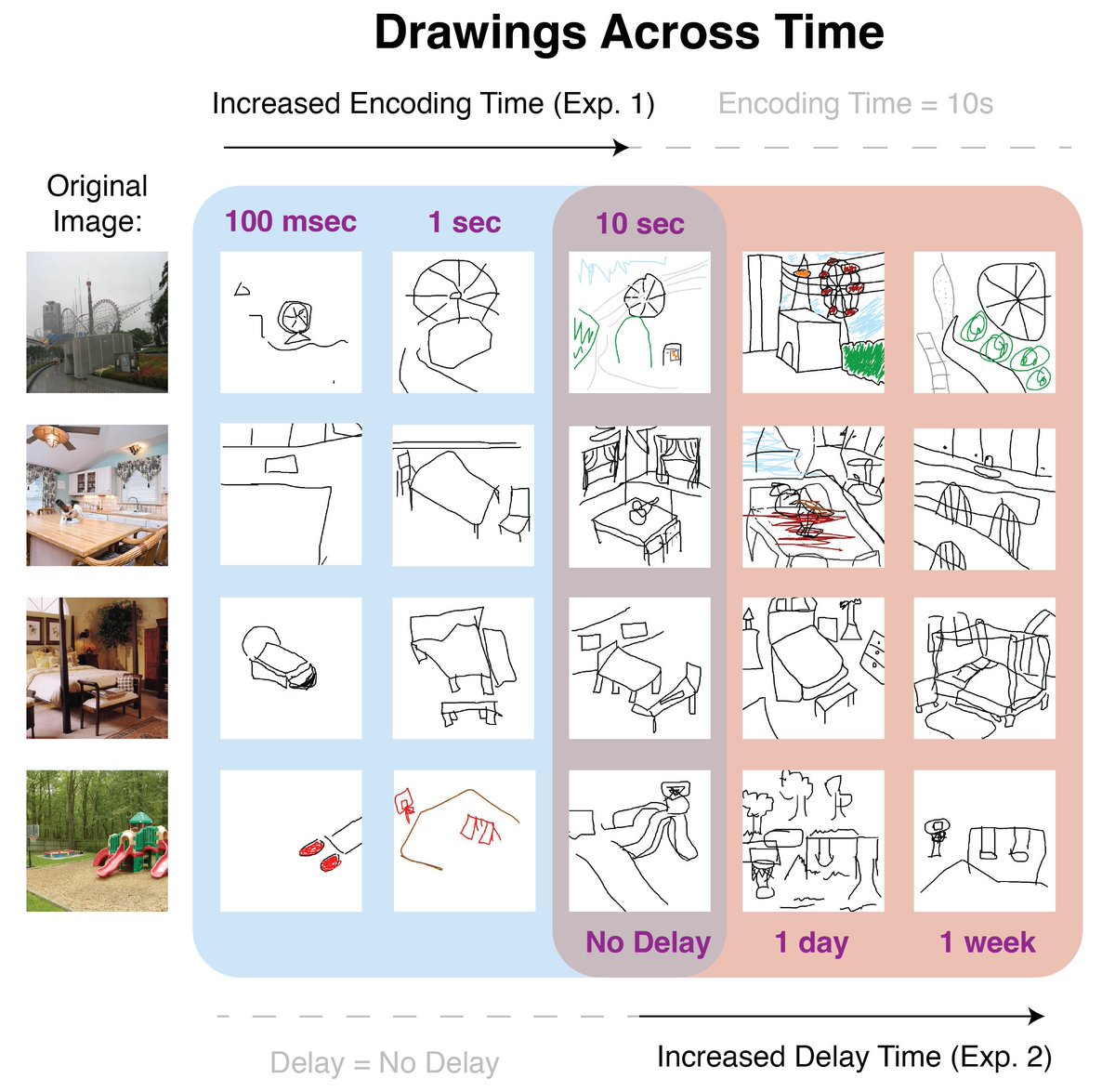
How is what’s stored in our memories affected by time? In my new preprint with @WilmaBainbridge, we leveraged 800+ drawings made from memory across variable encoding times and retention intervals to answer this question! Check it out: https://t.co/PaRbyBzAXZ
Excited to announce my first postdoc project at @UChicago with @WilmaBainbridge is now published in PNAS! Using computer vision and gen AI, we engineered memorable and forgettable symbols, showing memory can be optimized with data-driven visual design.
https://t.co/VfOJKMHQfN
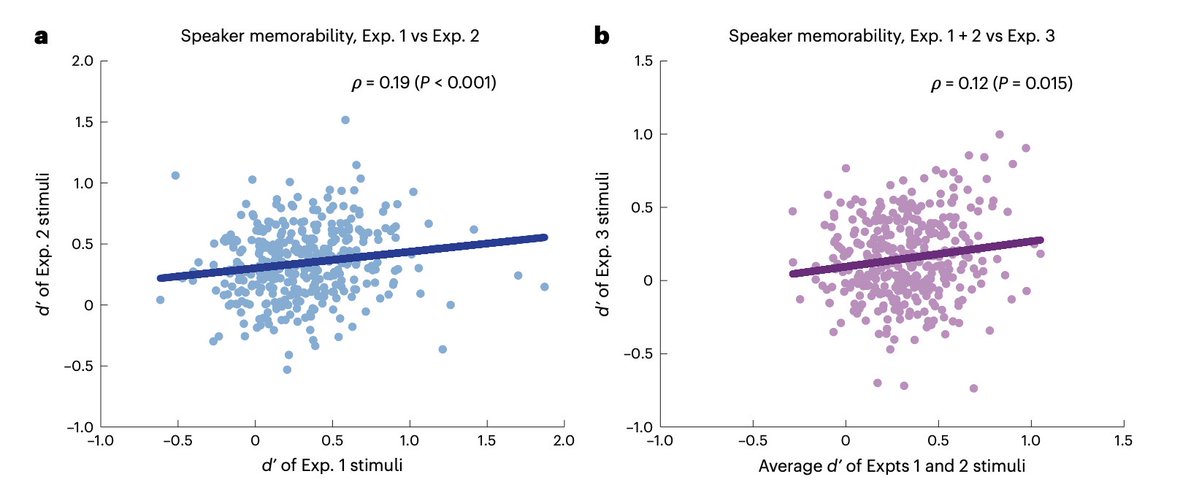
New paper out in Nature Human Behaviour!
In it, @WilmaBainbridge and I find that participants tend to remember and forget the same speakers' voices, regardless of speech content. We also predict the memorability of voices from their low-level features: https://t.co/YIXuAdyx7x
"Drawings reveal changes in object memory, but not spatial memory, across time"
📢New paper from: Emma Megla, Samuel Rosenthal, & Wilma Bainbridge
https://t.co/383hdVErV7
A Review in @NatRevPsych describes intentional and unintentional forgetting, highlights alignment across these traditionally siloed research areas, and explores the role of forgetting in certain clinical conditions. 🔒 https://t.co/nJxesxlNo9
Can you better recall the visual details of scenes after a night of sleep? The answer might surprise you - come visit my undergrad mentee Sam Rosenthal’s poster (358 in Banyan Breezeway) at #VSS2024 now until 6:45pm to find out!
I’ll be giving my first #VSS2024 talk on Wed 5/22 at 9:45 AM in Talk Toom 2 (Talk Session - Visual Memory) on the “semantic and visual features driving the memorability of co-speech gestures.” Come and share your thoughts! See abstract: https://t.co/6UwFTMFaAr
My first first-author paper is out now-- check out the thread and paper! Thanks to the whole team, especially Fernando for all his mentorship on this project 🧠
My first project as a postdoc at @UChicago is now available as a preprint with Julia Pruin, @WilmaBainbridge , @monicarosenb, and @MdeBettencourt! We tracked participants’ attention in real time, strategically inserting memorable or forgettable images. 1/4
https://t.co/SMnd7KhZsg
The @newscientist covered our work (@WilmaBainbridge) on how we used drawings to understand how memories change across time! In their article, they discuss how we believe this work could have important implications for eyewitness testimony. Check it out! https://t.co/y9ExoUPPPj
Check out my JEP:G paper with @WilmaBainbridge at https://t.co/6rc27UFEGl
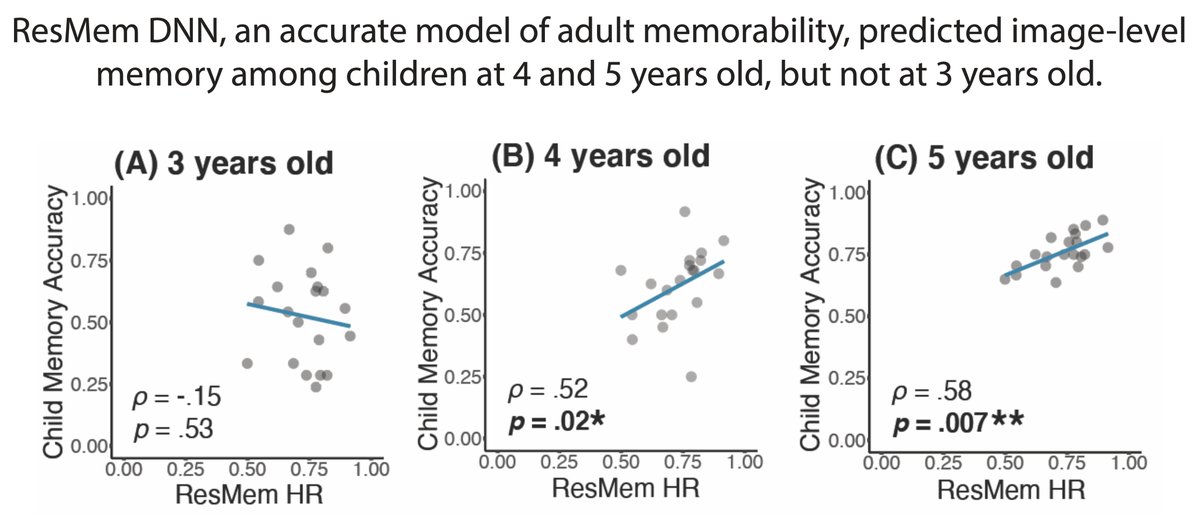
Children remember the same images as each other at age 3, and remember the same images as adults at age 4.
ResMem DNN trained using adult data could be used to select memorable materials for children.
Full-time lab manager / RA position available in @GolombLab starting Summer 2024!
This position is ideal for someone who wants additional research experience in cognitive neuroscience before applying to PhD programs.
Details:
https://t.co/BrYQaqDnCN
Excited to share my new preprint with @WilmaBainbridge & Esther Goldberg where we find the first evidence of consistent memorability for auditory stimuli (speakers' voices), which can be reliably predicted by acoustic voice features!
https://t.co/4b4AywD27a
Calling all artists in the US! Our lab's running a contest challenging you to make the most memorable or forgettable piece possible. No cost to entry. Winners win 💸, will be shown in an exhibit, and may appear in a documentary! All entries will be publicized online! Please RT!
How is what’s stored in our memories affected by time? In my new preprint with @WilmaBainbridge, we leveraged 800+ drawings made from memory across variable encoding times and retention intervals to answer this question! Check it out: https://t.co/PaRbyBzAXZ
In my preprint with @WilmaBainbridge, we tried to train participants to learn image memorability. Though they improved slightly, participants never reached the level of the DNN ResMem, suggesting that we are unable to access memorability’s full variance: https://t.co/pSv3lV89SU
How does what we see interact with what we remember? Delving into this topic, I wrote a chapter with @WilmaBainbridge covering memorability, caricatures, and more! Out soon in Oxford Research Encyclopedia of Neuroscience, but here's an early preprint! https://t.co/RBiK4CtZhb