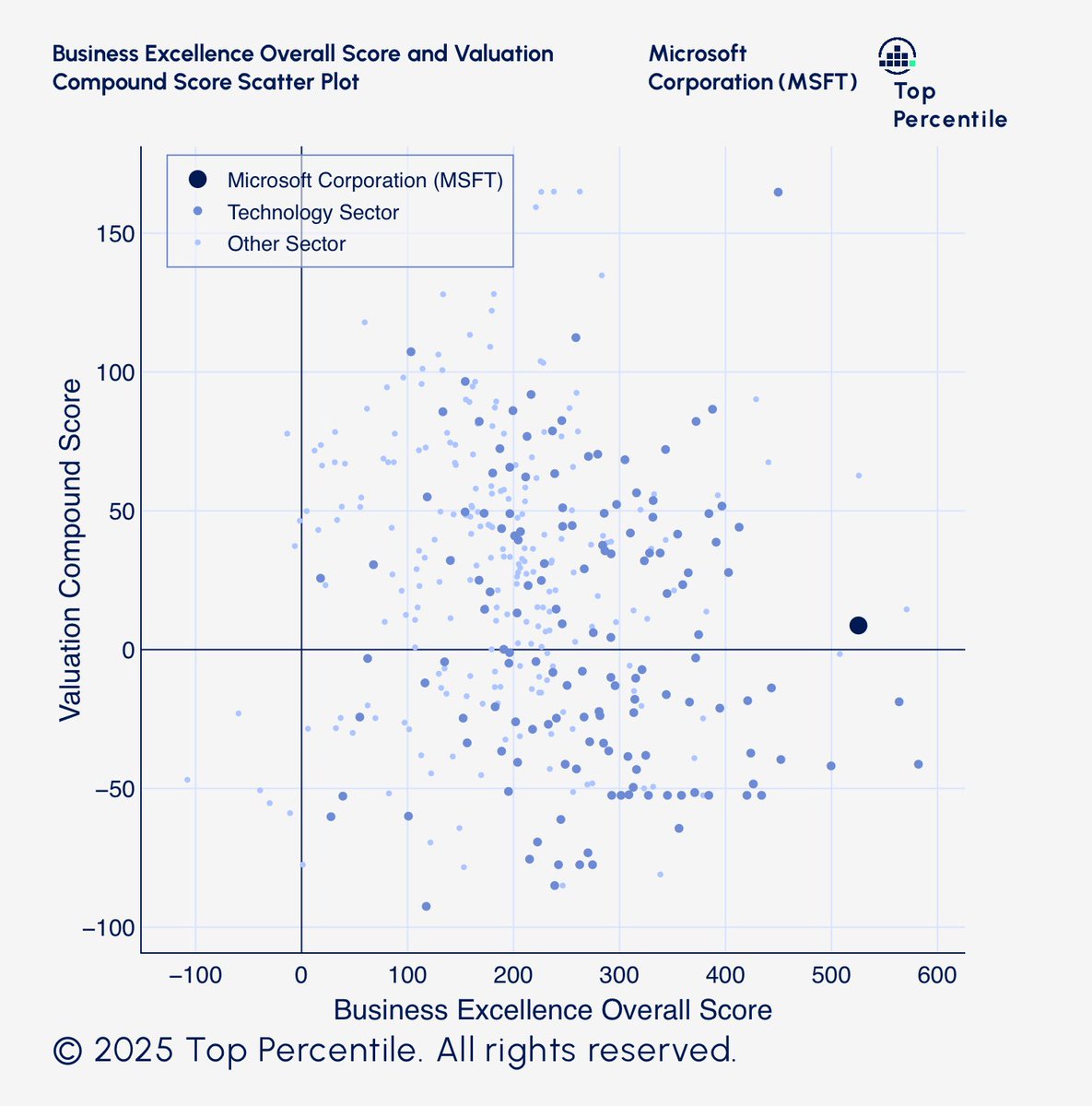
@burrytracker You didn’t need to find Nvidia. You just needed to buy Microsoft, let it compound at ~15% a year plus dividends, and get rich slowly over 25 years. Buying quality and being patient pays off.
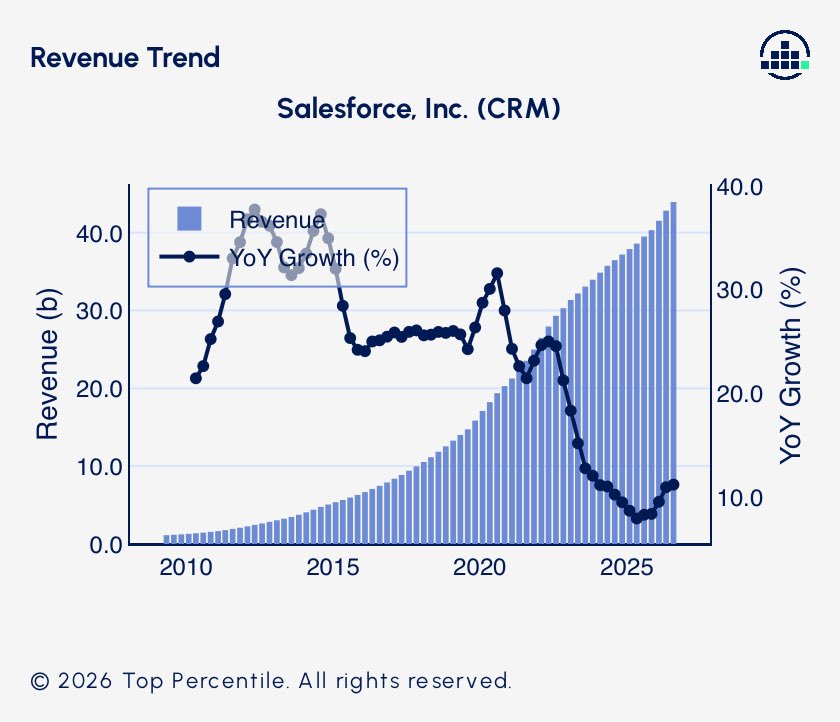
Spoiler: Jeremy’s strongest software pick here is $CRM.
He thinks the software rebound is still early. $NOW can keep running, but he has more conviction in Salesforce and says “Salesforce is the one.”
Snowflake’s blowout strengthened the point: the “SaaSpocalypse” went too far. AI is becoming an opportunity for the strongest software companies, not simply a reason they disappear.
Very different view on $META and $PLTR. He still likes both businesses, but sees the stocks as more range-bound for now, with Meta held back by capex and Palantir facing tougher growth comparisons next year.
My take: $CRM is a great pick. The business is showing both reacceleration and real AI monetisation.
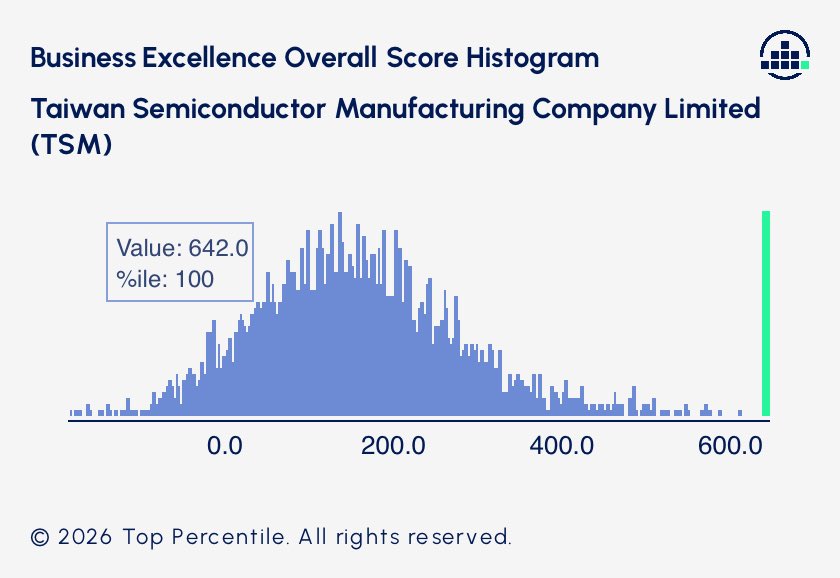
Yes, it’s an investment research platform. We pull company filings and evaluate every stock consistently across 30+ metrics to produce a Business Excellence score, then rank it against the whole market.
We do the same for valuation using multiples. Lots more in development too.
The site is linked in my bio if you want to explore it. It’s free
The $LULU earnings call was more revealing than the release.
The tone changed. Management said it expected a better response from the turnaround plan by now. Product launches remain inconsistent, management disclosed leggings sales fell 20%, and August started slowly.
KEY TAKEAWAYS
The product problem is becoming clearer. Management said leggings sales fell 20% in Q2. New away-from-body bottoms such as Groove and Dance Studio are working, but not enough to offset weakness in the core. Accessories fell 13%.
China deteriorated sharply. Management pointed to negative brand commentary, a weaker Tmall 618 event and inconsistent product newness, rather than macro. FY26 China revenue growth was cut from 20% last quarter to high single digits, implying a much weaker second half after strong H1 growth.
There is no turnaround in the current numbers yet. August started slowly. Q3 assumes North America revenue falls mid-teens, while China and Rest of World grow only 3–5%. Any upside from the actions underway is not included.
Lululemon is starting to resize around the weaker business. Planned net store openings were cut to around 35 from 40, and management is taking a deeper look at the cost base while protecting product and brand investment.
KEY QUESTIONS ANSWERED
Analysts challenged whether the underlying problem has actually been diagnosed. Management increasingly pointed to product inconsistency and brand sentiment rather than macro, while acknowledging the action plan has delivered less than expected.
They also asked whether Q3 should be the trough. Management did not call one. August started slowly and the guidance reflects what it is seeing today.
The cost structure was another concern. With sales falling, significant fixed-cost deleverage is emerging. Management is now looking more deeply at right-sizing the business, but gave no 2027 cost framework yet.
WHAT STILL NEEDS TO PROVE OUT
The clearest test is conversion.
Some new products are working and community engagement remains strong, but management said the increased marketing has not yet changed the top-line trajectory. Stronger away-from-body styles also haven’t offset the decline in leggings.
Incoming CEO Heidi O’Neill starts next week. She inherits a turnaround where the problems are becoming clearer, but there is still no evidence yet that the fixes are restoring demand.
$LULU -16%. The turnaround just got harder. Comparable-sales weakness is no longer confined to the Americas, and incoming CEO Heidi O’Neill inherits a much broader growth problem.
Revenue: $2.42B vs $2.46B expected (miss)
Global comps: -9%
Q3 revenue guide: $2.29-$2.32B
Q3 EPS guide: $0.93-$0.98 vs ~$2.52 expected (miss)
Americas comps fell 12%, while China and Rest of World comps also turned negative. International revenue is still growing, but the deterioration has clearly broadened.
The $2.92 Q2 EPS included an $0.86 tariff-refund benefit. More importantly, FY26 revenue and EPS guidance were both cut sharply.
Stock: -16% after hours
Verdict: The turnaround evidence went backwards. Growth weakened across regions and the outlook deteriorated again.
What still needs answering is whether this is fixable product execution or a deeper loss of brand momentum.
@Invesquotes I agree, the choice is interesting. I wonder if it’s a signal from the board that they want Adobe’s next phase to lean more toward enterprise and customer experience.
@Ashton_1nvests I agree. There are still positives in the business and I think it can turn around from here, but the weakness is clear now. Feels like the new CEO has a much bigger job ahead.
@KobeissiLetter This quarter made the slowdown feel much more real. The Americas were already weak, but China had been a bright spot. Now that’s slipped too.
$ZS is up 1% post earnings. Cybersecurity keeps getting more important, but Zscaler is entering FY27 with slower growth.
Revenue: $898M vs $877M expected (beat)
Adj EPS: $1.19 vs $1.09 expected (beat)
ARR: $3.77B, +25%
FY27 revenue growth: ~17%
Q4 stayed strong, but organic ARR grew 20%, already much closer to the FY27 outlook than the headline 25% suggests.
Stock: just over +1% after hours
Verdict: The cautious FY27 outlook was not temporary. Zscaler is still growing well, but the deceleration is real.
What remains is whether AI security and broader platform adoption can reaccelerate growth.
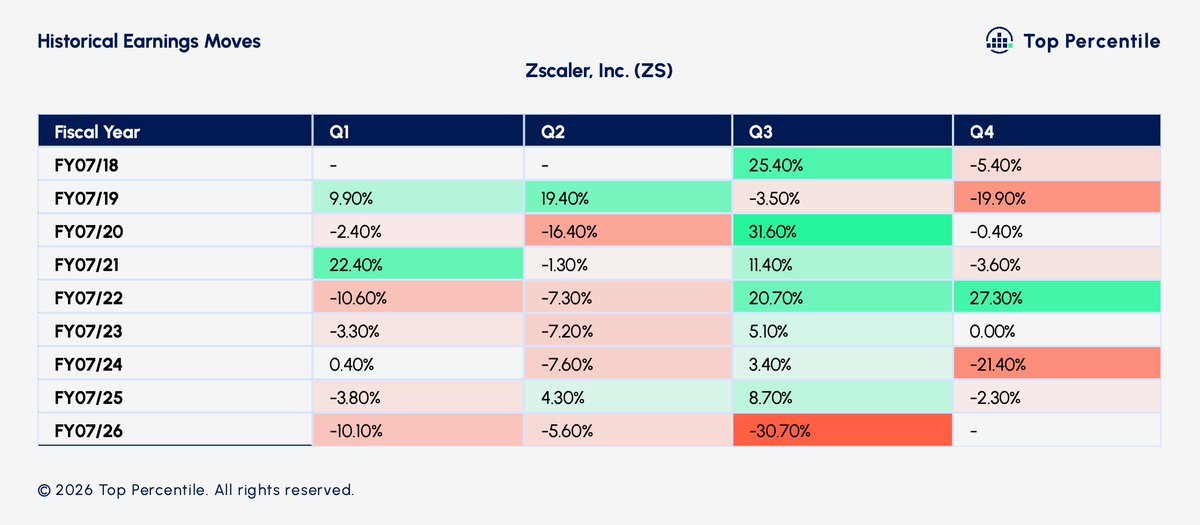
$ZS earnings tonight. Cybersecurity is booming in importance, but Zscaler has fallen after four straight earnings reports.
Tonight should tell us whether the business is still strengthening into that opportunity, or whether the slowdown investors fear is becoming real.
RECENT PRICE ACTION
YTD: -23.2%
1M: +14.2%
Last earnings reaction: -30.7%
WHAT HAPPENED AT LAST EARNINGS?
Revenue and ARR still grew 25%, but management gave a prudent FY27 outlook of just 16–17% growth after two senior sales leaders departed, while pulling forward capex and lowering FY26 free-cash-flow margin guidance.
WHAT HAPPENED LATELY?
The stock has recovered over the past month as software sentiment improved, while Zscaler has kept building its AI-security position, most recently expanding its CrowdStrike partnership.
KEY QUESTIONS FOR EARNINGS
- Is Zscaler still gaining ground as AI makes cybersecurity more important?
- Was the cautious FY27 outlook temporary, or is mid-teens growth the new reality?
Spoiler: Jeremy’s “next Nvidia” is actually two stocks: $NOW and $CRM.
His bigger point is about cycles. He thinks semis still have another year or two, but profits could peak as hyperscaler capex eventually slows. Great companies can still leave you with years of dead money if you buy near the top of a cycle.
Software is the opposite setup for him. He thinks expectations for $NOW and $CRM are still too low.
My take: I’m with Jeremy on software. Both $NOW and $CRM look interesting and below is $CRM versus the rest of the software group on our quality vs valuation map.
$LULU -16%. The turnaround just got harder. Comparable-sales weakness is no longer confined to the Americas, and incoming CEO Heidi O’Neill inherits a much broader growth problem.
Revenue: $2.42B vs $2.46B expected (miss)
Global comps: -9%
Q3 revenue guide: $2.29-$2.32B
Q3 EPS guide: $0.93-$0.98 vs ~$2.52 expected (miss)
Americas comps fell 12%, while China and Rest of World comps also turned negative. International revenue is still growing, but the deterioration has clearly broadened.
The $2.92 Q2 EPS included an $0.86 tariff-refund benefit. More importantly, FY26 revenue and EPS guidance were both cut sharply.
Stock: -16% after hours
Verdict: The turnaround evidence went backwards. Growth weakened across regions and the outlook deteriorated again.
What still needs answering is whether this is fixable product execution or a deeper loss of brand momentum.
$LULU Earnings (Tomorrow, after close)
Lululemon’s growth engine has almost stalled. After years of double-digit expansion, Q2 is now expected to decline and FY26 is guided roughly flat.
The slowdown is stark in the chart, with growth falling from around 40% at the peak to low single digits by Q1.
RECENT PRICE ACTION
YTD: -43.2%
1M: -0.7%
Last earnings reaction: -9.4%
WHAT HAPPENED AT LAST EARNINGS?
Q1 revenue grew 4%, but Americas revenue fell 3% and Americas comparable sales declined 6% in constant currency.
The bigger damage came from guidance. Q2 revenue was guided down 2–3%, with North America down low double digits. Gross margin was expected to fall 410 bps and operating margin to 11.6% from 20.7%, reflecting tariffs, markdowns and weaker sales.
FY26 revenue guidance was cut to $11.0–11.15B, flat to down 1%, with EPS cut to $10.95–11.15.
Management said traffic was the biggest issue, with conversion and average order value also under pressure, alongside weaker-than-expected product launches.
WHAT HAPPENED LATELY?
Heidi O’Neill takes over as CEO on September 8, just days after these results. She inherits a business already trying to refresh product, simplify assortments and rebuild brand momentum in North America.
That makes this earnings an important snapshot of where the business stands before the leadership handover.
KEY QUESTIONS FOR EARNINGS
- Has North America stabilized relative to the low-double-digit decline expected for Q2?
- Are product changes starting to improve traffic, conversion and full-price selling enough to reduce clearance pressure?
- Can international growth keep the already-lowered full-year outlook intact?
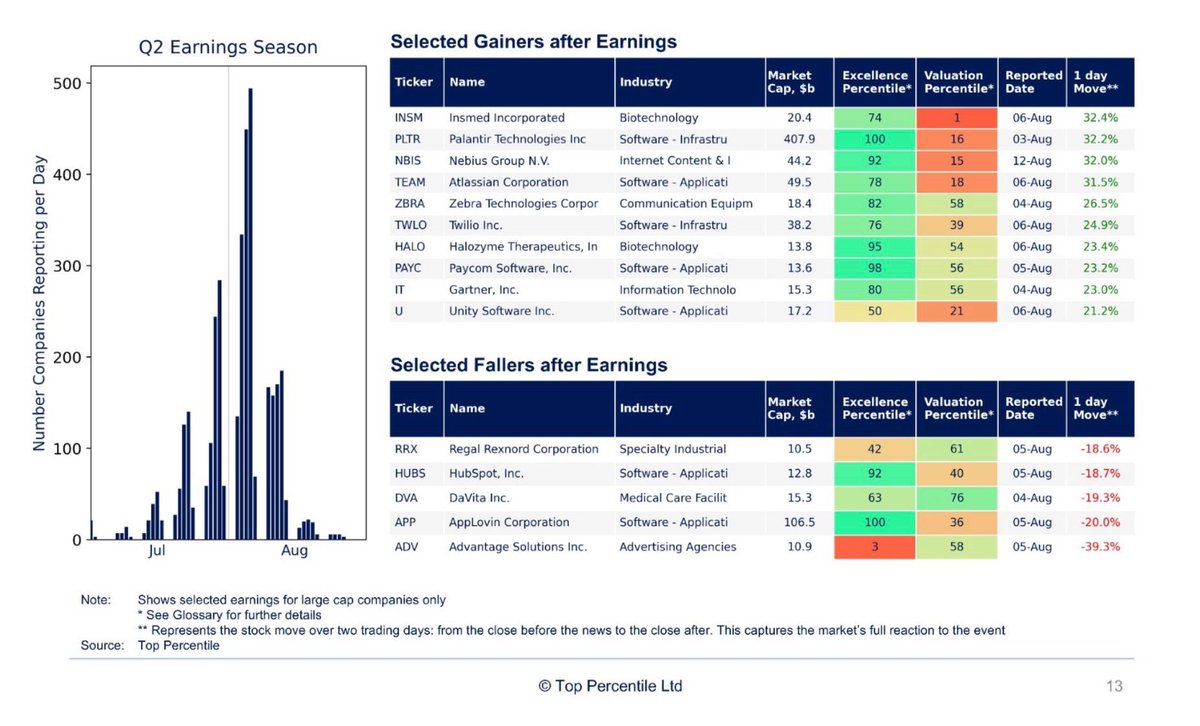
Before September gets too far underway, there’s still plenty to unpack from August.
Earnings are easy to experience one call at a time. Stepping back shows something different: who surprised, who disappointed, and which high-quality businesses were suddenly marked down.
Here are some of August’s biggest post-earnings moves.
@JasonL_Capital Great question. We use 30+ metrics across growth, profitability, capital structure and the other areas in the chart. All obtained from SEC filings. We then convert them into a single Business Excellence score and rank each company against the market.
@StockSavvyShay@Fiscal_ai Such a good way to show just how significant the growth has been. $AVGO’s revenue growth now ranks ahead of 76% of the market.
$ZS earnings tonight. Cybersecurity is booming in importance, but Zscaler has fallen after four straight earnings reports.
Tonight should tell us whether the business is still strengthening into that opportunity, or whether the slowdown investors fear is becoming real.
RECENT PRICE ACTION
YTD: -23.2%
1M: +14.2%
Last earnings reaction: -30.7%
WHAT HAPPENED AT LAST EARNINGS?
Revenue and ARR still grew 25%, but management gave a prudent FY27 outlook of just 16–17% growth after two senior sales leaders departed, while pulling forward capex and lowering FY26 free-cash-flow margin guidance.
WHAT HAPPENED LATELY?
The stock has recovered over the past month as software sentiment improved, while Zscaler has kept building its AI-security position, most recently expanding its CrowdStrike partnership.
KEY QUESTIONS FOR EARNINGS
- Is Zscaler still gaining ground as AI makes cybersecurity more important?
- Was the cautious FY27 outlook temporary, or is mid-teens growth the new reality?