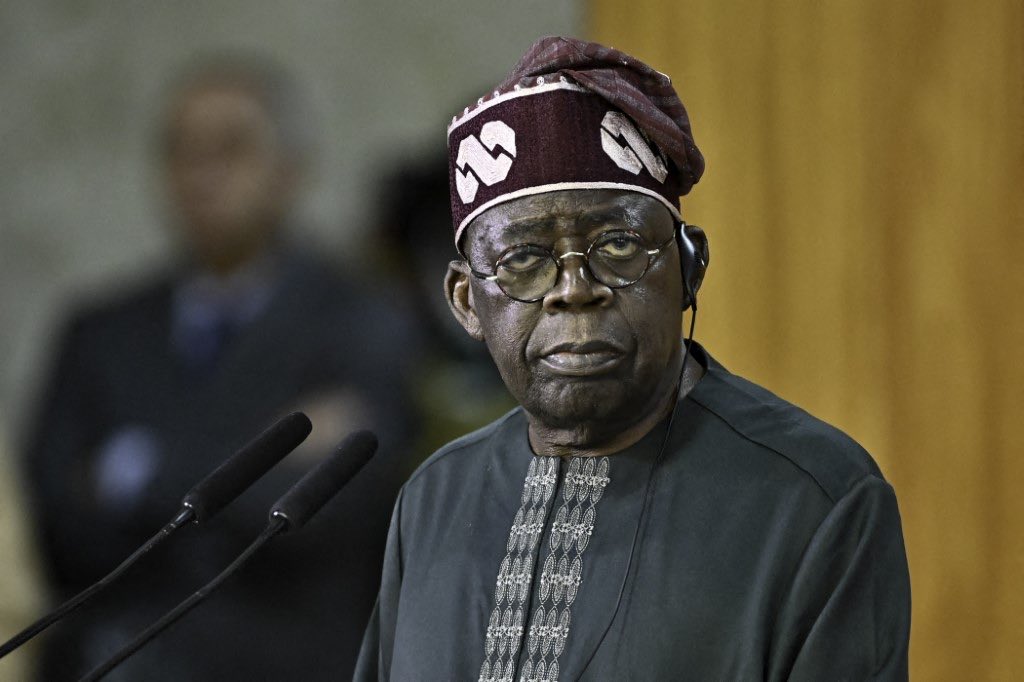
This story is actually insane and nobody is talking about it, and the key witness has apparently died in a hotel fire.
Prince Adeniyi Adeyemi accused Femi Gbajabiamila of collecting ₦400 million from him for a ₦600 million deal for the appointment to become DG of Presidential Foreign Intervention Promotion Council (PFIPC), the Chief of Staff was said to have demanded 48% of the agency’s ₦24 billion take-off grant.
Prince Adeyemi said 48% is too much. There was a little disagreement apparently, and on 11 June 2026, Gbajabiamila, in his capacity as Chief of Staff, issued a public statement saying the PFIPC was not an official government body.
Prince Adeyemi wrote a petition to the police and named the middleman who was the witness to everything that happened.
The middle man, who is the key witness to the transaction died a day after that petition.
Prince Adeyemi wrote for the investigation of the man’s mysterious death, and also claimed there are multiple assasinanation attempts on his life.
He also claimed his phone was particularly stolen in one of the attempts and they are refusing to help him track it.
Gbajabiamila claims the company does not exist and that Prince Adeyemi is telling lies, but the 2026 Appropriation Act currently contains a ₦1.3 billion budget allocation for the PFIPC on page 50 and 51.
So how did a “non-existent”agency receive a budget allocation?
The criminality happening under Tinubu is abysmal.
Why is this not making the news?
Let me tell you something, my friend.
The North’s problem is real. Nobody serious should deny it. The poverty is real. The out-of-school children are real. The insecurity is real. The failure of leadership is real.
But if you want to understand the North, you cannot start the story from “they have had presidents.”
That is too shallow for a region with this much history, geography, trauma, religion, power politics, colonial distortion, elite failure, and security pressure.
The North did not wake up one morning and decide to hate education. There is a history behind that suspicion.
When the British entered Northern Nigeria, they met an already established Islamic political order. There were emirates, courts, scholars, taxation systems, trade routes, Islamic schools, judges, administrators, and a ruling class that already had its own idea of civilization.
Then colonial rule came with Western education, missionary activity, new courts, new administrative structures, and new incentives.
In many parts of the South, Western education entered through mission schools and became a ladder into the colonial economy. In much of the Muslim North, it carried a different meaning. It was not just “school.” It was seen by many as a vehicle for Christian influence, colonial loyalty, cultural erosion, and the weakening of existing Islamic authority.
That stigma did not come from the sky. It came from conquest, mistrust, and the way Western education arrived.
This is why the North’s education problem cannot be reduced to stupidity or laziness. It began partly as a defensive reaction to a real historical threat.
But here is the hard truth: the suspicion has outlived the threat.
A reaction that may have made sense under colonial pressure became destructive when the modern state began rewarding literacy, science, bureaucracy, technology, engineering, and formal administration.
At some point, protecting identity became indistinguishable from trapping children outside the future.
That is where Northern leadership failed badly.
The old Northern elite understood the danger earlier than people admit. Sir Ahmadu Bello did not sit down and say, “Let the North remain backward.” His Northernization agenda was a deliberate attempt to produce Northern teachers, administrators, civil servants, professionals, and political leadership quickly enough to prevent the region from being swallowed inside a new Nigerian state dominated by the already Western-educated South.
That agenda had flaws, but it worked in one important sense: it created a Northern administrative class.
The problem is that later leaders inherited the power but not the developmental seriousness.
They inherited the slogans, the emirates, the titles, the political machinery, and the federal access, but not the discipline of mass education, industrial policy, rural development, teacher training, agricultural modernization, and serious security planning.
So yes, the North has produced presidents.
But producing presidents is not the same as producing development.
Power without developmental discipline becomes distribution. It becomes appointments, contracts, pilgrim boards, federal slots, elite bargaining, and recycled patronage.
And geography also matters.
The North is not sitting beside the Atlantic like Lagos or Port Harcourt. It is tied to the Sahel. It shares long and porous borders with Niger, Chad, Cameroon, and Benin. When Libya collapsed, when weapons spread across the Sahel, when jihadist networks expanded, when climate stress hit pastoral routes, when Lake Chad communities were weakened, when Niger and Mali became unstable, the North inherited those shocks directly.
A farmer in Zamfara, a trader in Maiduguri, a herder around Sokoto, or a community in Katsina is not dealing only with “Nigerian leadership failure.” They are living inside a regional security crisis.
That does not excuse bad leadership. It explains why lazy comparisons are weak.
The North also suffered from the Nigerian resource curse in a particular way. Once oil money became the centre of the Nigerian state, productive regional economies were weakened. Groundnut pyramids, cotton, hides and skins, textiles, agriculture, local industry, and regional planning lost importance. Politics became a struggle for federal allocation instead of a competition to build productive capacity.
The North had land. It had people. It had agriculture. It had trade routes. But the oil state taught every region to look toward Abuja.
That destroyed initiative everywhere, but it damaged the North deeply because its strongest assets required long-term planning: irrigation, agro-processing, education, rural roads, livestock systems, border trade, and security coordination.
Now, after saying all that, responsibility must be accepted.
Northern leaders failed their own people.
They allowed almajiri children to become political decoration instead of a national emergency. They allowed banditry to grow from local criminality into a parallel economy. They allowed schools to decay. They allowed girls’ education to become negotiable. They allowed clerics and politicians to play games with reform. They used poverty as an election structure. They built loyalty through dependence.
That part is true.
But the answer is not to mock the North. The answer is to study what worked before and update it.
Ahmadu Bello’s Northernization agenda can be reimagined for the 21st century.
Not as ethnic exclusion or nostalgia. But as a serious regional human-capital project.
Mass teacher training. Boarding schools in secure zones. Integrated Qur’anic and formal education. Technical colleges tied to agriculture, energy, construction, mining, and logistics. Girls’ education backed by stipends and community negotiation. Agro-industrial clusters around Kano, Kaduna, Katsina, Sokoto, Bauchi, Gombe, Niger, and Borno. Livestock modernization instead of pretending open grazing can survive modern population pressure. Border security tied to trade, not just soldiers and checkpoints.
Other societies have faced versions of this problem.
Bangladesh attacked female education with stipends, community-level incentives, and a clear national push. Indonesia did not abolish its Islamic schools; it integrated many of them into a modern education pathway. Malaysia used state policy to expand opportunities for historically disadvantaged Malay communities, though with its own flaws. China took poor inland regions seriously through infrastructure, rural industry, technical training, and state coordination.
The lesson is simple: you do not fix historic backwardness by insults. You fix it with policy, discipline, and elite seriousness.
So yes, my friend, criticize Northern leadership. I do it too.
But do not flatten a whole region into “they had presidents and still failed.”
That is lazy analysis.
The North’s crisis is a product of bad leadership, colonial disruption, educational mistrust, Sahelian geography, oil-state laziness, elite capture, and security collapse.
And the way forward is also clear.
The North must stop hiding behind history.
The South must stop pretending history does not matter.
And Nigeria must understand that if the North remains broken, the country will not be stable, no matter how much one region mocks another online.
@deeen_ameen That 250 million naira can open a small agro processing facility, no be by billions of FAAC wey dem de clamour for go change the lot of the masses.
Dear @WorldBankGroup
STOP GIVING NIGERIA FRESH LOANS!
STOP GIVING NIGERIA FRESH LOANS!
STOP GIVING NIGERIA FRESH LOANS!
STOP GIVING NIGERIA FRESH LOANS!
STOP GIVING NIGERIA FRESH LOANS!
You already approved a whopping total of $9.35 billion in loans & credits between June 2023 & May 2026 for the BAT administration
Enough is enough! Add your voice & repost this until The World Bank does the needful. 💔💔
@uNqubekoo@BiaPulse Since you know the culprits who are responsible for the destruction of trust between 🇳🇬 and 🇿🇦 I urge you to expose them to the authorities.
It is not right to claim to be the only saint while your kins are evil. This attitude of I better pass my neighbour is not right!