Greg Wallace may have pattern analysis skills but ‘the only women speaking up about my behaviour are the ones economically secure & experienced enough to do so’ is not the defence he thinks it is https://t.co/ra8D4lVB0A
🧵 THREAD 🧵
Autism and Social Energy
As an autistic person, social interactions can be incredibly draining. Let’s explore why this happens and why alone time is not isolation—it’s vital self-care.
#ActuallyAutistic
Are you an SLT who loves clinical practice & working with students, and would also like to develop your lecturing skills? We have the perfect post! Now recruiting another SLT Lecturer/Practitioner for our on-campus clinic https://t.co/RO3GaqJt6H
Or contact [email protected]
I keep thinking how 3 little girls were killed & more were hurt & traumatised, & instead of talking about their precious lives, we are being forced to focus on violent entitled white men burning cars & towns, who don’t give a shit about women’s & girls’ safety.
“It was obvious that my therapist was not bothered by me or my problems. They seemed disinterested and provided generic, textbook advice.” Major new study in
NHS shows importance of personalised, individually tailored therapy to clients https://t.co/YJewGstdVJ
🎉We're delighted to have been ranked 3rd for SLT student satisfaction in England🎉@compuniguide, rising 3 places overall.
Thank you to everyone whose hard work made that possible and to our students for recognising us! 🙏@marjonuni
It is a myth that asking about suicide will put the idea in someone's head.
Research shows that it is not dangerous to ask and it is safer asking than not. People often find great relief in being able to talk openly about their thoughts and feelings.❤️
https://t.co/xR4MHOKwpi
As a Speech and Language Therapist who worked in Sure Starts in the early noughties this:
1. Does not surprise me - the work done in Sure Starts to reduce health and education inequalities was extraordinary.
2. Makes me sad and angry that the work has been completely irradiated.
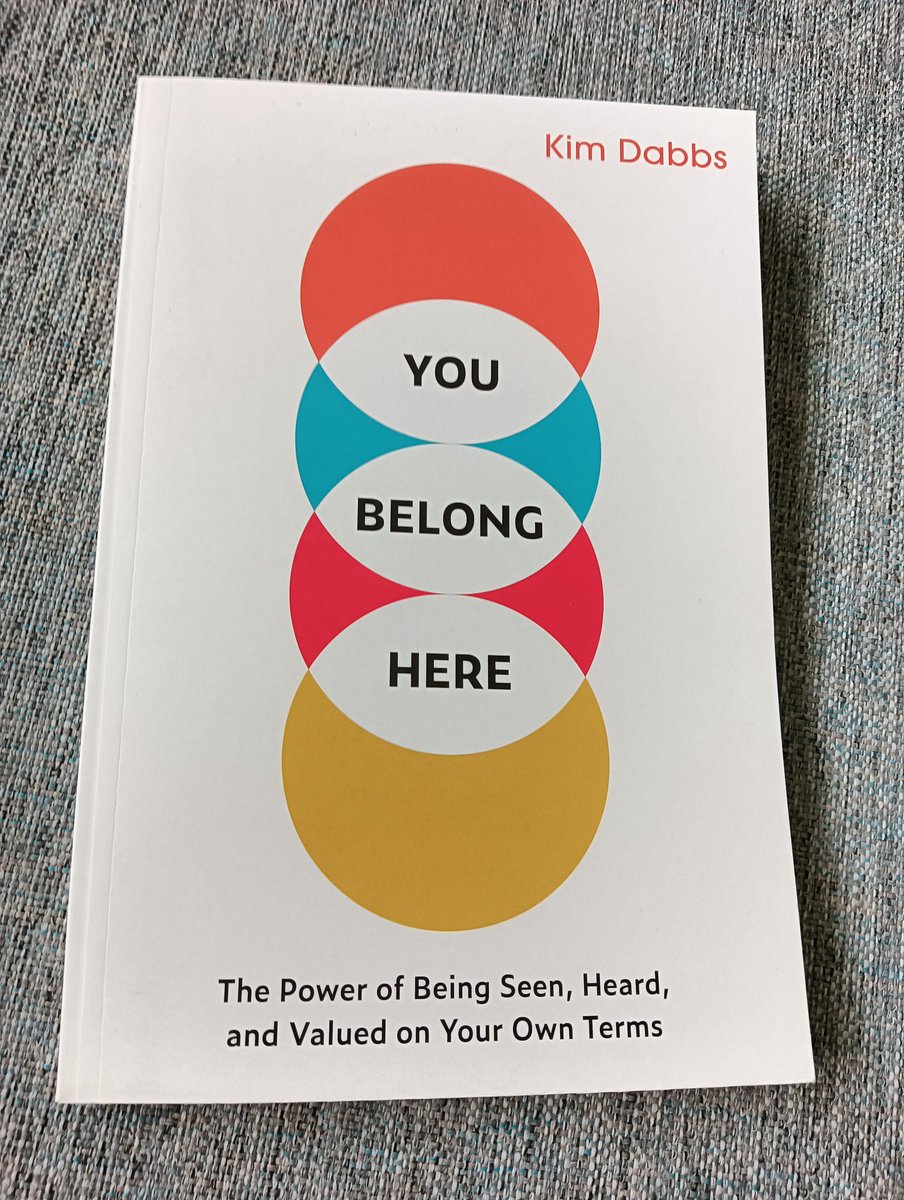
#belonging and finding a good fit often comes up in coaching conversations I have with people. My own team is reforming and I have started in a new wider role. I am getting curious to learn more about identity & belonging with @kimdabbs#LeadersAreReaders#WhatMattersToMeMatters
An autistic 11-yr-old died after being labelled 'uncooperative' because he struggled with medical examinations, and observations about his condition was dismissed because he was nonverbal and couldn't articulate his distress. This story has devastated me. https://t.co/KUhyUQIPXj
I am seeking survey responses from UK-based #SLTs who work with #tubefedchildren on methods used to support social participation during mealtimes. All responses are anonymous and it should take no longer than 10 minutes to complete. Thank you #dysphagia
https://t.co/9JTAdK4Z7y
It's Children's Mental Health week 2024. The theme is Your Voice Matters.
I’d like to highlight the many ways in which children express their voice. For they don’t always talk or communicate in the ways that we expect.
They often express their voice through their behaviour. Sometimes loudly, chaotically, erratically, childishly. They might communicate with us by refusing to do something, or by being increasingly disruptive. Their voice is often inconvenient for adults, who would prefer it if they kept quiet.
Children show us how they feel and what they think all the time, but if adults don’t deem that to be appropriate then they are dismissed and sometimes punished for using their voice.
This children's mental health week, let's not put the onus on children by telling them to use their words, let's put the onus on adults to really listen.
Cancer took my father in his prime. I hate it with a passion. On this, King Charles has my sympathy. I wish him & thousands across UK diagnosed with cancer full recovery. Watching the news & the media has already started whitewashing his legacy as ‘Monarch’ & painting him as a saint for ‘working’ when he should be focused on his recovery. Bear in mind that there are thousands of cancer patients on long NHS waiting lists, some HAVE to work because they can’t afford not to & won’t have access to the quality of healthcare & specialists he would have. Plus they won’t have the wealth or staff to make themselves comfortable while dealing with this horrible disease. The media should stop being tone deaf & read the room.
Are you the parent of an anxious autistic child and you don't know how to help? Come to my lunchtime webinar on Monday. You'll understand how anxiety works, why it can be a particular problem for autistic children - and get some ideas as to how you can help. It's recorded if you can't make the time.
Please share if you know parents who might benefit.
We try to keep these webinars affordable. If the price is prohibitive for you, please get in touch with me.
https://t.co/4gRBwOzV6A
Today I heard from a parent that their son was terribly upset when he got covid, because it would ruin his 100% attendance record. At the end of the year, those with 100% get book tokens & certificates in assembly. She mentioned it in passing, she obviously didn’t think it was a big deal. It was just how school worked, and last year her son had got the award.
Here’s why policies like that should stop.
What’s the problem, you might think, with rewarding those who turn up day after day? Surely it’s just a nice little treat to recognise their commitment? And book tokens! How worthy. What’s the problem with free books for kids who take school seriously enough to make it in every day?
As with all reward systems, however, we don’t think enough about those who don’t get the reward and the effect on them.
Who are these kids? Well, it’s the children with serious illness - the mum then went on to tell me that one girl in his class has leukaemia, for example. Or the disabled child. Or the child with overwhelming anxiety. Or the child who became homeless with their mum due to domestic violence and has to go to the shelter in the night, and then doesn’t make it to school the next day. Or even the child whose dad died and who had a day off to attend the funeral.
It’s the kids who find school most difficult and who have the most challenges who struggle to attend.
What happens to them when everyone else goes up to get their book tokens? They sit in assembly watching, and they are punished. They are punished because the absence of a reward acts as a punishment for them. It’s a public punishment too, everyone knows that they didn’t make the grade. No free books for them. Tough.
Whenever there are rewards, the flip side is punishment. When we reward one person, the others are punished by the absence. When we reward someone one year, and then not the next, that again the absence acts as a punishment. It makes them feel bad.
Of course, we know this. We know that children feel bad when they don’t get something and others do. This is in fact pretty well how rewards are meant to work. They are meant to motivate. The idea is that children will try harder to get the reward.
So what’s the problem? The problem is that 100% attendance isn’t about trying harder. It’s largely about luck, particularly at primary school. Luck not to get ill, luck to have a stable family, luck to be the kind of person who doesn’t find school overwhelmingly stressful. Luck to be the sort of person for whom life is a bit easier, in fact.
Rewards for 100% attendance reward the lucky, and by doing so punish the unlucky. The lucky feel good and the unlucky feel bad. And that has other consequences. Because making those who find school attendance hard feel bad is very unlikely to make them more able to attend. They are already struggling, and now they’re being punished for it.
It contributes to anxiety, because children are aware of the consequences of not getting 100%, and some of them will become really anxious about it. For others, it will contribute to their anger and their feelings that they aren’t valued as much as others.
So yes, the proud children up the front of assembly can’t see a problem, and their parents think it’s ‘just a nice gesture’, but it’s so easy to ignore the effect on the least advantaged. We celebrate the winners and the losers are invisible, shamed into silence. The winners assume that the losers deserved to lose - they say that they worked hard for their awards, and the losers couldn’t be bothered to get out of bed and so why should they get book tokens?
This happens again and again in our education system, and that’s why I keep on banging this drum. Every intervention should be evaluated for its impact on losers as well as winners. It’s not enough to pretend they could all be winners if they just tried hard enough.
Sometimes people tell me that the attendance awards helped them learn that everyone is good at different things, because whilst they didn’t get attendance awards, they did well at other things and got awards for music or creative writing. Which is nice for them, but again, let’s think about the losers. For it’s not true that in a school context everyone is good at something. It’s not true that everyone gets awards somewhere. Some children learn that they aren’t good at anything. Not even turning up.
These reward systems come up often when I talk to young people who are disillusioned and burnt out by school. The significance of book tokens goes beyond the money. That’s why it doesn’t work when parents say they’ll buy the book tokens instead, to try and lessen the pain of not getting the reward. Those book tokens, awarded in public in assembly, signify approval, status, validation - and to those who don’t get them, they signify the opposite