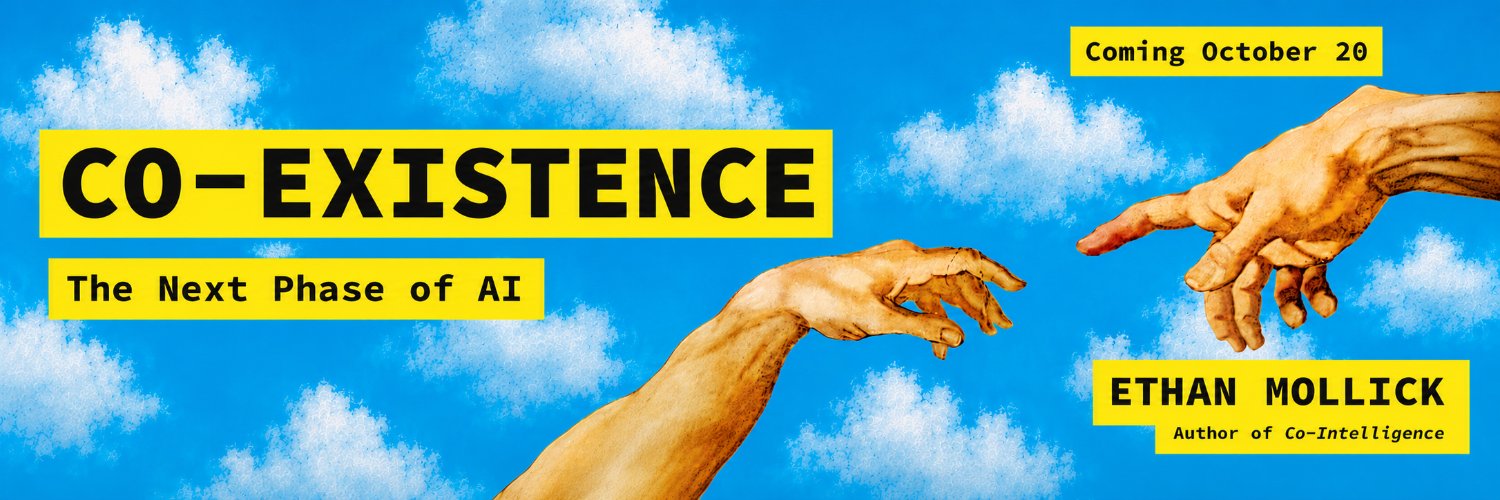
I just got the first copies of my new book, Co-Existence (out October 20) & they look great!
Also, there is a fun pre-order bonus: if you pre-order, you get a code to an AI interview that will help you figure out how to use your human advantages with AI. https://t.co/Ti5jo6l05g
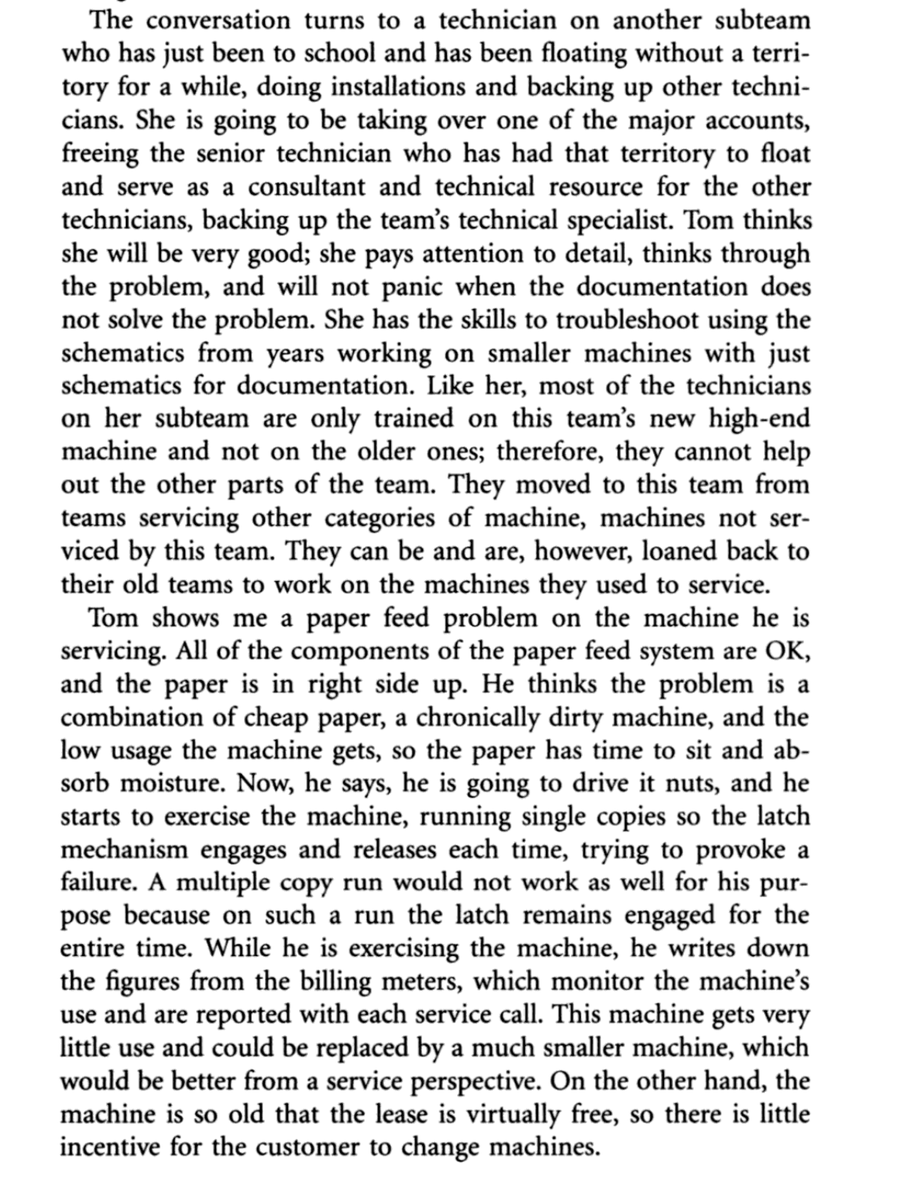
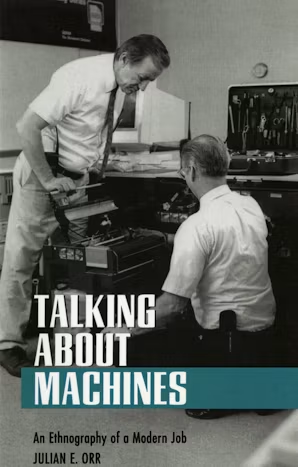
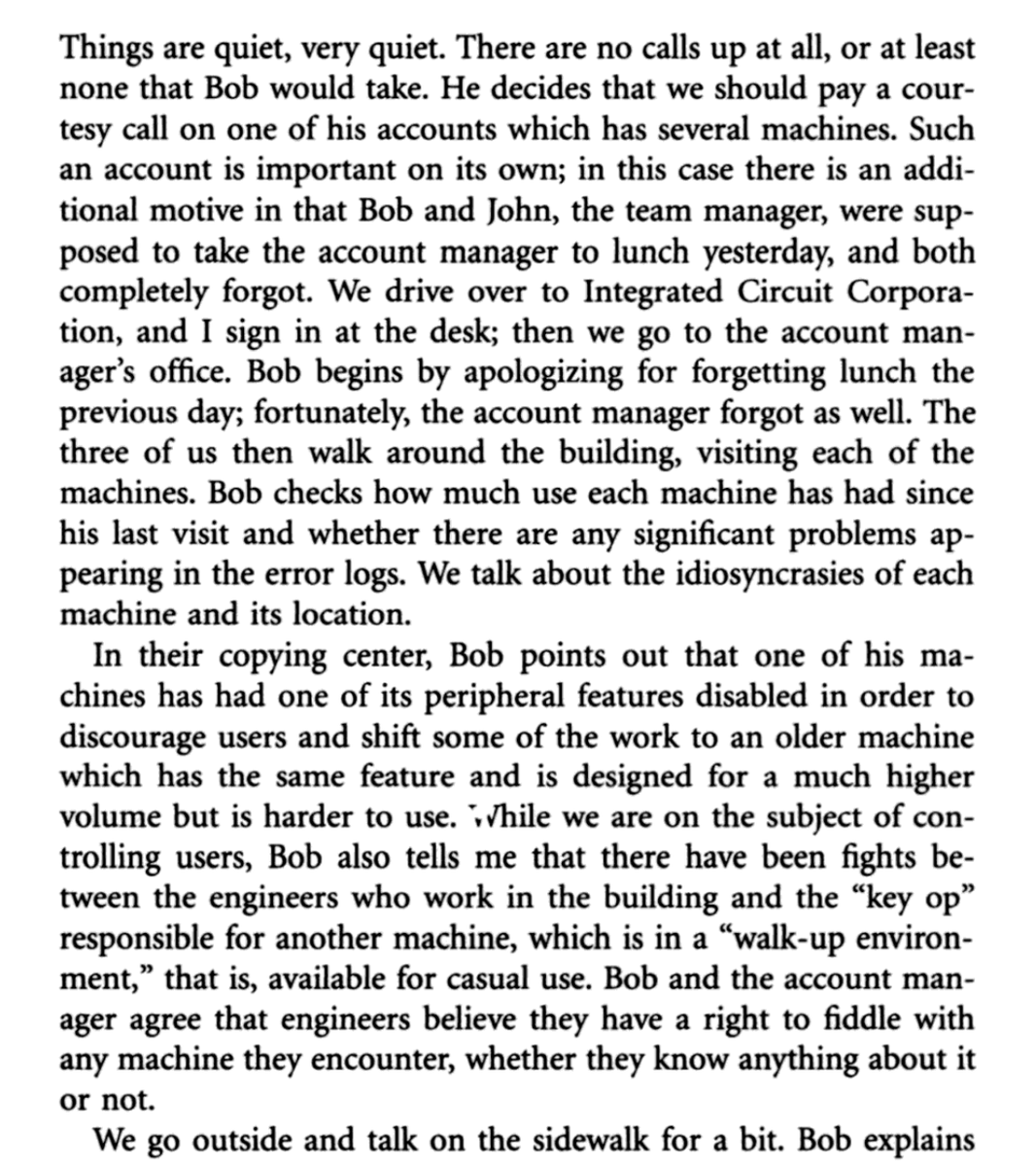
When people talk about AI easily replacing workers, I think about this ethnography of copier repair technicians in the 1990s.
You see how work is complicated and improvised by workers and informal and badly documented.
(But eventually technology did largely eliminate this job)
Subtle problem with AI-written academic papers is that AI isn't calibrated for feedback. AI often just folds, but if you are sending a paper for review, challenges from peer reviewers should result in some attempt to defend your idea (while still giving up on it if really wrong)
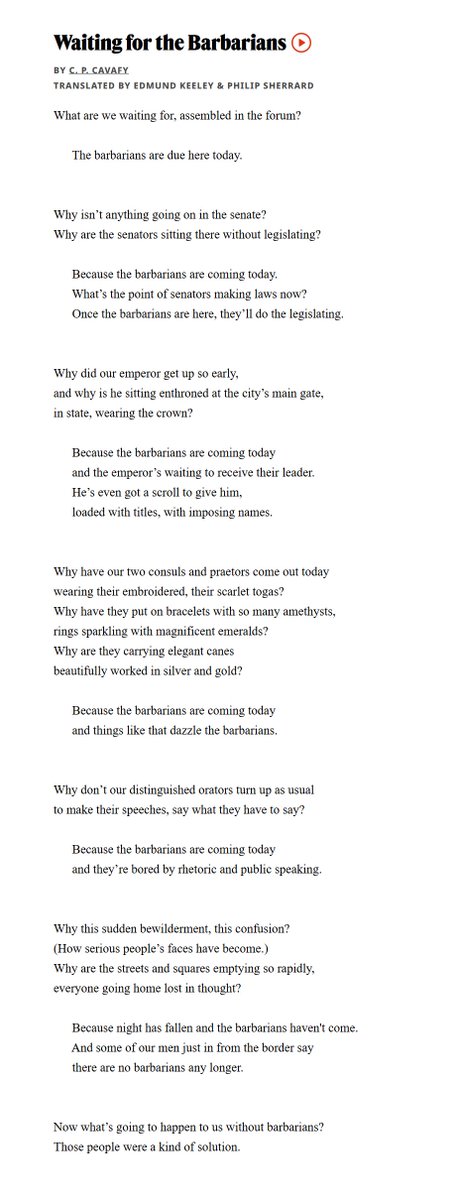
AI policy right now, especially from the Labs, makes me think of this poem.
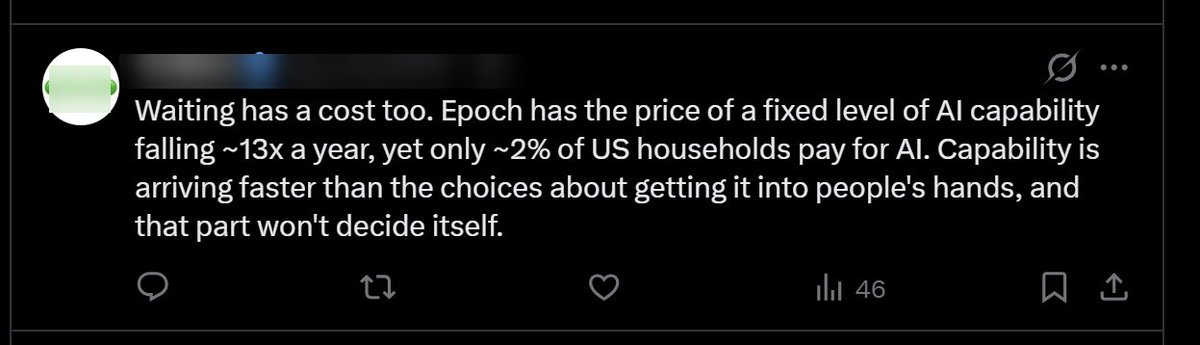
If you believe superintelligence is near, you don't need to make hard decisions about how to build AI to make the world better. Just wait for ASI & it will decide for us. But if that doesn't happen...
I will block replybots whose prompts make them generate inane comments connecting the poem to business process re-engineering or whatever, or those that quote a random line from the poem as "the part that people miss" etc. You can do better.
I tend to use ChatGPT on my machine for Codex work (using the Remote connection for management), but Dot is in the Cloud and I have a couple scheduled tasks in Claude running on my machine and... oh my gosh is it all confusing to explain to anyone who isn't deep into this stuff.
Over the past weeks I switched a lot of my Cowork complex work to new Claude Projects (confusingly, it is not the same as the old Projects in Claude, instead, it persistently chats with a dedicated cloud VM). I found it to be much better in most ways, but not clearly documented.
Hi! I work on Cowork. Probably no surprise, but we want to make our users as powerful as possible with Claude - and you're right that explaining and keeping up with the capabilities is hard. Affected users got both an email and an in-app notice, but I'm grateful for the feedback - I think this change was more surprising to people than I'd like it to be. This one will be a longer explainer, bear with me!
The "old" version of Cowork runs model inference in the cloud, executing tool calls in an Anthropic-provided VM we shipped to your computer. We added the VM for capability, safety, and security reasons - mapping in just the data you explicitly added to your session. People loved what they were able to do with Claude but didn't love the disk, battery, and performance cost of running the VM locally. Also, people didn't love that closing your laptop means the work stops.
The "new" version of Cowork runs model inference and the VM in the cloud. Each session gets its own sandbox, not sharing state with other sessions. When the VM needs something on the users' device (like a file), the desktop app is responsible for that file access tool call. To be clear, Claude will only access files in folders that the user explicitly added to the session, the same way Claude only saw files explicitly added to the VM in the "old" version. Sandboxes are destroyed when the session ends!
We think this solves a lot of problems we've heard about (like using Cowork from a phone, keeping work running, or getting all the same power without losing battery to the VM) - but we'll keep iterating on new feedback we hear!
So much reporting on the Claude or OpenAI usage of the same handful of technology companies with competing products & huge cloud infrastructure of their own.
There are many, many more firms out there that are not direct competitors & whose use trends would be more informative.
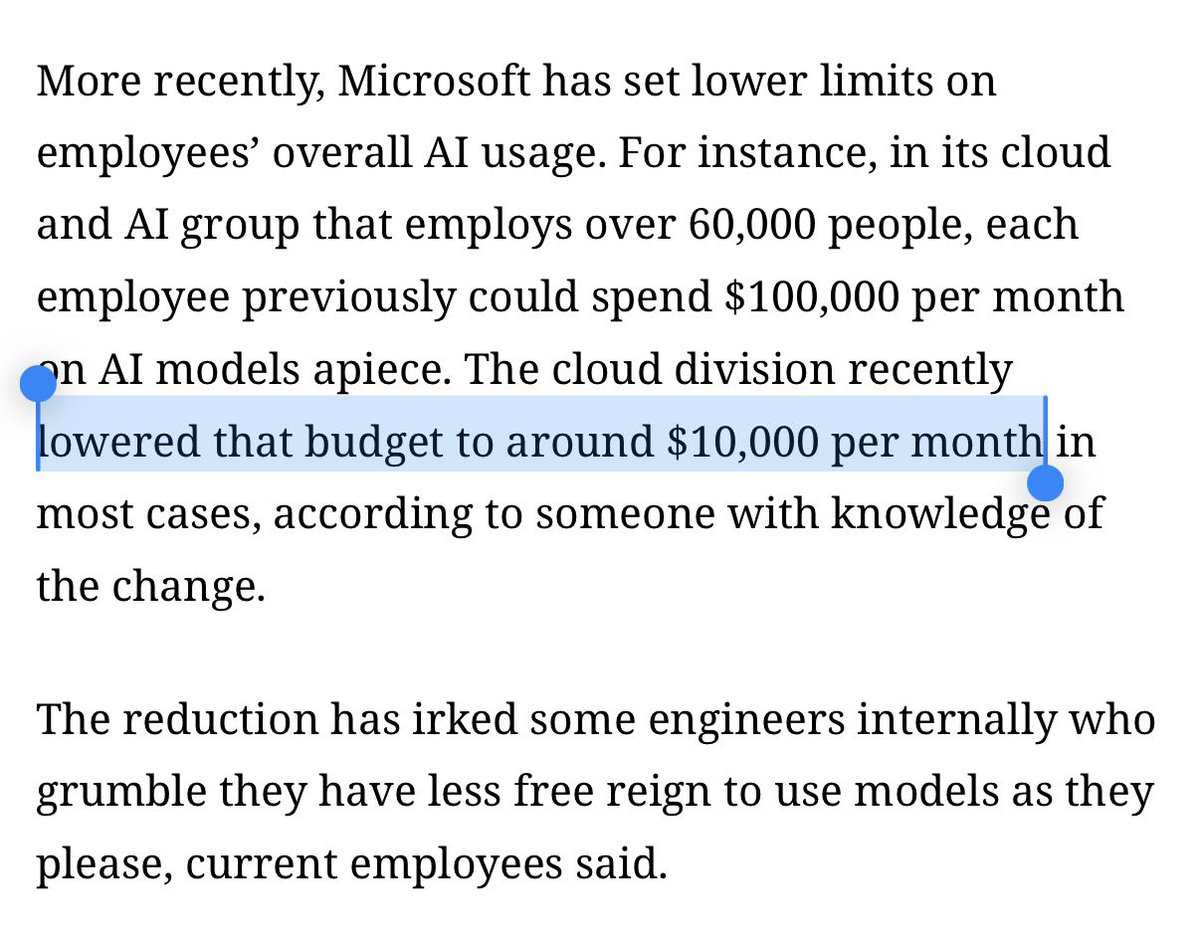
🚨BREAKING: Microsoft and META are aggressively cutting employee use of Claude ahead of Anthropic's IPO
Microsoft has cut internal claude spend by more than 33%, nuked per-employee token budget from $100k/month to $10k/month, and forced Copilot to auto-route to cheaper models
META used Claude code to build Muse, then cut active users from 60,000 to 30,000 (50% decline) after launch, and replaced it with Muse Code
Palantir and Nvidia are also scaling back claude over soaring prices and data privacy fears
it’s OVER…
And for everyone saying it, no this is not Slack. Actual email inbox with material being moved between folders or annotated, rather than a team messaging chat. Think Superhuman, but looping in Ais.
Another much-needed product: an email system built for teams so that a human and autonomous agents can both access it.
We need a system, with appropriate permissions, where your AIs (& invited others) can work, comment to each other and bring things to your attention if needed.
I've been complaining about some OpenAI choices tonight, so, on the plus side, I will say there is still no equivalent to GPT-6 Pro (just as there wasn't with previous Pro models). It both does really hard tasks in one shot & does a surprisingly good job communicating the results
The whole reset thing is really weird and only makes sense to a narrow slice of even people on Twitter.
Everyone else expects to plan their usage in some sort of rational way and getting random prizes of tokens is kind of strange. Like what percent of the user base gets this?
Do you ever think of all the ChatGPT pro users who aren’t on Twitter and are just completely confused at why their usage randomly resets and why they receive banked resets
I have spoken with company leaders in just the last couple of months that talk about their efforts to train people to make GPTs! I think OpenAI needs to figure out ways to bring people along where it is going, since most people are not following this stuff closely.
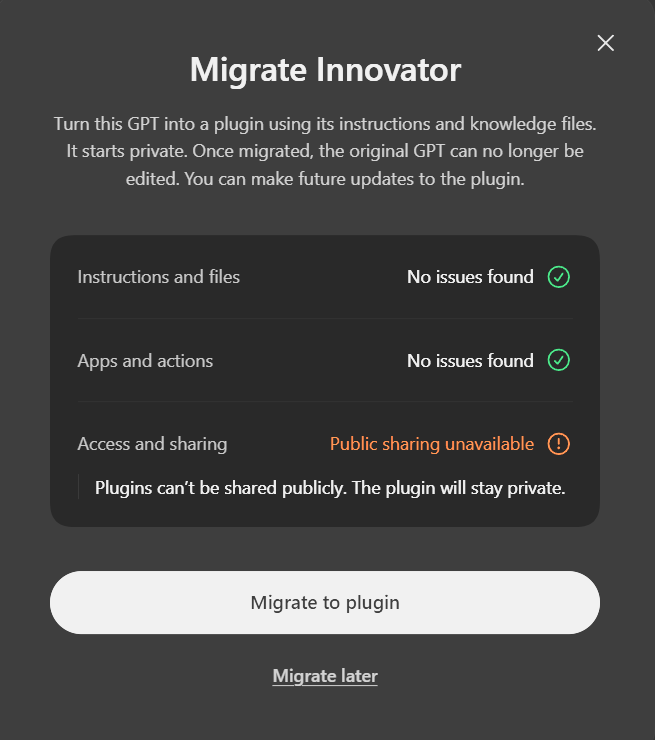
I can migrate my most-used GPT (going away in December) to a private "plugin." But the reason I created a GPT was for other people to use it.
GPTs are obviously obsolete, but I know they were a focus within companies & among educators for years. This isn't a great path for them.
I actually want personal operating systems optimized for co-working with AIs, including fine-grained ideas of security, easier ways to dynamically see & understand what AIs are doing, and independent secondary "audit" agents that check the results of the AIs on your system
whenever I see
- "claude/chatgpt has started debugging your browser"
- have to give an agent full disk and/or accessibility access
I'm convinced we need fundamentally better security primitives for agents to do work as us - and we are living in an awkward intermediate era.
It doesn’t mean that using AI cannot result in tremendous individual advantage on the job, but it does suggest we need to think about how to build our systems at work to aim for human augmentation, instead of automation. Individual performance is not the only factor.
I think this advice is not as true anymore:
1) the durable skill behind “using AI better”
Is unclear as AI gets easier to use
2) Increasingly, organizational systems bottleneck AI gains not individual workers
3) The effect on jobs is uncertain but may impact entire job categories
"create the ultimate brutalist city builder. you should have lots of controls over buildings in ways that are delightful and intuitive to people..."
Here is Fable 5.1, a little over a year since GPT-5 below, in a single shot from a prompt.
It quite good: https://t.co/WsmSwYSDKc
I had access to GPT-5. I think it is a very big deal as it is very smart & just does stuff for you
Full write up in comments, but this is “make a procedural brutalist building creator where i can drag and edit buildings in cool ways" & "make it better" a bunch. I touched no code
Full prompt: "create the ultimate brutalist city builder. you should have lots of controls over buildings in ways that are delightful and inuitive to people who just want to play, but are sophisticated and deep for people who know something about architecture. you should be able to play a lot with design and approach. there should be simulation modes and different ways to view or experience the city. make it stunning."