@Xenianancy@BarExamTutor It’s not so much lowering the bar as it is streamlining. The NYLE is an open-book, pass/fail multiple choice exam based on around 17 hours of recorded lectures. This change would require the same/similar study of NY law without paying, studying, and sitting for a separate test.
Trying to be mature online is exhausting sometimes. I just spent 5-10 mins scrolling through a year of tweets and researching statistics to clap back at a misogynist, only to decide he would probably enjoy the attention and it would be better to say nothing and block him.
@BarExamTutor I was just talking to a student who is taking the MPRE this month and she said that everyone was telling her the test was easy and not to worry, but she found out many of those same people failed the first time🙄
It never hurts to be prepared.
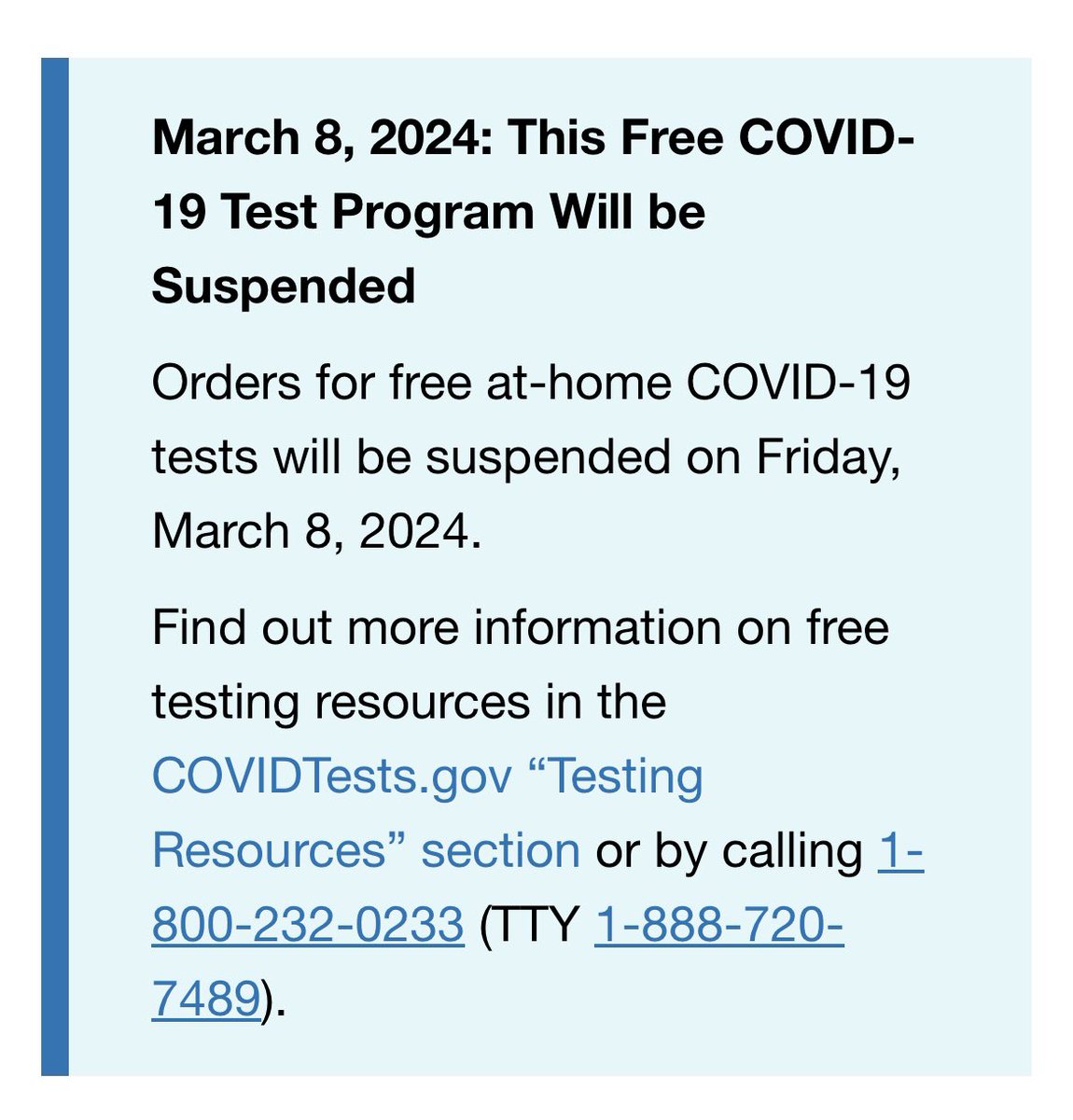
Just days after the CDC weakened its COVID isolation guidelines, the White House is suspending its free home rapid test program.
This week is your last chance to order free COVID rapid tests here: https://t.co/UNk1uTBdQO
@BarExamTutor And the owner is liable for the injury under a strict liability theory because orangutans are wild animals and the injury resulted from the shock of the perceived danger. #barprep (I’m actually a little unsure if that is the best way to phrase it for an essay.)
@designmom I don’t think “autosexual” is usually used this way, but I feel it comes close to describing sexuality less about attraction to other people and more about attraction to one’s own experience of sex. IDing as straight preserves the image of themself they are attracted to.
I am revisiting old tweets to try and assess what potential employers might think if they bother to look at my Twitter account. So far, my conclusion is that if they have any taste at all they will be appalled at how little engagement my best tweets have gotten.
I don’t know what Wordle is but it has made a small segment of accounts I follow tweet out incomprehensible pictographs so I won’t look it up to find out.
@sewistwrites@NJMomforinpers1 I feel like the lunch tip is still feminine-coded. I’d guess, whatever the stats on who eats packed lunches, the numbers for who packed the lunches would still skew female. A lot of my “splurges” involve outsourcing domestic tasks.
@ASU@michaelcrow , its time to cut ties. We are what we eat, and the “New American University” should be careful about breaking bread with those that poison for profit.
Incarcerated people in Nevada prisons have resorted to eating salt, toothpaste, and toilet paper. Why? Because the food being served by foodservice giant @Aramark is making people sick and they can't afford commissary items. It's a human rights crisis. https://t.co/EPcrxeukUy
12 Reasons Why Cities Need More Trees:
1. Temperature Control
One large tree is equivalent to 10 air conditioning units, and the shade they provide can reduce street temperature by more than 30%.
2. Noise Reduction
Trees can reduce loudness by up to 50%. In urban areas filled with the sound of cars, construction, sirens, aeroplanes, and music, trees are essentially the best way to block noise and keep cities — along with the homes and workplaces in them — quieter.
3. Air Purity
Trees remove an astonishing amount of harmful pollutants and toxins from the air. In urban areas air quality is often disastrously bad — with severe consequences for our health. Trees make the air we breathe much cleaner.
4. Oxygen
And, while absorbing all those pollutants, trees also put more oxygen back into the urban environment. Oxygen levels are significantly lower in cities compared to the countryside; trees help to solve that problem.
5. Water Management
Trees do more than just shelter us and our buildings from rain — which is, in fact, extremely important. They also absorb huge quantities of water, reduce run-off, neutralise the severity of flooding, and make flooding more unlikely altogether. Not to forget that their roots absorb pollutants and prevent them from feeding back into a city's water supply.
6. Psychological Health
Studies have proven what we instinctively know to be true: that human beings are significantly happier when surrounded by nature rather than sterile urban environments. Our emotions, behaviour, and thoughts are shaped by the places we spend time — and trees have a profoundly positive effect on our psychology. The consequential benefits of being happier and more peaceful — as individuals and as a society — are immense.
7. Physical Health
Beyond all the other ways in which trees improve air quality and the urban environment, much to the benefit of our health, they also encourage people to go outside. Cycling, running, and walking are all more common in urban areas with plenty of trees. A knock-on effect of people spending more time outdoors is also social integration and stronger communities.
8. Privacy
A simple point, but not inconsequential, is that trees provide privacy.
9. Economics
The total economic benefit of urban trees is hard to calculate. There are costs, of course, including the repair of infrastructure damaged by roots and maintaining the trees themselves. But the total economic benefit — a consequence of everything else in this list and more — far outweighs the expenditure. Trees make cities wealthier.
10. Wildlife
Trees are miniature cities all of their own, serving as a habitat for hundreds of different species, including birds and mammals and insects.
11. Light Pollution
Trees don't only block the light shining down, therefore keeping us and our cities cooler — they also disrupt light shining up, from street lighting, cars, houses, and billboards. Skies are clearer in cities with more trees.
12. Aesthetics
And, finally, trees are beautiful. They break up the potential monotony of urban environments — the sharp geometry, the greyscale roads and buildings, the endless rows of cars — with their trunks, boughs, canopies, and flowers.
Just think: the gold and red of falling leaves in autumn, the white and pink blossom of spring, the vast green canopies of summer, and the branches lined with hoar-frost in winter. Every single tree is a myriad of intricacy and texture, of colour and scent, of dappled light on the pavement, mottled bark, knotted roots, of clustered leaves and delicate petals and stern boughs.
Few streets would not be improved by the kaleidoscopic aesthetic delights of a tree, not to mention the many different species of tree, all over the world, whether willow, oak, lime, cherry, aspen, maple, birch, horse chestnut, dogwood, hornbeam, ash, sycamore... the list goes on.
There are some drawbacks to urban trees, most of them context-specific, and they are not — of course — universally appropriate. But it seems fair to say that many cities would benefit from at least a few more trees here and there.
The largest public school district in Texas is eliminating librarian positions and converting the libraries into 'discipline centers' at 28 schools this upcoming year
https://t.co/PhO0TkEpBi
@emilyjoypoetry I stopped everything I was doing to find an article from a source they would trust when my parents told me they were planning to see the movie. I have spent too long researching and working in anti-HT spaces to have to deal with my own parents getting infected by this shit.