“You can be rich too if you work hard enough” …First, no. That’s really not how it works. Second, I don’t want to be rich. We have enough resources for everyone to have what they need. I want less hoarding, more sharing. I want a world where people care about people, not things.
I think one of the healthiest things a person can do is become easy to delight. To still stop for weird clouds and dogs wearing bandanas and the smell of garlic cooking somewhere down the street. The world already has enough cynicism. Be the person who still points at the moon.
12 physical standards every adult over 40 should be able to pass:
1) Walk 1 mile in under 15 minutes
2) 20 push ups
3) Hang from a bar for 30 seconds
4) Hold a plank for 60 seconds
5) Deep squat hold for 60 seconds
6) Stand on one leg for 30 seconds
7) Carry half your bodyweight for 60 seconds
8) Perform 15 bodyweight squats
9) Plank for 60 seconds
10) Reverse lunge x10 each side without holding onto something
11) Get up from the floor without using your hands
12) Climb 3 flights of stairs without needing a break
---
Most people focus on weight.
What you should focus on is capability.
A lean body is great.
But can you carry your luggage without getting winded?
Can you get off the floor easily?
Can you climb stairs, play with your kids, travel, train, and recover well?
These are the markers that matter.
The clients I work with aren't trying to become professional athletes.
They're building a body that supports a high-performing life.
How many of the 12 tests can you pass?
"Trickle down economics doesn't work, so let's try piñata economics. That's the one where we beat the billionaires until the hoarded wealth falls out."
*BRITISH WRITER PENS THE BEST DESCRIPTION OF TRUMP*
Someone asked "Why do some British people not like Donald Trump?" Nate White, an articulate and witty writer from England wrote the following response:
A few things spring to mind. Trump lacks certain qualities which the British traditionally esteem. For instance, he has no class, no charm, no coolness, no credibility, no compassion, no wit, no warmth, no wisdom, no subtlety, no sensitivity, no self-awareness, no humility, no honour and no grace – all qualities, funnily enough, with which his predecessor Mr. Obama was generously blessed.
So for us, the stark contrast does rather throw Trump's limitations into embarrassingly sharp relief.
Plus, we like a laugh. And while Trump may be laughable, he has never once said anything wry, witty or even faintly amusing – not once, ever.
I don't say that rhetorically, I mean it quite literally: not once, not ever. And that fact is particularly disturbing to the British sensibility – for us, to lack humour is almost inhuman.
But with Trump, it's a fact. He doesn't even seem to understand what a joke is – his idea of a joke is a crass comment, an illiterate insult, a casual act of cruelty. Trump is a troll. And like all trolls, he is never funny and he never laughs; he only crows or jeers.
And scarily, he doesn't just talk in crude, witless insults – he actually thinks in them. His mind is a simple bot-like algorithm of petty prejudices and knee-jerk nastiness. There is never any under-layer of irony, complexity, nuance or depth. It's all surface.
Some Americans might see this as refreshingly upfront. Well, we don't. We see it as having no inner world, no soul. And in Britain we traditionally side with David, not Goliath. All our heroes are plucky underdogs: Robin Hood, Dick Whittington, Oliver Twist. Trump is neither plucky, nor an underdog. He is the exact opposite of that. He's not even a spoiled rich-boy, or a greedy fat-cat. He's more a fat white slug. A Jabba the Hutt of privilege.
And worse, he is that most unforgivable of all things to the British: a bully. That is, except when he is among bullies; then he suddenly transforms into a snivelling sidekick instead.
There are unspoken rules to this stuff – the Queensberry rules of basic decency – and he breaks them all. He punches downwards – which a gentleman should, would, could never do – and every blow he aims is below the belt. He particularly likes to kick the vulnerable or voiceless or female – and he kicks them when they are down. So the fact that a significant minority – perhaps a third – of Americans look at what he does, listen to what he says, and then think 'Yeah, he seems like my kind of guy' is a matter of some confusion and no little distress to British people, given that:
• Americans are supposed to be nicer than us, and most are.
• You don't need a particularly keen eye for detail to spot a few flaws in the man.
This last point is what especially confuses and dismays British people, and many other people too; his faults seem pretty bloody hard to miss.
After all, it's impossible to read a single tweet, or hear him speak a sentence or two, without staring deep into the abyss. He turns being artless into an art form; he is a Picasso of pettiness; a Shakespeare of shit. His faults are fractal: even his flaws have flaws, and so on ad infinitum. God knows there have always been stupid people in the world, and plenty of nasty people too. But rarely has stupidity been so nasty, or nastiness so stupid. He makes Nixon look trustworthy and George W look smart. In fact, if Frankenstein decided to make a monster assembled entirely from human flaws – he would make a Trump.
HOW TO LET GO OF THE PAST?
A WONDERFUL ANSWER BY A BUDDHIST MONK
A woman once asked an old Buddhist monk:
“How do I let go of my past?
The memories still hurt me.
The regrets still follow me.
No matter how hard I try, I cannot seem to move on.”
The old monk smiled gently and asked her:
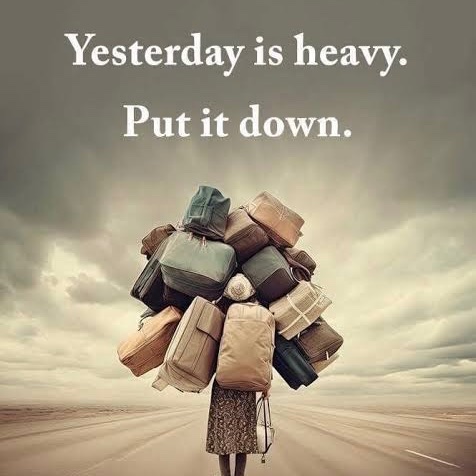
“If you carried a heavy bag of stones on your back for many years...
what would happen?”
The woman replied,
“My body would become exhausted and weak.”
The monk nodded.
“Your mind works the same way.
Every regret, betrayal, heartbreak, guilt, and painful memory you refuse to release becomes another stone you continue to carry.”
The woman asked,
“But how do I stop carrying it?”
The monk picked up a glass of water and held it before her.
“If I hold this glass for one minute, it feels light.
If I hold it for one hour, it begins to hurt.
If I hold it all day, my arm becomes numb and useless.
The weight never changed.
Only the length of time I chose to hold it.”
Then he looked at her and said:
“Your past is much the same.
The pain may be real...
but much of your suffering comes from holding onto it long after the moment has passed.”
The woman lowered her head quietly.
“But I don't know how to let go,” she whispered.
The monk replied:
“You let go by accepting that the past cannot be changed.
By forgiving yourself for who you were when you knew less than you know today.
By understanding that pain often teaches lessons that comfort never could.
And by realizing that you do not have to keep punishing yourself to prove that you have learned those lessons.”
Then he smiled and said:
“The past is a place of reference, not a place of residence.
Visit it only to learn...
never to live there forever.”
Sometimes healing is not about forgetting what happened.
It is about putting down the weight you were never meant to carry for the rest of your life.
✨🙌🏾💫
Learned about something called a "glimmer" recently. It's the opposite of a trigger. A tiny moment that makes you feel good. Coffee hitting right. Sun on your face. Your dog losing its mind when you walk in the door. Most of us are trained to scan for threats all day. Flip that. Start scanning for glimmers. Same exact life starts feeling completely different.
FAMILY PSYCHOLOGY: BITTER BUT TRUE
1. Emotionally distant parents often raise emotionally hungry adults.
Many people spend years searching for the love, validation, reassurance, and emotional safety they never received growing up.
2. Strict parenting often creates better liars, not better children.
When children fear punishment more than understanding, they learn to hide mistakes instead of being honest about them.
3. Children who feel emotionally safe become more confident adults.
When mistakes are met with guidance instead of shame, children learn resilience instead of fear.
4. Overprotective parenting can weaken self-belief.
Children who are never allowed to struggle often grow up doubting their ability to handle life on their own.
5. Parents teach relationships without saying a word.
Children learn how love looks, how conflict is handled, and what respect means by watching their parents every day.
6. Ignored children often become adults who constantly seek approval.
When emotional needs go unmet at home, many spend years trying to earn validation from everyone else.
7. Family wounds often show up in adult relationships.
Unhealed childhood experiences can quietly influence trust, boundaries, attachment, and self-worth.
8. Children remember how you made them feel more than what you bought them.
Years later, they may forget the gifts but they will remember whether they felt loved, safe, heard, and accepted.
9. The family cycle usually changes because one person chooses awareness.
The person who decides to heal, learn, and grow often becomes the reason future generations suffer less.
10. Love alone is not enough—presence matters too.
Many parents love their children deeply, but children also need time, attention, emotional safety, and connection.
Family shapes the mind long before the world does.
The words spoken at home...
the love given or withheld...
the emotional patterns repeated for years...
often become the voice people carry inside themselves for life.
That is why patience matters.
Understanding matters.
And emotional safety matters more than most people realize.
✨🙌🏾💫
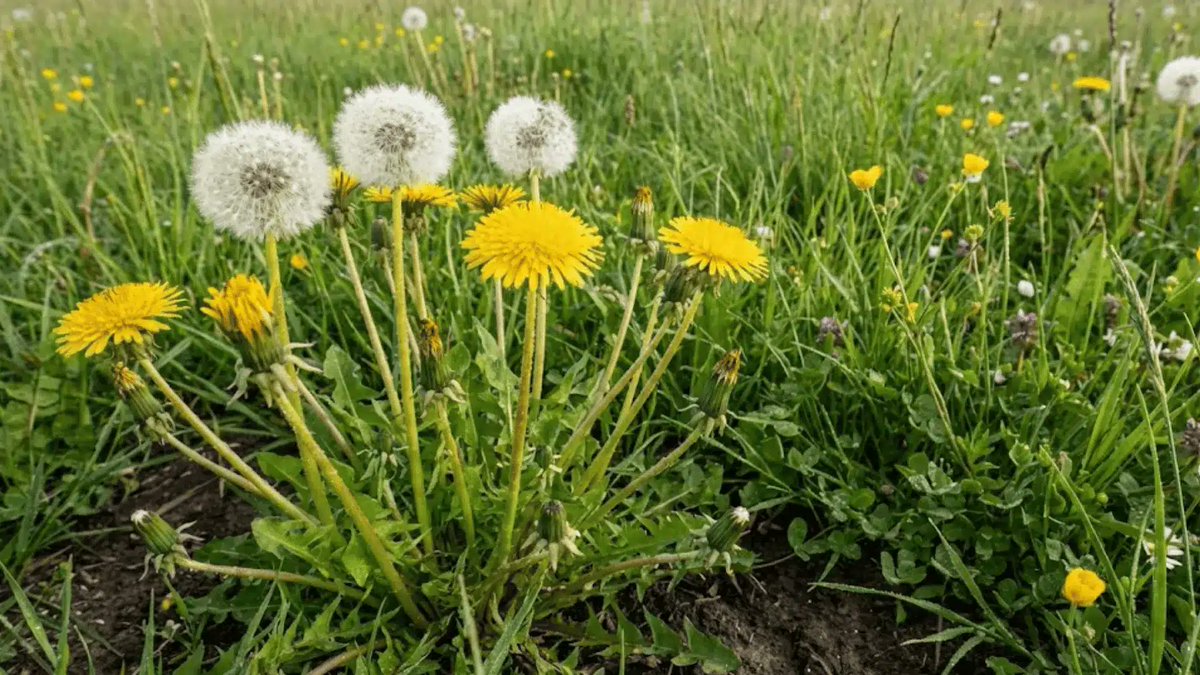
The reason we think dandelions are weeds is because of a 1950s marketing campaign.
Dandelions, native to Europe and Asia, were brought to North America in the 1600s by European colonists who grew them deliberately.
Every part is edible. The leaves are a salad green, the flowers were made into wine, and the roots were roasted as a coffee substitute and used medicinally for liver and kidney conditions for thousands of years. They were a kitchen-garden staple well into the 1800s.
The shift happened after World War II, when 2,4-D (originally developed for chemical warfare research) was approved as a residential herbicide. Companies like Scotts built the modern lawn-care industry around the idea that a perfect green lawn meant zero broadleaf plants.
Dandelions, being bright yellow and resistant to mowing, became a visible enemy, and the campaign worked. By the 1970s, "dandelion-free" was synonymous with "well-kept."
They aren't native, but they aren't doing significant ecological harm either. The herbicides used to kill them, on the other hand, kill bees, contaminate groundwater, and have been linked to non-Hodgkin lymphoma in humans.
If you hate dandelions, it's most likely due to a marketing campaign that ran before you were born.
A PSYCHOLOGIST WHO SPENT HIS LIFE INSIDE THE HUMAN MIND LEFT ONE FINAL WARNING:
1. The most dangerous person in your life is not your enemy. It is the one who slowly makes you doubt yourself.
2. People do not choose their patterns. They inherit them. The work of a lifetime is choosing which ones to break.
3. A person who never learned to receive love will spend their life giving it in the wrong places hoping to feel it back.
4. Happiness is not a destination. It is a skill. And like every skill it requires daily practice and enormous patience.
5. The child you once were is still inside you making decisions. Until you meet that child, you will not understand yourself.
6. Trauma does not make you who you are. But unexamined trauma will make every decision for you without your permission.
7. Most people do not need advice. They need someone to finally listen without preparing a response.
8. The mind protects you from what it thinks will destroy you. Sometimes that protection becomes the prison itself.
9. The loudest person in the room is rarely the most certain. Certainty does not need an audience.
10. You will keep attracting the same relationship until you understand what in you recognizes it as familiar and calls it home.
11. The hardest grief is not for the people you lost. It is for the person you had to become in order to survive them.
12. Final warning, the people who never heal are not the ones who suffered the most. They are the ones who never allowed themselves to feel it.
Strangest Psychological Effects Proven by Science:
1. Baader-Meinhof Phenomenon :
You buy a red car and suddenly see red cars everywhere
2. Dunning-Kruger Effect :
The less you know, the more confident you feel
3. Placebo Effect :
Sugar pills genuinely heal people who believe in them
4. Mandela Effect :
Millions of people share the same false memory simultaneously
5. Spotlight Effect :
You think everyone notices your mistakes but nobody does
6. IKEA Effect :
You value things more when you built them yourself
7. Bystander Effect :
The more people present in an emergency the less likely anyone helps
8. Pygmalion Effect :
People perform better simply because someone believes in them
9. Zeigarnik Effect :
You remember unfinished tasks far better than completed ones
10. Stockholm Syndrome :
Victims develop genuine affection for their captors
11. False Memory Effect :
Your brain confidently remembers events that never actually happened
12. Priming Effect :
Exposure to one idea secretly influences your very next thought or decision
13. Chameleon Effect :
You unconsciously copy the gestures, posture and expressions of people around you
I detest the phrase “Stop abandoning yourself,” for people who are just starting their healing journey from emotional and psychological abuse.
How on earth can someone know if they’re abandoning themselves if they were never allowed to develop a “self” or were raised to abandon themselves all the time? When you were taught that overriding your body was called being “polite,” where silencing your truth was called being respectful, tolerating chaos was called family and having your own needs was called being selfish, too sensitive or difficult?
People in these systems learn to normalize abuse and enmeshment and to deny their own bodies and their own needs and then, years later, the healing world hands them a cute little phrase like “stop abandoning yourself,” as if the “self” was sitting right there the whole time, clearly labeled and easy to retrieve.
The real work is individuation and learning who you really are. Learning to listen to your body and what it’s telling you and learning where you end and other people begin, and it is a process.
But when you do come to know yourself, only them can you learn to stop abandoning yourself.
Try not to be so emotionally involved in the world, don't give your energy to every passing fad and political development.
Much of it won't even last a year.
Opt out of gossip and drama. Nobody really cares and taking sides on everything corrodes your soul.
Instead, focus on cultivating clarity with regard to your values and working hard to be the person you think you ought to be.
HOW A CULTURE TREATS ITS OLD TELLS YOU EVERYTHING:
Japan — Bowing to an elder is not performance, it is reflex. Japan built respect for age into the body itself. A culture that teaches reverence before ambition has its priorities in the right order.
South Korea — The Korean language has multiple levels of speech and the highest is reserved for elders. When a culture encodes respect into its language, even the laziest generation cannot escape it.
India — In most Indian households, the grandmother is consulted before the decision, not after. Authority here was never about who earns the most. It was about who has lived the longest and still has something left to say.
Nigeria — When two families dispute land or money, they go to the eldest first, not a courthouse. His word carries a weight no legal document has managed to replicate. Some institutions existed long before institutions had names.
Greece — The old men of Greece occupy the village square and argue about politics with the same fire they had at thirty. A culture that does not ask its old to be invisible has understood what age is actually for.
Italy — The Italian grandmother does not stop cooking when her children grow up, she cooks for more people. She has not failed to retire. She has refused to become unnecessary, and nobody around her table has ever asked her to.
Mexico — Día de los Muertos is a genuine belief that the dead return, that they are still family, that they still deserve a meal and a candle. A culture that builds altars for its dead never decided that love had an expiration date.
Brazil — In a Brazilian family, the great-grandmother is not a guest at the gathering. She is the reason for it. Some people do not hold families together through authority. They do it simply by being the root.
Ethiopia — The elder listens first, speaks last, and what he says tends to end the conversation. A culture that taught its leaders to listen before deciding understood that wisdom was never about being the loudest voice in the room.
Egypt — The photograph of a deceased grandfather stays on the wall for decades, sometimes generations. Children grow up beneath the gaze of people they never met. A culture that keeps its dead visible understands continuity better than most.
Vietnam — The eldest at a Vietnamese table eats first and the meal does not begin until they begin. Gratitude practiced daily becomes something deeper than gratitude. It becomes structure.
Sweden — Sweden decided that care for the elderly was too important to leave entirely to families. A society that institutionalizes that care has acknowledged that affection alone was never a sufficient plan.
Indonesia — A grandparent's blessing before a wedding or major decision is considered genuinely necessary. To leave without it is to leave something unfinished. Some wisdom cannot be bypassed simply because you are in a hurry.
Ghana — When an elder dies, the mourning is extended and communal because the community understands that what was lost is not just a person but a library. A generation that buries its elders with ceremony knows what it is actually losing.
Turkey — A younger person takes the elder's hand, kisses it and presses it to their own forehead. It is taught before children fully understand what respect means. By the time they understand it, it is already part of them.
Spain — The Sunday lunch happens because the grandmother expects it and no one has found a reason strong enough to disappoint her. She held the family together not through authority but through insistence, and insistence was enough.
America — The American elderly are among the loneliest people in the wealthiest country on earth. This is not cruelty. It is what happens when a culture organizes itself around productivity and forgets to decide what people are worth when they are no longer producing.