Would you hire you? Ask yourself honestly.
I went to a gym looking for a personal trainer.
Someone approached me and offered to train me. He knew anatomy. He understood fitness. He was technically skilled.
But here's the thing: He didn't look like what I wanted to become.
I didn't hire him.
That moment completely shifted how I think about positioning as a designer.
You can be incredibly talented. You can understand design systems, user psychology, and product thinking. But if the way you present your work doesn't look like what clients aspire to become, you've already lost them.
Here's what I realized:
Clients don't just hire your skills. They hire your vision. They hire the proof that you can create the aesthetic, the experience, the quality they want for themselves.
This shows up everywhere:
Your profile. Your bio. Your case studies. Your portfolio website. The way you tell stories about your work. The quality of your presentations. How you showcase your process.
All of it is part of the product you're selling.
I get this constantly: Clients send me my own designs back as references for what they want. That tells me everything. My presentation doesn't just look good, it looks like the standard they aspire to.
So here's your challenge:
Go through your profile right now. Look at it like a potential client would.
- Does your bio clearly communicate what you do?
- Do your case studies show strategic thinking or just pretty screens?
- Does your portfolio website reflect the quality you promise?
- Would you hire you?
If the answer is "maybe" or "not really," then you know what needs to change.
You don't just need to do good work. You need to present work so compelling that clients see their future in it.
That's when positioning becomes powerful.
Take 15 minutes today to audit your profile from a client's perspective. What would you change first?
Dear Hustlers,
Private Equity is one of the fastest ways billionaires create wealth, yet most people never learn how it works.
In 2007, Blackstone acquired Hilton Hotels in a deal worth about $26 billion.
They spent years improving operations, expanding the brand globally, and increasing profitability.
When Hilton returned to the stock market, Blackstone gradually sold portions of its stake over several years, ultimately generating tens of billions of dollars in value from the investment.
Now imagine the same model in Nigeria.
Buy a private school for ₦70 million.
Invest ₦50 million in new classrooms, a computer lab, school buses, better teachers, and marketing.
Enrollment grows from 400 to 1,500 students.
Five years later, the school is valued at ₦950 million.
Or buy a neighborhood restaurant for ₦18 million, renovate it with ₦30 million, expand to three branches, and sell it for ₦650 million.
Or acquire a small bakery for ₦50 million, improve production and distribution, and later sell it for ₦350 million.
That's private equity.
Buy.
Improve.
Grow.
Exit.
The biggest fortunes are not built by trading businesses.
They are built by transforming businesses into more valuable assets.
Are you learning?
So i created this in after effects. Wove in storytelling, creative visuals and relatale humor... in a way that DevRel audiences of any level would connect with.
Cooked this up for @GoDark
crypto’s first dark pool decentralized exchange.
Trade without exposing your positions.
Execute without signaling.
Tools used:
After Effects • Premiere Pro • Figma
No AI used.
#GoDarkVideo
Moonshot by TechCabal is back! 🚀
This year, we’re moving to the iconic National Theatre, Lagos, to make room for our biggest chapter yet. We’re bringing together the discipline and ambition African tech needs, backed by serious numbers:
AI ISN'T REPLACING DESIGNERS.
But let’s be honest about what’s actually happening.
We’ve all seen the hype. AI can generate anything in seconds. Cool. But are we thinking clearly about the impact?
Let me say this directly: designers, let's stop acting like we’re untouched by it. Yes, AI is a tool. But look at how we’re using it. When we generate images of models for our designs, that’s work real models and photographers would normally do. When we create 3D product renders with AI, that’s work for 3D designers. When we use AI to write captions or marketing copy, that’s what content writers are paid for. When you generate logo animations, that’s motion designers’ space.
So don’t turn around and attack “AI designers” like we’re any different. We’re not. If you’ve used AI for any of these, you’ve already stepped into someone else’s lane. That’s the truth. And yeah, people might not like hearing it—but it doesn’t make it false.
Now flip it for a second. Imagine being a 3D designer watching social media designers generate product visuals in seconds. Or a model seeing brands use AI faces instead of hiring real people. Or a photographer getting replaced by generated images. You think they’re not frustrated? Exactly. So this whole superiority mindset needs to stop, we’re all in the same shift.
Here’s the part people ignore: despite all this, people are still getting work. Designers. 3D artists. Photographers. Models. Motion designers. Nobody has disappeared.
Why? Because everything is starting to look too perfect, too polished, too artificial. And when that happens, people start craving what feels real. The human touch becomes valuable again. That shift is already happening.
So no, AI isn’t the end. But pretending you’re not part of the disruption is just dishonest.
Use the tools. Adapt. But stay grounded in real creativity.
DON'T BECOME UNREAL!
In 1986, the American Medical Association published an article titled "The Physical Death of Jesus Christ". It details the entire process of Jesus' trial to His death on the cross.
In Luke 22, before Jesus is arrested, it is written that He was in great distress & sweating blood. Although rare, it is recognized as Hematidrosis, a condition caused by high levels of stress.
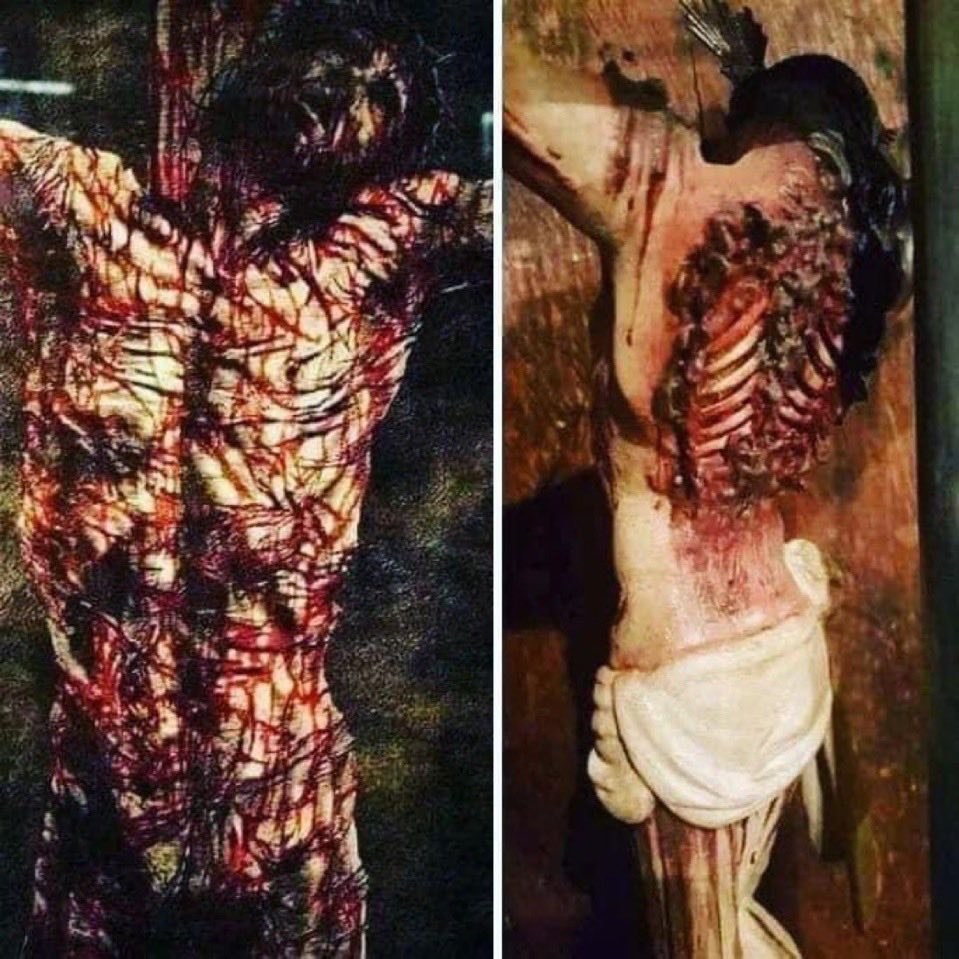
At the time, the crucifixion was considered the worst death for the worst of criminals. But this is not all Jesus faced. He endured whipping so severe that it tore the flesh from His body. He was beaten so horribly that His face was torn & His beard ripped.
A crown of thorns, 2-3 inches long cut deeply into His scalp. The leather whip used to flog Him had tiny iron balls & sharp bones. The balls caused internal injuries while the sharp bones ripped open His flesh. His skeletal muscles, veins, & bowels are exposed, causing major blood loss. Most men do not survive this kind of torture. After Jesus was severely flogged, He was forced to carry His cross while people mocked & spat on Him.
Crucifixion was a process meant to instill excruciating pain, creating a slow & agonizing death. Nails as long as 8 inches were driven into Jesus' wrists & feet. The Roman soldiers knew the tendons in the wrists would tear & break, forcing Jesus to use His back muscles to support Himself to breathe. Imagine the struggle, the pain, the courage...Jesus endured this reality for 3 hours!
The Gospel of John writes that after Jesus' death, a Roman soldier pierced His side with a spear & blood & water came out. Scientists explain that from hypovolemic shock, the rapid heart rate causes fluid to gather in the sack around the lungs & heart. The accumulation of fluid in the membrane around the heart is called a Pericardial effusion & the lungs is called a pleural effusion.
To the world, Christianity is as foolish as it can get. They believe it's for the weak. But when you are confronted by the reality of the cross, it's clearly not a pretty sight. It is brutal & horrific.
This is the weight Jesus carried. The weight of the sins of the world, all so that we can live. God's wrath is fully satisfied in Jesus. This is what it took. Repent & believe! Jesus is “God among us” in the flesh. Jesus is our Savior. Jesus loves you so much that He went through this spiritual and physical punishment for your sins and mine.
Jesus is the LORD, Almighty God, Everlasting Father.
Thank You, Jesus.
🛡️ Cynos Protocol: Introducing The Trinity Engine! 🚀
In the world of Web3, security isn't just a feature—it’s the foundation. We are thrilled to unveil The Trinity Engine, our three-layered autonomous defense system designed to keep your assets safe! 🦾
🧠 1. Neuro-Shield (The AI Guard)
While standard security reacts after an attack, Neuro-Shield acts before. By scanning the Mempool 24/7, it identifies suspicious transactions before they are even written to the blockchain. It senses malicious intent and stops exploits in their tracks!
📱 2. Mobile Watchtower (The Alert System)
Be the first to know about liquidity movements! The Mobile Watchtower monitors pools for suspicious activity and sends High-Priority Notifications directly to your phone. It gives you the critical time needed to withdraw funds safely during rug pulls or liquidity drains.
🔍 3. Deep Scan Audit (Dynamic NFT Verification)
Was the contract audited but then the code changed? Trinity won’t let that slide. Deep Scan Audit issues a Dynamic NFT Badge to projects. If the smart contract code is secretly altered, the NFT is instantly burned, sounding an alarm for all investors.
At Cynos Protocol, we are building the future of security today. Stay tuned, stay safe! 🌐✨