EMPIRE INDEX maps who owns what in the world's most powerful business empires.
Ownership and control, mapped. Every figure traced to a filing. What we can't verify, stated.
Independent. Not affiliated with the companies covered. Not investment advice.
One index a week.
@leevalueroach A $37M bid against a ~$500M EV means the lenders are the real counterparty here. Management can say no, but the debt gets the final word.
@MrFamilyOffice #2 and #7 feel connected. When the sons don't come back, outside capital is usually the next door that opens. Do families tend to keep voting control when that happens?
@kejca Buybacks while the cash pile is shrinking feel like a stronger signal than buybacks from spare cash. Curious if the test is still Buffett's: below intrinsic value, conservatively estimated.
More SoftBank money, same rule at the top: under OpenAI's deal with Delaware's Attorney General, its directors may consider only the mission. Not the financial interests of shareholders.
At Walmart's 2026 meeting, 1.44 billion shares never reached the board vote.
806 million did not show up.
634 million were present but cast no vote.
Every missing share made the Walton family's block count for more.
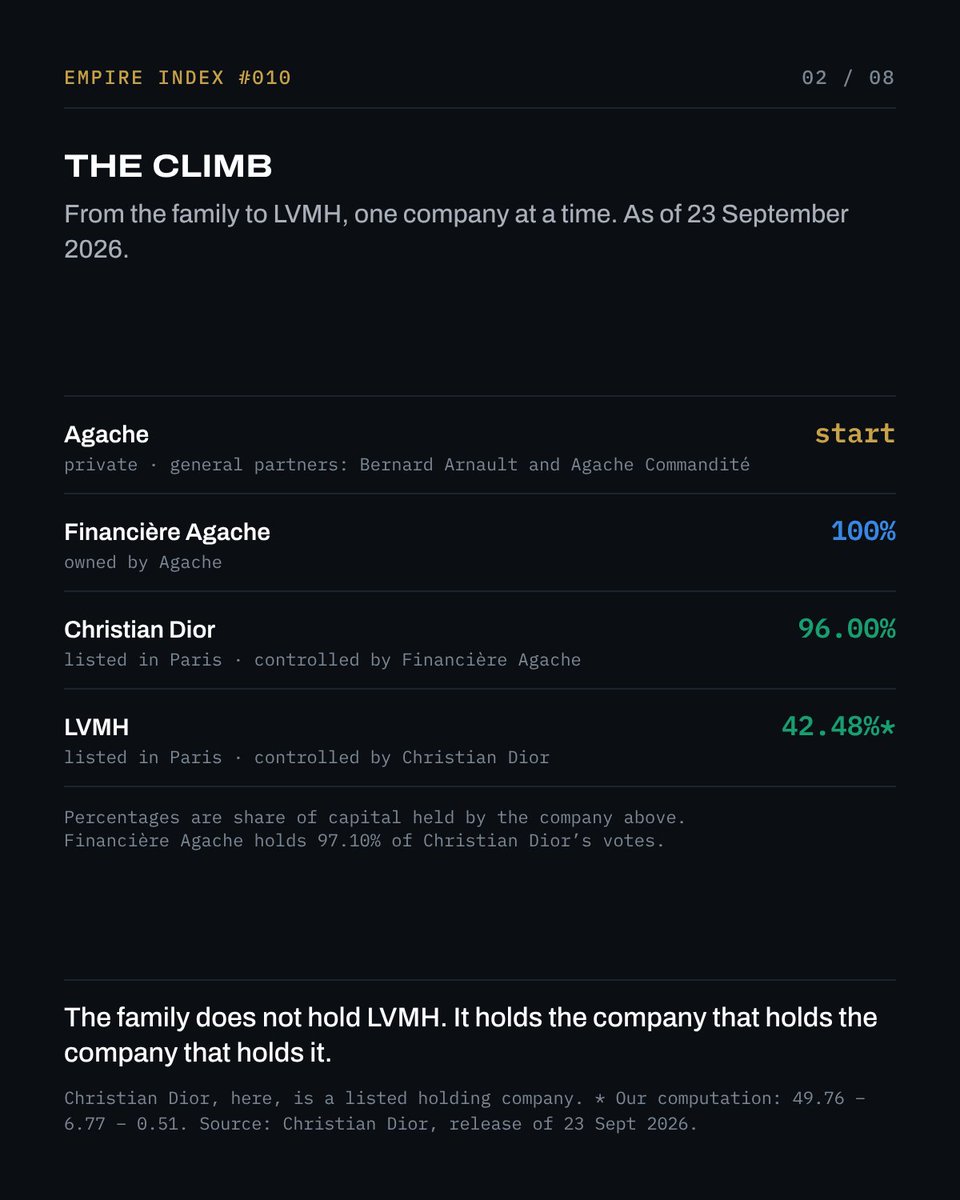
On 2 November, Christian Dior's shareholders approved the first step. Next, planned for December: one listed holding, renamed Agache.
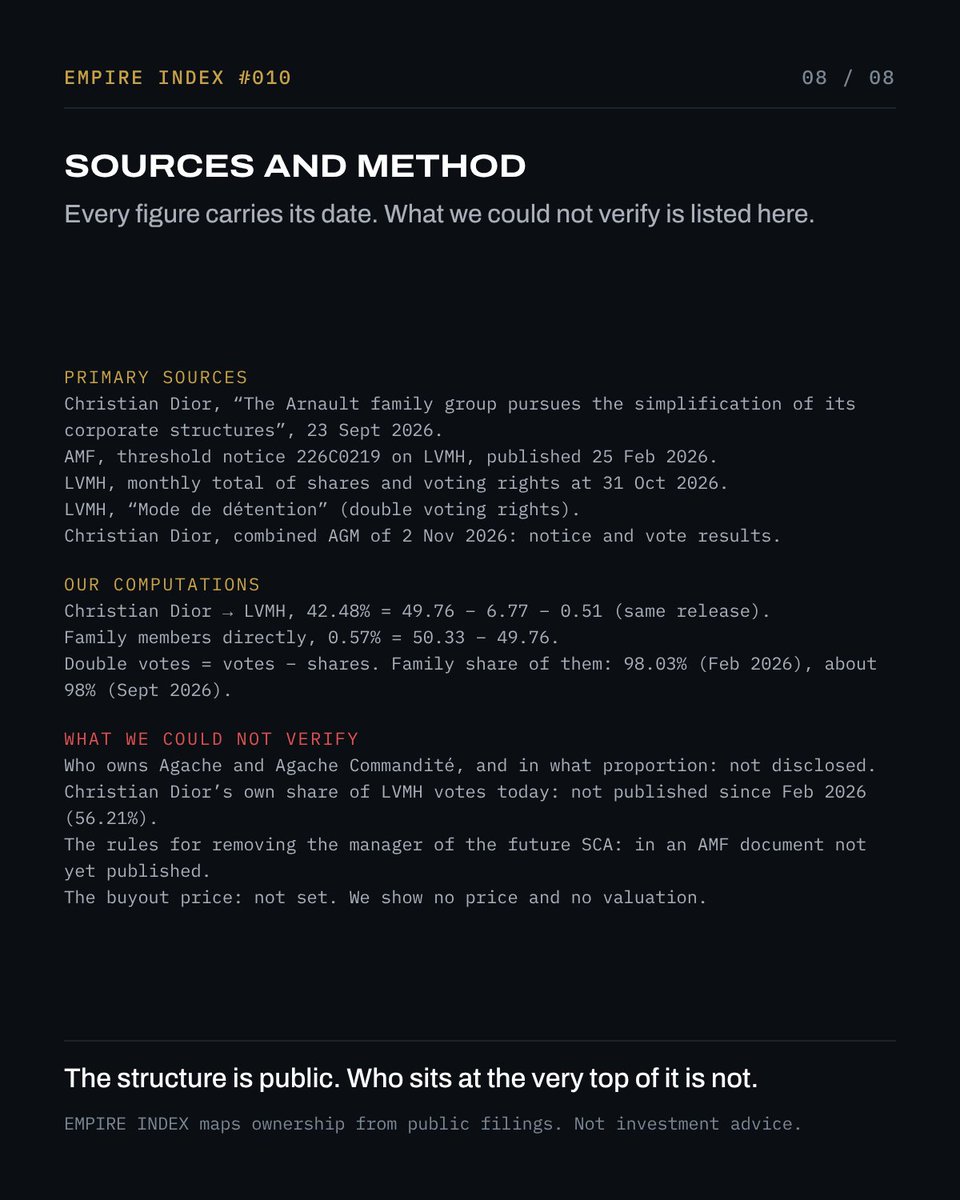
What we could not verify is on the last slide.
One index a week. Next: 011 — BLACKROCK & VANGUARD.
EMPIRE INDEX 010 — THE ARNAULT CASCADE
To find who controls LVMH, you climb three companies.
In December, the family plans to make it one.
Who owns what, in 8 slides.
The Arnault family group: 50.33% of LVMH's shares, 66.27% of its votes.
The gap comes from one rule. A share held in registered form for three years carries two votes.
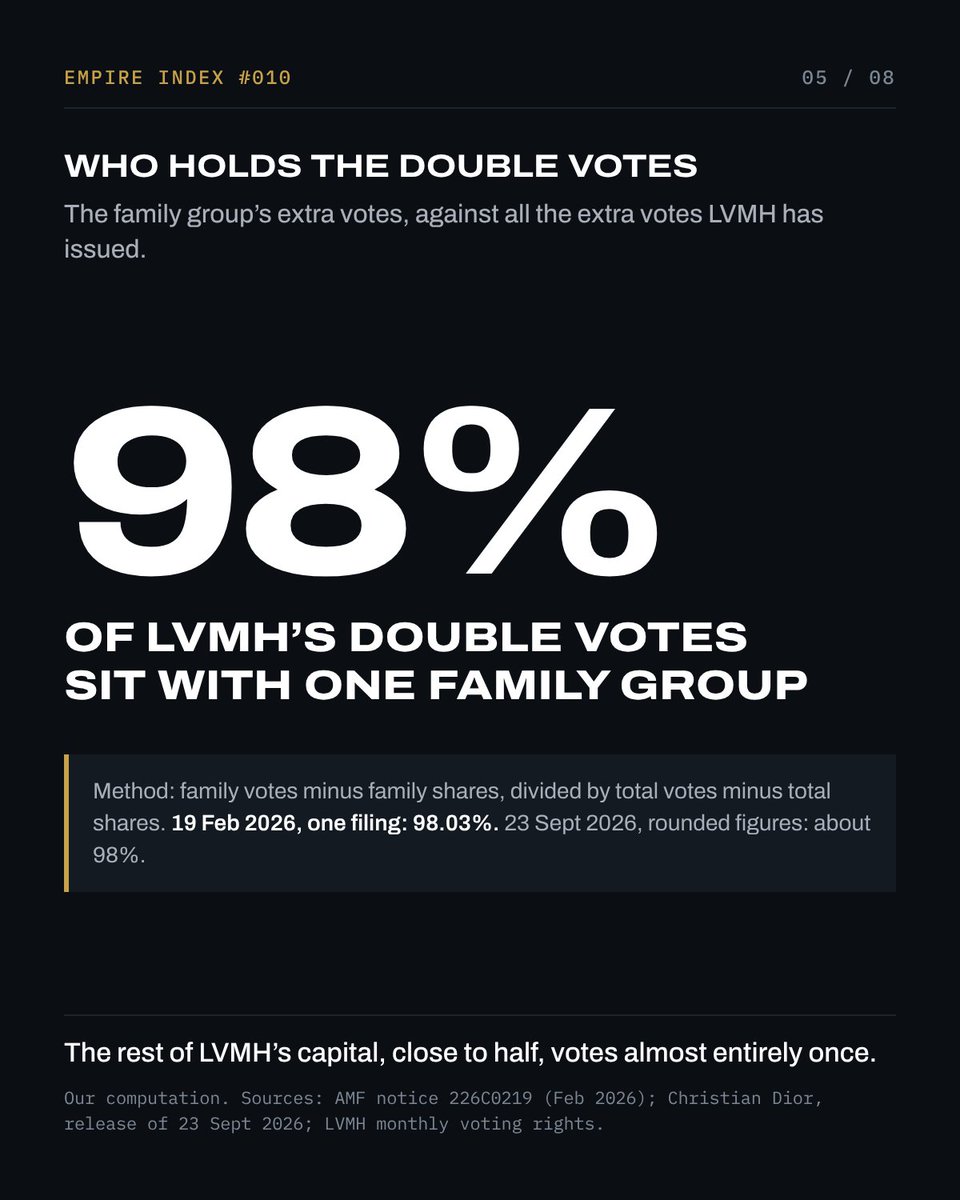
By our count, about 98% of those double votes sit with the family group.
OpenAI's nonprofit has a bet on the upside written into its structure.
It holds a warrant.
If OpenAI Group's share price rises more than tenfold after fifteen years, it receives additional shares.
The more the company is worth, the bigger the charity's slice gets.
@MrFamilyOffice@SpearsMagazine The fee test is the cleanest line I've seen. Ownership says even more: if the family owns the office, it works for the family. Once outside shareholders own it, it ends up working for them too.
Berkshire has two kinds of shares. One is worth 1,500 of the other.
Class B: 1/1,500 of a Class A's economic rights.
Its vote: 1/10,000 of a Class A's.
Buy 1,500 B shares and you get the money of one A share. Not its voice.
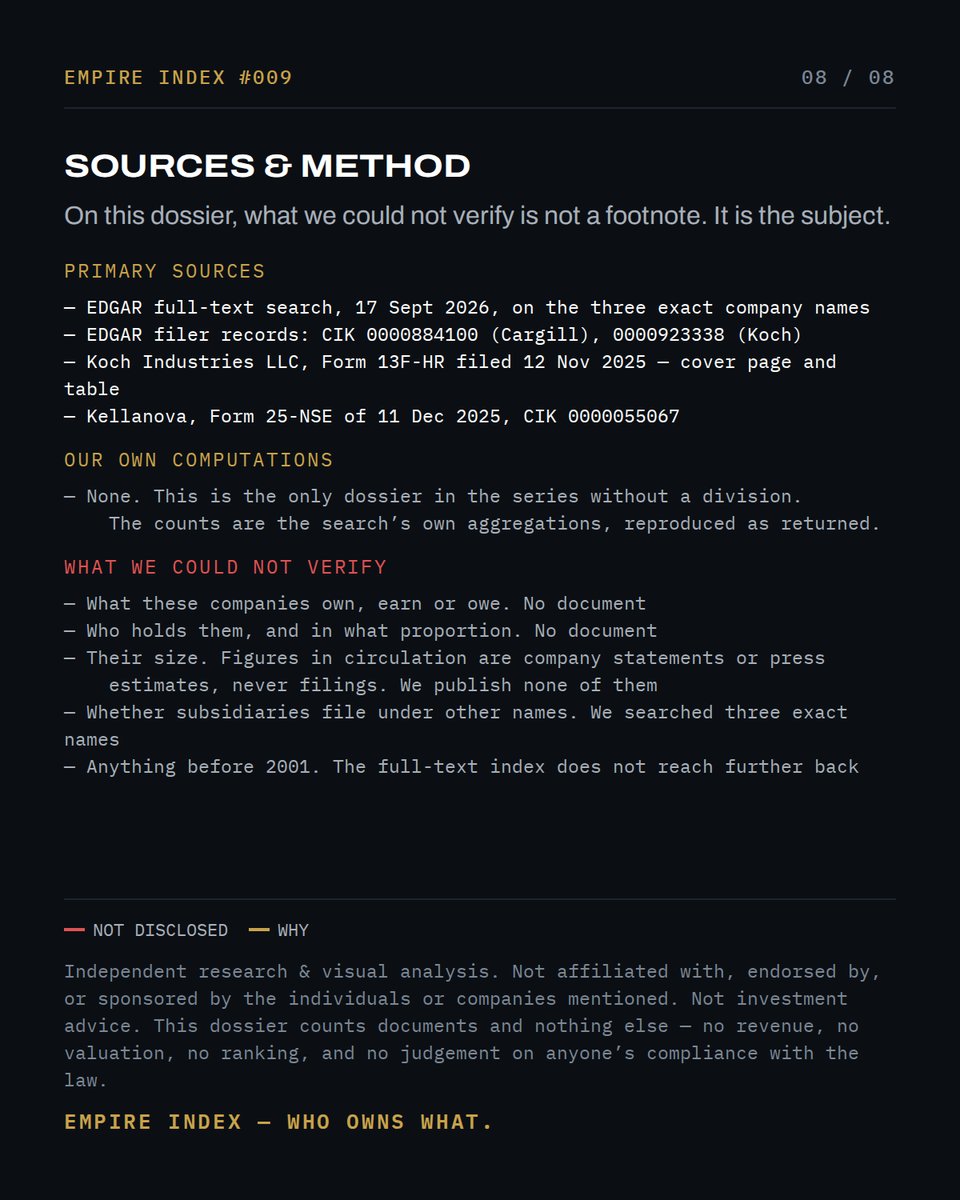
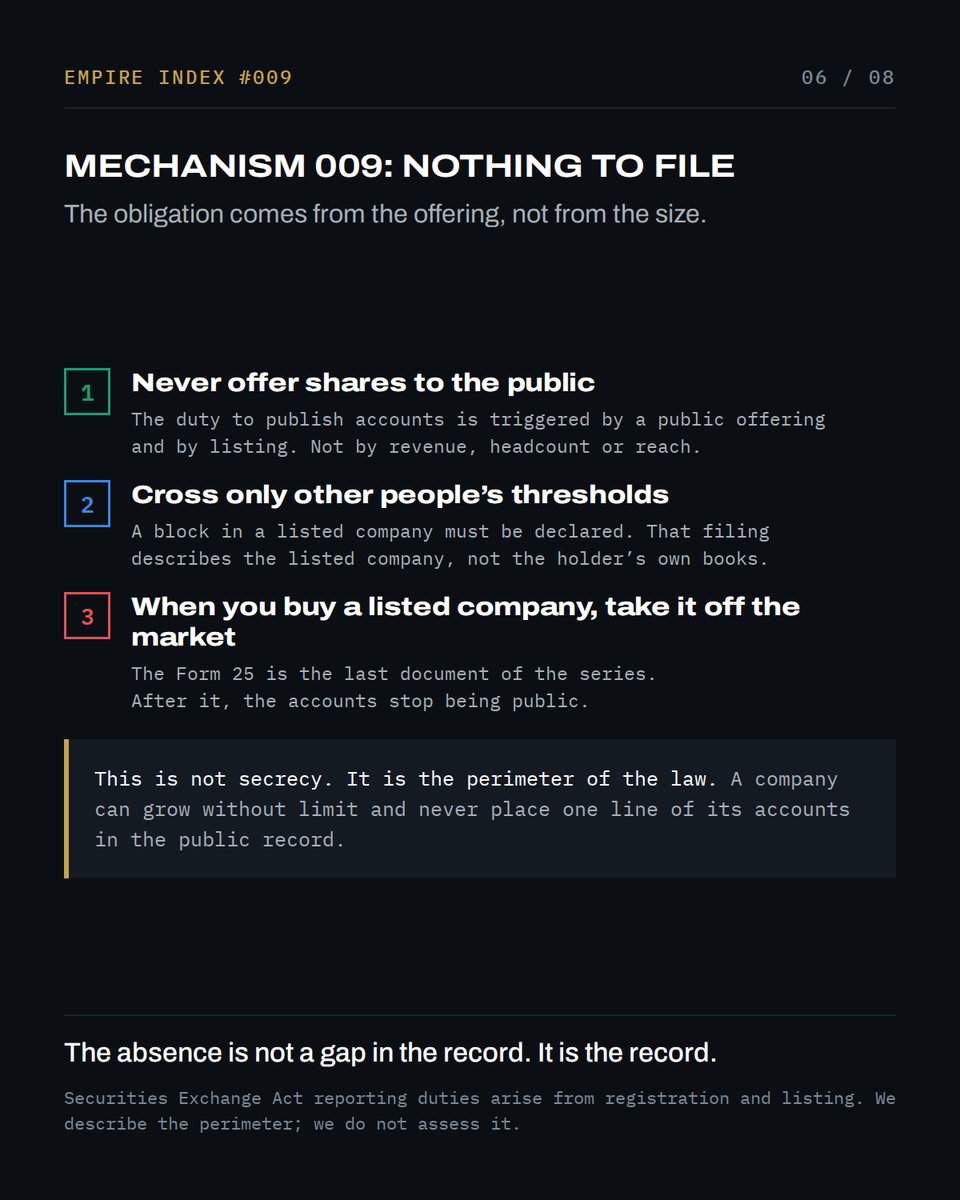
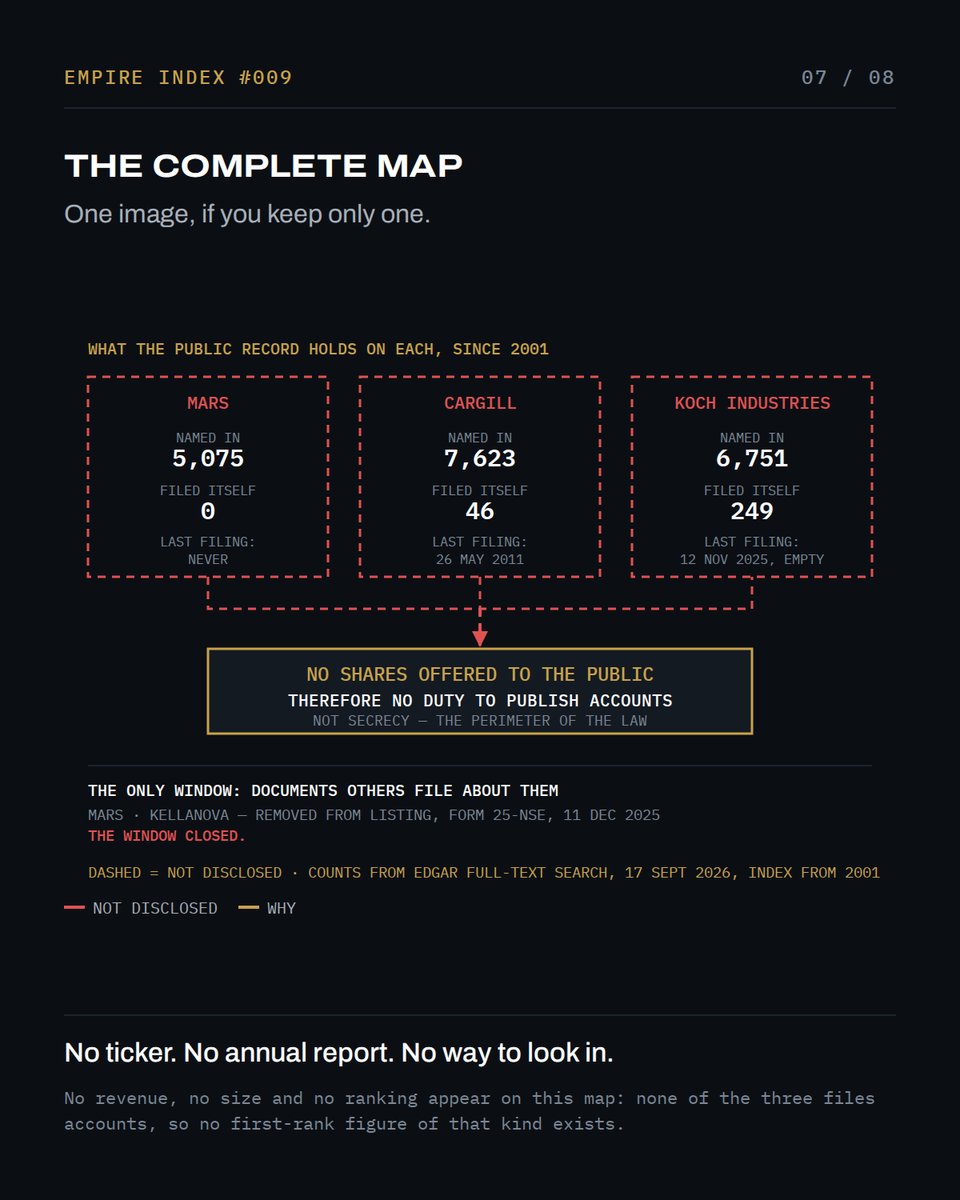
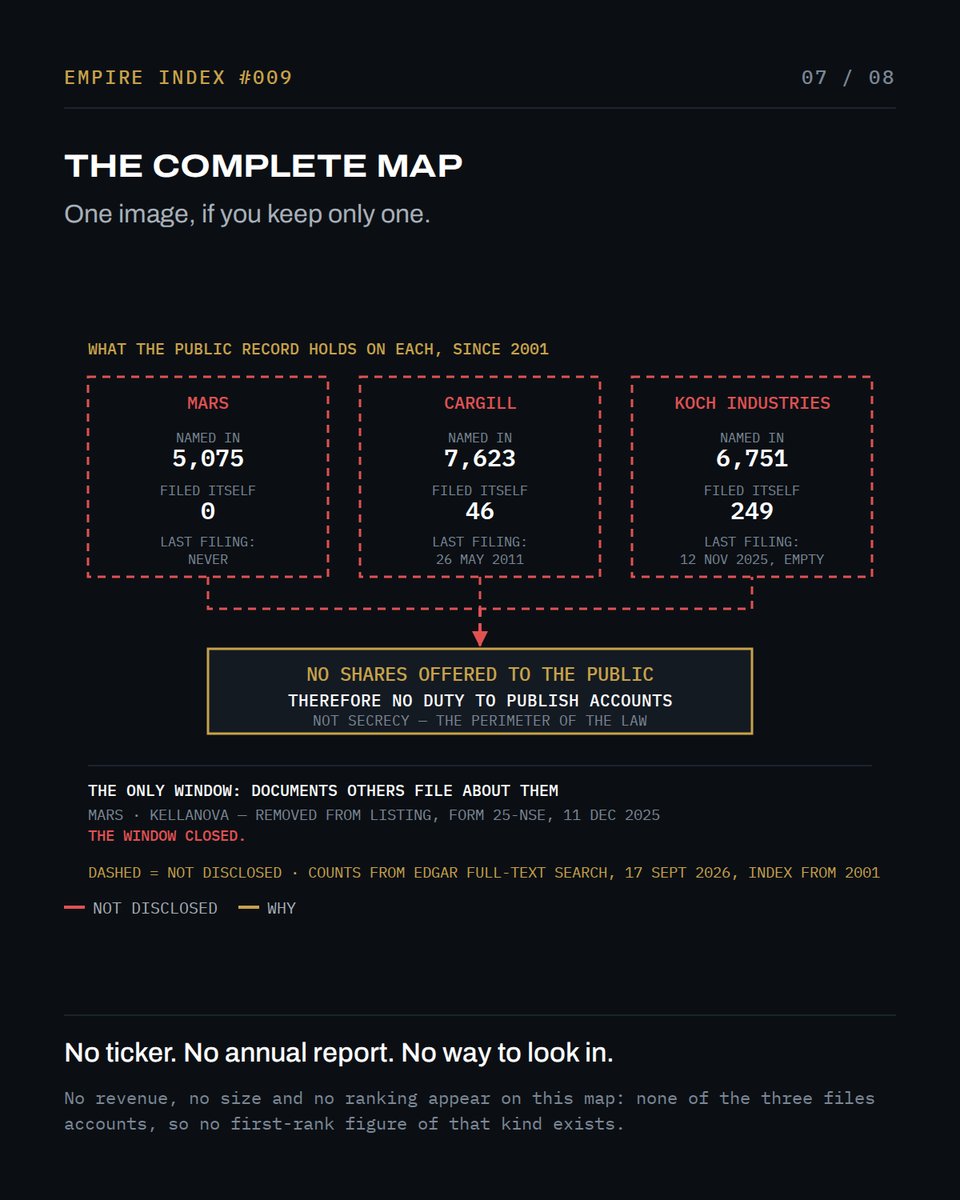
Mars never filed anything. The only window was Kellanova, which it bought. Kellanova left the market on 11 December 2025.
No shares offered to the public, no duty to publish. Not secrecy, the perimeter of the law.
One index a week. Next: 010.
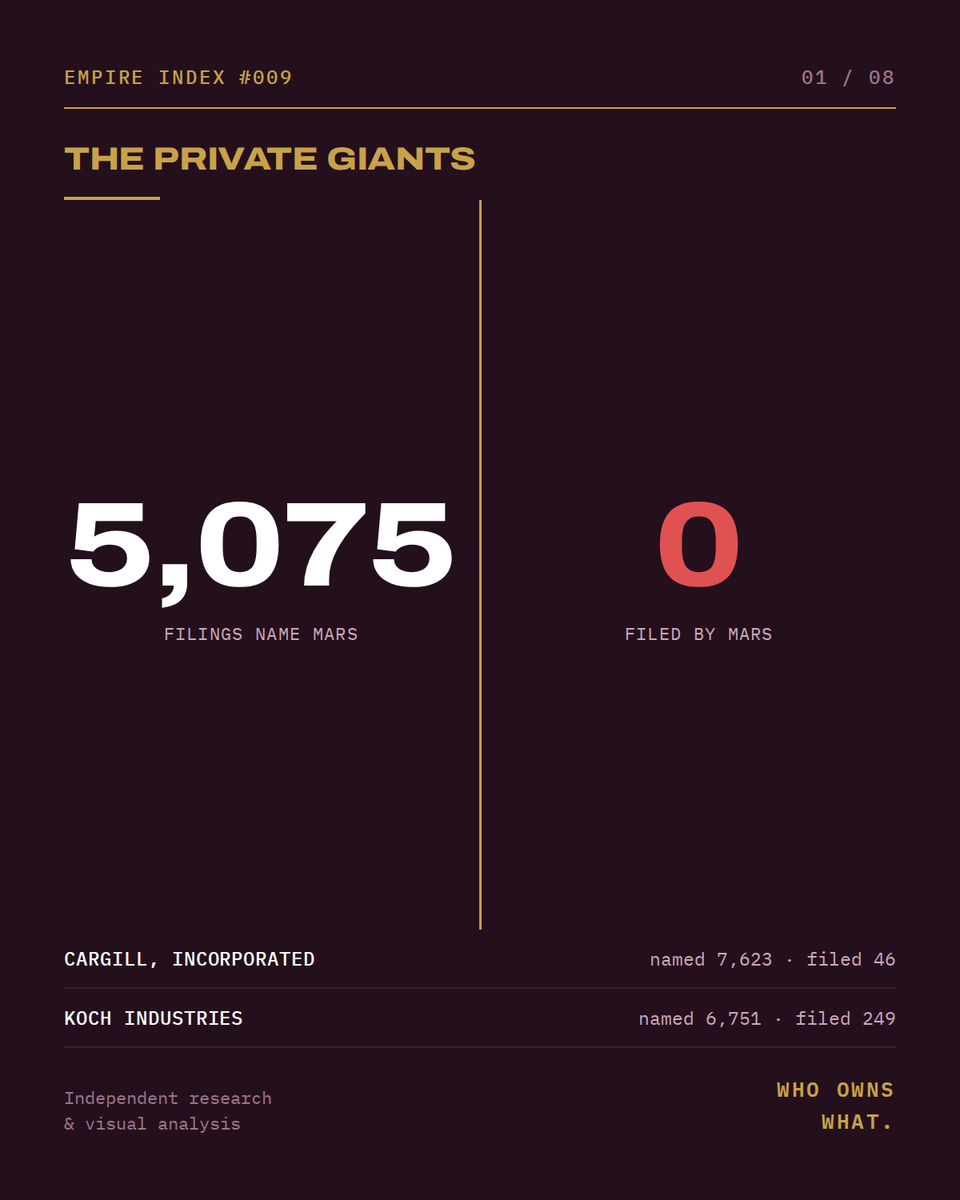
EMPIRE INDEX 009 — THE PRIVATE GIANTS
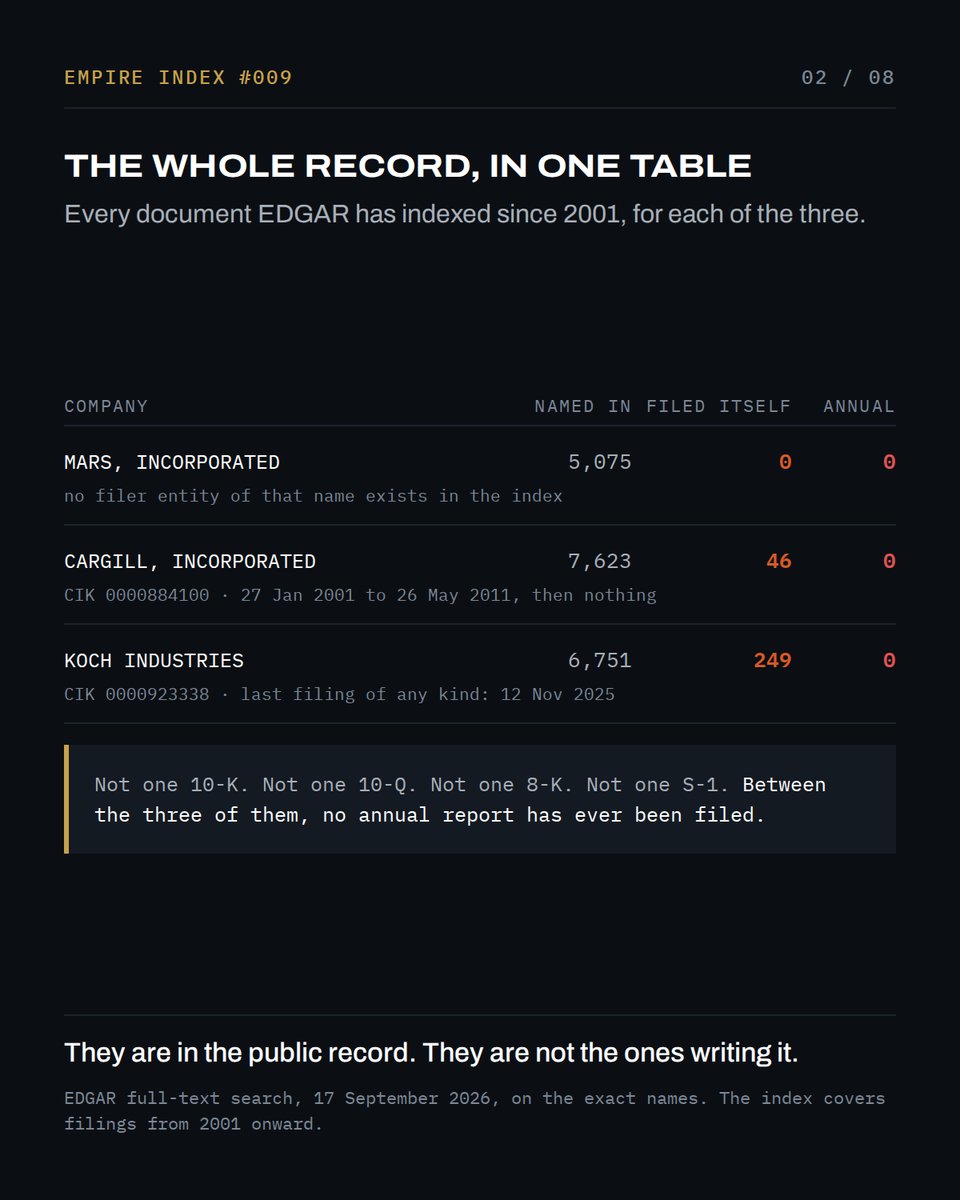
5,075 filings name Mars. Mars filed none of them.
Mars, Cargill, Koch. Between the three of them, no annual report has ever been filed.
Who owns what, in 8 slides.
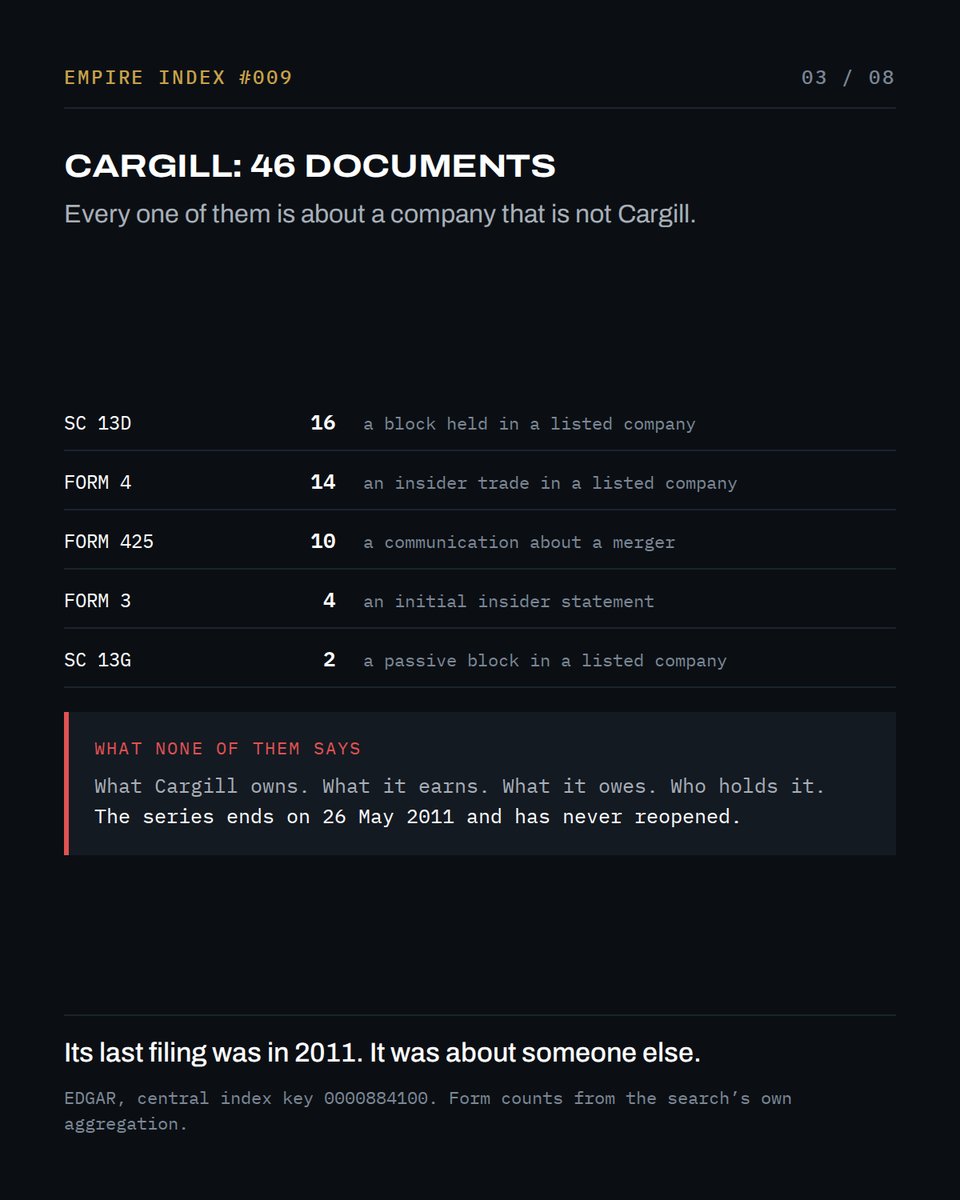
Cargill filed 46 documents, from 2001 to 2011. Every one is about a company that is not Cargill.
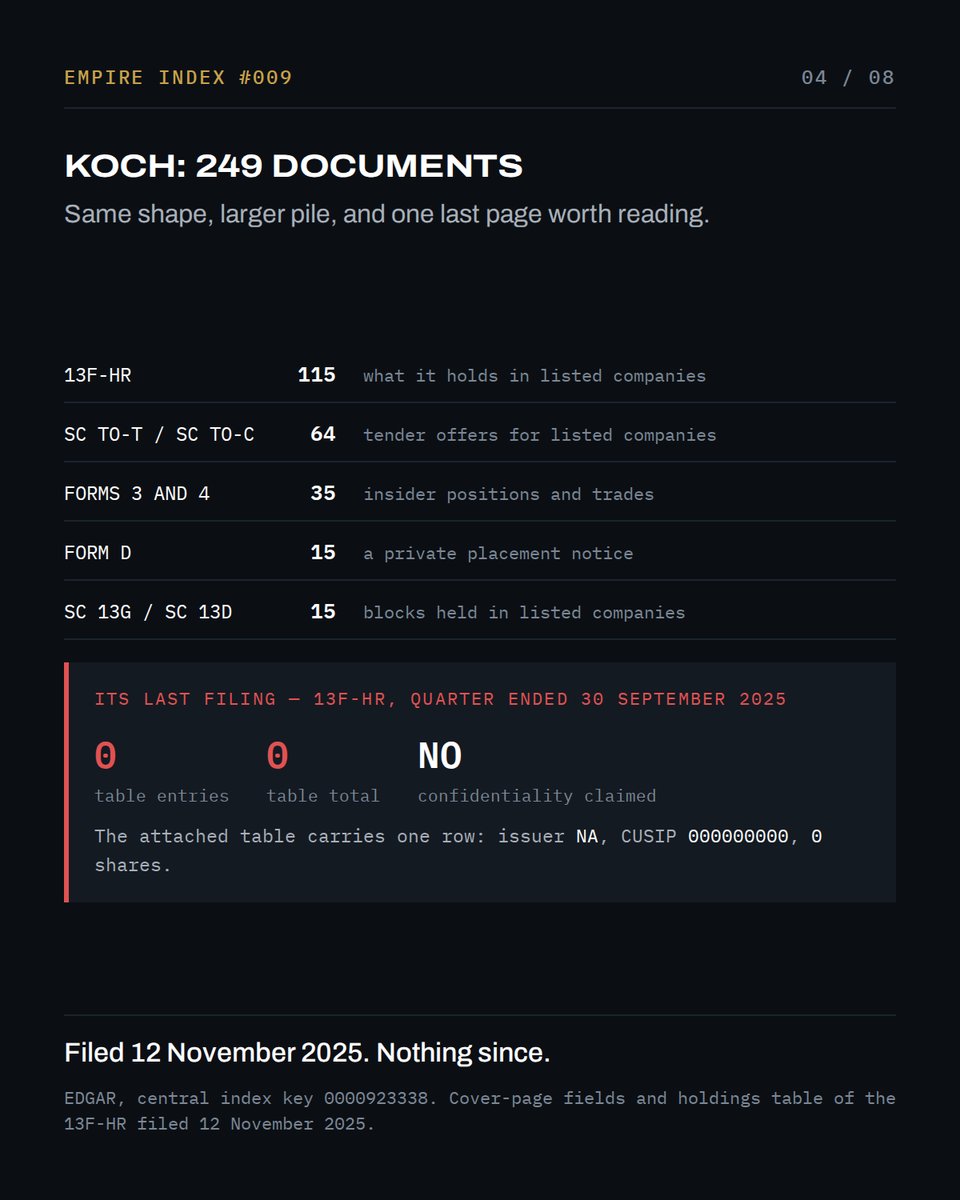
Koch filed 249. Its last one, in November 2025, is a holdings table with zero rows.
@MrFamilyOffice Depends what gets handed down. The Waltons kept the votes in the family and hired outsiders to run Walmart. Ownership is inherited, the CEO job isn't.
@sensa_market Meta did it with super-voting shares. This goes further: one share, no claim on the profits, majority of the vote. Control and ownership fully split.