Season 1 of @PudgyWorld_ is officially closing🐧✨
My final stats:
🔹 Level 29
🔹 68/101 badge
🔹 18/23 Fish caught 🎣
🔹 100k+ BP
🔹 Lb #3700
Are we jumping straight into Season 2, or is it finally time to claim our rewards first? 🤔🎁
just locked in on the @opeg_us allowlist 🐙
octopus jpeg = $OPEG
888 octopi, born from market activity
8 arms. 8 layers. 1 runtime.
https://t.co/36r2pmvaiP
Privacy-first and mobile-ready. @billions_ntwk is building the essential infrastructure for the Human and AI Network. Digital trust starts here. 🛡️🤖
#BILLdiscovery
Every week a new team finds a creative way to hit rock bottom. this week it's @openmind_agi
they allocated 5% of $ROBO supply (500,000,000 tokens) to the community. at least that's what their tokenomics say
ran the numbers on-chain and turns out the team is claiming their own airdrop using sophisticated clusters funded by 7 different CEX hot wallets.
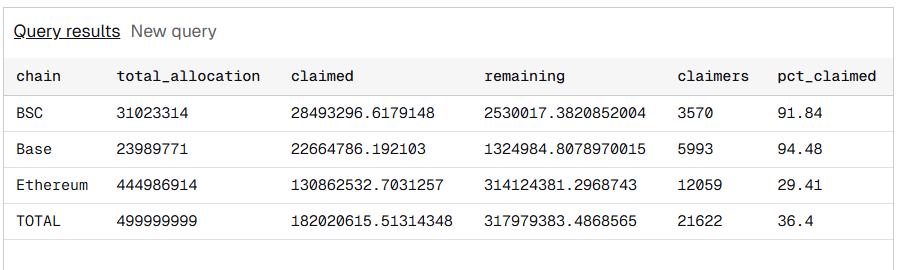
claim stats as of today:
36.4% claimed so far across all chains. not as bad as $ESP, but what you'll find next is worse
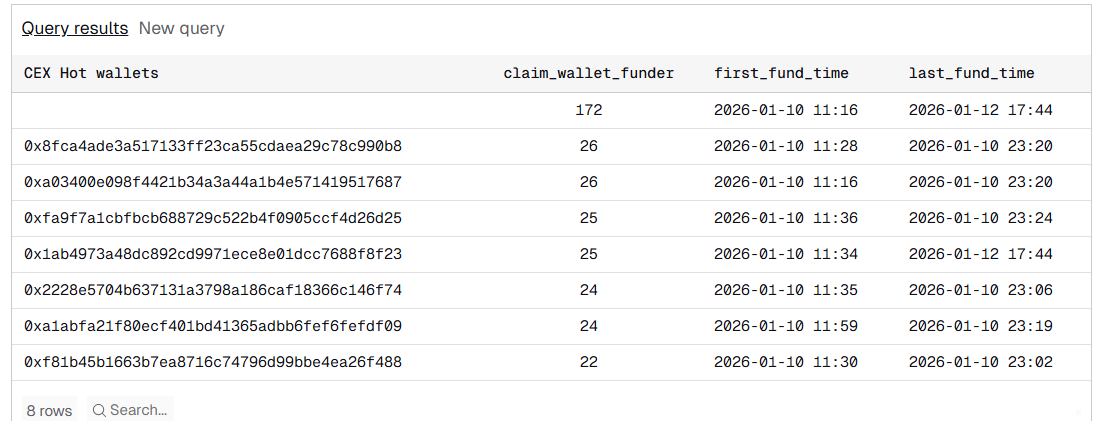
On January 10th 2026 roughly 7 weeks before claims even opened 7 CEX hot wallets funded 172 intermediate wallets with only one wallet receiving funds on the 12th
The 7 exchanges used: Poloniex, HTX, Bitget, Bybit, LBank, Backpack, and Ourbit
Now here's where it gets sophisticated.
those 172 wallets didn't claim the airdrop directly. they used a daisy chain method with 4 hops to obscure the trail
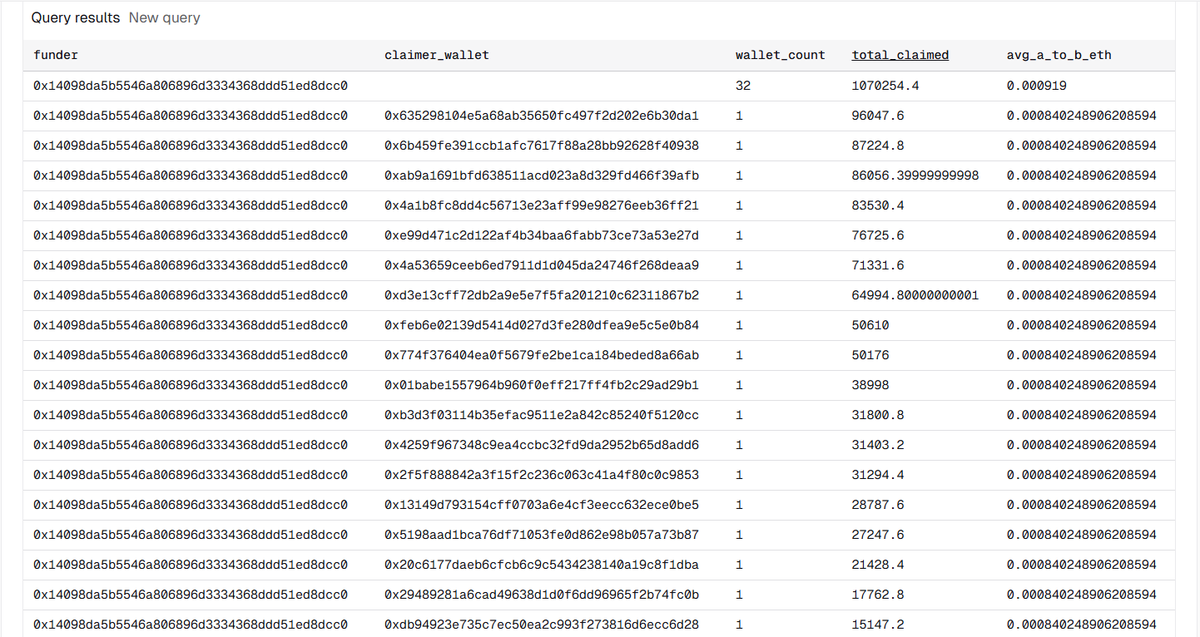
e.g. Bybit hot wallet → wallet A (0x14098Da5...D8dCc0) → wallet A sends ETH to B → B sends to C → C sends to D → D sends to E → E is the actual claimer wallet
every single hop wallet is a fresh address. the entire purpose of this structure is to make it look like unrelated wallets are independently claiming the airdrop. wallet A in the example above funded 32 claimer wallets through this exact pattern
Using strict criteria of tracking only wallets funded through the 4-hop daisy chain pattern originating from those 172 CEX-funded wallets, i identified 3,940 claimer wallets that claimed 99,673,692 $ROBO on Ethereum alone
Every single token is still sitting in the claimer wallets. all ~100 million $ROBO.
This is the biggest reason it's an inside job. no sybil operator in the history of airdrops holds ~$3.8M+ worth of tokens across thousands of wallets without moving them
sybils claim and dump, that's the entire business model. they rotate to the next airdrop
who would hold that many tokens? the team that wants low float to manipulate price
Even if the team claims these aren't insiders and this is genuinely a sybil cluster that slipped through, @openmind_agi has an even bigger problem to explain: how did they fail to filter out a cluster this size?
if i drop 4-hop requirement and just look at fresh wallets with only 2 transactions (funded + claimed), the number jumps to 4,195 wallets and 104,628,794 $ROBO.
but I'm keeping ~100M as the confirmed floor
that's ~100 million out of 130 million total claimed on Ethereum so far. 76% of all claims in one cluster. make it make sense. who else if not team
and this is just Ethereum i haven't analyzed BSC and Base yet where another 50 million $ROBO has been claimed. the real number is probably higher
Now let's talk about open market float
2.5% went to liquidity provisioning
0.5% public sale
0.6% - 0.8% actual community airdrop claims
that's roughly 3.8% of supply on the open market at max. and i'm being generous assuming every airdrop claimer and sale participant sold, which they definitely didn't. realistic float is probably lower than this
unless the team sold from the “Foundation Reserve” or the “Ecosystem and Community Allocation,” which I highly doubt since they want low float
this is early data and more wallets from the cluster are still actively claiming. this figure will go higher unless the team reads this and stops claiming.
i'll post a follow-up with updated numbers in the coming days
we've seen this playbook before. low float, crime pump to trap retail, slow bleed to zero
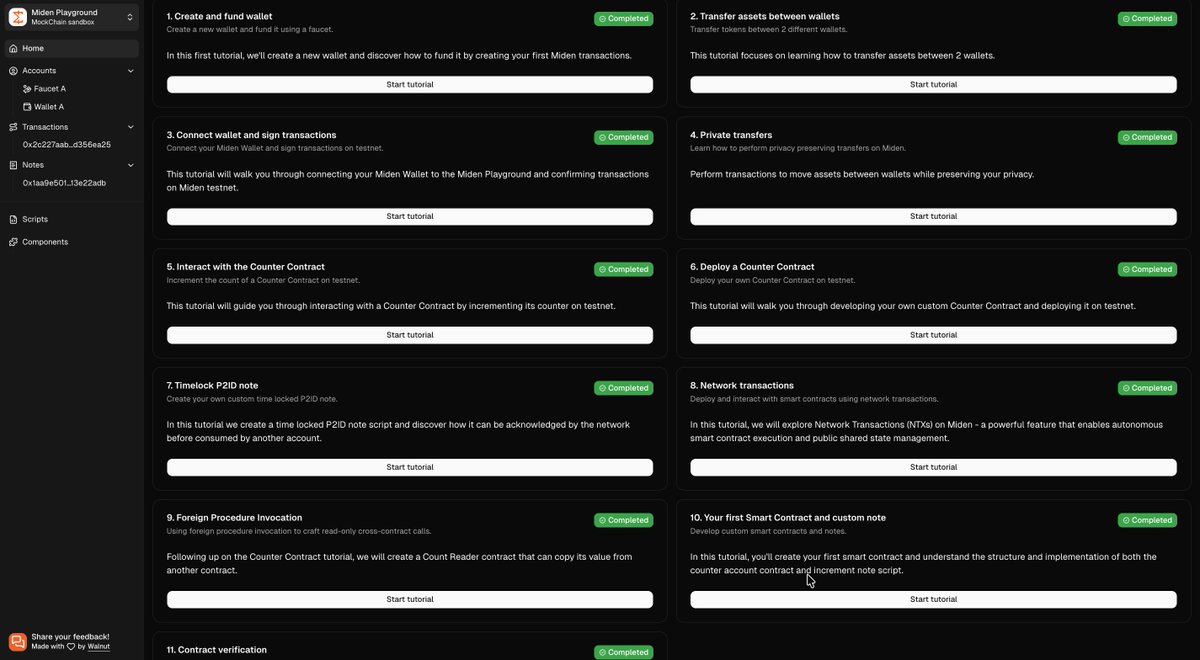
tried stepping out of my comfort zone today and finished the @0xMiden Playground task.
learned a lot about how Rust source code is transpiled to MASM and the importance of contract verification so it's transparent and can interact with other dApps.