OEP is non-partisan & facilitates substantive, responsible dialogue on U.S. #energypolicy via webinars, live events, roundtables. ⚡Search the OurEnergyLibrary.
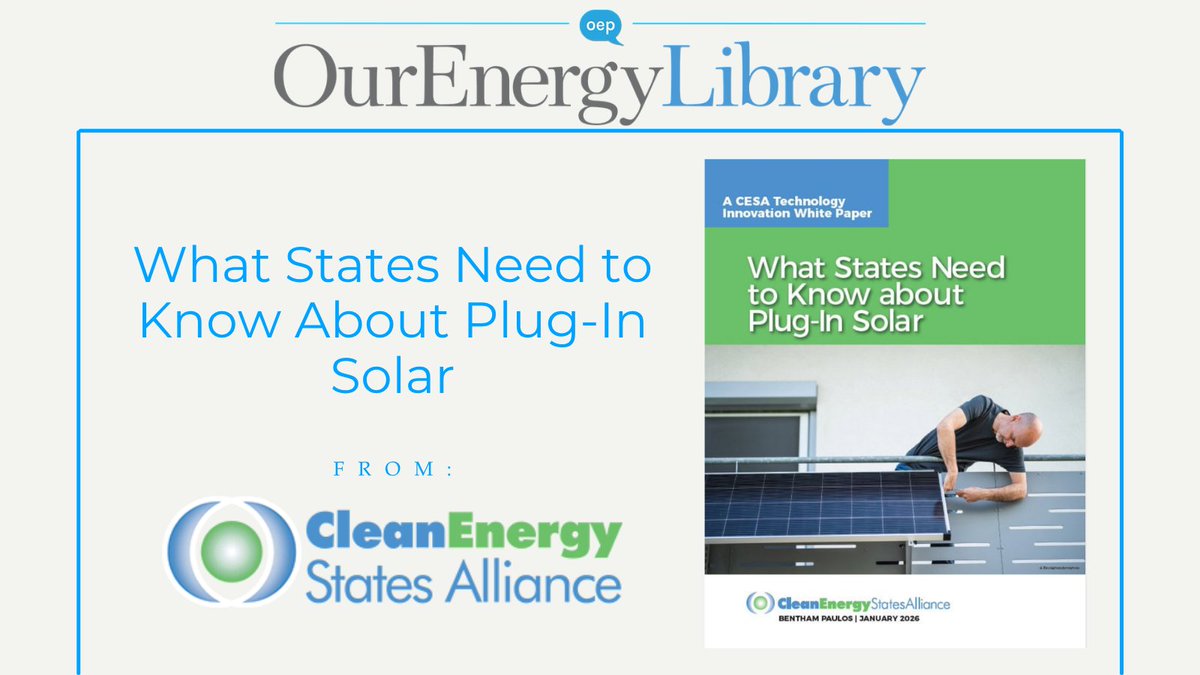
This report from CESA provides information about plug-in solar for state energy agencies, their legislative counterparts, and other stakeholders.
Read: https://t.co/7z2LBYdmdf
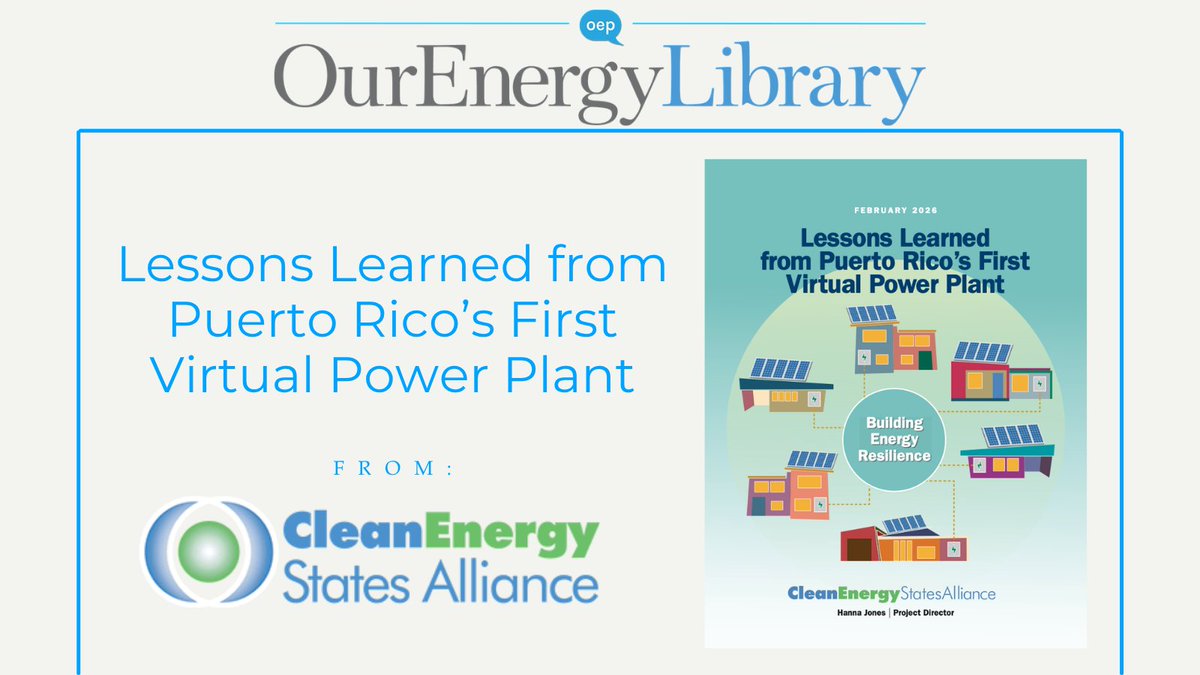
This CESA case study profiles Puerto Rico’s first VPP program, and explores how customer-centered program design and collaboration between stakeholders helped bring LUMA Energy’s CBES program to life and scale it into a model for resilient power.
Read: https://t.co/jTQ9jay5HS
This @BerkeleyLab report provides an analysis of existing regulatory and legal factors affecting microgrid deployments to help non-technical community leaders and decision-makers better understand the feasibility of a microgrid in their community.
Read: https://t.co/ThjBQIkE8V
This report from @Nature serves as a comprehensive and adaptable decision-support tool for energy planners, engineers, and policymakers engaged in the design and deployment of next-generation sustainable microgrid solutions.
Read: https://t.co/ap3LqYQJv7
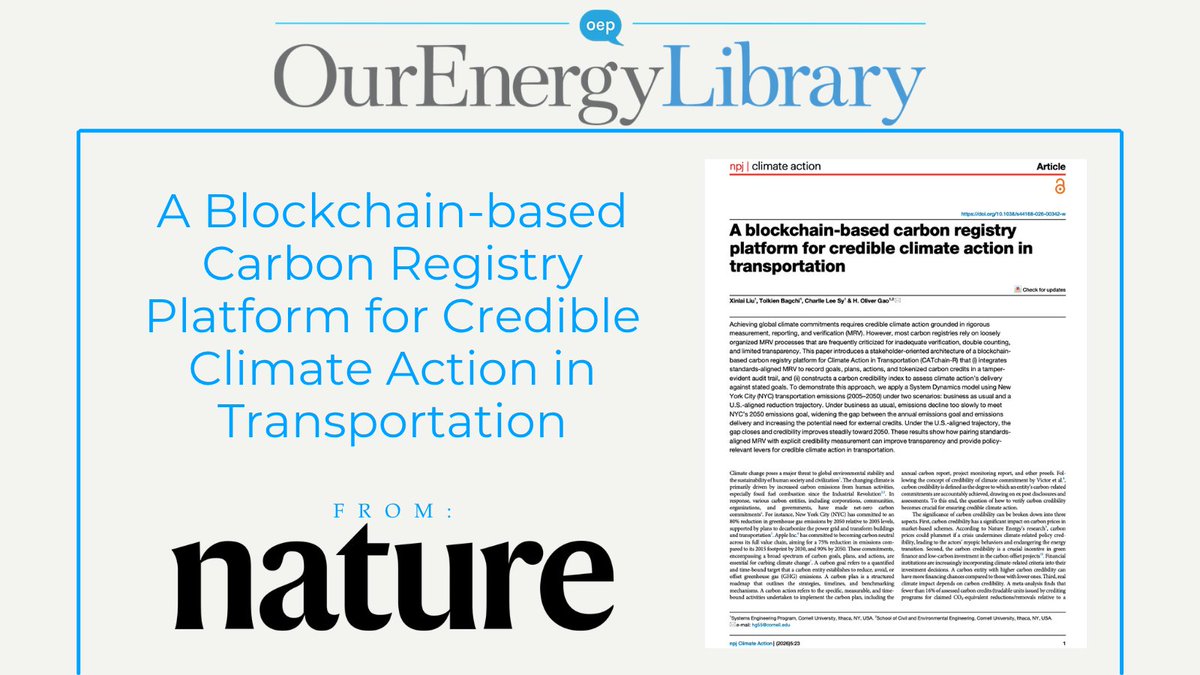
This @Nature report introduces a stakeholder-oriented architecture of a blockchain-based carbon registry platform for Climate Action in Transportation (CATchain-R).
Read: https://t.co/X8YvTQTnLN
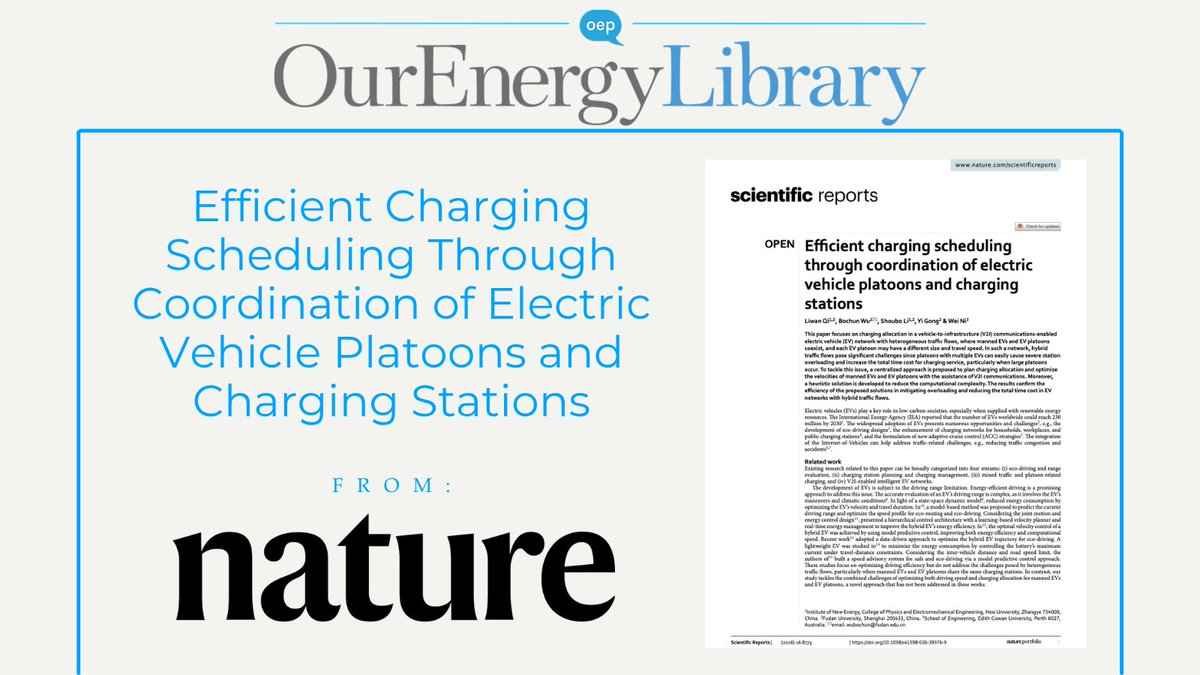
This @Nature report focuses on charging allocation in a V2I communications-enabled EV network with heterogeneous traffic flows, where manned EVs and EV platoons coexist, and each platoon may have a different size and travel speed.
Read: https://t.co/lJCsY0SxuN
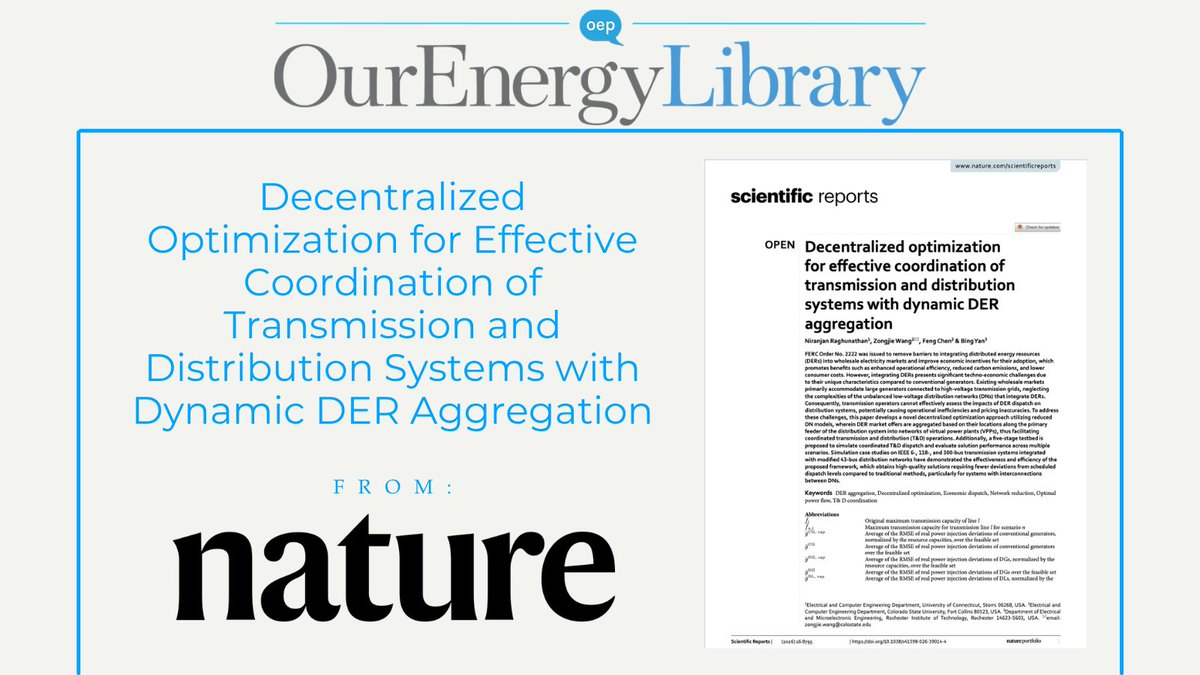
This @Nature report develops a decentralized optimization approach using reduced DN models, wherein DER market offers are aggregated based on their locations along the primary feeder of the distribution system into networks of virtual power plants.
Read: https://t.co/i2rvE6Utaq
This report from @Nature summarizes results from a spatial-temporal prospective life cycle assessment of twenty international supply chain scenarios in 2023, 2030, 2040, and 2050 across five hydrogen production technologies in fourteen countries.
Read: https://t.co/DrWHrjLX6O
This Clean Energy Group case study provides an overview of the approval process that the Kenzi apartments in Boston underwent to obtain solar+storage-only backup power.
Read: https://t.co/AfFFPYtgFD
This @ember_energy report analyses changes in global electricity generation from January to June 2025 compared with the same period last year to measure the progress of the global clean energy transition.
Read: https://t.co/mUpeNN15im
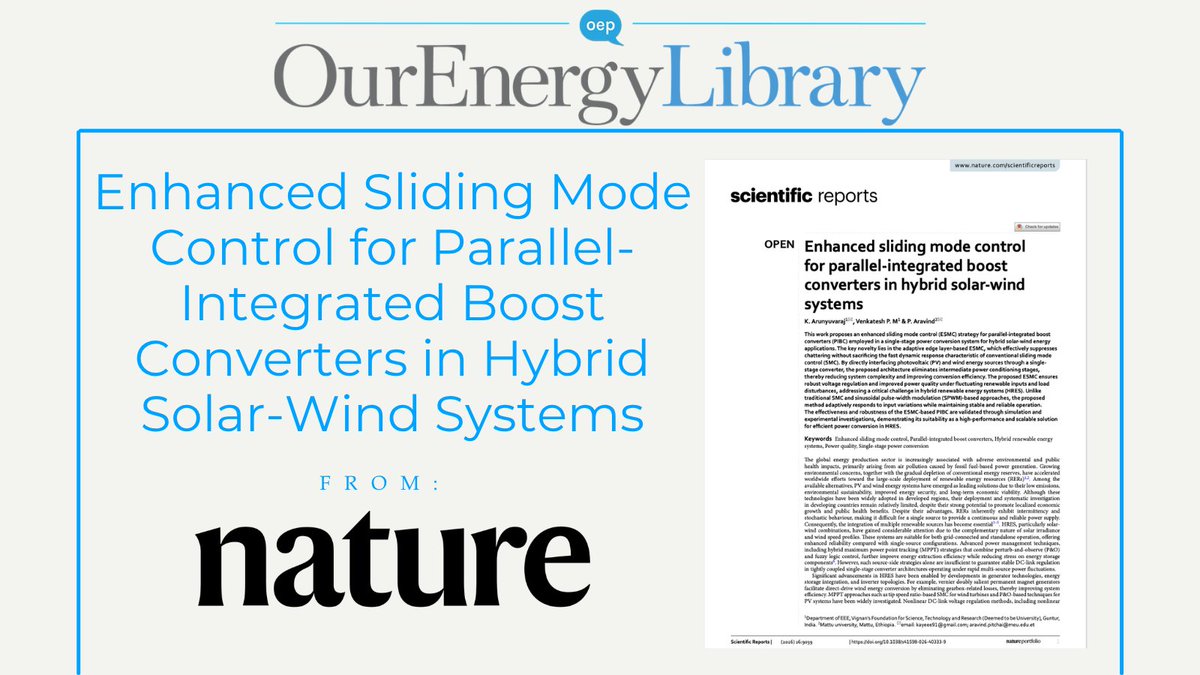
This report from @Nature proposes an enhanced sliding mode control (ESMC) strategy for parallel-integrated boost converters (PIBC) employed in a single-stage power conversion system for hybrid solar-wind energy applications.
Read: https://t.co/b6KNAxENTE
This @Nature report compares the environmental, economic, and social impacts of two renewable energy projects with the same installed capacity.
Read: https://t.co/jLxY42fpM5
This @Nature report develops an hourly-resolution linear programming optimization model to evaluate the economic and environmental benefits of hydrogen integration as both an energy storage medium and an industrial commodity.
Read: https://t.co/a4Q9iHizf3
This report from @Nature (1) introduces a methodology for the derivation of SOS-based targets for mobility and electric vehicle batteries; (2) demonstrates target sensitivity to downscaling assumptions and parameters.
Read: https://t.co/fJvw3WBmZB
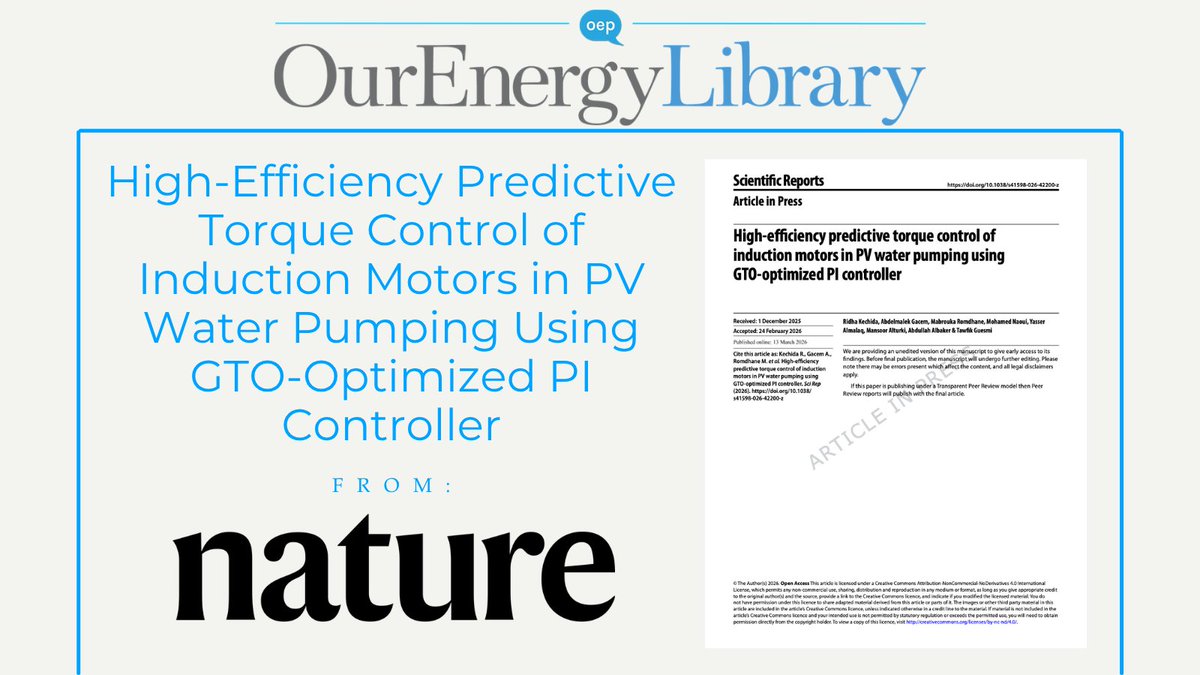
This report from @Nature proposes an integrated and optimally tuned photovoltaic water pumping system (PVWPS) with high performance and operational stability under variable climatic conditions.
Read: https://t.co/r2ni2WUbe9
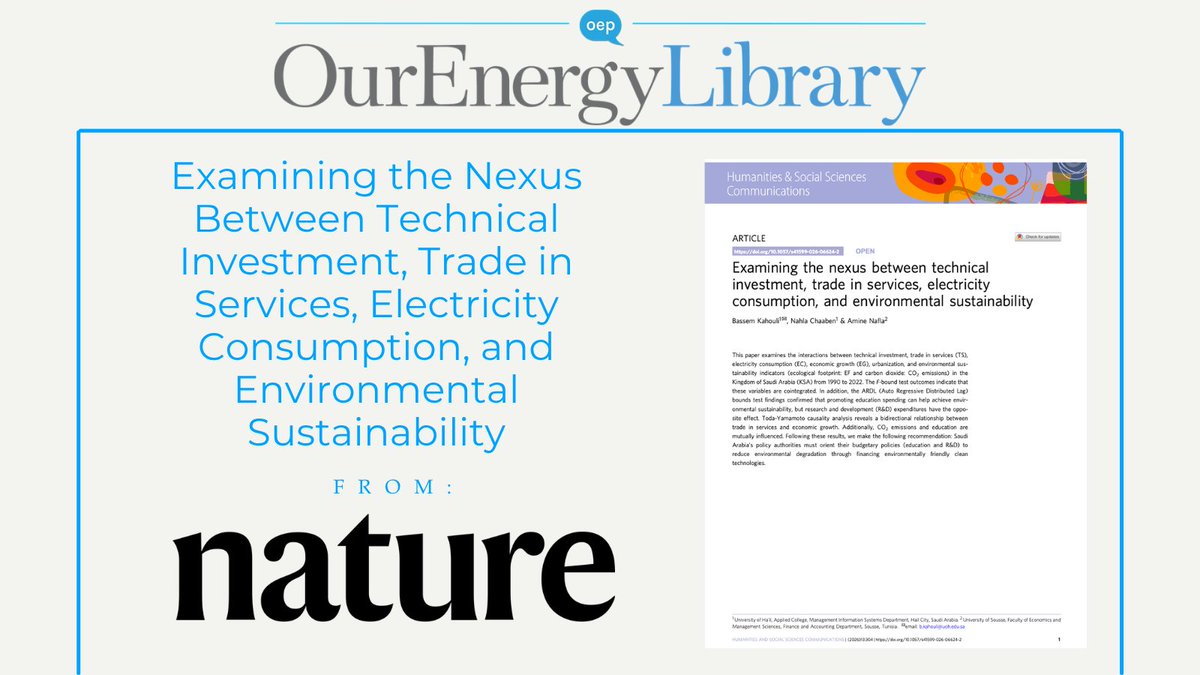
This report from @Nature examines the interactions between technical investment, trade in services, electricity consumption, economic growth, urbanization, and environmental sustainability indicators in the Kingdom of Saudi Arabia from 1990 to 2022.
Read: https://t.co/mMq6lxNYF8
This report from @Nature cost-effectively addresses green-H2 scarcity without demanding natural freshwater and electricity, thereby providing an archetype for global sustainable development.
Read: https://t.co/TZFaGvB7OZ