Tú dices: "Córtate un poco; piensa las cosas antes de empezar a soltar mierda".
Cervantes decía: "Enfrena la lengua; considera y rumia las palabras antes de que salgan de la boca".
Victor Hugo pleurait sur la misère le jour et l'exploitait sexuellement la nuit.
Derrière la figure du vieux sage adulé pour sa défense des opprimés se cachait un bourgeois cynique qui profitait directement de la faim des gamines des rues, achetant frénétiquement des jeunes filles souvent âgées de quinze ou seize ans à peine.
Celui qui a fait pleurer des générations entières sur le sort tragique des femmes du peuple réduites à vendre leur corps pour survivre s'offrait cette même misère pour quelques centimes.
Le grand moraliste tenait d'ailleurs une comptabilité effroyable de ses abus. Dans ses carnets intimes, il notait méthodiquement les tarifs sordides, l'âge et les actes sexuels, réduisant la chair des misérables à un simple livre de comptes.
Ses journaux cryptés regorgent d'entrées glaçantes où l'on peut lire par exemple : "La petite blanchisseuse, 15 ans : 2 francs", ou encore "Fille de la rue de la Verrerie. 16 ans. 1 franc 50.", au milieu de froides descriptions anatomiques codées en espagnol.
La cruauté de cet homme s'illustre de manière encore plus tragique avec Juliette Drouet, la maîtresse dévouée qui lui a sacrifié cinquante ans de son existence.
Pendant que l'écrivain s'érigeait en champion universel de la liberté, il exigeait de sa compagne une soumission totale, l'enfermant à double tour et anéantissant sa carrière d'actrice.
Alors qu'il amassait une fortune colossale grâce à ses droits d'auteur, il prenait un plaisir sadique à la maintenir dans une pauvreté humiliante.
Sa correspondance dévoile le calvaire d'une femme brisée. Transie de froid l'hiver, Juliette devait le supplier pour payer le boucher ou acheter du bois, lui écrivant avec désespoir : "Je suis si pauvre, mon adoré, que je n'ai plus de souliers à mettre à mes pieds".
Pendant qu'elle mettait ses propres robes en gage pour survivre, Hugo dépensait sans compter pour multiplier les passes avec des adolescentes des quartiers pauvres.
Le monde littéraire entretient aujourd'hui une amnésie bien commode pour protéger la statue d'or du grand républicain au Panthéon.
Ses propres écrits décrivent plutôt un rentier de la morale qui sublimait la pauvreté dans ses livres pour mieux l'acheter et l'asservir dans son lit.
Tú dices: "Mira, porque eres cura, si no te daba una hostia".
Cervantes decía: "El respeto que siempre tuve y tengo al estado que vuesa merced profesa tienen y atan las manos de mi justo enojo".
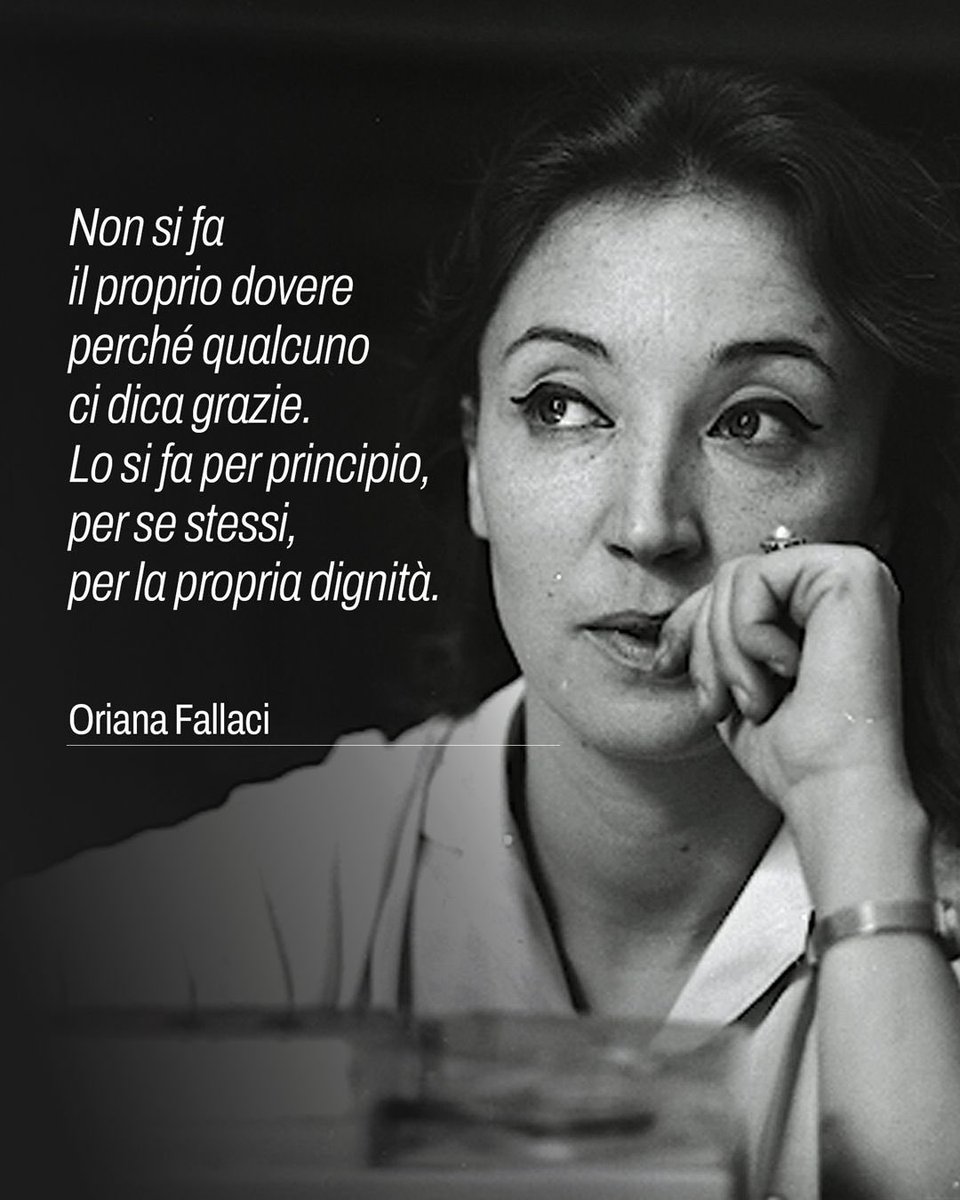
Vent’anni fa ci lasciava Oriana Fallaci.
Una giornalista libera, coraggiosa, mai accomodante. Ha raccontato il potere, le guerre e le contraddizioni del suo tempo senza piegarsi al conformismo.
Negli ultimi anni provò anche a mettere in guardia l’Occidente dai rischi del fondamentalismo islamico e dalla perdita di consapevolezza della propria identità.
Si poteva essere d’accordo con lei oppure no. Ma una cosa era certa: Oriana non aveva paura di dire ciò che pensava.
E forse è proprio per questo che, vent’anni dopo, le sue parole continuano a essere così attuali.
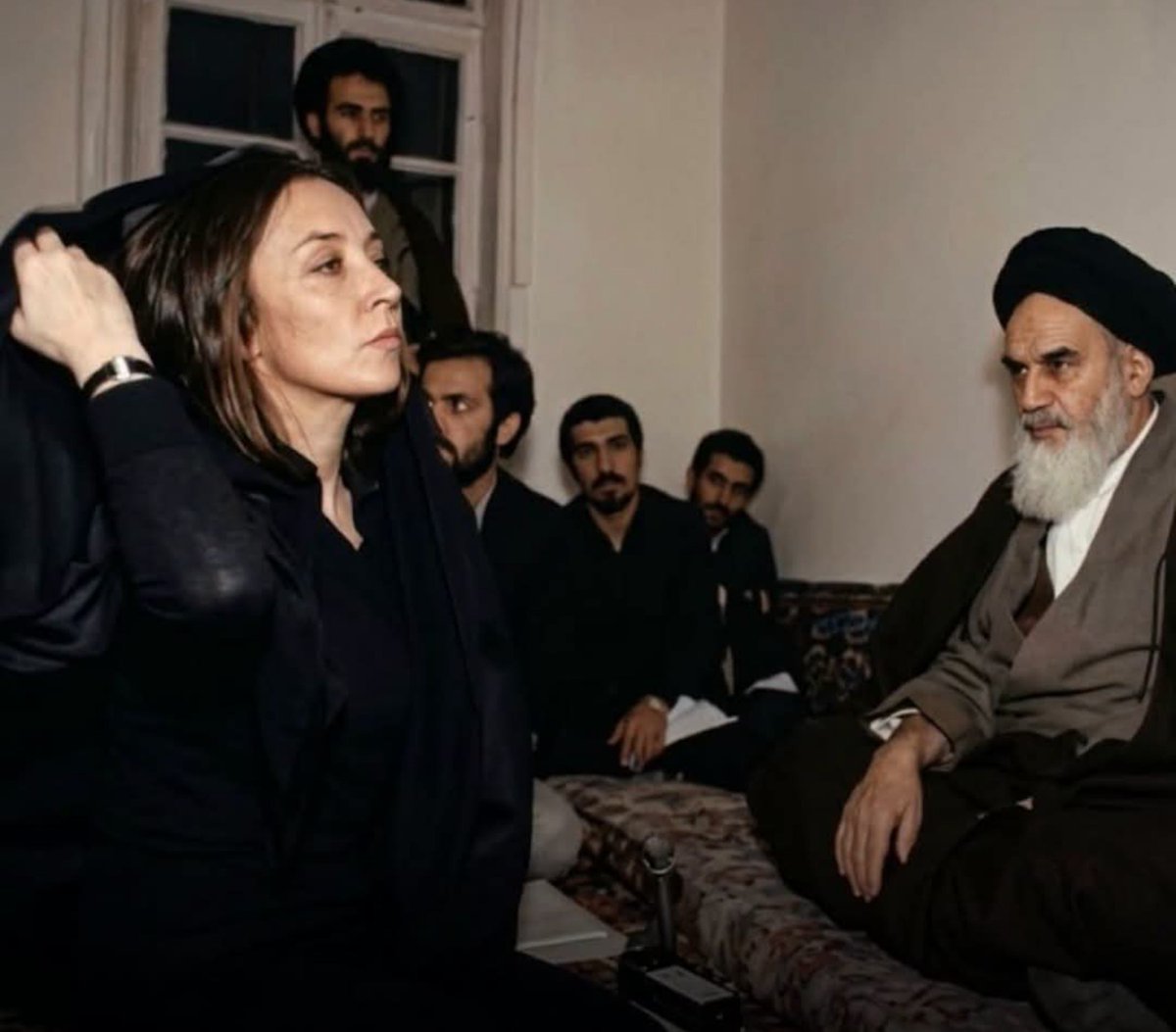
Italian journalist Oriana Fallaci removing her chador during her tense 1979 interview with Ayatollah Ruhollah Khomeini in Qom, Iran...
In October 1979, Italian journalist Oriana Fallaci traveled to Qom, Iran, to interview the Islamic Revolution's supreme leader. To get inside the room, Fallaci was forced to cover herself from head to toe in a heavy black chador, leaving only her face visible.
The conversation inside the room was tense from the very start. Fallaci did not hold back her questions.
She pushed the Ayatollah on political executions, the sudden shutdown of independent newspapers, and the sharp loss of rights for Iranian women under the new regime.
When she asked about the forced wearing of the veil, Khomeini dismissed her concerns and claimed the garment was meant to protect young and respectable women. He then added,
"If you do not like the Islamic dress, you are not obliged to wear it."
Fallaci took his words literally and replied, "Thank you, Mr. Imam. Since you tell me so, I am taking it off right now."
With a quick move, she pulled the chador off her head, leaving her hair completely exposed right in front of the Supreme Leader.
Khomeini was furious.
He stood up without saying another word and walked out of the room. The room fell silent, and the interview was abruptly stopped. However, Fallaci refused to leave Iran until he returned a day later to finish the conversation.
This confrontation became legendary in the history of journalism.
It showed a reporter refusing to bow down to authority, even in one of the most dangerous settings imaginable.
Fallaci proved that real journalism requires standing up to power, asking hard questions, and refusing to be silenced by fear or tradition.
When journalists trade raw courage for easy access and comfortable silence, we lose one of our strongest shields against tyranny.
In an era where true courage in reporting feels rare, her brave stand reminds us that honest journalism still has the power to light up the dark, giving a voice to the voiceless and inspiring future generations to speak truth without fear.
#archaeohistories
Taxi driver in New York asked me if I knew Stefanos Tsitsipas.
I said, "We're very close."
He said, "Good. Tell him to stop taking bathroom breaks like he's searching for Narnia."
I pulled my hood up and pretended I was a tourist from Oslo.
Nobody bought a ticket to hear Miley Cyrus sing. They just happened to be standing in the right subway station.
In a New York City subway station in 2017, Miley Cyrus put on a dark wig, sunglasses and tried to disappear into the crowd. Jimmy Fallon joined her, pretending to be an ordinary street performer while banging a tambourine slightly off beat. There was no concert stage, no giant screen and no polished production waiting to announce who was behind the disguise. Just a microphone, a small speaker and a street musician making music with a bucket.
Then they started Jolene.
For the first few seconds, people didn't seem particularly interested. Nobody takes the subway expecting to run into Miley Cyrus. But the moment her voice came through, the atmosphere changed. People began turning around, phones came out and a small crowd started forming around the performers. The disguise could hide her face, but it couldn't hide that voice.
That is what makes the moment so satisfying. The surprise isn't created by somebody shouting, “Look who is here!” The voice reveals her first. Before the crowd knows exactly who they are looking at, they already know they are hearing someone special.
There is also something wonderfully imperfect about the performance. The sound comes through a small setup instead of a concert PA, Fallon is deliberately playing around with the rhythm, and there is none of the visual spectacle normally surrounding a Miley Cyrus performance. Yet when she sings, the song still holds together. Her voice doesn't need the production around it to make the moment work.
And Jolene makes the surprise even better. It is a song deeply associated with Dolly Parton, but Miley has performed it enough times for her own interpretation to become part of what people recognize. So when that unmistakable voice suddenly appears in the middle of a subway station, the disguise becomes almost irrelevant.
For the people standing there, the strange part was that they hadn't planned to attend anything. They were simply on their way somewhere else. Some were probably thinking about work, dinner or catching the next train. Then, for a few minutes, their ordinary commute turned into a concert they never bought a ticket for.
Maybe that is the part of the story worth carrying beyond the subway station. We often imagine memorable moments as things that require planning: a special trip, an important event, a perfect opportunity. But some of the moments we remember for years arrive in the middle of an ordinary Tuesday, when we are simply going somewhere and happen to look up.
The people who heard Miley that day didn't know they were about to experience something special. They only had to notice that something had changed around them and decide to stop for a moment.
Life can be like that too. Not every meaningful moment announces itself before it arrives. Sometimes it is hidden behind a disguise, buried inside an ordinary day, or almost missed because we are too focused on getting to the next place.
The subway doors will open, the train will leave, and the crowd will eventually disappear. But for a few minutes, an ordinary commute became a story worth telling for years.
Maybe the lesson isn't to wait for extraordinary days. It's to stay awake enough to recognize the extraordinary moments hiding inside ordinary ones.
At 14, Zack MacLeod Pinsent burned his last pair of jeans after finding a box of his great-grandfather’s suits, and he hasn’t worn modern clothes since.
What could have remained a teenage phase became his trade. He taught himself historical tailoring and built a business in Brighton, drafting patterns by hand and making clothes using techniques from the 1660s through the 1920s.
His clients now range from museums to people who simply want garments cut the old way. Last year he hosted a Regency Ball at Brighton’s Royal Pavilion that sold out in under three minutes, drawing 150 people from seventeen countries to spend a night dressed for the world Zack decided at 14 he’d rather live in.
George Galloway nos da una lección de lo que significa ser judio y antisionista.
Nos recuerda a los judios del Congreso Nacional Africano, que defendieron a Mandela y lucharon contra el apartheid en Sudáfrica.
Ser antisionista es una obligación moral.
Spectacular Italian traditions 🇮🇹🌹
The Machine of Santa Rosa, Viterbo, Lazio
Every 3 September, more than a hundred men lift a 98-foot tower of light weighing 5.5 tons and carry it on their shoulders through the narrow streets of the old town
One kilometre of strength and faith to honour Saint Rose, patron saint of the city
UNESCO intangible heritage