Today, I joined the PS for @SDPI_AM , Mr. Cyrell Wagunda, and members of the PPP Committee during an inspection of the Nairobi Expressway to evaluate the project’s operational performance, asset condition, maintenance regime, and ongoing optimisation measures.
The inspection included a review of the recent improvements undertaken at the Museum Hill and Westlands exits, interventions that are enhancing traffic circulation and contributing to greater efficiency along one of the country’s most critical transport corridors. The Committee also visited the Expressway’s Operations Control Centre to assess incident detection, emergency response coordination, and traffic management systems that support uninterrupted traffic flow and operational reliability across the corridor.
The 27.1-kilometre Nairobi Expressway continues to deliver substantial socio economic value through improved mobility, enhanced road safety, reduced travel times, and strengthened connectivity between Nairobi’s key commercial centres and strategic transport infrastructure, including Jomo Kenyatta International Airport, the Nairobi SGR Terminus, and Syokimau Railway Station.
As a flagship Public Private Partnership project, the Nairobi Expressway exemplifies the transformative impact of strategic collaboration between the public and private sectors in delivering world class infrastructure. The project remains a compelling demonstration of how innovative financing, robust operational management, and effective project execution can accelerate infrastructure development, enhance service delivery, and support Kenya’s long term economic competitiveness.
Effective project delivery requires continuous performance assessment, robust contract management, and a clear understanding of lessons emerging from implementation. These were among the key themes that shaped discussions during Day One of the 3rd Annual PPP Projects Performance Review and Reporting Workshop.
The workshop brought together Contracting Authorities, Project Companies, Independent Engineers, Transaction Advisors, and PPP practitioners to evaluate the performance of ongoing PPP projects against established contractual obligations and Key Performance Indicators. Deliberations focused on project implementation progress, asset performance, service delivery standards, environmental and social compliance, local content integration, stakeholder management, and the adoption of innovative solutions that enhance project efficiency and sustainability.
Participants also reviewed the draft FY 2025/26 Annual PPP Project Report, an important accountability instrument that provides insights into project performance, operational challenges, emerging risks, and opportunities for strengthening project oversight across the PPP portfolio.
The workshop further examined experiences from key national projects including the Nairobi Expressway, the Nairobi–Nakuru–Mau Summit Highway, Road Annuity Projects, and the Galana Kulalu Food Security Project. These engagements provided practical perspectives on project development, construction management, operations, maintenance obligations, performance monitoring frameworks, and the management of complex stakeholder environments.
Independent Engineers presented findings from project monitoring and compliance assessments, offering valuable technical insights on asset condition, performance benchmarks, contract administration, quality assurance, and measures that can support continuous improvement throughout the project lifecycle.
As our country expands the use of Public Private Partnerships to accelerate infrastructure development and service delivery, sustained knowledge sharing and performance-driven oversight remain essential in ensuring that PPP projects achieve their intended economic, social, and developmental outcomes while delivering value for money to citizens.
IMPORTANT.
Firms with expertise in infrastructure planning, PPP transaction advisory, transport economics, engineering, environmental assessment, and project development are encouraged to express interest in the Mau Summit–Eldoret–Malaba (A8) Road Capacity Enhancement Project.
The Mau Summit–Eldoret–Malaba corridor is one of Kenya’s most strategic transport arteries, carrying a substantial share of the freight and passenger traffic linking the Port of Mombasa to Uganda, Rwanda, South Sudan, the Democratic Republic of Congo, and the wider East African region. Its capacity enhancement is expected to improve mobility, reduce logistics costs, strengthen regional trade, and support economic activity across multiple counties along the Northern Corridor.
Strong project preparation is fundamental to successful PPP delivery. Rigorous feasibility studies, sound transaction structuring, and comprehensive technical assessments are essential in developing bankable infrastructure projects capable of attracting long term investment and delivering sustainable infrastructure outcomes.
Eligible firms are encouraged to review the procurement documents and submit their Expressions of Interest within the stipulated timelines.
The Menengai Geothermal Development Project continues to stand out as one of Kenya’s most strategic clean energy Public Private Partnership models, demonstrating how deliberate public sector de risking can unlock long term private investment into critical national infrastructure.
Last evening, together with PS for National Treasury, Dr. @DrChrisKiptoo , PS @SDPI_AM Dr. Cyrell Odede, PS Roads Eng. @PSRoads_Ke , and officials from the PPP Committee, we undertook an inspection tour of the Menengai Geothermal Project in Nakuru County to assess the progress of the ongoing geothermal power generation programme being implemented through a structured partnership framework between the Geothermal Development Company (GDC) and Independent Power Producers (IPPs).
Under this model, GDC undertakes the high risk and capital intensive upstream activities including geothermal resource exploration, appraisal drilling, steam field development, reservoir management, and steam gathering infrastructure before supplying verified geothermal steam to private power producers for electricity generation and dispatch into the national grid. This government led de risking framework substantially improves project bankability, lowers investor exposure to exploration uncertainty, accelerates private sector participation, and strengthens financing viability for large scale geothermal infrastructure.
The first phase of the development targets 105MW through three separate 35MW power plants being developed by Sosian Menengai Geothermal Power Limited, Globeleq Menengai Limited, and OrPower Twenty Two Limited. Upon completion, the projects are expected to strengthen baseload electricity supply, enhance grid stability, support industrial productivity, reduce pressure on thermal generation, and reinforce Kenya’s position as a global leader in renewable energy development.
The Menengai model continues to provide an important reference point on how governments can strategically undertake early stage infrastructure and resource risks while leveraging private sector capital, operational expertise, and generation efficiency in delivery of commercially sustainable infrastructure. The framework is increasingly becoming significant in expanding long term energy security while supporting manufacturing growth, investment attraction, and rising national electricity demand driven by economic expansion.
Today’s inspection of the ongoing KDF Housing PPP Projects at Gilgil and Lanet Barracks in Nakuru County confirmed the significant progress being realised under the KDF Housing Program, with construction at Gilgil now at 80 percent completion while the Lanet project has reached 90 percent completion.
Implemented under the Build Transfer PPP framework, the projects continue to support ongoing efforts to address the estimated 65,000 housing unit deficit within the Kenya Defence Forces through modern and dignified accommodation for military personnel.
The broader PPP programme is delivering 3,069 housing units across five KDF installations, including 697 units at Gilgil Barracks, 932 units at Lanet Barracks, 788 units at Nanyuki Barracks, 152 units at Mariakani Barracks, and 500 units at Roysambu Barracks, which were completed and commissioned last year.
The Affordable Housing Program is further complementing these interventions through the delivery of an additional 10,000 housing units for KDF personnel, while ongoing considerations under the PPP framework are expected to further expand housing delivery in order to progressively bridge the existing accommodation gap.
The projects are being financed through a structured framework that leverages housing allowances to support long term project sustainability and delivery under the PPP model. Construction across the remaining sites is now in the final phase, with completion expected within the next one month.
The continued progress demonstrates the growing capacity of Public Private Partnerships to accelerate strategic public infrastructure delivery, mobilise private sector investment and efficiency, and strengthen sustainable housing development within critical national institutions.
@matheka_alfred This toll road will be an open system and one can access it at any point through service roads as there will be no designated entry and exit
The Rironi–Nakuru–Mau Summit Highway Project is rapidly taking shape on the ground as large scale implementation activities continue advancing across multiple sections of the corridor under the Public Private Partnership framework.
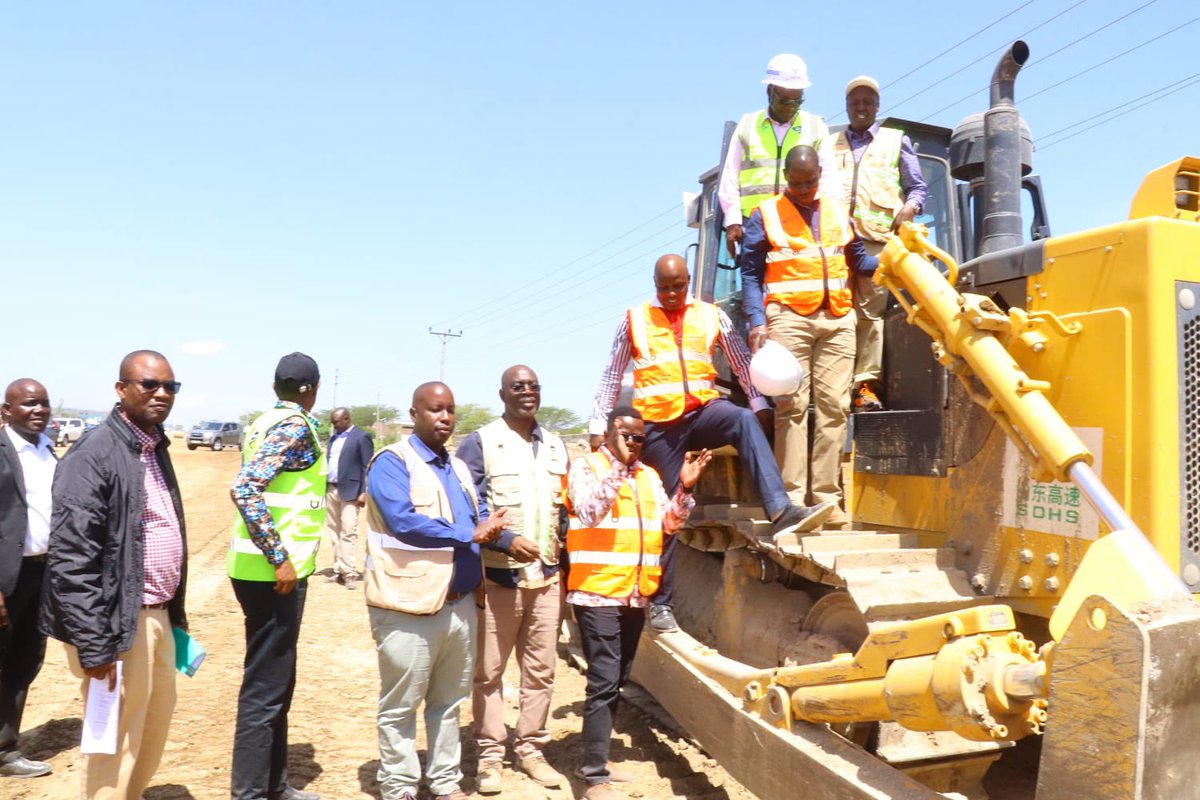
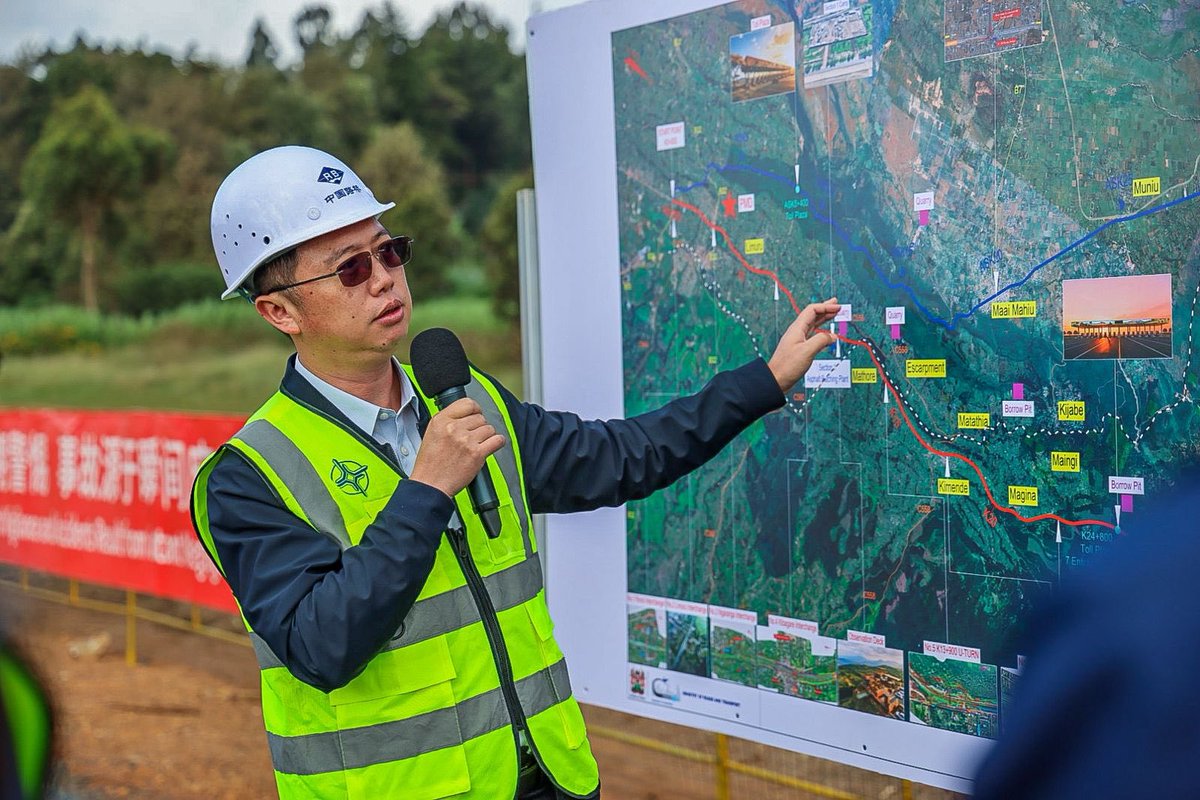
Today, I accompanied PS National Treasury Dr. @DrChrisKiptoo , PS @SDPI_AM Cyrell Odede, PS Roads Eng. @PSRoads_Ke , and members of the PPP Committee during an inspection tour of the ongoing works where major earthworks, excavation activities, culvert installation, drainage works, embankment formation, fill layer processing, site clearance, traffic management interventions, and broader contractor mobilization efforts were all progressing steadily across different sections of the project corridor.
The inspection covered the two project sections currently being undertaken by the CRBC/NSSF Consortium along the Rironi–Gilgil section and Shandong Hi Speed along the Gilgil–Mau Summit section, where deployment of additional technical teams, engineering personnel, and heavy machinery continues accelerating implementation progress toward targeted completion and commissioning for public usage by June next year.
Being implemented under the Design, Finance, Build, Operate, Maintain and Transfer model, the project remains one of Kenya’s most strategic transport infrastructure investments expected to substantially ease congestion, improve travel efficiency, strengthen cargo mobility, and enhance regional trade connectivity along the Northern Corridor.
The project scope includes development of dual carriageway sections along the corridor alongside associated rehabilitation, upgrading, and toll infrastructure works designed to support long term transport efficiency, logistics reliability, and sustainable corridor management.
The progress already being realized on site continues reflecting the growing maturity and effectiveness of Kenya’s PPP framework in mobilizing long term infrastructure financing, engineering expertise, institutional collaboration, and private sector efficiency toward delivery of transformative national infrastructure.
I received with profound grief and deep sorrow, the heartbreaking news of the untimely transition to glory of Eng. Anne J. Cheboi, one of the recently appointed members of the PPP Tribunal, following a short illness that she battled with courage. Her untimely demise is a monumental loss to the Public Private Partnerships sector, the Engineering fraternity, and the broader institutional framework supporting infrastructure governance, commercial justice, and investment facilitation within our country.
She distinguished herself as an exceptionally energetic, focused, and intellectually astute professional whose commitment to learning, service, and institutional excellence became evident from the very beginning of her tenure. Her engagements consistently reflected diligence, clarity of thought, admirable composure, and a remarkable readiness to deepen her understanding of the evolving PPP ecosystem and its strategic importance to national development.
Even within a relatively short period of service, she demonstrated immense promise, professional maturity, and a genuine passion for public duty. She carried herself with grace, discipline, and purpose, while continually exhibiting a collaborative spirit and a deep appreciation of the responsibility entrusted to the Tribunal. Her contribution, presence, and potential had already begun enriching the institution and strengthening confidence in the integrity and effectiveness of PPP dispute resolution mechanisms.
Her demise is deeply painful and profoundly unfortunate at a time when her expertise, perspective, and growing contribution to institutional governance within the PPP framework remained greatly needed.
It is even more painful that this solemn moment coincides with what would have been her birthday (which is today 23rd May) a day that would ordinarily have been marked with gratitude, celebration, and reflection on a life of purpose and promise. Instead, we mourn the loss of a distinguished professional whose future remained exceptionally bright and impactful.
On behalf of the PPP fraternity, I extend my deepest and heartfelt condolences to her family during this period of immense grief and mourning. The loss of a daughter, relative, colleague, mentor, and loved one of such promise and character is a painful burden that words can scarcely ease. May they find comfort in the legacy of professionalism, integrity, humility, and service that she leaves behind, and may they draw strength from the many lives she touched through her dedication and warmth.
I equally convey sincere condolences to her colleagues at the PPP Tribunal, the Engineering fraternity, friends, and all those who had the privilege of working alongside her.
May her soul rest in eternal peace.
Director General, Public Private Partnerships,
Eng. Kefa Seda O.
Sustainable transport infrastructure remains central to Kenya’s economic transformation agenda, particularly at a time when rising infrastructure demand, urbanization, regional trade expansion, and constrained public financing continue reshaping how governments plan, finance, and deliver strategic projects.
Today at the Inaugural KIHBIT International Research Conference on “Enhancing Capacity Building and Skills Development for Sustainable Road Transport,” I underscored the increasingly critical role of Public Private Partnerships in mobilizing long term private capital, technical expertise, innovation, and institutional efficiency toward sustainable infrastructure delivery.
The discussions highlighted the growing need for multidisciplinary infrastructure capacity across engineering, financial modelling, legal structuring, procurement, environmental safeguards, contract management, and stakeholder coordination as Kenya continues advancing a robust PPP pipeline spanning transport corridors, energy infrastructure, logistics systems, water infrastructure, and regional connectivity projects.
I further noted that inclusive growth demands infrastructure that is accessible, affordable, sustainable and resilient, while pioneering such transformation equally requires sustained investment in the people, technical skills, institutional capacity, and professional expertise that make complex infrastructure delivery possible.
The ongoing implementation of the Nairobi–Nakuru–Mau Summit Highway PPP Project, alongside strategic projects under preparation including the Nairobi–Mombasa Expressway, High Grand Falls Multipurpose Development Project, Kenya Ports Authority Port Assets Development Program, and the Mau Summit–Eldoret–Malaba Highway Project, continues demonstrating Kenya’s commitment toward structured, bankable, sustainable, and investment ready infrastructure development capable of supporting long term economic competitiveness and regional integration.
Powering the Energy Transition through Transmission PPPs
Co-authored by Denis Yegon (Financial Analyst) and Irene Karbolo (Commercial Transactions Lawyer)
Why Transmission is Ripe for PPPs
Kenya’s energy sector has long been regarded as commercially viable, demonstrating sector revenues exceeding KES 231 billion annually and attracting private investment in power generation for decades. Yet, for all this success, private capital has largely stopped at the power plant gate. The recent commercial close of energy transmission PPP between KETRACO, Africa50 and POWERGRID marks an important shift in Kenya’s energy story, one that extends private sector participation beyond generation.
Transmission assets share several characteristics that align well with PPP structures. They demand significant upfront capital investment, but once built, their operating costs are relatively predictable, and their economic value is realized steadily over long asset lives. This combination produces stable, long-term cash flows, an attractive proposition not only for project lenders, but also for institutional investors such as pension funds seeking core or core-plus infrastructure assets.
In this context, transmission PPPs offer a practical and timely response to Kenya’s transmission financing needs and rising demand, driven in part by the expansion of renewable energy.
Which transmission projects are suitable for PPPs?
While the transmission asset class may be well suited to PPPs, public concerns about tariff affordability often dominate debates around private sector participation in the energy sector. Consequently, careful selection and prioritization of transmission projects for implementation based on the system benefits is crucial.
In Kenya’s case, the Least Cost Power Development Plan (LCPDP) provides a transparent, data-driven roadmap for generation and network expansion. For investors, this clarity reduces uncertainty around future electricity demand and ensures that load growth and associated risks are well understood by the public sector.
The recently concluded transaction in Kenya includes two strategically significant assets. The 400kV Lessos–Loosuk transmission line that will provide an alternative evacuation route for renewable energy from Lake Turkana Wind Power project and traverses the North Rift geothermal complex, positioning it as a primary evacuation corridor for upcoming geothermal generation. Meanwhile, the 220kV Kibos–Kakamega–Musaga line extends high-voltage supply into Western Kenya, increasing renewable energy penetration and expanding access to historically underserved areas.
Collectively, these projects will enable displacement of expensive thermal generation in Western Kenya, reduce system losses, connect new users and improve reliability thus addressing suppressed demand. All of these contribute to lowering the long-run marginal cost of electricity. Therefore, while availability payments may result in a modest near-term increase in tariffs, the long run effect is expected to be positive to the end-users.
Structuring for bankability
One of the most consequential structuring decisions for Transmission PPPs is the choice between availability-based and user-pay models. Under availability-based payment model, the private partner is paid for keeping the asset operational in accordance to stipulated standards. This model is suitable for national grid systems, whereby transmission operators typically have no control over how much power flows through the network. In Kenya, this approach has been adopted, reflecting the reality of the grid’s utilization driven by system dispatch and planning decisions. This mirrors international best practice adopted in markets such as Latin America and India.
That said, user-pay models which are based on actual flow of power, remain viable where the customer base is clearly defined and demand is predictable. For example, for dedicated transmission lines serving mines, industrial parks, or data centres from a specific generation source. Kenya’s Open Access framework could support such arrangements, particularly for clean energy supply from geothermal fields serving energy-intensive users in special economic zones (SEZs).
Ultimately, the choice of payment model is critical as it shapes the project’s risk profile, influences the cost of capital, and determines investor appetite.
Structuring for Affordability and Value for Money
The energy sector in Kenya has, at times, faced pressure to renegotiate Power Purchase Agreements (PPAs) over concerns on affordability. In the case of transmission PPPs, novel solutions have been incorporated borrowing from recommendations of the 2021 Presidential Task force on Reviewing PPAs.
Foremost, a blended currency tariff is adopted, with payments split between local and hard currency. This reflects the underlying cost structure of the project recognizing that a significant portion of operating and maintenance expenses are incurred locally while also providing the private party with protection against foreign exchange volatility on external financing obligations obtained in hard currency.
Transmission PPPs also provide for structured commissioning milestones, distinguishing between “cold” commissioning (construction completion) and “hot” commissioning (actual power flow through the lines or substations). Consequently, payments are more closely aligned with operational readiness, reducing unnecessary fiscal exposure. Provisions for sharing gains from refinancing are also incorporated, as once construction risk falls away, the project may be refinanced on improved terms, allowing the public sector to share in the upside.
Additionally, equity returns are carefully benchmarked to ensure they are neither inflated by perceived risk nor suppressed to levels that would deter investors. This is reinforced by competitive procurement of EPC costs through transparent e-reverse auctions, thus enhancing value-for-money assurances. Furthermore, local content requirements are embedded in the transaction agreement ensuring that project benefits extend into the domestic economy.
Lessons Beyond Technicalities
Beyond technical structuring, one of the most enduring lessons learnt from delivering Kenya’s first transmission PPP is the need for tenacity. Project development can be tedious, complex, and at times even adversarial. As infrastructure finance professionals, it is easy to become absorbed in risk matrices, financial models, and contract negotiations but it is crucial not to lose sight of the bigger picture: the project’s ultimate purpose which is to improve lives. Keeping that goal in mind helps teams persist through inevitable setbacks and maintain momentum.
Finally, stakeholder coordination is critical to maintaining momentum. Close collaboration among government agencies, project sponsors and lenders ensures alignment across approval. This is reinforced by structured public engagement, which mitigates social risk and reduces the likelihood of delays further down the line.
Overall, Kenya’s transmission PPP offers a template for scaling up investment in the country’s energy infrastructure, thereby ensuring access to affordable and reliable electricity for consumers. @EngKefaSeda@SDPI_AM@KeTreasury@KETRACO1@JohnMbadiN
#TransmissionPPPs
#PublicPrivatePartnerships
#CleanEnergy
#InfrastructureFinance
#RenewableEnergy
#GridModernization
#KenyaPPP
#InvestInKenya
The infrastructure financing conversation across Africa is entering a far more strategic phase in which governments are increasingly prioritising transaction readiness, investment credibility, blended finance structures, domestic capital mobilisation, and commercially sustainable project delivery within tightening fiscal environments.
APPP 2026 will bring together governments, sovereign institutions, development finance partners, institutional investors, pension funds, infrastructure developers, commercial financiers, and transaction advisors to advance practical financing solutions across transportation systems, renewable energy infrastructure, water and sanitation, data centres and digital connectivity, healthcare systems, logistics corridors, affordable housing, Agriculture, industrial parks, and targeted climate resilient infrastructure for county Governments.
Kenya’s hosting of the 16th Africa PPP Infrastructure Finance, Investment and Partnerships Summit further reinforces Nairobi’s growing position as a continental infrastructure financing and transaction hub supporting regional integration, industrial competitiveness, and long term economic transformation across Africa.
The infrastructure financing conversation across Africa is entering a far more strategic phase in which governments are increasingly prioritising transaction readiness, investment credibility, blended finance structures, domestic capital mobilisation, and commercially sustainable project delivery within tightening fiscal environments.
APPP 2026 will bring together governments, sovereign institutions, development finance partners, institutional investors, pension funds, infrastructure developers, commercial financiers, and transaction advisors to advance practical financing solutions across transportation systems, renewable energy infrastructure, water and sanitation, data centres and digital connectivity, healthcare systems, logistics corridors, affordable housing, Agriculture, industrial parks, and targeted climate resilient infrastructure for county Governments.
Kenya’s hosting of the 16th Africa PPP Infrastructure Finance, Investment and Partnerships Summit further reinforces Nairobi’s growing position as a continental infrastructure financing and transaction hub supporting regional integration, industrial competitiveness, and long term economic transformation across Africa.
Kenya is increasingly positioning Public Private Partnerships (PPPs) at the centre of its infrastructure financing strategy as growing development demands continue exerting pressure on public finances. Read more…
https://t.co/f4JNgLF5Vm
A snippet from the Kenya PPP Symposium 2026 where discussions reinforced the increasingly central role of Public Private Partnerships in financing transformative infrastructure amid rising infrastructure demand and mounting fiscal pressure globally.
The engagements advanced high level conversations around project bankability, transaction credibility, financing innovation, de risking frameworks, and Kenya’s expanding KES 1.7 trillion PPP pipeline spanning transport systems, renewable energy, healthcare infrastructure, logistics ecosystems, ICT infrastructure, water systems, and industrial development.