A doctor was already zipping the body bag shut when the soldier spit in his face.
It was the only way he had left to say he was still alive.
Six hours earlier, on May 2, 1968, he had been safe back at base camp in South Vietnam.
Then the radio came alive with the desperate voices of twelve American reconnaissance soldiers trapped in the jungle.
More than one thousand enemy troops had them surrounded.
When you hear your friends over a radio knowing they might not make it out, you do not wait for someone else to go.
His name was Roy Benavidez.
He did not even grab a rifle.
He picked up a medical bag and a knife, then jumped onto a rescue helicopter.
Heavy fire kept the chopper from touching the ground, so he leaped from hovering height and ran seventy five yards through bullets to reach them.
Before he even got to the men, he took rounds to his leg, his face, and his head.
He kept running.
For the next six hours, he pulled wounded men into defensive positions, called in air strikes, and dragged them one by one toward the extraction chopper.
When the first helicopter went down, he pulled the survivors out of the wreckage and fought off enemy troops at close range.
Bullets, shrapnel, and a bayonet cut into him thirty seven separate times.
By the time the final helicopter lifted off, he had helped save eight men.
Back at base, his body finally gave out.
He could not move.
He could not speak.
A doctor checked him, found no signs of life, and began zipping him into a body bag.
Roy had no strength left to raise a hand.
So he gathered every bit of air left in his lungs and spit straight into the doctor's face.
The doctor stopped cold and shouted that he was alive.
In 1981, President Ronald Reagan placed the Medal of Honor around his neck.
Roy Benavidez lived to sixty three and passed away in 1998.
Shot in the head, bleeding from thirty seven wounds, and holding only a knife and a medical bag, one Texas sergeant showed every soldier on that radio what a brother does: you call for help, I am coming.
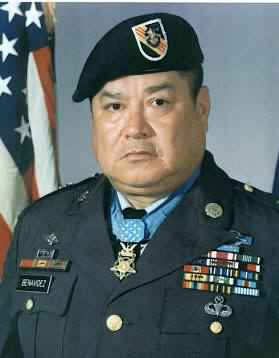
U.S. Army Master Sergeant Roy Benavidez (Official U.S. Army Portrait). 出典: Wikipedia
In December 1941, Japanese troops captured an American surgical nurse in the Philippines.
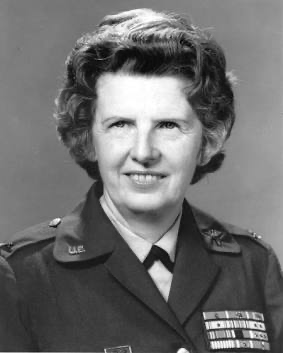
Colonel Ruby Bradley, United States Army Nurse Corps.
For the next 37 months, she ran an operating room inside a prison camp while starving alongside her patients.
Her name was Ruby Bradley.
Born in West Virginia in 1907, she taught school before joining the United States Army Nurse Corps in 1934.
In 1943, the Japanese Army locked her inside the Santo Tomas Internment Camp in Manila with thousands of prisoners.
Food was scarce and people were dying in the barracks every week.
Ruby refused to leave the hospital ward.
As starvation stripped the weight from her bones, her uniform hung loose on her frame.
She used the empty space under her clothes to smuggle surgical tools, soap, and medicine past armed guards into the clinic.
Whenever she saw starving children crying in the dirt, she gave them her own small food ration and went to sleep hungry.
Over three years in captivity, she assisted in 230 major surgeries and helped deliver 13 babies behind barbed wire.
The prisoners called her one of the Angels in Fatigues.
On February 3, 1945, American tanks smashed through the camp gates and set them free.
Ruby walked out weighing just 86 pounds.
Everyone expected her to go home and leave the military forever.
She refused to quit.
Then war broke out in Korea in 1950.
At age 42, Ruby volunteered for the front lines as Chief Nurse of the 171st Evacuation Hospital.
In one afternoon in November 1950, her team treated 780 wounded soldiers in the bitter cold.
Days later, 100,000 Chinese troops surrounded her hospital in Pyongyang.
With enemy artillery shelling the city, commanders told Ruby to take an early flight to safety.
She refused to board a plane while wounded men were still lying in the snow.
With shells exploding nearby, she stayed on the freezing runway and loaded every injured soldier onto transport planes first.
She was the last one out.
Seconds after she stepped onto the final plane, an enemy shell blew up the ambulance she had just left behind.
She later led 500 combat nurses across Korea and became the third woman in United States Army history to reach the rank of Colonel.
She retired in 1963 with 34 medals for bravery, died in 2002 at age 94, and was buried at Arlington National Cemetery.
Across two wars, three years in a prison camp, and an enemy siege, she never once left a patient behind.
March 11, 2011: a magnitude 9 earthquake tore open the seafloor off northeastern Japan.
Inside Mangokuura Elementary School in Ishinomaki, the floor shook so violently that children could not stand.
The power died in the freezing air, and children cried in the dark as snow fell outside.
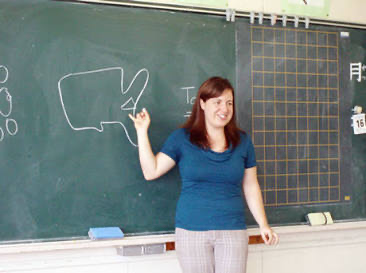
In the shaking classroom, a 24 year old American teacher knelt beside her terrified students and held onto them.
Her name was Taylor Anderson.
Growing up in Richmond, Virginia, she fell in love with Japan after watching My Neighbor Totoro.
In August 2008, after learning Japanese in college, she moved to Ishinomaki to teach English at elementary schools.
Every morning through rain and snow, she rode her bicycle to school and greeted shy children until they smiled back.
When her two year term ended in 2010, she stayed a third year because she did not want to leave her students.
That Friday afternoon, as aftershocks rattled the school, Taylor calmed her crying students and led them into the snowy schoolyard.
She waited in the freezing cold until parents ran to the school one by one to take their children to higher ground.
Only after her students were safe with their families did Taylor get on her bicycle to ride home.
Pedaling home, she called her parents in Virginia and told her mother she had survived the earthquake.
Minutes later, a black wall of water over ten meters high smashed over the seawalls and swallowed whole neighborhoods.
Taylor was caught in the roaring wave before she could reach high ground.
Every single student she helped evacuate at Mangokuura Elementary School survived that day.
On March 21, 2011, after ten days of searching through crushed homes and mud, Japanese rescue teams found her body in the ruins of the city she loved.
Her parents flew to Ishinomaki and worked with local craftsmen whose workshops had been washed away to build cedar bookshelves filled with English and Japanese books.
The tsunami took her life at age 24 on a flooded street in Ishinomaki, and the wooden bookshelves built in her name still stand inside the classrooms of the children she saved.
@tanpukunokami The all powerful dollar my friend. They will sell a pill that makes your skin clearer with side effects like projectile diarrhea and spontaneous combustion and people will like up to buy it. It's wild here 😁😂
@flower6260 Ny in the fall is just beautiful with these old buildings. The way they vary from art deco to Victorian to Gothic, post modern etc. just stunning 🙏this was my fav.