@niccruzpatane Fair point on compute, but a supervised driver is an evaluator too.
If I can see what the car sees, I can tell earlier whether I need to take over. That's evaluation, just running live in every car.
@SawyerMerritt The steel going up is the easy part. A fab is a building engineered around air and vibration: cleanrooms with extremely low particle counts and floors that keep tools stable.
Tool install and yield ramp are what decide when useful chips come out.
Cybercab is a two-seater. Family of five here, so one doesn't move my crew.
Parents: would you split the family across two robotaxis, or wait for a bigger autonomous vehicle?
5/ Engineer's take: if you mostly drive locally, LFP's durability and charge-to-100% simplicity is a real advantage. If you road trip in the cold a lot, a nickel pack's density pays off.
4/ LFP is more sensitive to cold. It charges slower and gives less usable range until the pack warms up, so precondition before Supercharging in winter.
@TeslaClubIN@AjinkyaBhende 8,000 km on DC charging alone, from Kashmir to Kanyakumari, covers a huge range of climates for an LFP pack.
I'd love to see the charging log: how charge speeds changed between the cold north and the heat down south.
@TeslaNewswire Florida would test something Austin doesn't much: heavy afternoon downpours. Rain on the cameras, standing water and glare off wet roads.
If Cybercab launches there, that's the weather I'd watch.
@EZebroni Family of five here. Measure the third row with real kids and car seats in it, and check cargo space behind row 3 with all seats up.
That's where most 3-row EVs separate.
@elonmusk No wheel and no pedals means the cabin gets designed around passengers instead of a driver.
The screen is the easy part. What I'd watch is motion comfort: watching a movie in stop-and-go city traffic is where people get carsick, so ride smoothness matters more.
@SawyerMerritt Parking is where this pays off. Autopark only offers spots you've already driven past. Tapping lets you pick one before you get there, like the shaded spot by the door.
The real test is lots with faded or no lines.
@LamarMK The platform pieces are there: 48V, steer-by-wire, rear-wheel steering.
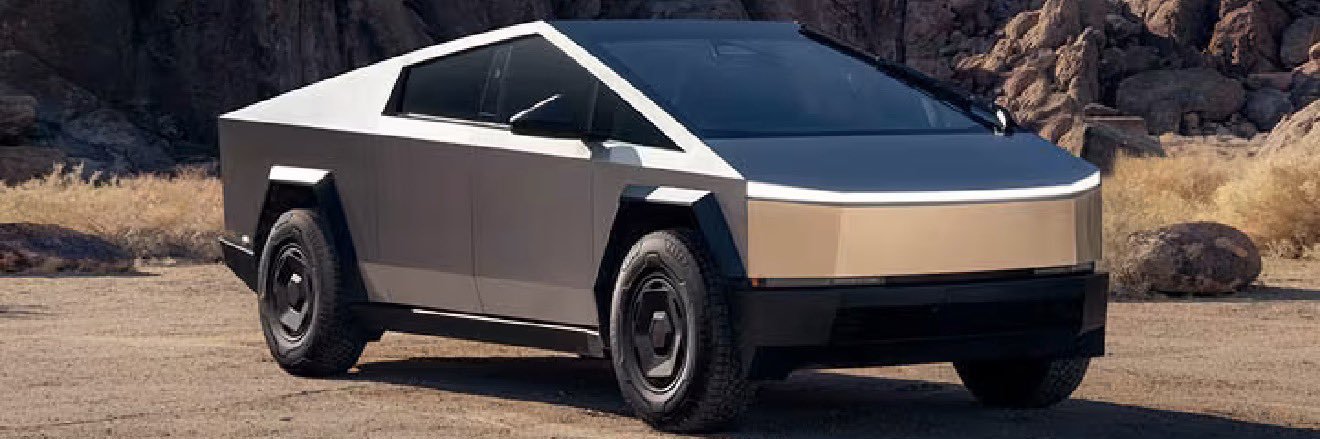
The constraint is floor space. Musk says Giga Texas builds Cybertruck through the end of summer 2027, then that space goes to Cybercab. A 3-row body would need a line somewhere.
@niccruzpatane Rendering a scene like that for training is the easier half. Showing it live to the driver means it has to update in real time and match what the car is actually planning.
Xiaomi says theirs isn't in cars yet. That second step is the hard one.
Elon says FSD will soon let you tap a spot in Reality View and the car drives there. Point release in a week or two.
Engineer's take: the tap is the easy part. The car has to turn a 2D touch into a real 3D goal, check it's reachable and legal, then plan the path.
Tesla Semi pulls waste powertrain heat into the cab, per Tesla. One Megamanifold heat pump runs cabin HVAC plus all powertrain heating and cooling.
Diesel trucks often idle just to keep the cab warm. This recycles heat it already made.
5/ Engineer's take: with Cybertruck production set to end late summer 2027, Powershare is one of the truck's strongest arguments. Check your real daily kWh before you count on three days.
4/ Why the extra hardware: something has to detect the outage and isolate your house from the grid. You never want to backfeed lines a crew is working on.