The vaccine dosage was obviously too high and done too many times.
I had the original Wuhan virus before there was any vaccine and it was much like any other cold/flu. Bad, but not terrible.
But my second vaccine shot almost sent me to the hospital. Felt like I was dying.
@CsTominaga why dont you create a BitCoin that never changes in value? I would park my money there. just with BTC and BSV its so volatile and risky ton park money there.
🛢️ DIESEL LIFE HACK
- Vegetable oil is about €1.50 per liter
- Diesel is about €2.50 per liter
-> Obvious solution is to go to your local grocery store to fill up your car now!
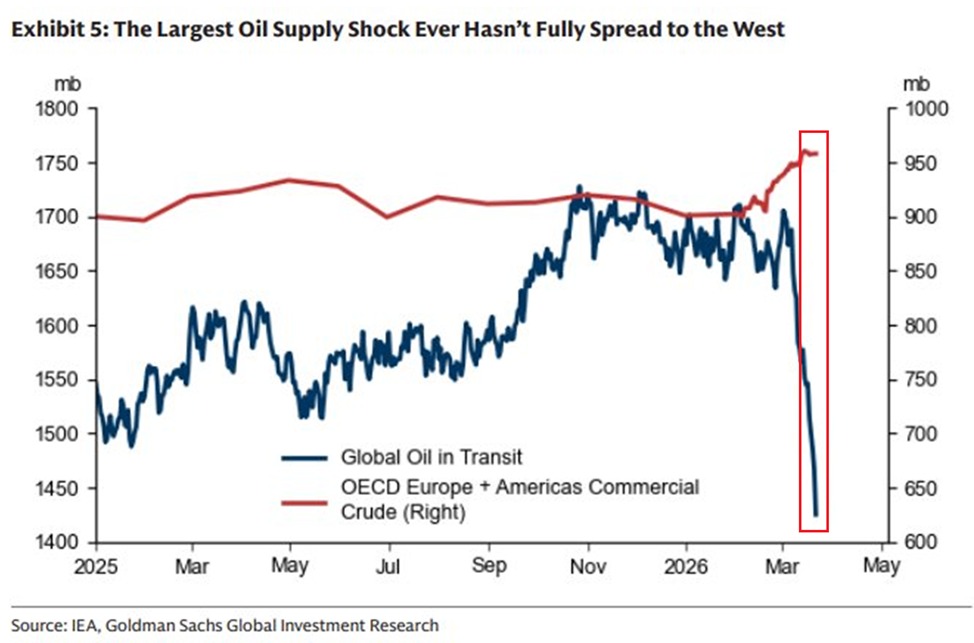
The West is relatively “protected" from the current energy shock:
Oil currently flowing through global shipping routes is down to ~1,430 million barrels, down -270 million over the last 3 weeks.
Meanwhile, OECD Europe and Americas commercial crude flows are up to ~960 million barrels, the highest since at least 2024.
Since the start of 2026, Western commercial crude flows have risen +50 million barrels, even as global oil in transit collapses.
In fact, US oil giants are now set for one of their most profitable years on record.
The US is pumping and selling oil like never before.
The software sector is facing a massive debt wall:
~$40 billion in software and services debt matures in 2028, the largest single-year concentration.
The vast majority of this is rated B- or lower, deep in junk territory, with no investment-grade debt in the mix.
In total, ~$100 billion in software debt matures from 2026 to 2029, with an additional ~$70 billion beyond 2030.
Meanwhile, AI disruption is increasing credit risk for software borrowers, the exact companies that private credit funds have been lending to most aggressively.
Software is also the largest sector in the leveraged loan market, representing 12% of the total.
Refinancing this debt at higher rates with deteriorating fundamentals will be a growing problem for the sector.
The software sector has a tough road ahead.
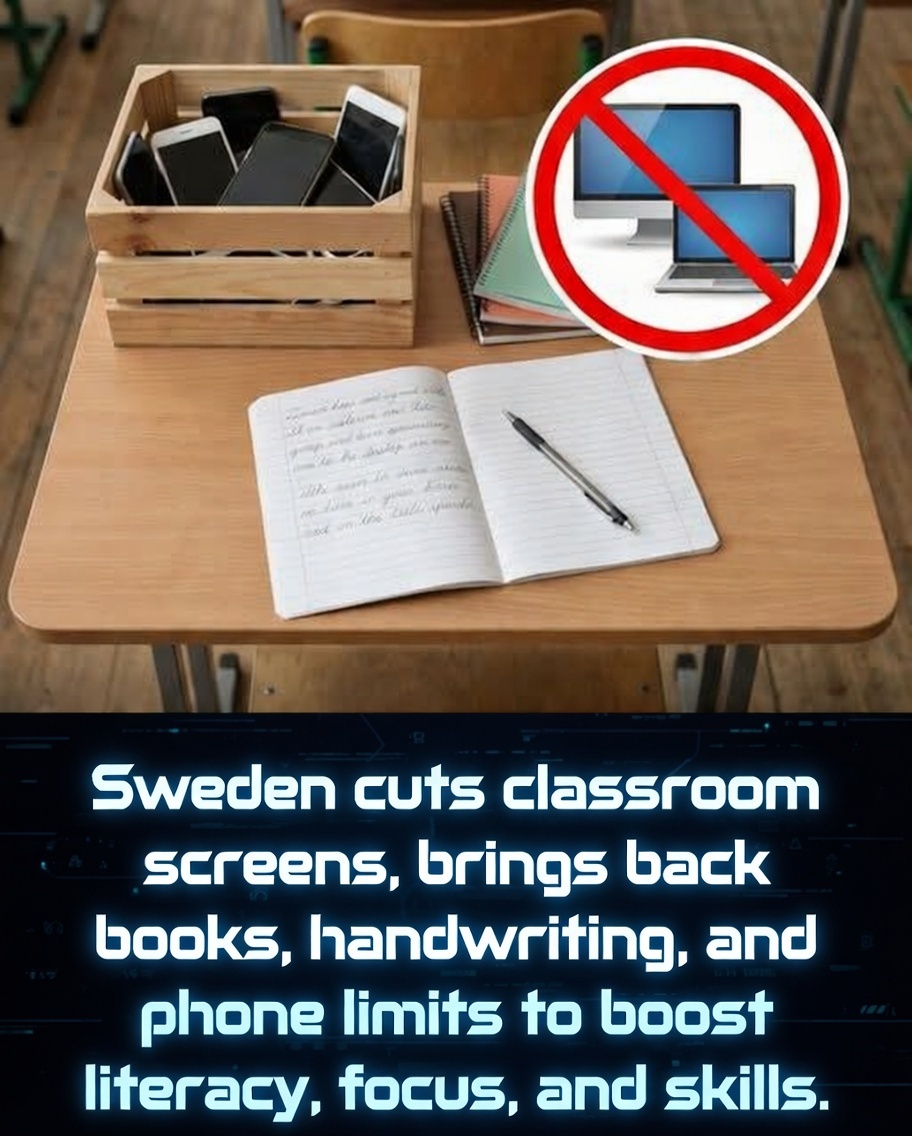
Sweden is committing more than €100 million to a sweeping classroom overhaul: replacing tablets and screens with traditional printed textbooks to help reverse falling student performance and sharpen focus.
After more than a decade of embracing digital-first education, Swedish authorities are now pivoting back to paper-based learning. Official data and recent studies cited by the Ministry of Education show that prolonged screen use in class has been linked to shorter attention spans, weaker reading comprehension, and reduced critical-thinking abilities.
Research consistently finds that reading on illuminated screens requires greater mental effort and invites more distractions compared to the calm, linear experience of physical books—factors believed to have contributed to declining academic outcomes in recent years.
Under the new plan, every student will receive printed textbooks for all core subjects, restoring books as the central learning tool. Digital devices and online resources will remain available as supportive tools, but they will no longer dominate daily instruction.
This bold €100+ million investment signals Sweden’s leadership in rethinking the role of technology in education. It underscores a broader, growing recognition worldwide: while screens provide speed and access, the hands-on, distraction-free engagement of physical books supports deeper concentration, stronger memory retention, and more effective long-term learning.
By choosing paper over pixels, Sweden is charting a path toward a more balanced, evidence-informed classroom future—one that puts proven pedagogical principles ahead of unchecked digital trends.
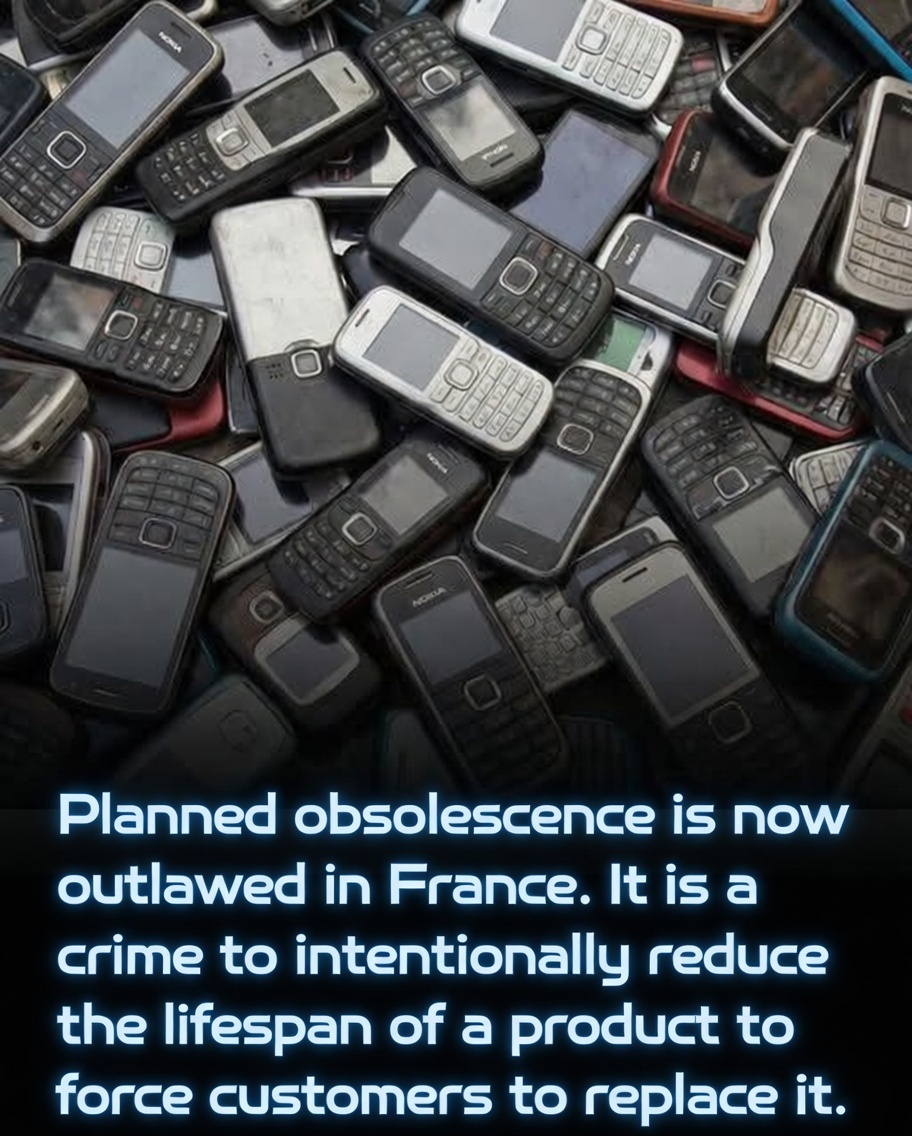
France has made planned obsolescence a criminal offense, becoming one of the first countries in the world to treat deliberate product shortening as a serious crime.
Manufacturers caught intentionally designing electronics, appliances, or other goods to fail prematurely or become unusable—whether through hardware flaws, software updates that slow performance, or other engineered limitations—now face steep penalties: up to 2 years in prison and fines reaching €300,000, or as high as 5% of their average annual turnover in the most serious cases.
This landmark law, building on France’s earlier consumer-protection framework and reinforced by high-profile scandals (such as the 2017–2018 investigations into smartphone “battery-gate” slowdowns), explicitly targets both physical and digital tactics used to push consumers toward frequent replacements.
The legislation is more than just punishment—it’s a cornerstone of France’s broader “right to repair” agenda. By criminalizing practices that drive premature disposal, the government aims to:
- Slash the massive environmental footprint of electronic waste,
- Protect consumers from hidden “forced upgrades,”
- Encourage manufacturers to prioritize durability, repairability, and longer-lasting support.
France’s tough stance sends a clear message to global tech and appliance companies: the era of disposable-by-design products is ending. By leading the charge on sustainability and consumer rights, the country is helping shift the world toward a more circular economy—one where goods are built to last, repaired when needed, and discarded only when truly necessary.
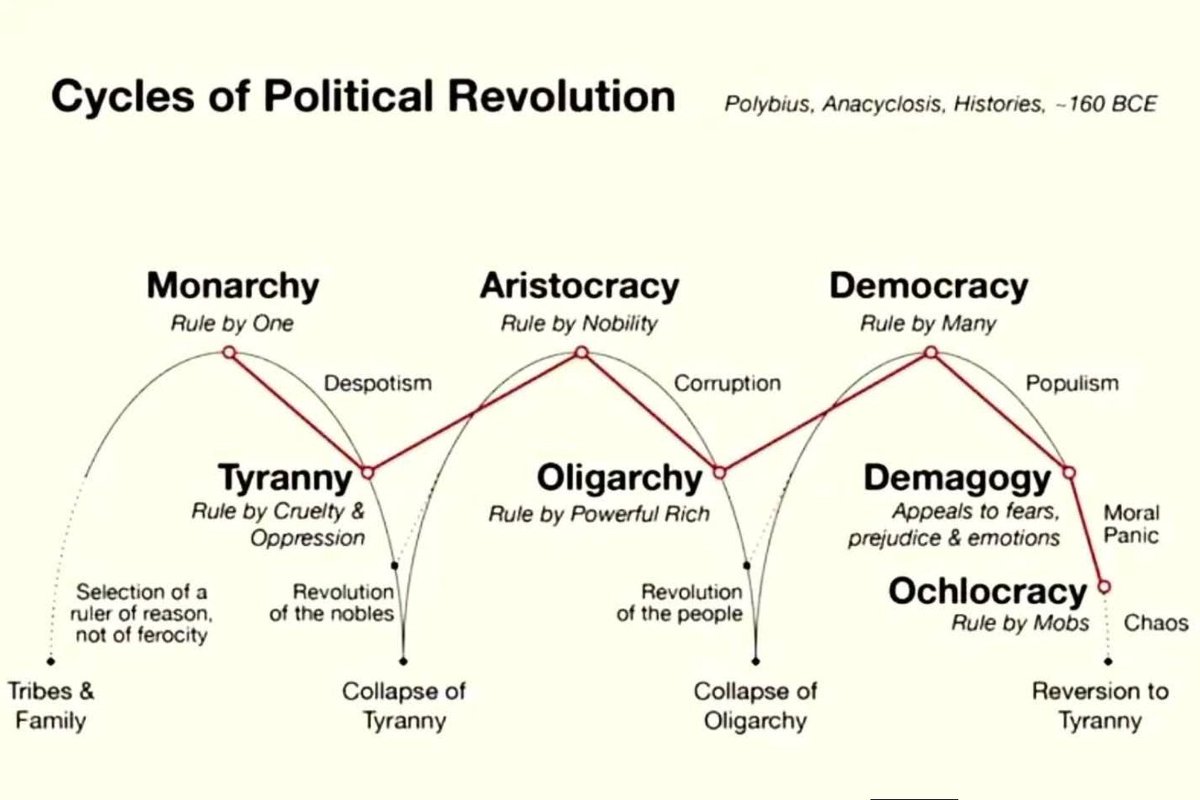
According to Polybius, governments follow a predictable cycle of rise, decay and replacement....
The cycle begins with monarchy, rule by a single virtuous leader. Over time, monarchy degenerates into tyranny when the ruler becomes corrupt and self serving. Tyranny is overthrown and replaced by aristocracy, rule by the virtuous few. Aristocracy eventually decays into oligarchy, when the ruling elite govern for their own benefit. Oligarchy is then replaced by democracy, rule by the people. Finally, democracy degenerates into ochlocracy, or mob rule, when public order collapses and decisions are driven by passion rather than law.
Out of chaos, a strong leader emerges, restoring monarchy, and the cycle begins again.
Polybius believed that Rome’s mixed constitution, combining elements of monarchy, aristocracy, and democracy, helped delay this cycle by balancing competing forces. Later thinkers such as Machiavelli were influenced by this idea.
#drthehistories
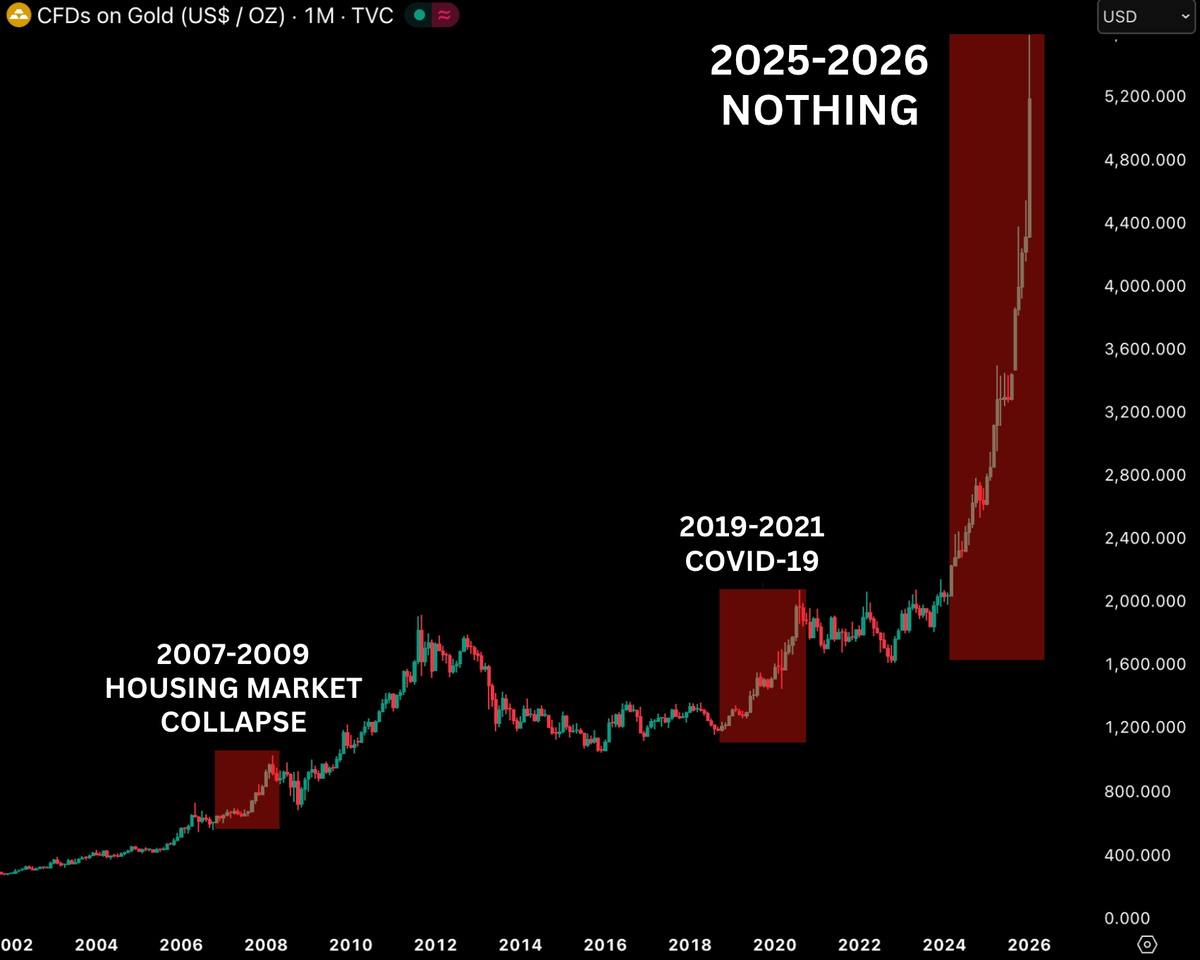
🚨 WARNING: SOMETHING BIG IS COMING.
2007-2009 HOUSING COLLAPSE:
Gold pumped $670 - $1,060
2019-2021 COVID-19:
Gold pumped $1,200 - $2,030
2025-2026 NOTHING (YET):
Gold pumped $2,060 - $5,520
If you still think nothing will happen
YOU'RE WRONG.
Gold doesn't move like this in a normal market.
Gold moves like this when TRUST is breaking.
I've studied macro for 10 years and I called almost every major market top, including the October BTC ATH.
Follow and turn notifications on.
I'll post the warning BEFORE it hits the headlines.
BREAKING: Copper prices surge to their highest level on record, now up another +9% this month.
When everything is at record highs, it should tell you something.