On an average weekday, buses in Brampton Ont. carry about 226,500 people. The key to getting people to ride them, reports @EnglishRail. They need to be able to show up at the stop and know that a bus will be along in a few minutes. https://t.co/FN1JfnUElb
The https://t.co/kIlGXuRw2T plan to fix the streetcars has received support from numerous council candidates across the city. If you take a look at the account below, you can see posts about each ward.
Toronto really, really needs a mayor who will not only be there for, but adamantly push for our streetcar network to be fixed. And our 10-point plan is the perfect place to start.
https://t.co/9RpJtWQwtM
The last in my 3-part series on infra of the Great Lakes looks at diversion infrastructure that moves water into & out of the basin. Some in the middle of a major city, while other in areas so remote they lack roads. Also, some of the wildest old schemes. Link in reply.
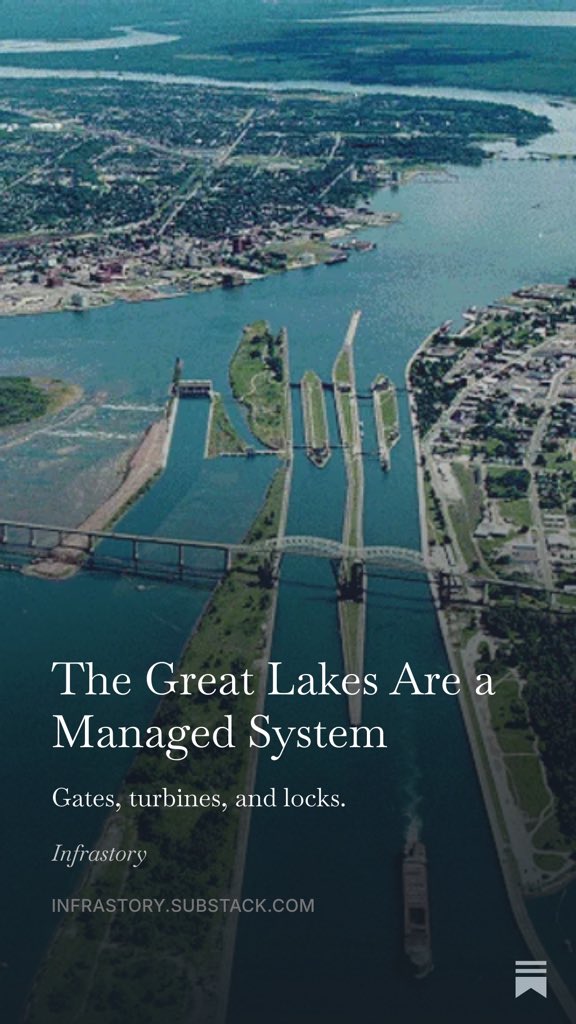
The Great Lakes are packed with invisible infrastructure that’s essential to the North American economy. Part 2 of their 3-part series on Infrastory looks at Niagara, Lake Ontario, and St. Lawrence.
Link in reply
Not that long ago, we lived in a world where very few things were standardized. You couldn’t plug things into any random wall outlet, trains couldn’t run on tracks of other railways, even screws wouldn't fit just anywhere. This week's Infrastory article linked below.
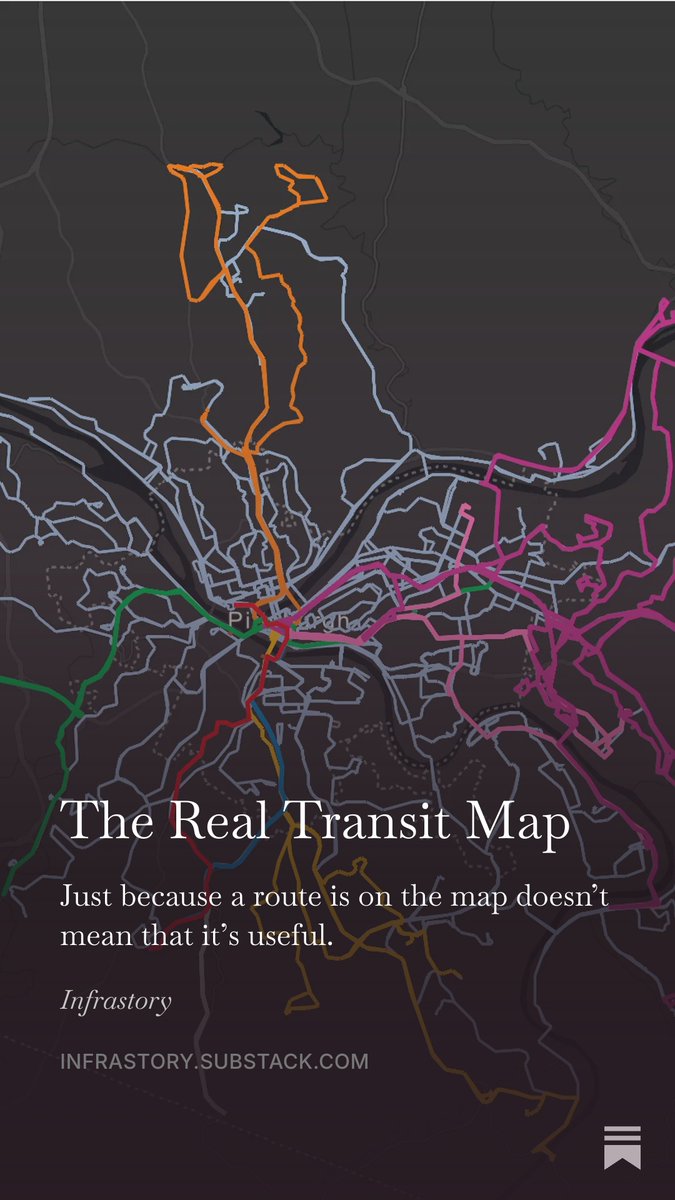
Every city has its transit map. But too often they’re more than a little misleading, with routes that run only a few times a day or shut down on weekends. A city's real transit maps, with the useful routes, can be shockingly limited.
Link to Infrastory below
I love this so much. Ridership in Burlington up 49% since 2019, after they improved service on a bunch of bus routes. That's at a time when many cities were experiencing post-pandemic stagnation. This is a notably affluent, low density suburb.
https://t.co/ZqJvOV2ZXs
@MattSpoke One challenge with VIA is the cost structure is very high compared to operators like GO/West Coast Express. So there'll always be a temptation to set up a separate operator for new services.
I wrote a bit on this (linked below). 70s France-US comparison shows building new generally goes better than trying to fix up old. It’s very complex trying to rebuild over-century-old infrastructure. 1/
Genuine question for @RM_Transit and @EnglishRail on the topic of Alto and the use of $90b (give or take $100b)…
How much could Via be improved with that amount of capital?
What are the legitimate technical limitations of “old” rail being upgraded?
Is there a scenario where Via could become >80% as good as the Alto promise, but with significantly less risk of a boondoggle?
@MattSpoke Ideally what you'd see is some of VIA's capacity shifting to other corridors in the country. Like Western Canada, the Maritimes, southwestern Ontario, maybe routes like Montreal-Sherbrooke, etc. There are loads of good potential intercity rail corridors in Canada.
Now if you’re talking about VIA across Canada, as we should, a Calgary-Edmonton, Vancouver-Whistler, and Vancouver Island corridor are no brainers. VIA needs to be much more national. But first 2 still require deal w/ freight.
There’s a tendency (especially Anglo/Northern European) to try and go for a solution that delivers 80% of the benefits for 50% of the cost. Unfortunately, these solutions very often tend to deliver 40% of the benefit for 80% (or sometimes 100+%!) of the cost.