🚨🇺🇸 Rare and AWESOME close-up footage of B-21 Raider taking off from Edwards Air Force Base today
It's built to fly deep into enemy airspace without being seen and deliver nuclear or conventional weapons anywhere on Earth.
Each one costs roughly $700 million, and for that price the Pentagon is betting it can reach any target in the world without the enemy ever knowing it was there.
So enjoy the close-up while you can... The whole point of this thing is that the next time somebody sees one, it's already too late.
Writer: Daniel
McDonald's is spending 8.5 billion dollars to find out why families stopped coming.
I can save them the 8.5 billion.
They took out the playground.
The plan, announced Wednesday at investor day. Better food, faster service, new equipment, AI tools, hospitality training, and a bigger push into chicken and beverages. They call it Next. The goal, they say, is making customers feel more comfortable.
Wall Street loved it so much the stock fell 5 percent to its lowest since 2022.
Over five years McDonald's shares are down 3 percent. Burger King's parent is up 14. The owner of Taco Bell and KFC is up 13.
This is not a hamburger problem. This is a McDonald's problem.
So let us talk about who used to eat there.
Parents. That was the whole business. Parents at 5:40 on a Tuesday with three kids in the back and nothing thawed at home.
You did not go for the burger. You went because your kids could run screaming through a plastic tube for 40 minutes while you sat with a coffee and experienced silence.
That was the product. The food was the cover charge.
The first PlayPlace opened in 1971 in Birmingham, Alabama, and for fifty years it did one job. It made small children demand to go to McDonald's.
Then 2020 arrived, every play area in the country closed, and a great many never came back. The equipment came out during a remodeling program named Experience of the Future.
The Experience of the Future turned out to be a touchscreen.
Their own chief executive said he did not know if ball pits were in their future.
Sir, you were not selling ball pits. You were selling forty minutes.
So now there is no counter, no playground, and no reason for a seven year old to want to go. A screen, a window, and a bag.
And for that we pay prices that require a moment of reflection in the parking lot.
For thin, overcooked, oddly uniform pucks that taste like a memory of beef.
I did not love them because they were good. I loved them because I was eight and there was a slide.
And have you seen the new buildings.
The old ones were unmistakable. Red roof, yellow arches, legible from a highway at 70 to a child who could not yet read.
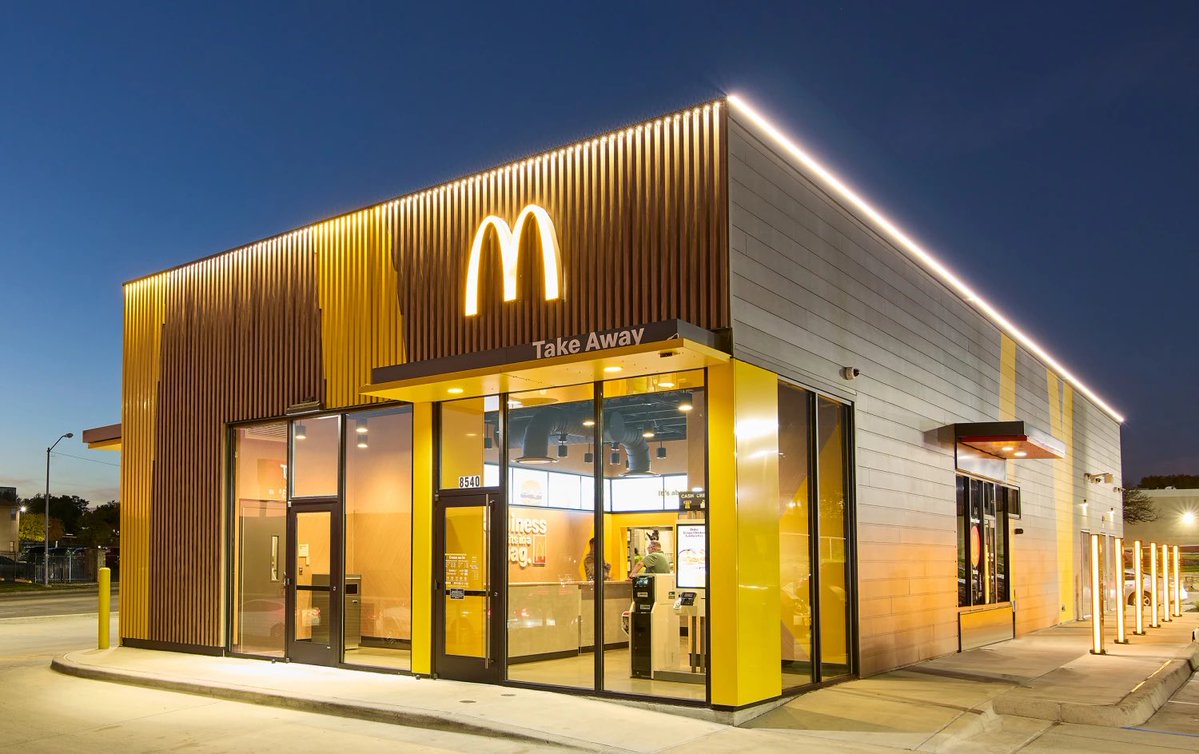
The new ones are a flat gray box with a small logo and a drive through wrapped around it. A regional claims office with a fryer.
They removed the color, the characters, the counter, and the playground, and then hired consultants to find out why it no longer feels like anywhere.
Which is why, when I have to eat fast food, I go to Chick-fil-A.
Not for the politics. For the competence.
They have led the customer satisfaction index for fast food eleven years running, and average 8.5 million dollars per location against McDonald's 4 million.
More than double, while closed on Sundays. Fifty two days a year with the lights off, and still double.
A seventeen year old hands you a bag and says my pleasure and means it about 70 percent, which is 70 percent more than a touchscreen has managed.
McDonald's is spending 8.5 billion on hospitality training.
Chick-fil-A earns 8.5 million per restaurant by just having some.
So here is my consulting proposal, free of charge, on behalf of mothers everywhere.
Put the playgrounds back.
Not a nostalgia campaign. Not a retro cup. The structure. Tubes, slides, a door the kids cannot open from the inside, and a bench where a tired woman can sit.
And understand what you are buying, because it is not lunch.
A six year old does not know your food is bad. He has no basis for comparison and no functioning palate. He thinks the burger is incredible because he is standing in a castle made of tubes.
That is the window. That is the only window you get.
You catch them before the taste buds arrive, and thirty years later they drive past your sign, feel something they cannot explain, and pull in anyway.
That is not a menu strategy. That is imprinting, and you shut it down in 2020 to save on cleaning.
Eight and a half billion dollars for AI tools and hospitality training.
Or a slide.
🦋
🚨 I've been saying this for THREE years. It's not a drill.
The legacy system is done. Beyond done. There is no way to fix it. The moment that reality hits the masses, things will break fast.
I lived it in Lebanon. Others have lived it in Ukraine, Venezuela, and Iran. And whether you like it or not, the US is not immune.
There are people responsible for this. You don't hate them enough.
NO ONE IS COMING TO SAVE YOU!
Get out of worthless paper and into hard assets they cannot destroy.
I prefer Bitcoin in full self-custody. Listen to this excellent clip from @LukeGromen he articulates perfectly.
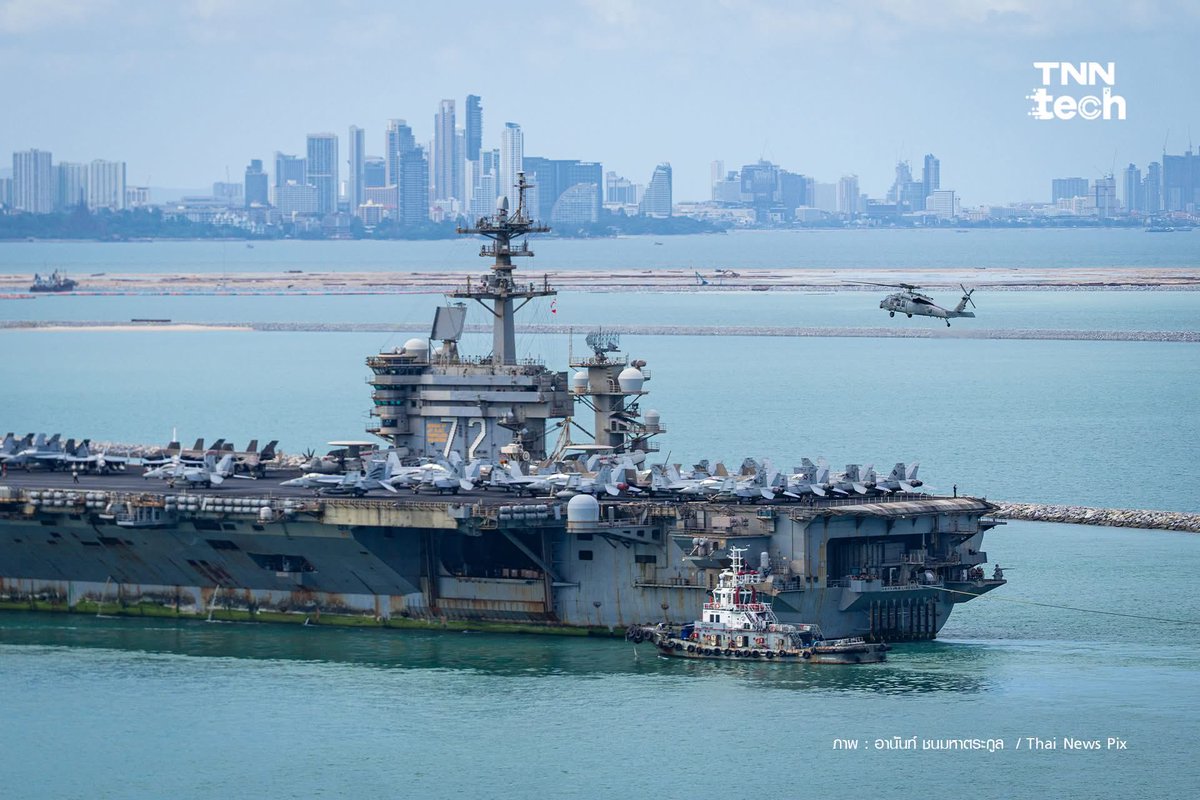
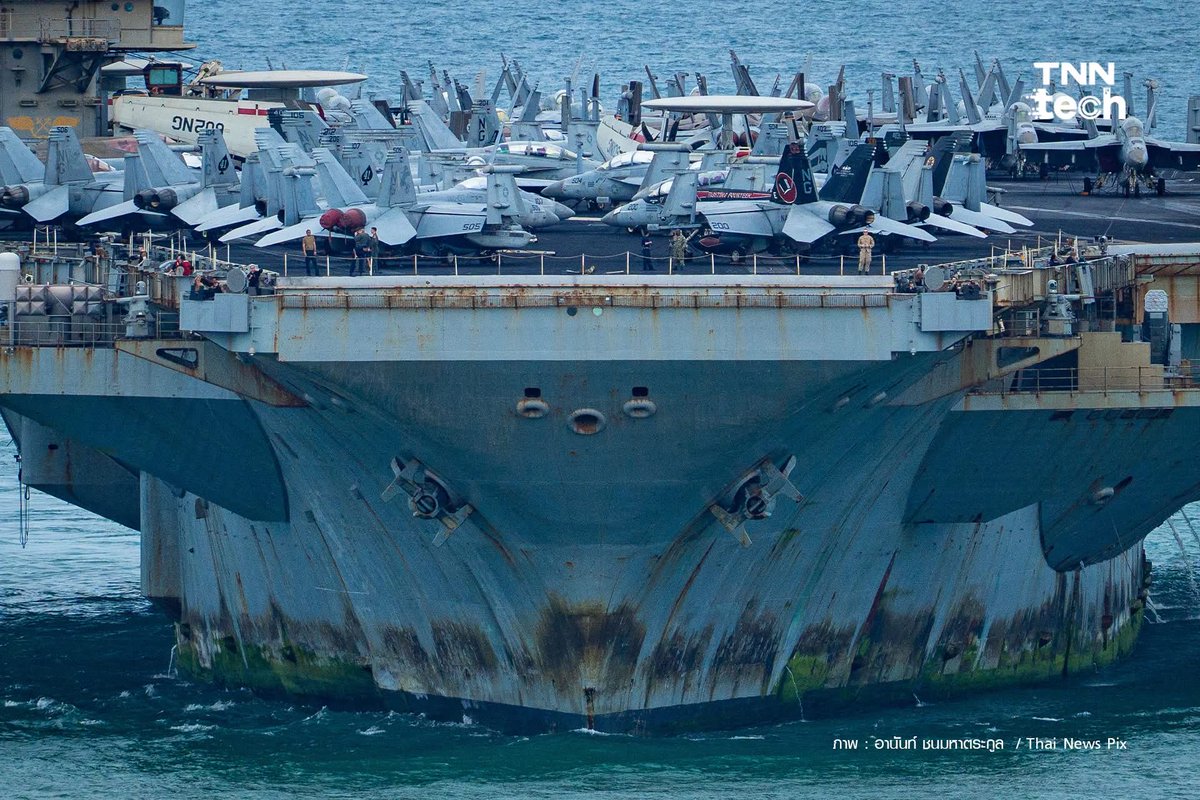
Just think what a graphene enhanced protective coating could do for this amazing ship! Hydrograph Clean Power is going to one day help keep this exterior protected and looking amazing. #HGRAF
Here’s a study that flew under the radar.
Super-capacitor enhancement using @HydroGraphInc FGA-1 Turbostratic Fractal Graphene.
From the conclusions section
- FGA-1 added at a 4% weight Increased the capacitance from 45.95 to 172.6
-shows proper mixing into a control without major alterations in the crystalline structure
Love to see it! $HGRAF
https://t.co/eBdreVwVaA
⚡Graphene was the most hyped material of the century. Then it spent fifteen years going nowhere, and the market filed the entire category under "broken promise." That filing error is the story.
The material never failed. Production did. Three blockers killed every graphene business plan since the Nobel: batches were inconsistent, costs wouldn't scale, and nearly every route starts with graphite, a supply chain that runs through China. Real producers exist and grind: NanoXplore ($NNXPF) ships the most volume on earth into plastics and composites, Zentek ($ZTEK) holds the NASDAQ listing, GMG works coatings and batteries. Respectable. None of it re-rated the category.
Then $HGRAF went from $0.15 to over $8 in a year. So did the market finally catch on? Half of it did.
What it caught: detonation synthesis attacks all three blockers at once. Graphene built bottom-up from gas. No graphite, no mine, no foreign chokepoint. 99.8% purity, third-party verified, identical batches, made in Texas. In a world writing FEOC rules into every subsidy, a graphite-free American graphene process is a strategic asset, not a science project. Add US, UK and EU commercial clearance, $42.8M cash, near-zero debt, 80+ customers engaged, and partnerships printing weekly. The recognition is rational.
What it front-ran: revenue. Trailing sales are sixty-two thousand dollars against a ~$1.5B valuation. The float is near-totally retail, which is how you get a 30x and how you get the round trip. Dilution is the fuel, and the loudest catalyst is a Nasdaq uplisting, which changes who can buy the stock, not what the company earns.
That's the realistic shape of it: the market caught on to the possibility. The business and economics haven't caught up yet. Every advanced-materials cycle looks exactly like this at the moment recognition arrives before invoices, and this moment is where fortunes and cautionary tales get minted from the same chart.
The gate is dated and simple: purchase orders, not partnerships. Invoices, not NDAs. Not YET.👀
With that said, I actually think graphene may finally be approaching the point where the investment thesis changes. But not because the science changed -> the science has been extraordinary for 20 years. The constraint has always been cost, consistency, and manufacturability. However, I believe the macro has never looked better.
Several trends are converging:
⚡AI datacenters need better thermal management.
⚡Aerospace and defense want lighter, stronger composites.
⚡Concrete, coatings, and polymers are under pressure to improve durability and reduce lifecycle costs.
⚡A FEOC world rewards domestic advanced-material production over dependence on Chinese specialty materials.
The question has shifted from "Is graphene amazing?" to "Can someone make the same graphene, every time, cheaply enough for industry?"
AI is turning thermal management into infrastructure.
DYOR. Not FA.
New case study today posted from @HydroGraphInc involving @SparctechS
they have concluded their testing results and have found FGA-1 from $HGRAF to be the best product.
Testing results under ISO9227 salt spray conditions as follows:
60% reduction in scribe corrosion creep at 480 hours
39% reduction in scribe corrosion creep at 960 hours
59% reduction in scribe corrosion creep at 1680 hours
Here’s the article:
https://t.co/WtjFY3tenI