Science made entertaining ✨
Mind-blowing facts, rare curiosities & visuals that surprise you.
Discover. Learn. Be amazed daily.
What blew your mind today?
This doesn’t look real… but it is.
At night, some beaches around the world turn into this glowing blue wonder. The waves light up bright electric blue because of millions of tiny organisms called dinoflagellates that glow when the water moves.
Every time a wave breaks or you walk on the wet sand, it triggers them and creates this magical light show. It looks like the ocean is full of stars.
I still can’t believe this exists on our planet. Nature really has its own special effects department.
The King Vulture is low-key one of the most badass birds in the jungle.
It’s huge, strikingly beautiful with that colorful head, and it dominates the rainforest canopy… but it’s completely silent. No calls, no songs — it literally has no syrinx (the vocal organ birds use).
It communicates only through hisses, aggressive body postures, and loud snaps of its beak.
Imagine being the top predator of the skies and still choosing to be the strong silent type. Absolute legend behavior.
Mind officially blown.
If you were 5,000 light-years away with a crazy powerful telescope, you wouldn’t see us right now… you’d see woolly mammoths walking around, early humans painting caves, and the last Ice Age still going strong.
We’re literally living in the past for anyone looking at us from far enough away.
The light we’re emitting today won’t reach them for another 5,000 years.
We’re all time travelers, just in different directions.
This is one of those geology debates that gets scientists really heated.
The North Pole Dome in Western Australia is being claimed as one of the oldest asteroid impact craters on Earth — supposedly from 3 billion years ago. That would make it insanely ancient.
But other researchers are pushing back hard, saying the evidence for it being an impact crater (and especially that age) isn’t solid enough yet.
Either way, if it really is that old, it means Earth was getting absolutely hammered by asteroids during the early days of life on the planet. Pretty wild to think about.
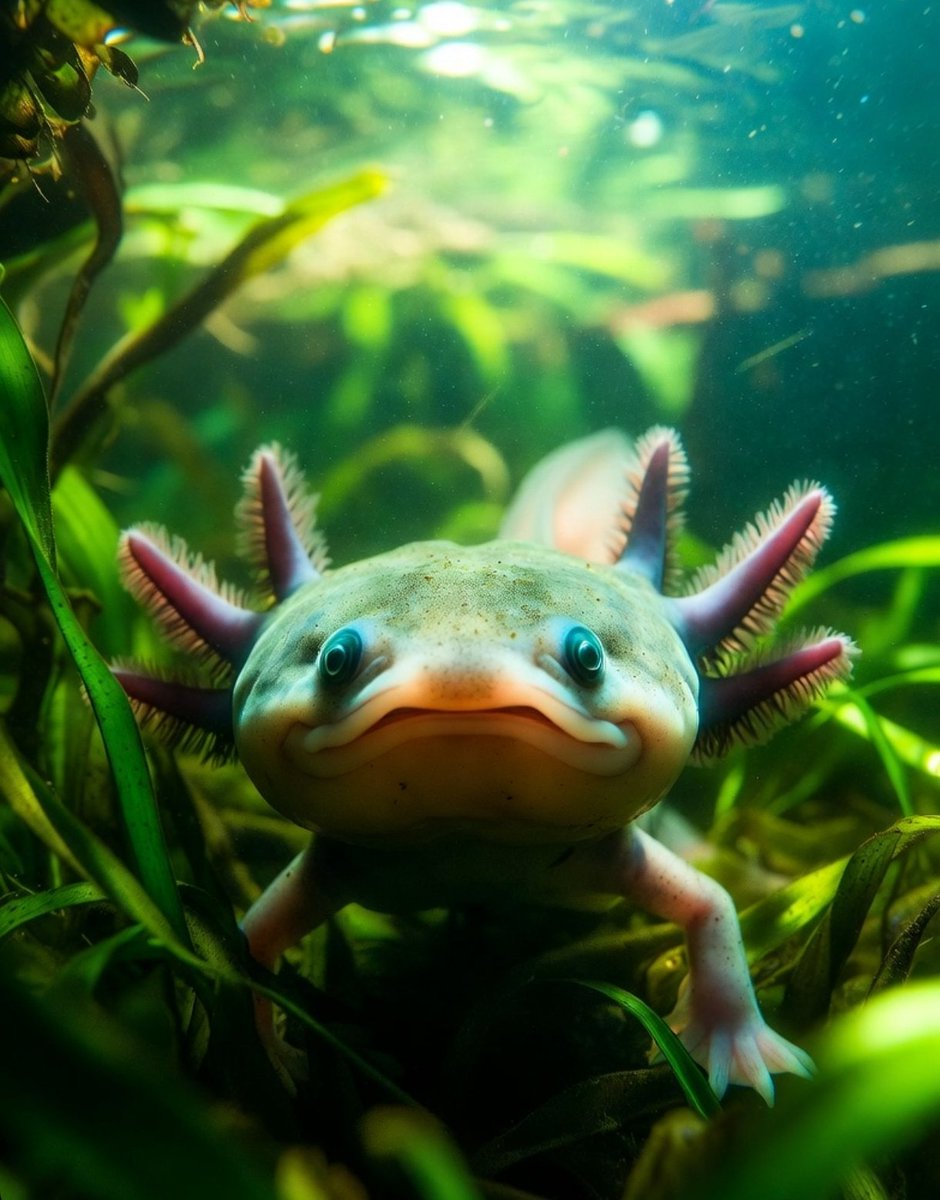
This little guy is straight-up science fiction.
It’s called the Axolotl. A salamander that lives permanently in its “baby” form — it never fully grows up. It can regenerate entire limbs, spinal cord, heart tissue, and even parts of its brain… perfectly, without any scarring.
They can do this over and over again. Scientists have seen them regenerate the same limb 5+ times.
Even crazier: they can survive being frozen, extreme radiation, and long periods without food. Some have lived over 20 years in captivity.
Mexico’s Xochimilco lakes are basically home to real-life Pokémon that can regrow body parts. Nature was feeling generous with this one.
This is actually worrying.
Astronomers are raising the alarm because we’re about to fill Earth’s orbit with over 1.7 million satellites. That’s not a typo — 1.7 million.
All those satellites will leave bright trails across the night sky, making it much harder for telescopes to capture clean images of distant galaxies and faint objects. The European Southern Observatory is saying it could seriously damage our ability to study the universe.
We’re basically turning the night sky into a highway of moving lights.
It’s crazy how fast we’re changing the view of the cosmos that humans have looked at for thousands of years.
This is one of the most ambitious projects on the planet right now.
The Great Green Wall is basically an attempt to plant a giant “wall” of trees across Africa to stop the Sahara Desert from expanding. It started in 2007 and Ethiopia alone has already planted over 40 billion seedlings.
40 billion. That’s insane.
It’s not just about trees — it’s about fighting desertification, restoring farmland, and creating jobs for local communities. Some parts are already showing real results with greener land and better rainfall.
It’s rare to see a project this massive actually moving forward. Pretty inspiring.
This is actually huge.
Scientists say they’ve created living blobs from scratch — tiny quivering things made with completely lab-made DNA. These things can feed, grow, and even multiply on their own in a dish.
We’re not talking about modifying existing life anymore… this is building something that behaves like life, using synthetic genetic material.
It’s one of those moments where biology and technology are blurring in a way that feels like science fiction becoming reality.
The ethical and philosophical questions this raises are going to be intense.
Solar winds hitting our atmosphere really create the most magical show on Earth.
Those glowing green, purple and pink curtains dancing across the sky are the result of charged particles from the Sun slamming into our magnetic field and exciting the gases in the upper atmosphere.
The colors depend on which gas gets excited: oxygen usually gives that vibrant green, while nitrogen creates the deeper reds and purples.
Whenever I see photos like these, it reminds me how insane it is that we’re living on a planet constantly being bombarded by solar energy… and sometimes it paints the sky like this.
That building is massive.
Egypt’s new Ministry of Defense headquarters, nicknamed “The Octagon”, looks like something out of a sci-fi movie. It’s enormous, with a very distinctive octagonal shape, and it’s set to open on July 4th in the new administrative capital.
From the photos, it seems like they went all-in on modern architecture. Pretty bold statement for a defense ministry.
Egypt has been building a lot of these huge projects lately in the new capital.
The Himalayan Monal is easily one of the most beautiful birds on the planet.
The male looks like a living jewel — those iridescent feathers shift between electric blue, emerald green, copper, and purple depending on how the light hits them. It’s almost unreal.
They live at crazy high altitudes in the Himalayas (up to 4,500 meters) and are actually the national bird of Nepal.
Seeing one in the wild must feel like spotting a mythical creature.
This case still gives me chills.🥶
In 1970, a woman was found burned to death in a remote forest in Norway. Her body was so badly damaged that her fingerprints and dental records had been deliberately destroyed.
She had no ID, all clothing labels were removed, and she carried a suitcase with fake passports and disguises. She had been using multiple identities and changing hotels constantly while acting extremely paranoid.
To this day, nobody knows who she really was. Was she a spy? A criminal? Something else?
The Isdal Woman case remains completely unsolved after more than 50 years. One of the creepiest mysteries in modern history.
This sounds like straight-up science fiction… but it’s real.
Chinese scientists are inserting firefly genes into plants to make them glow, basically turning trees and shrubs into natural streetlights. The goal is to create entire “bio-cities” that light themselves up using just water and nutrients instead of electricity.
Imagine walking down a street at night lit only by glowing plants.
It’s still in early stages, but if it works at scale, it could be a pretty beautiful (and sustainable) way to light up cities in the future.
This is something a lot of people don’t think about.
Fireworks are terrifying for wildlife. Birds can fly away in panic and crash into buildings or get lost, mammals abandon their nests or burrows, and some animals even have heart attacks from the stress of the explosions.
It’s not just pets that suffer — entire ecosystems get disrupted for hours.
Honestly, it makes you wonder if we should be looking for quieter alternatives for big celebrations.
This headline sounds like the start of a disaster movie, but it’s actually pretty fascinating.
Earth’s inner core (that solid iron ball at the center) periodically slows down, stops relative to the surface, and then starts spinning in the opposite direction. It’s part of a natural cycle that happens roughly every 60-70 years.
Scientists have been tracking this for a while. The good news? It has almost zero dramatic effect on our daily lives. Maybe some tiny changes in the length of the day (milliseconds) and very subtle influences on the magnetic field over decades.
The planet is just doing its weird internal dance as usual.
Oh no… The Blob is back.
This thing is basically a massive, stubborn patch of super warm water in the Pacific that refuses to leave. Last time it showed up it cooked marine life, caused huge die-offs, messed with salmon populations and even triggered toxic algal blooms.
It’s like the ocean’s version of a heatwave that just won’t break. Scientists have been tracking it for years and now it’s making a comeback.
Nature really said “let me cook”… but literally.
This is one of those “wait, what?” animal facts.
Eastern quolls (a type of carnivorous marsupial from Australia and Tasmania) have a hidden superpower: their spotted fur glows bright blue and purple under ultraviolet light.
It’s a phenomenon called biofluorescence. Scientists discovered that their white spots absorb UV light and re-emit it as visible glowing colors. The darker parts of their fur don’t do this, which creates this crazy glowing pattern.
No one is 100% sure why they evolved this yet. It could be for communication between quolls at night, camouflage under moonlight, or even protection against parasites.
Nature just keeps dropping these little secrets on us.
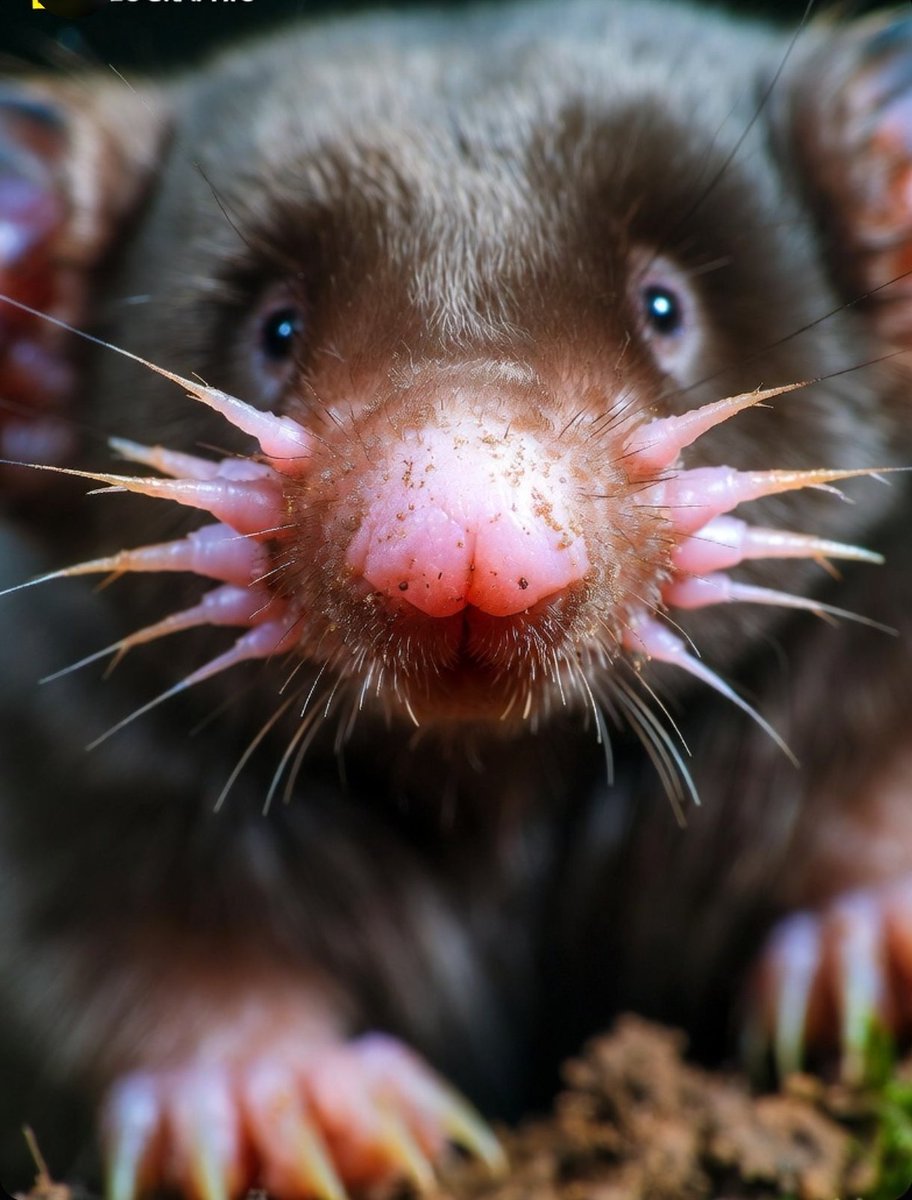
This animal looks like it came from another planet.
It’s called the Star-nosed Mole. It has 22 fleshy tentacles on its face that move at insane speed — up to 13 times per second — and it uses them like ultra-sensitive fingers to feel its way around underground.
It can actually smell underwater by blowing bubbles and sucking them back in. And get this: it’s one of the fastest eaters in the animal kingdom, identifying and eating prey in under 120 milliseconds.
Honestly, nature was just showing off with this one.
This is actually terrifying when you stop to think about it.
Bees aren’t just honey makers — they’re responsible for pollinating about a third of everything we eat. Almonds, apples, coffee, tomatoes, strawberries… almost everything depends on them.
The scary part is that many wild bee species are in serious decline due to pesticides, habitat loss, and climate change. Honeybees get most of the attention, but it’s the native wild bees that are disappearing fastest.
If we lose them, we don’t just lose honey. We lose a huge chunk of the global food supply.
It’s one of those problems where the solution is actually pretty clear… we just need to act faster.
One thing that always blows my mind about Mount Fuji is that it’s not just one volcano… it’s actually three stacked on top of each other.
Geologically speaking, it’s made of Komitake (the oldest base), Ko-Fuji, and the current Shin-Fuji (Younger Fuji), which started forming around 11,000 years ago. The beautiful symmetrical cone we see today is the result of layer upon layer of lava and ash from different eruptive phases.
It’s a stratovolcano sitting right on a triple junction of tectonic plates, which explains why it has such a high eruption rate compared to other volcanoes in the region. Its last big eruption was in 1707 (Hoei eruption), and it threw ash all the way to Tokyo, over 100 km away.
Even though it looks peaceful and perfect, it’s still considered an active volcano.