The first set of Entropy affiliate badges have been distributed.
If you post about markets, break news, or build an audience that actually trades, you qualify.
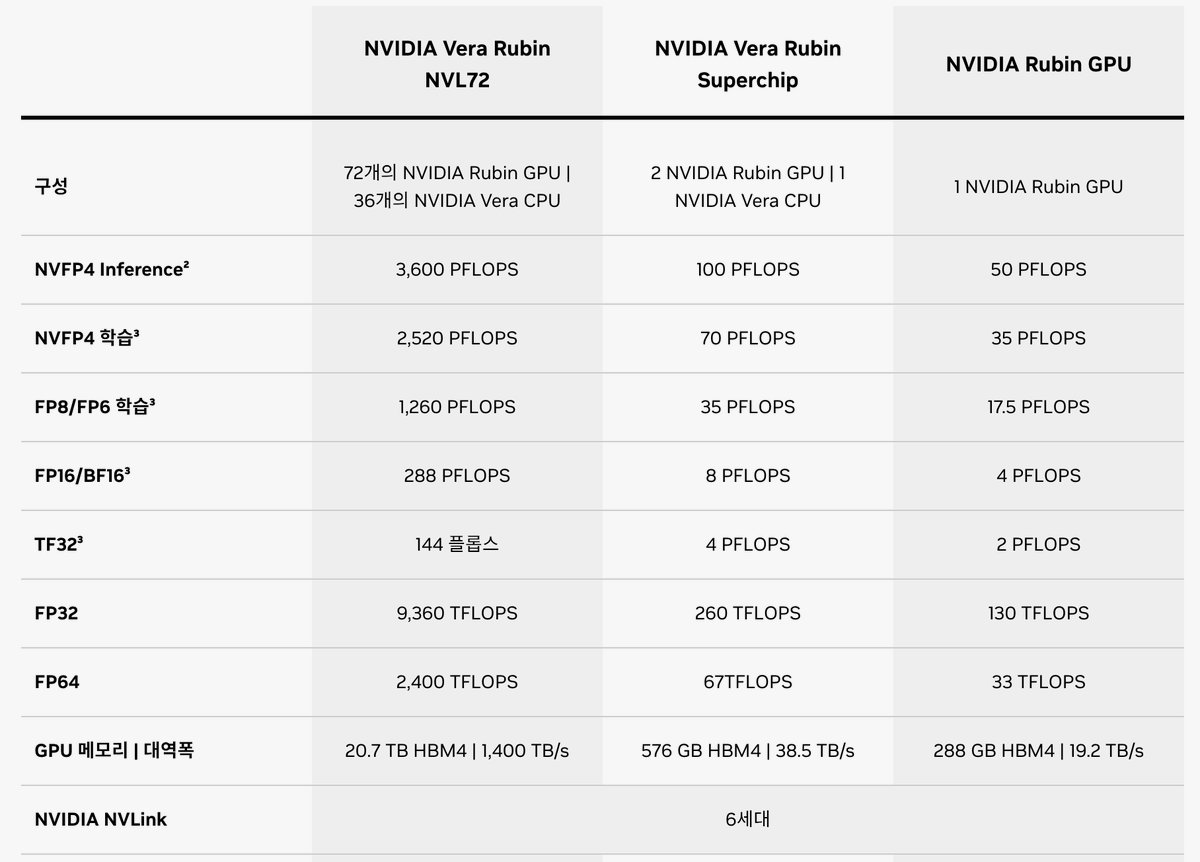
JUST IN: NVIDIA has quietly cut Rubin’s memory bandwidth on its official spec page, from 22 TB/s to 19.2 TB/s per GPU, implying HBM4 pin speeds of around 9.3 Gbps
The fourth round of Entropy affiliate badges has been distributed.
Invitations have been sent on X, and recipients will find further instructions in their DMs.
Thank you to everyone sharing research and trades on Entropy. Every contribution is noticed, and the next round will follow soon.
The first set of Entropy affiliate badges have been distributed.
If you post about markets, break news, or build an audience that actually trades, you qualify.
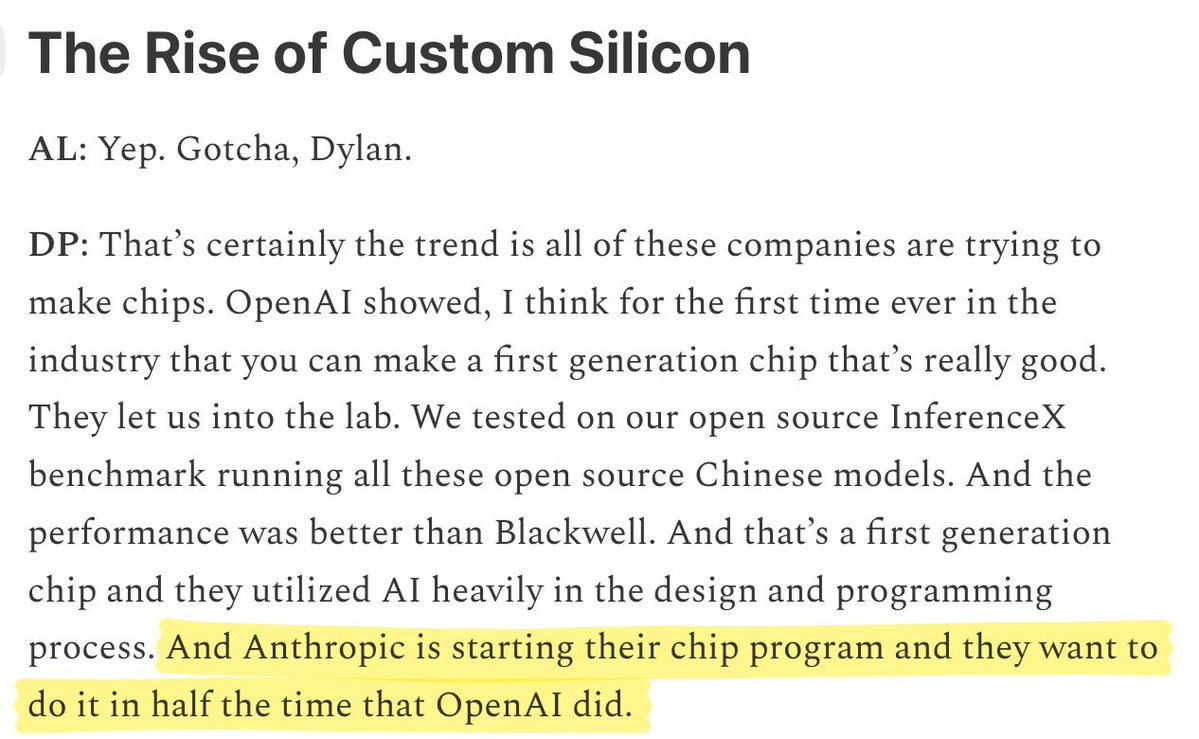
JUST IN: Anthropic is starting its own custom AI chip program and wants to do it in half the time it took OpenAI, according to SemiAnalysis’s Dylan Patel.
JUST IN: Security researcher Erica Windisch has published 11 unpatched Tailscale vulnerabilities, skipping coordinated disclosure because she says users are vulnerable today.
JUST IN: Anthropic says Claude mathematically proved 239 entry points across 123 open source libraries can never crash on any input up to 64 MB. It took a few weeks
New on our Frontier Red Team blog: using Claude to formally verify software at large scale.
Formal verification can prove that code is free of certain bugs, but historically it has only been feasible for small codebases (or required a lot of expert time).
With AI models, however, this is beginning to change. In collaboration with @theoremlabs, we used Claude to prove security properties in over one hundred real-world open-source libraries over the span of a few weeks.
Read our research in full here: https://t.co/zUyx8CjBEk
JUST IN: SK hynix has scrapped plans for a US IPO of its flash memory unit Solidigm and halted a pre IPO round, per Bloomberg. Korean regulators flagged it as a duplicate listing.
JUST IN: Nvidia is in talks to invest hundreds of millions of dollars in Firmus Grid, two weeks after the Australian AI cloud company pulled its IPO, per Bloomberg.
JUST IN: Anthropic’s next model is especially good at working out what a user actually wants even when they don’t spell it out, according to a person who has used it, per The Information.
JUST IN: Anthropic says roughly 20% of its shares are now dedicated to the public good, combining the new fund, its co founders’ 80% equity pledge and an employee donation match.
We’re committing a portion of Anthropic’s shares to the Anthropic Public Benefit Fund, a new wholly owned entity dedicated entirely to the public benefit.
It will start off with 5% of our shares. For every 50% increase in the company’s value over a set baseline, we can contribute up to an extra 2%, subject to our board’s discretion.
In total, this means that roughly 20% of Anthropic’s shares are committed to the public good. Our co-founders have already pledged to donate 80% of their equity, and around half our employees are donating a portion of their equity as part of a donation matching program we’ve run since our founding.
In the post below, we share more details about our new fund.
https://t.co/XzDntVH0vH
Interesting comments from Jordi, but I respectfully disagree on the point of pre-IPO derivatives being inferior to SPVs and tokenized access.
All perp markets are zero-sum; this is definitionally correct. But even zero-sum instruments can produce useful risk transfer. Derivative instruments have their own quirks, but they do not require underlying shares to change hands for every position.
The current state of private markets is extremely exclusive, and existing tokenized/SPV products inherit those limitations. These structures can be clunky, slow to close, and constrained by available shares and transfer restrictions. Layered SPVs can introduce high fees, carried interest, counterparty risks, etc.
Our belief is that hedgers and speculators can coexist on a fair orderbook, enabling continuous price discovery for typically illiquid assets. There are accounts already short low to mid 7 figures on @entropyIO markets only 1.5 months after launch, and we expect this trend to continue and grow. We have identified participation from institutional prime brokers executing total return swaps for clients, Anthropic shareholders hedging their share exposure, and traders using our perp as a way to both speculate and hedge other legs of trades.
For existing shareholders, shorting a pre-IPO perp can serve a similar economic purpose to selling shares through an SPV: reducing their company exposure while allowing a broader audience to take the other side, without requiring the underlying shares to change hands. We believe this to be useful risk transfer, even when the instrument itself is zero-sum.
On Jordi's broader point, I agree -- we should be doing more to provide earlier access to companies' growth. But broader access shouldn’t depend on navigating the complications of SPVs.
The third round of Entropy affiliate badges has been distributed.
Invitations have been sent on X, and recipients will find further instructions in their DMs.
Thank you to everyone who continues to support Entropy. Every contribution is noticed, and the next round will follow soon.
The first set of Entropy affiliate badges have been distributed.
If you post about markets, break news, or build an audience that actually trades, you qualify.
Entropy’s Pearl perp market became the largest and most liquid, one day after launch.
Financializing compute has always been of interest to me, and I’ve been following Pearl since shortly after the first whitepaper. I remember wondering at the time if they could overcome the verification issue that sidelined other compute projects. Having since met the team, it's clear why they were the ones to solve it.
Entropy is working to make frontier assets more accessible. Pearl fits that bill exactly: if it scales, it could universally drive down the cost of compute. A more liquid market for Pearl directly contributes to that end.
Excited for more listings like pearl-2:native
JUST IN: Researchers used GPT-5.6 Sol to find a Linux kernel bug that lets code escape a virtual machine and reach the host. It cost under $700 in API tokens.
JUST IN: Tesla’s new Roadster lifted off the ground at its reveal and does 0 to 60 in 0.81 seconds. Tesla says the production car will be even quicker.
1/ We are excited to list PEARL, and are extremely aligned with our friends @prlnet in their mission to make the frontier of inference more useful and efficient.