On health and its costs, Americans aren’t as divided as you think.
82% of Trump supporters want him tougher on polluters. 81% of all Americans say pollution’s costs are showing up on medical bills.
EPA leaders think we want fewer protections. The country just said otherwise.
New national polling is in, and the message is clear.
82% of Trump's supporters want tougher action on polluters. 7 to 1 want the EPA stronger, not weaker. Nearly 8 in 10 say they have a right to know what's in their air, water, food, and the products they use.
We agree.
177 million Americans live near high-risk chemical facilities like the Washington paper mill where a tank burst last week.
EPA's Risk Management Program, built to prevent disasters like this, is being rolled back. Former EPA experts and scientists are raising the alarm.
A serious chemical incident happens in the U.S. every two days. 177 million Americans live near high-risk facilities. The federal government is rolling back the rules that protect them. These rules exist because people already got hurt. They are the line that keeps us safe.
HFC regulations were just rolled back. the administration says it "won't impact the environment."
Joe Goffman, former EPA official, says the real costs show up in your air, your health, and your wallet.
We’re tracking these rollbacks closely. Follow us to stay up to date.
For 30 years, Marines at Camp Lejeune drank water containing TCE, a toxic solvent linked to Parkinson’s and documented at more than 1,400 military sites nationwide.
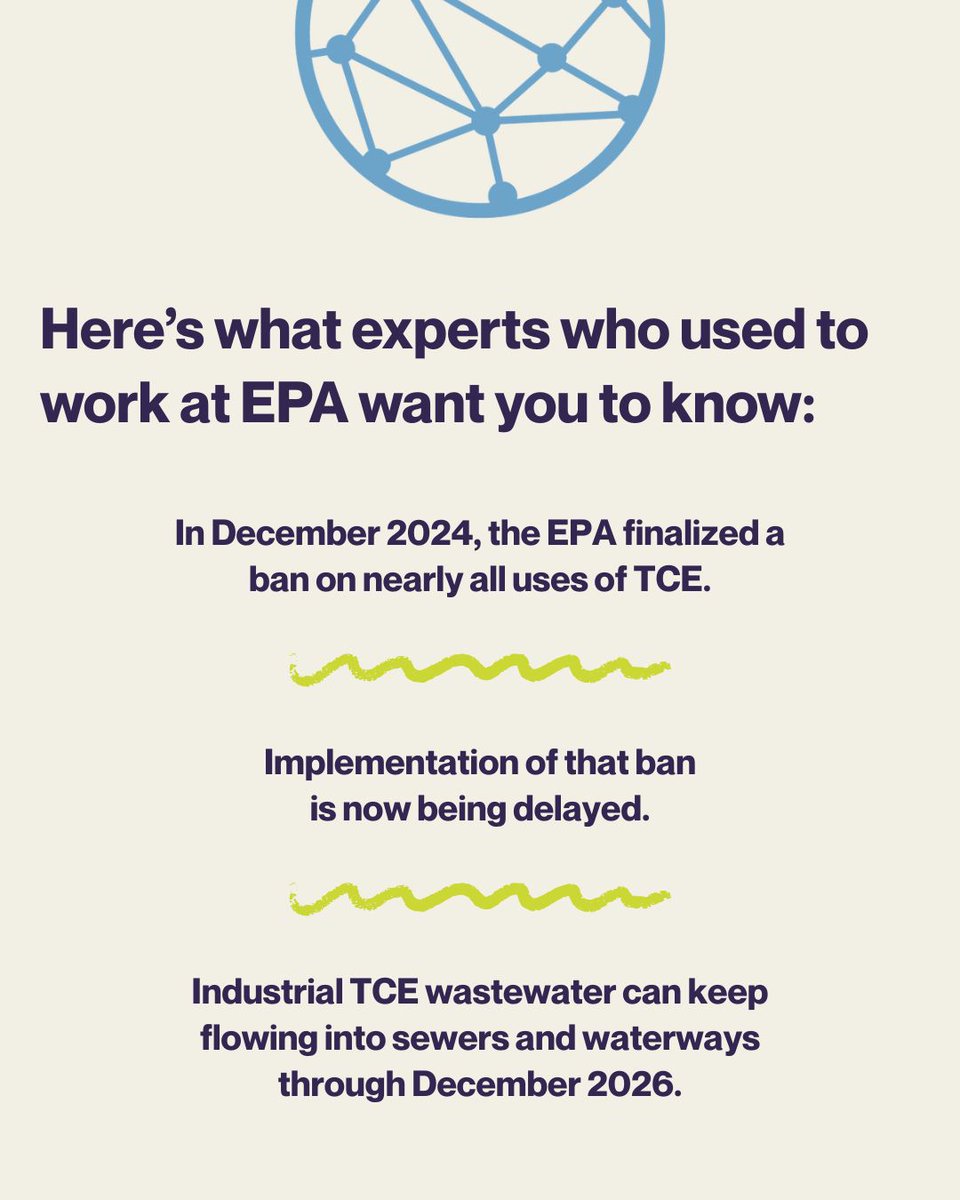
The EPA finalized a ban on nearly all uses of TCE in 2024. Now, implementation of that ban is being delayed.
You’d think incidents like this would lead to stronger chemical safety protections and emergency planning.
Instead, the Trump admin is rolling back chemical disaster prevention rules and proposing to eliminate the Chemical Safety Board.
Put our health & safety first.
Authorities in Southern California are scrambling to find a safe resolution as a damaged chemical tank at an aerospace facility posed a threat of a leak or even an explosion. https://t.co/yWFAkC3hHP
Protections on your drinking water are being quietly undone.
Former EPA Director Dr. Betsy Southerland joined @zerlinamaxwell to explain why the EPA's rollback of 4 PFAS standards is concerning — and may be illegal.
Standards exist because people got sick. Follow for updates.
Your tap water could contain toxic "forever chemicals" (PFAS).
EPA leadership called PFAS a top priority, but they just delayed drinking water protections and reopened chemical standards.
Families need enforceable protections right now, not corporate-driven delays.
“Independent referees are essential to ensure that facts are determined by evidence, not by the industries that would benefit,” writes Chris Frey, former head of EPA’s Office of Research and Development.
Chemical safety decisions should be driven by independent science.
The federal government is sidelining its most important independent chemical safety referee.
For 40+ years EPA’s IRIS program has been the gold standard for answering two vital questions: Is a chemical dangerous? And how much exposure causes harm?
https://t.co/6eYZAwywE6
That opens the door for political and industry pressure to shape how EPA evaluates chemicals linked to cancer, respiratory disease, and other serious health harms, including ethylene oxide, chromium-VI, and formaldehyde.
Joint Base Andrews' delay in notifying state regulators about a massive jet fuel spill near the Potomac River has added stress and potential further contamination to the river.
We need accountability and a commitment to protect our local waterways.
https://t.co/lJirunddpq