💻 Learning Log #8 — Array Methods
Started learning how to manipulate and search through arrays using built-in methods.
After practicing different examples, I'm getting better at understanding **which method to use and when.**
Next → `forEach()`, `map()`, `filter()` & `find()`
The biggest lesson:
**"Largest" means the largest value I've found so far.**
That's when arrays started feeling less like syntax and more like actually working with data.
Next → Array methods 🚀
💻 Learning Log #7 — Arrays 🚀
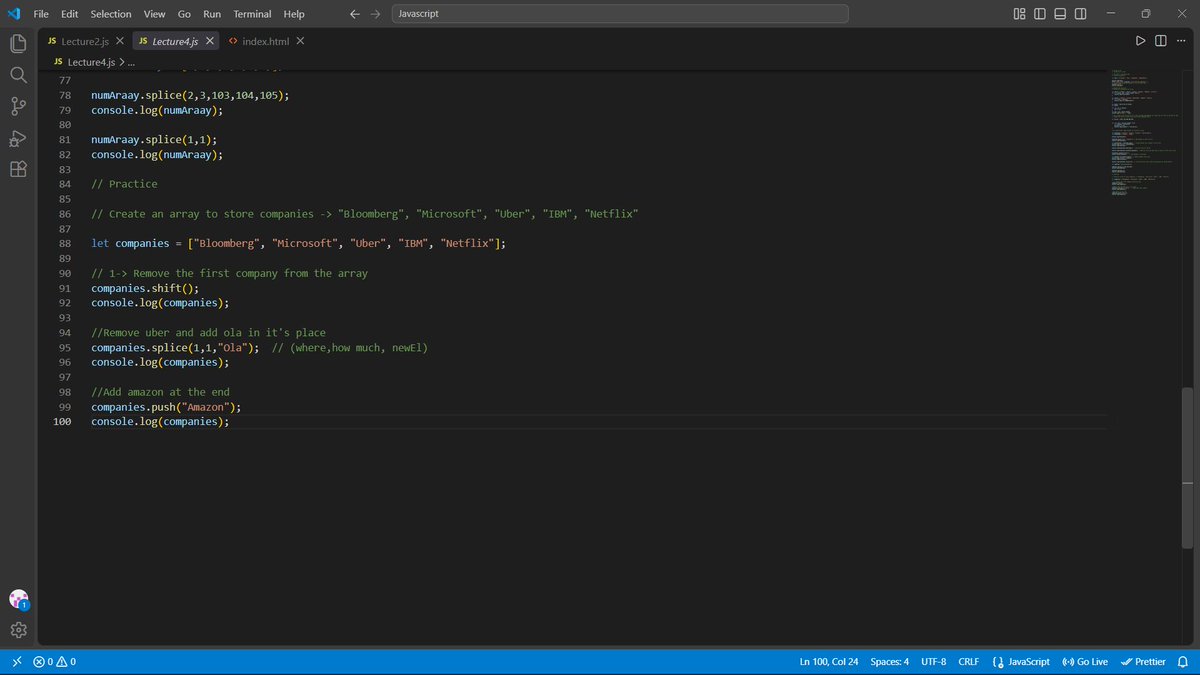
Started working seriously with arrays.
Learned:
• Creating & accessing arrays
• Indexes & `.length`
• Changing elements
• Adding/removing elements
• Searching & combining arrays
#JavaScript#WebDevelopment#LearningInPublic#100DaysOfCode
After solving different patterns, nested loops started making much more sense.
The patterns weren't really about stars.
They were about learning to break a problem into rows, columns, and repetitions.
Next → Functions ⚡
#Programming#Webdev#LearningInPublic#100DaysOfCode
💻 Learning Log #5 — Nested Loops & Patterns
Started practicing nested loops through different star patterns.
The real challenge wasn't printing `*`.
It was understanding how the outer loop controls rows and the inner loop controls what happens inside each row.
#100Daysofcode
One while loop exercise helped it click:
Keep taking names until the user types "stop".
It taught me why something inside the loop must change — otherwise the condition never changes and you get an infinite loop.
break → stop the loop
continue → skip the current iteration
Learning Log #4 — Finally Understanding Loops
Covered:
• for
• while
• do...while
• break
• continue
The big lesson: loops aren't just repetition. They're about controlling when and why repetition happens.
Also learned index vs value while working with arrays.
#100DayOfCode
🚀 Learning Log #1
I started web dev months ago, learned HTML & CSS, and built my first project: an Amazon Clone.
Lost consistency, took a break, and forgot a lot.
Now I'm restarting, learning JS, building projects & documenting the journey.
https://t.co/Ar5JLrAL4L
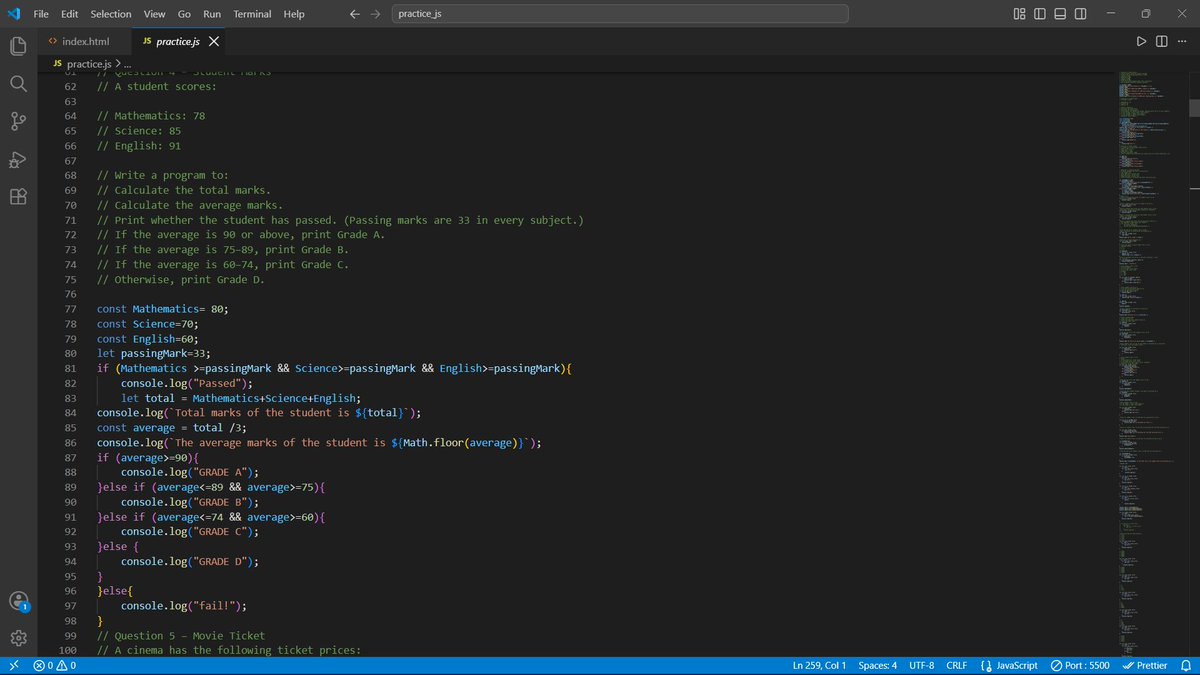
The hardest part wasn't writing if.
It was figuring out what condition the problem actually needed.
That's where I'm starting to understand the difference between knowing syntax and actually thinking like a programmer.
Next → Loops 🔄
#JavaScript#100DaysOfCode
💻 Learning Log #3
Started teaching JavaScript to make decisions. 🚀
Covered:
• if / else / else if
• switch
• Ternary
• Comparison & logical conditions
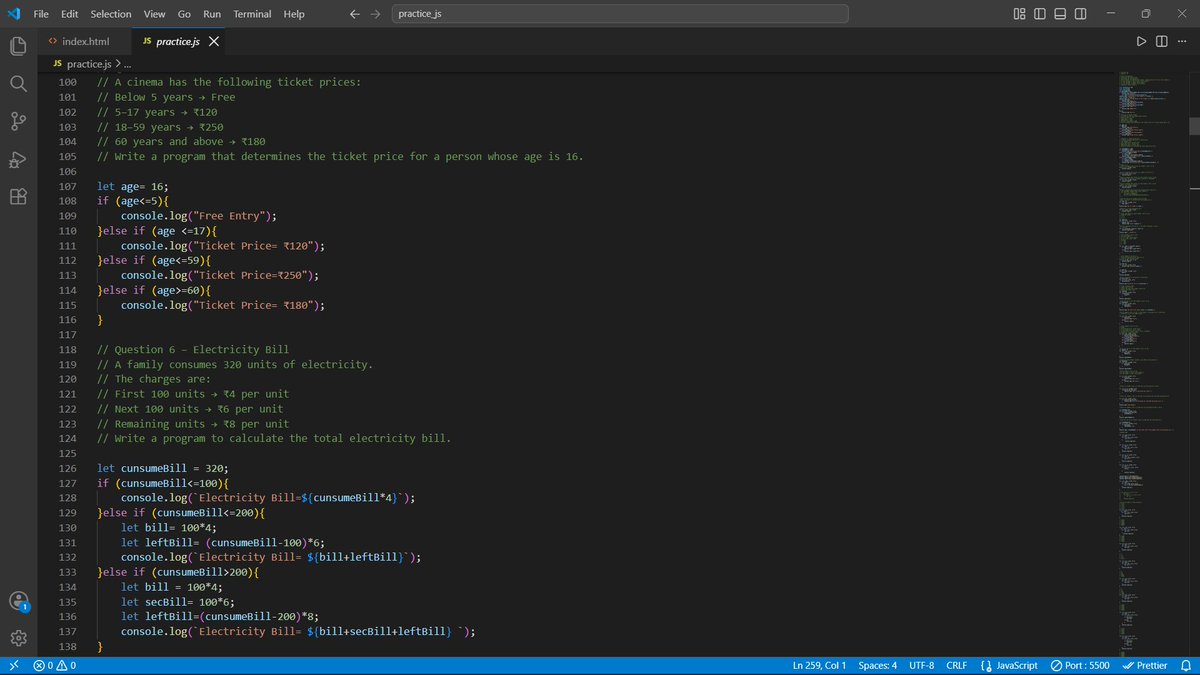
Practiced with grades, salary, electricity bills, Even/Odd.
Big lesson: coding = turning problems into logical steps.
The biggest difference this time:
I'm not just watching tutorials. I'm trying to solve problems myself and understand why the code works.
Still a long way to go, but the foundation is getting stronger.
Next: Conditions
#JavaScript#100DaysOfCode
💻 Learning Log #2 — JavaScript Foundations
Completed my first JS milestone.
Covered variables, data types, operators, objects & basic calculations.
Also practiced by building small programs like bill calculators, grading systems and ticket pricing.
Big lesson: syntax ≠ logic.
One honest limitation: the project isn't responsive across all device sizes. It was one of my first projects, and there are definitely things I'd improve if I built it today.
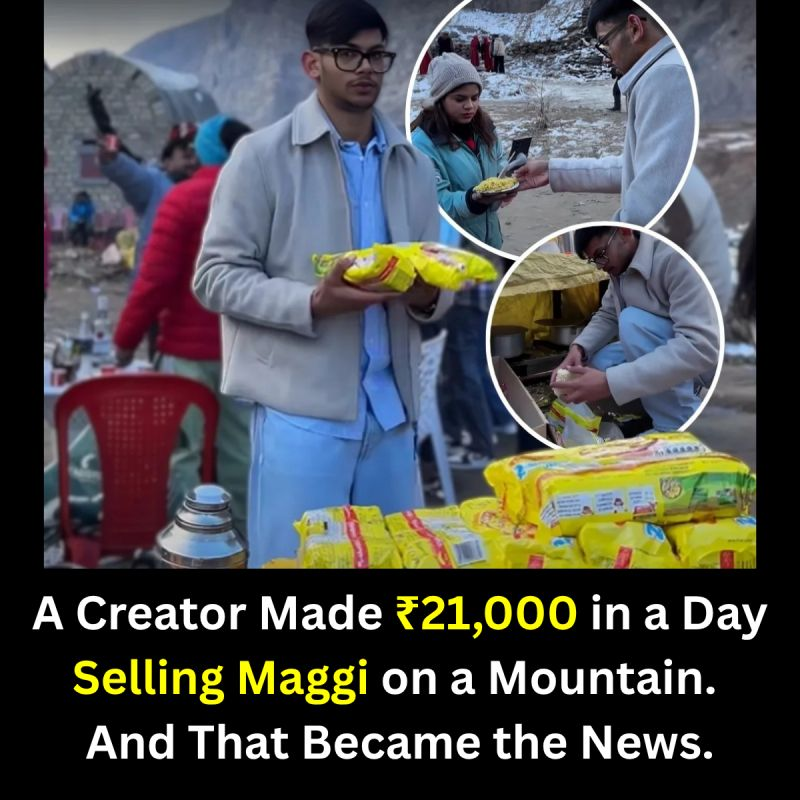
300+ packets sold.
Thousands of feet above sea level.
And the internet celebrated it, calling it “hustle culture.” But in all that noise, not a single question was asked: What happened to those 𝟯𝟬𝟬+ 𝗽𝗹𝗮𝘀𝘁𝗶𝗰 𝘄𝗿𝗮𝗽𝗽𝗲𝗿𝘀?
Because at those altitudes, there is no waste management system. No garbage trucks. No one coming to clean up after our celebrations.
𝗪𝗵𝗮𝘁𝗲𝘃𝗲𝗿 𝗶𝘀 𝗹𝗲𝗳𝘁 𝗯𝗲𝗵𝗶𝗻𝗱...𝘀𝘁𝗮𝘆𝘀 𝘁𝗵𝗲𝗿𝗲. And this is not about one creator. 𝗧𝗵𝗶𝘀 𝗶𝘀 𝗮𝗯𝗼𝘂𝘁 𝗮 𝗺𝘂𝗰𝗵 𝗹𝗮𝗿𝗴𝗲𝗿 𝗰𝗿𝗶𝘀𝗶𝘀, plastic pollution in India’s fragile Himalayan ecosystem, worsening with every passing day.
And its real cost is not paid by you. It is paid by prakriti. In fact, if the true ecological cost were accounted for, that ₹50-₹100 plate of 𝗠𝗮𝗴𝗴𝗶 𝘄𝗼𝘂𝗹𝗱 𝗰𝗼𝘀𝘁 ₹𝟴𝟬𝟬-₹𝟭𝟬𝟬𝟬+, 𝗼𝗿 𝗲𝘃𝗲𝗻 𝗺𝗼𝗿𝗲.
That’s how difficult, and expensive, it is to remove plastic from such sensitive zones.
As 𝗔𝗰𝗵𝗮𝗿𝘆𝗮 𝗣𝗿𝗮𝘀𝗵𝗮𝗻𝘁 often points out, this is not just a policy failure, it is a deeper injustice. And that’s why policy alone cannot solve it. Its roots lie deeper.
As long as we continue to see the 𝗺𝗼𝘂𝗻𝘁𝗮𝗶𝗻𝘀 𝗮𝘀 𝘀𝗼𝗺𝗲𝘁𝗵𝗶𝗻𝗴 𝘀𝗲𝗽𝗮𝗿𝗮𝘁𝗲 𝗳𝗿𝗼𝗺 𝗼𝘂𝗿𝘀𝗲𝗹𝘃𝗲𝘀, as long as they remain just a place to consume and move on, exploitation is inevitable. It may change its form, but it will continue.