"I must die to myself continually and accept trials without complaining . . . Anyone who is not prepared to suffer all for the Beloved and to do His will in all things is not worthy of the sweet name of friend, for here below, love without suffering does not exist" - St. Bernadette
En la Fiesta de Nuestra Señora de Lourdes y la Jornada Mundial del Enfermo, el Papa León XIV impartió la Bendición Apostólica al final de la Audiencia General de hoy, extendiéndola de modo especial a los niños, a los ancianos y a los que sufren.
Day 11/365
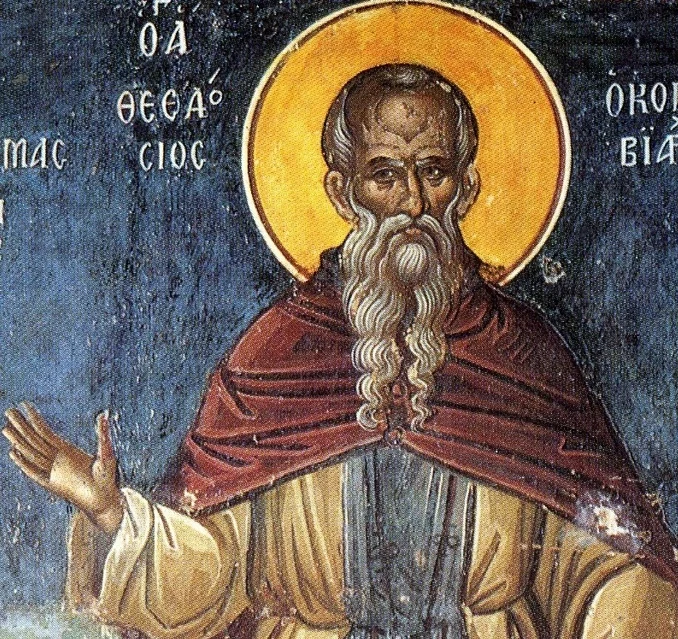
January 11th – St. Theodosius the Cenobiarch (c.423-c.529)
Church historian Theodore of Petra and later hagiographers record that St. Theodosius the Cenobiarch was born in Cappadocia in Asia Minor and, from a young age, was drawn to the ascetic life.
Seeking greater holiness, he traveled to the Holy Land and placed himself under the guidance of St. Longinus, a hermit near Bethlehem, before eventually founding his own monastic community.
Around the late 5th century, Theodosius established a large monastery near Bethlehem that organized monks into a cenobitic (communal) way of life, earning him the title Cenobiarch, or “father of communal monks.”
His monastery became a model for organized monasticism in the East, housing Greeks, Armenians, Syrians, and others, each praying in their own language but united under one rule.
Because of his holiness and leadership, Theodosius was appointed overseer of all cenobitic monasteries in Palestine by the Church authorities.
He endured persecution and exile for opposing the Monophysite heresy, remaining steadfast in Chalcedonian orthodoxy until his return.
My favourite part of his story is this one chronicled by Theodore of Petra:
When the emperor Anastasius I pushed Monophysite heresy, St. Theodosius the Cenobiarch refused to bend. He lit a fire at his monastery and declared that any monk who denied the Council of Chalcedon should step into the flames, while the faithful should stand firm even unto death. For this open defiance, he was exiled and imprisoned, yet his stand hardened orthodox resistance across Palestine.
Theodosius proved that monks were not hiding from the world, but guarding the truth at its gates.
St. Theodosius governed his monasteries until his death in 529, and he was venerated as a saint whose legacy shaped Eastern monastic life for centuries.
Patron saint of:
- File-makers
St. Gregory of Nyssa, pray for us.
✠
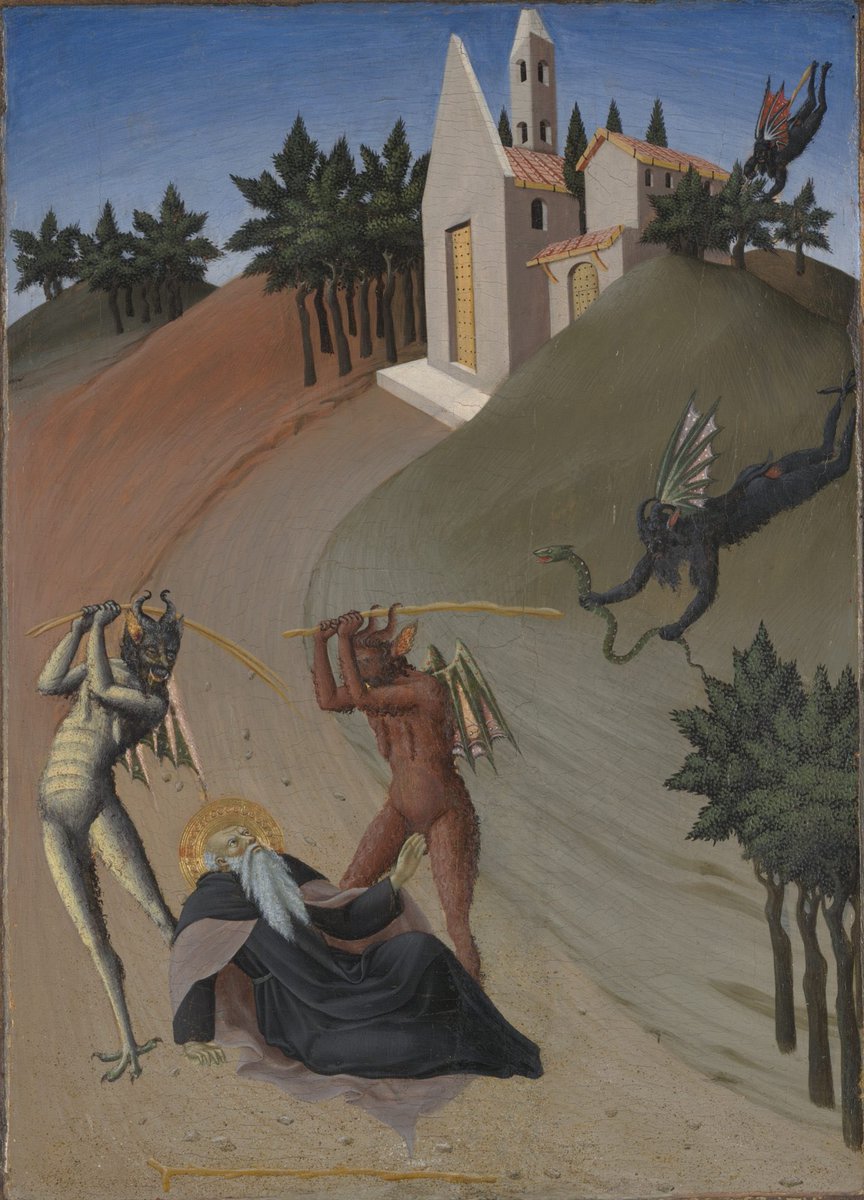
“Saint Anthony of the Desert repeatedly warned monks not to fixate on demonic activity, hidden knowledge, or speculative explanations of evil. His counsel was blunt: Do not chase how demons work. Do not obsess over their schemes. Focus on repentance, prayer, and obedience. Saint Anthony taught that over-attention to evil gives it influence, while humility starves it. Fixation is a distraction, not wisdom.”
We must realize the following truth: in order to begin to live a spiritual life, I must be vividly conscious of the fact that I am nothing, that I can do nothing and that I am completely incapable and unworthy.
*Abba Aimilianos
Pope Leo XIV became the first pope to visit and pray at Saint Charbel’s tomb in Annaya, Lebanon. On the second day of his visit to this beautiful country, he spent a few minutes in silent prayer and lit a lamp at the saint’s burial place, which is visited daily by thousands of pilgrims from all over the world.
"The God Who makes the moving curtain of the Northern Lights, made you as a living light.”
-Troparion for St Olga of Alaska
I painted this last minute St Olga commission for my home parish. Her feast day is coming up(Oct 27)& our bishop will be there for it(though I will not😕).
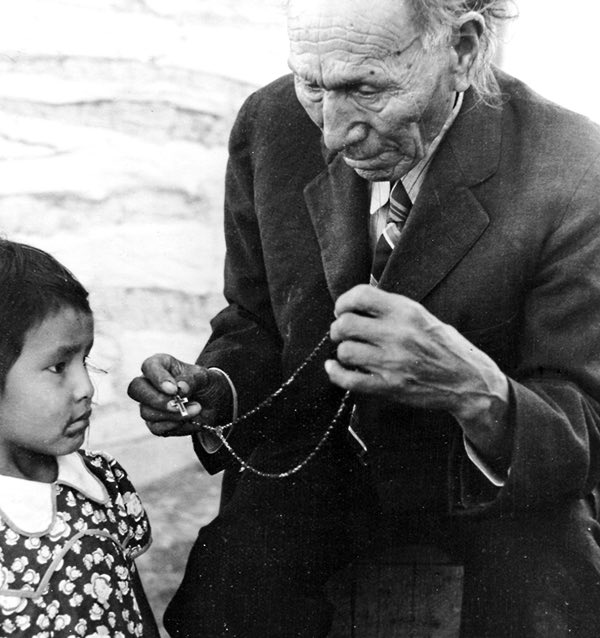
Black Elk, a Native American from the Oglala Lakota Sioux tribe, was a respected spiritual leader who later converted to Catholicism. Baptized in 1904 as Nicholas Black Elk, he became a devoted Catholic catechist, sharing the faith among his people. His deep spirituality and dedication to Christ led to the opening of his cause for canonization in 2017, giving him the title Servant of God Nicholas Black Elk.