Australia’s cattle herd is edging closer to rebuild territory, but it is not there yet.
The FSR has eased from recent highs, suggesting liquidation pressure is softening. But with the annual FSR still above the typical rebuild trigger, the herd is moving closer, not fully turning
Are heavy steer prices experiencing similar levels of volatility to young cattle? What about trade lamb and mutton? Have sheepmeat markets also become more volatile, or does their longer history tell a different story?
READ ARTICLE: https://t.co/ptVXrclOzg
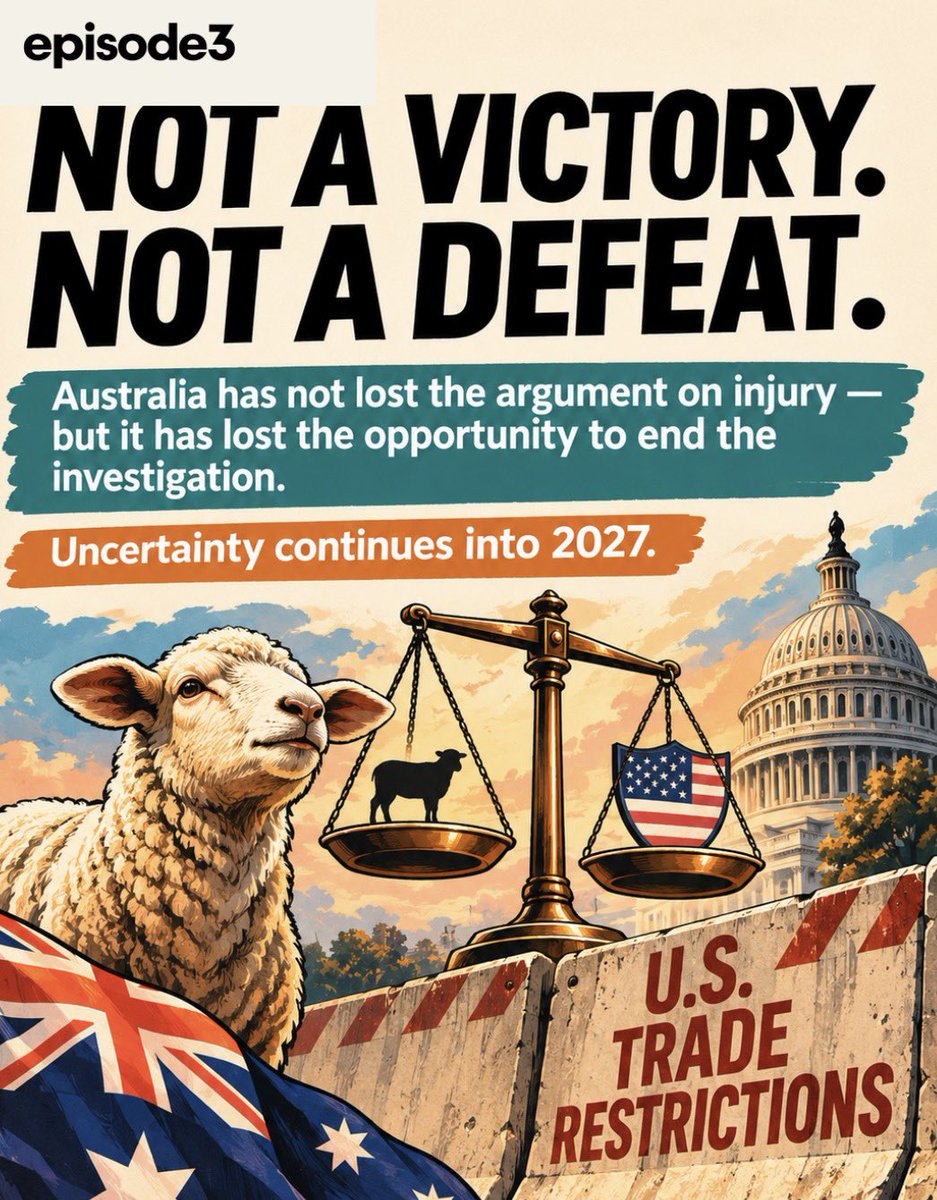
The USITC has split 3–3 on whether imported lamb is causing injury to US producers.
That means the investigation continues and tariffs or quotas remain possible.
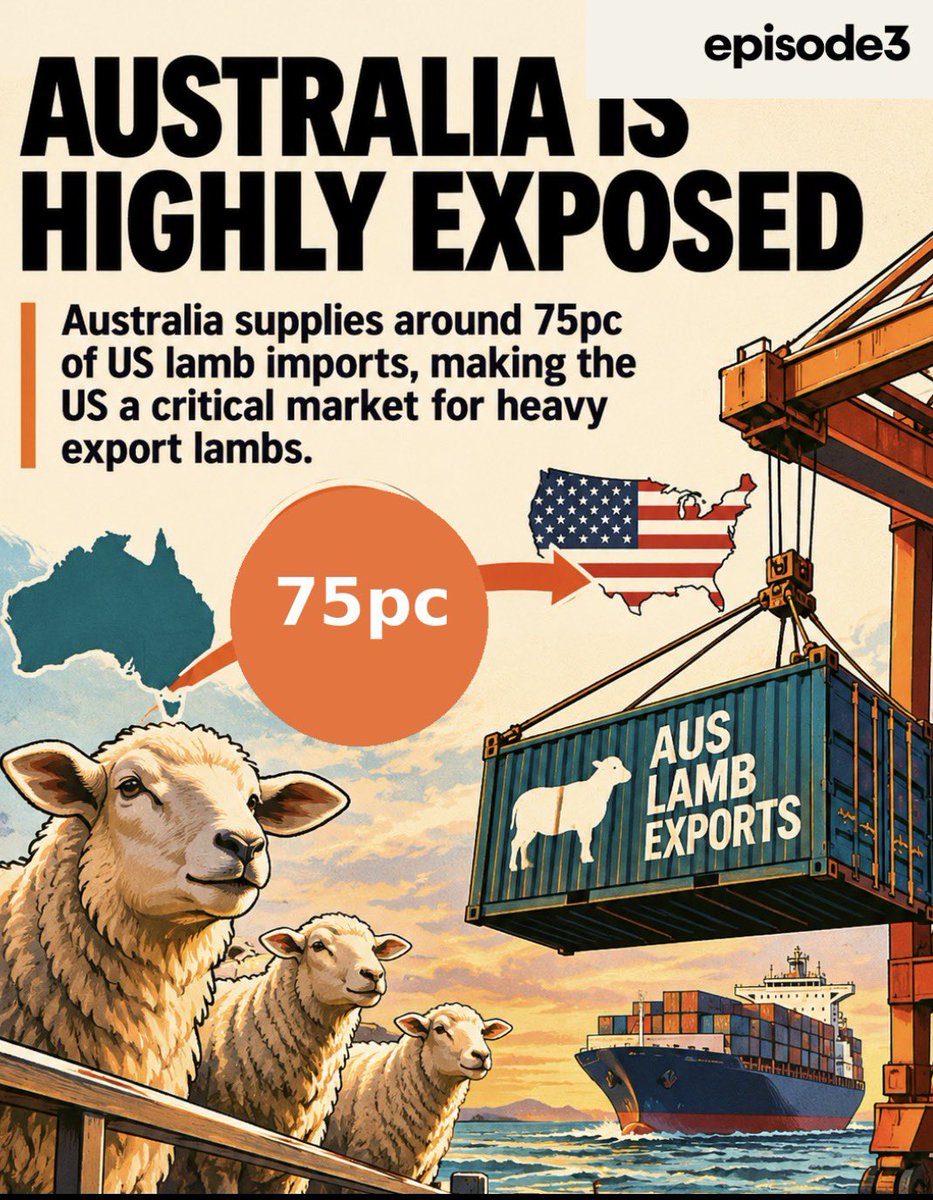
Australia supplies around 75pc of US lamb imports, so the commercial risk remains significant heading into 2027.
Food prices softened again in September.
Beef and milk fell 1.8pc for the month, lamb & goat eased 1.0pc, while fruit jumped 1.9pc.
But annual inflation is still elevated, with lamb & goat up 9.4pc and beef 9.2pc year-on-year.
Great time to be in sheep. Clients sold over 5000 Primeline Maternal ewe suckers today to average $360 or $17-19 dressed. Solid returns for many flocks weaning over 160%
@Meat_Watcher@AgWatchers@SixtAustralia@HertzAUCar Was in Darwin a few weeks ago Europe car opening in the city said 9am, rang them at 9.15 and they sent a lad in from the airport! 2 people waiting for a car! NT time, not today, not tomorrow, not Tuesday, not Thursday, not next week!
When booking rental cars don’t use @SixtAustralia particularly when travelling to rural destinations as they cancel reservations at the last minute and leave you stranded.
US red meat production softened in September.
Beef output fell 6pc year-on-year as cattle slaughter dropped 7pc, despite heavier average liveweights.
Pork was down 3pc and lamb & mutton 5pc, leaving total commercial red meat production 4pc lower than a year ago.
Are Australian cattle prices really becoming more volatile, or are bigger swings just a reflection of higher prices? We crunched 73 years of inflation-adjusted EYCI data. Volatility has jumped since 2020, but we're still below the peaks of the late 1970s.