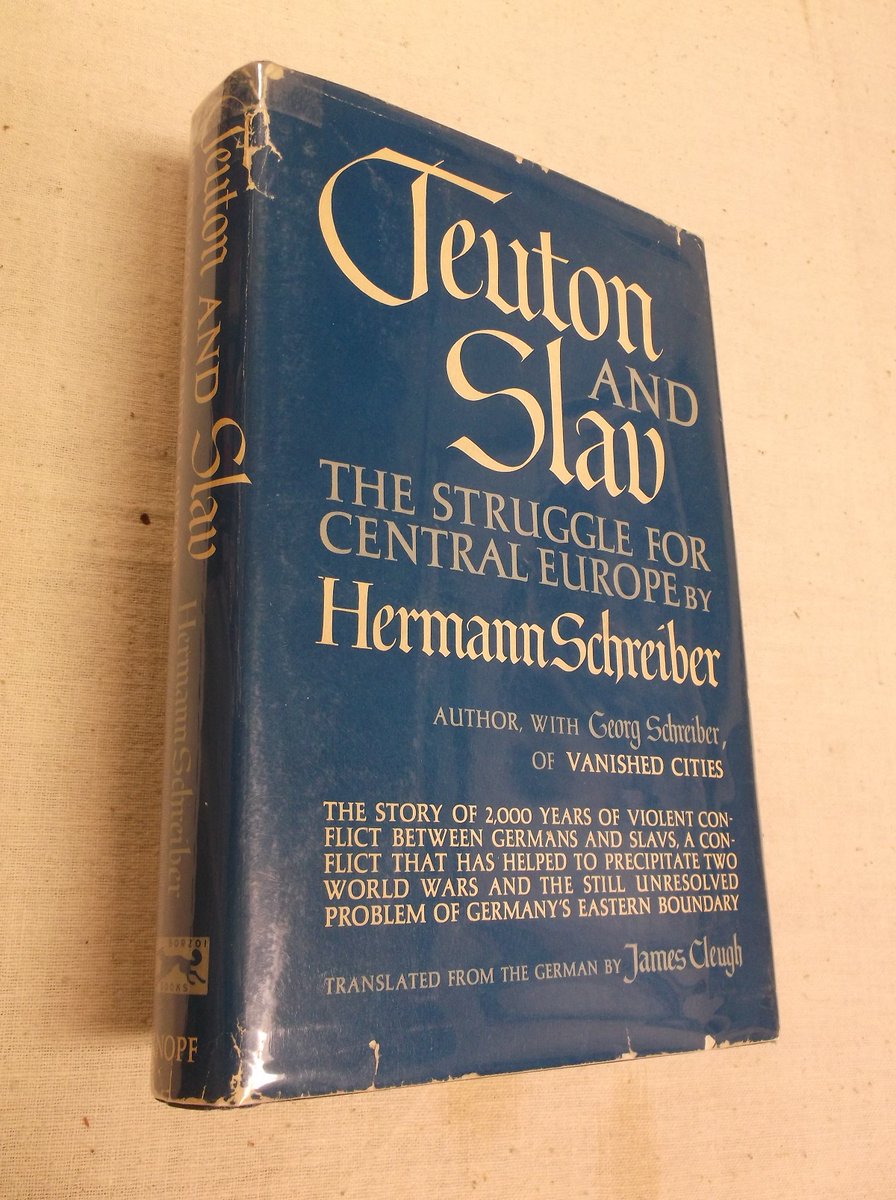
Read the first three chapters of this yesterday. Solid. Been looking for a book like this for years, and it's one of the only more general (not hyper-specialized) books on this subject I have found.
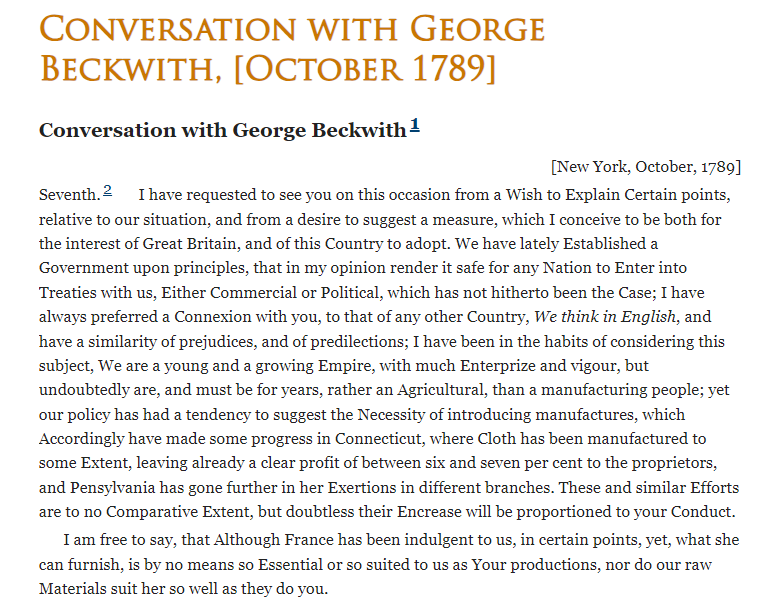
This is such a bad look for Hamilton, because here he is pleading with a British informant (behind the back of the president, and then lied about the extent of the convo(s) to Washington/Jefferson, et al) in the exact same terms that his merchant/banker mentor - William Bingham -
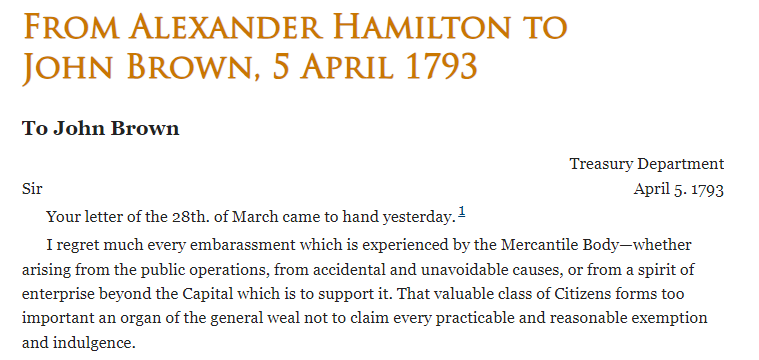
Meanwhile, Hamilton had complete merchant-brain: "I regret much every embarrassment which is experienced by the [merchants]".
For those who don't know: father was a merchant; was taken in by a merchant when orphaned; formative work experience was as a merchant;
Hence acting like their agent in every respect throughout his entire career -- his whole "egregiously one-sided" econ program, incl merchant-friendly tariffs, was practically written by them, etc.
Meanwhile, Hamilton had complete merchant-brain: "I regret much every embarrassment which is experienced by the [merchants]".
For those who don't know: father was a merchant; was taken in by a merchant when orphaned; formative work experience was as a merchant;
merchant guardian and employers sponsored/funded his move away from their merchant-infested island to merchant-infested New York; became BFFs with, and was mentored by, the most powerful merchants.
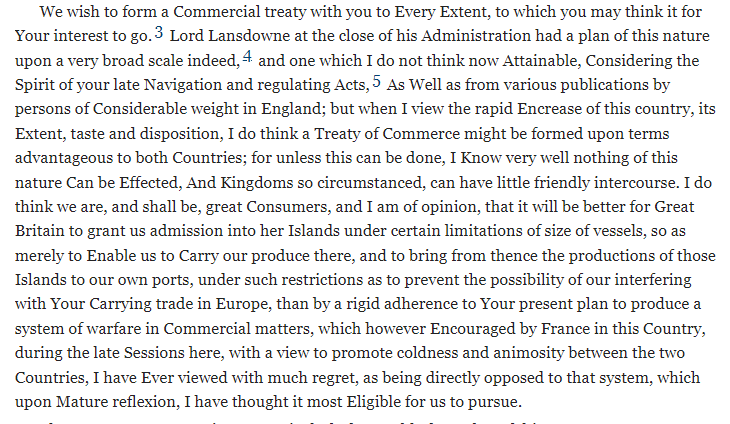
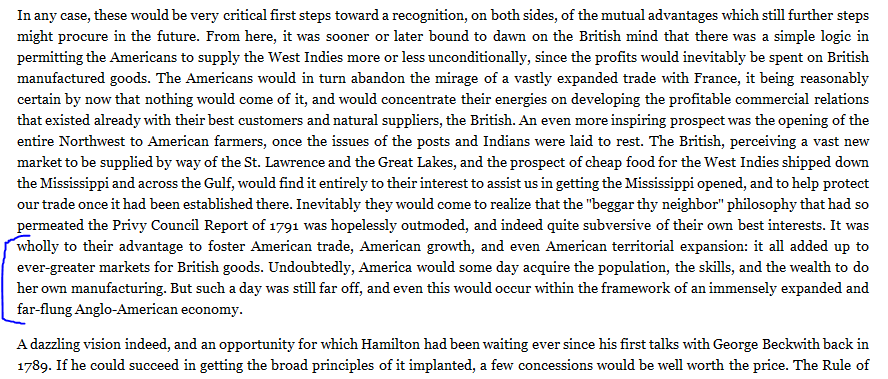
that if no alliance is struck up America will industrialize to a much greater/faster extent (principally due to the discriminatory measures of Jeffersonians), which is not in British interest - "I do think we are, and shall be, great consumers [of your manufacturing products]"!
This is such a bad look for Hamilton, because here he is pleading with a British informant (behind the back of the president, and then lied about the extent of the convo(s) to Washington/Jefferson, et al) in the exact same terms that his merchant/banker mentor - William Bingham -
pleaded with British PM Shelburne. He says "we wish to form a commercial treaty with you to every extent, to which you may think it for your interest to go". Wat he's pleading for is a long-term practically free-trade alliance with industrial Britain. He warns, just like Bingham,
Subordination would be for those for whom, as Pauline Maier put it, 'dependency seemed right and natural.' To paraphrase Samuel Johnson, all white males could be leveled up because women, children, blacks, and Indians were leveled down."
#HerrenvolkDemocracy
"Republicans did not seek to destroy social hierarchy altogether; they aimed to replace one hierarchy with another. In expanding the compass of political participation, they were not extending citizenship to all people only to white males.
In rejecting wealth as the basis of political privilege, they devised a social order in which supposed biological differences, as defined by gender, race, and age, determined relative status.
Federalist speakers emphasized women's ability to sway, even manipulate, men into doing their duty. 'You, my fair friends,' said David Daggett to the New Haven Cincinnati in 1787, 'are possessed of a kind of magic influence over the other sex.'"
"Women, it was assumed, shaped the county's morals and manners; men controlled government and the lawmaking process. This was not an insignificant contribution. As James Tilton noted, 'In a republic, manners are of equal importance with laws.'
Northern women were granted too much freedom. They became the 'moral authority' in the household. Women's lib came about through the 'cult of domesticity'.
In forming manners, women influenced men to perform the civic functions essential to the republic's survival to volunteer for battle, serve in the statehouse, or vote at the polls.