His #legacy lives on in the dignity of Eritrea, in the victory over unjust sanctions, and in the hearts of his people.
@GirmaAsmerom@AmbStesfamariam@hawelti https://t.co/HG2vN6PgsQ
Development is About Keeping People at the Center
Bana Negusse
Today, development is often judged by what can be seen from a distance. Across Africa and much of the Global South, the increasingly common towering skyscrapers, expansive highways, modern ports, and other headline-grabbing megaprojects have become the most visible symbols of national progress. Governments frequently showcase these ambitious undertakings as evidence of modernization, economic growth, and global competitiveness. In many cases, such investments have indeed delivered important benefits, creating jobs, improving connectivity, and supporting broader economic activity.
Yet visibility and impact are not always the same thing. All that glitters is not gold.
The history of development, a concept still poorly understood and defined, is filled with countless examples of costly projects that promised transformation but delivered far less than expected. Delays, budget overruns, underutilization, and poor maintenance have undermined the effectiveness of many large-scale initiatives. Some have become so disconnected from local realities that they now stand as monuments to misplaced priorities rather than engines of progress. These so-called “white elephant projects” often consume enormous resources while producing limited long-term value for the communities they were intended to serve.
This reality raises an important question: must development always be grand in scale to be meaningful?
Eritrea’s experience suggests otherwise. Rather than relying primarily on highly publicized megaprojects, the country has long emphasized a more practical and people-centered approach that prioritizes targeted interventions, community participation, and sustainable outcomes. While these initiatives rarely attract international attention, their impact can often be measured where it matters most: in improved livelihoods, stronger communities, and enhanced resilience.
In towns and villages across Eritrea, carefully targeted investments in agriculture, infrastructure, and essential public services have generated benefits that extend well beyond their modest budgets. These projects, often involving the direct participation of local communities, are designed to address specific local needs and create lasting improvements in everyday life.
Agriculture provides a particularly compelling example. Through investments in irrigation systems, soil and water conservation measures, and support for local farming communities, Eritrea has sought to strengthen food production and improve food security. In Gash- Barka and Anseba, improved irrigation networks have helped revive previously underutilized land, allowing farmers to cultivate crops more consistently and, in some cases, harvest multiple times a year. These interventions, led by the Ministry of Agriculture, may lack the visibility of large infrastructure projects, but their contribution to rural livelihoods and community resilience is substantial.
The same principle can be seen in transportation infrastructure. Roads linking remote villages to markets, schools, and healthcare facilities have created opportunities that extend far beyond improved mobility. By reducing travel times and transportation costs, these connections have enabled farmers to reach buyers more efficiently, facilitated trade, and expanded access to essential services. Communities that were once geographically isolated have become more closely integrated into the broader national economy, strengthening both economic participation and social cohesion.
The benefits of this development model are also reflected in employment creation. Thousands of jobs have emerged through projects spanning agriculture, construction, public services, and local infrastructure development. For many individuals, particularly young people entering the workforce, these opportunities provide a pathway toward economic stability and self-reliance. What is more, communities that host development initiatives frequently experience broader gains, with rising household incomes contributing to improvements in health, nutrition, and educational attainment.
The ripple effects can be significant. Consistent with empirical research and case studies from around the world, families with more stable sources of income are often better positioned to invest in their children’s education, access healthcare when needed, and improve their overall quality of life. In some communities, dependence on uncertain external sources of support has gradually given way to greater economic self-sufficiency driven by local employment and productive activity.
Another notable feature of Eritrea’s development approach is its unwavering emphasis on inclusion, particularly the participation of women. Across numerous initiatives, women are playing increasingly prominent roles not only as beneficiaries but also as active contributors, decision-makers, and leaders. Their involvement strengthens project outcomes while expanding opportunities for economic and social advancement.
This shift is especially evident in technical, administrative, and managerial positions that have traditionally been dominated by men. As women assume greater responsibilities within development projects, they help challenge longstanding barriers, provide role models for younger generations, and ensure that a wider range of perspectives informs decision-making. The result is a more inclusive form of development that draws upon the talents and experiences of the entire community.
Equally significant is the process through which many of these projects are designed and implemented. Unlike traditional development models that rely heavily on centralized planning, external direction, and a hierarchical approach, Eritrea has often emphasized community participation from the outset. Local residents frequently contribute to identifying priorities, planning interventions, providing labor, and overseeing implementation. This collaborative approach helps ensure that projects respond to genuine needs rather than externally imposed assumptions.
Community ownership also increases the likelihood that development gains will endure over time. When people are directly involved in shaping and maintaining projects, they are more invested in their success and sustainability. This principle is widely supported by development research worldwide, yet meaningful grassroots participation remains less common than many policy discussions suggest.
Notably, none of this implies that large-scale infrastructure projects lack value. Major investments can play an essential role in supporting economic growth, improving connectivity, and expanding national capacity when they are carefully planned and effectively managed. However, Eritrea’s experience highlights an important reality: transformative development does not always require massive budgets, monumental structures, or international attention. Often, the most durable progress emerges from initiatives that are modest in scale but precise in purpose.
In an era when development is often measured by investment size or the visibility of construction projects, Eritrea offers a different perspective. It demonstrates that lasting progress is not simply about building bigger and spending more. Rather, it is about building better and spending wiser.
As Eritrean officials, including President Isaias Afwerki, have frequently emphasized, development is ultimately about improving people’s lives and expanding opportunities for citizens. That principle serves as a useful reminder for policymakers everywhere. The true measure of development is not the scale of what is built or how shiny it is, but the difference it makes in the lives of those it is meant to serve.
A massive victory for girls' rights! 🎉
The subzoba Logo-Anseba, Gash Barka region, Eritrea has officially been declared FGM-free!
Young and adolescent girls are free from FGM.
Change is possible when communities lead the way.
@EU_Partnerships
Defamatory narrative on Eritrea, peddled for many decades now, was never a simple case of sloppy journalism or paucity of authentic/verifiable information.
In its recent manifestations, the demonization campaign stems from and is driven by the consortium, the unholy alliance so to speak, of forces bent on reversing and rolling back Eritrea's hard-won and inviolable independence.
In this perspective, https://t.co/512O7pb8z2's timely initiative to expose the toxic campaign on the basis of fact-based, well-researched, and nuanced analyses is laudable indeed. It will also substantially enrich and complement previous and foundational documents (Responses to UNHCR Eligibility Guidelines etc.) that are already in the public domain.
Myths About #Eritrea: A Fact-Based Examination https://t.co/NcEkFjouOJ via @RedSeaBeacon
Good Read: #Eritrean Beauty Engraved in Names
by Kidane Shimendi
"With its enchanting landscapes, warm hospitality, profound peace, sweeping coastal vistas dotted with remarkable islands, rich historical tapestry, and diverse cultural heritage, Eritrea presents a mosaic of splendor. These elements are genuinely interwoven to shape Eritrea’s unique identity. Nowhere is this beauty more quietly yet powerfully recorded than in the names carried by its places".
https://t.co/zvMq5tpCkb
Eritrea @35: Progress, Resilience, and Pride
by Bana Negusse
*"...Over the past month, Eritreans at home and across the diaspora have been enthusiastically celebrating the 35th anniversary of the country’s independence. And so they should. Freedom was not handed to Eritrea on a silver platter. Rather, it was won through immense sacrifice during one of Africa’s longest and bloodiest liberation struggles".
*"...Notably, many of Eritrea’s development indicators and broader social trends compare favorably – sometimes considerably so – with those of numerous countries across Africa and the wider developing world. Moreover, these achievements, impressive as they are in their own right, become even more significant when viewed against the backdrop of the immense challenges that Eritrea has faced, including external aggression, sanctions, regional instability, economic constraints, and climate-related pressures".
*"...The strong sense of social cohesion, peace, and harmony that prevails across Eritrea is also something that distinguishes the country positively. For many years, much of Africa, the developing world, and indeed many other parts of the globe have been affected by internecine conflict, sectarian violence, and recurring instability. Sadly, in many areas, safety and security are luxuries. In this regard, Eritrea stands in notable contrast".
*"...Beyond the above, there are many other qualities and values that Eritreans can take pride in. These include a deep respect for nature and the environment, as well as a strong culture of humility, modesty, and simplicity that continues to characterize much of Eritrean society. In many communities, ostentatious displays of wealth and status are discouraged, while values such as dignity, mutual respect, hospitality, and collective responsibility remain highly regarded. Together, these qualities form an important part of Eritrea’s social fabric and national character".
*"...The resilience of the people, the spirit of self-reliance, the strong sense of social cohesion, the commitment to equality and national ownership, and the developmental gains achieved under difficult circumstances together provide a solid platform for future progress. As Eritrea marks 35 years of independence, there is ample reason not only for reflection, but also for confidence, pride, and hope in the country and its people".
https://t.co/kBvGCRjicK
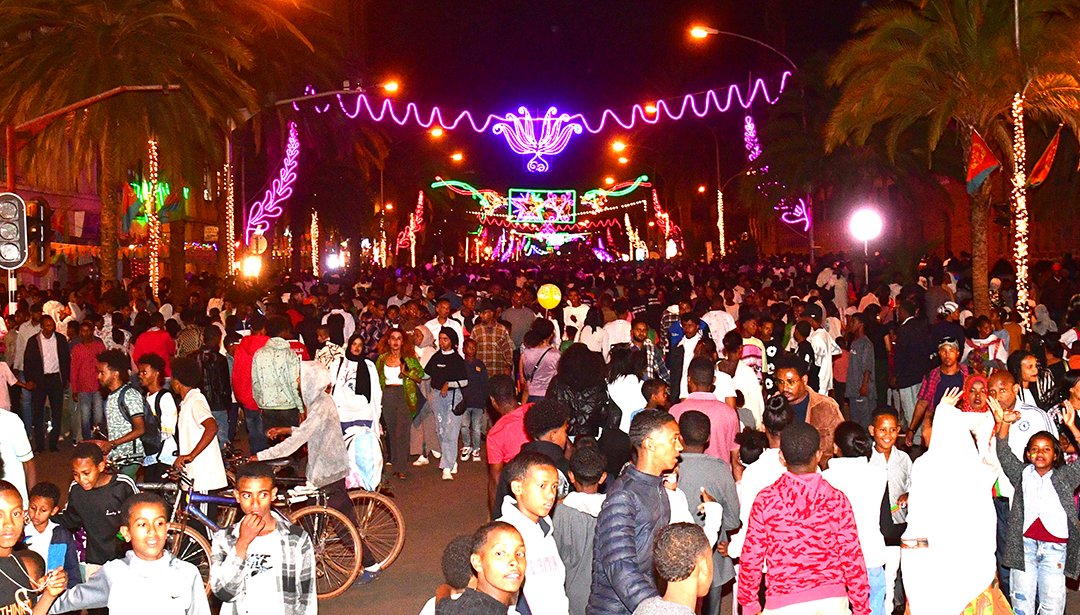
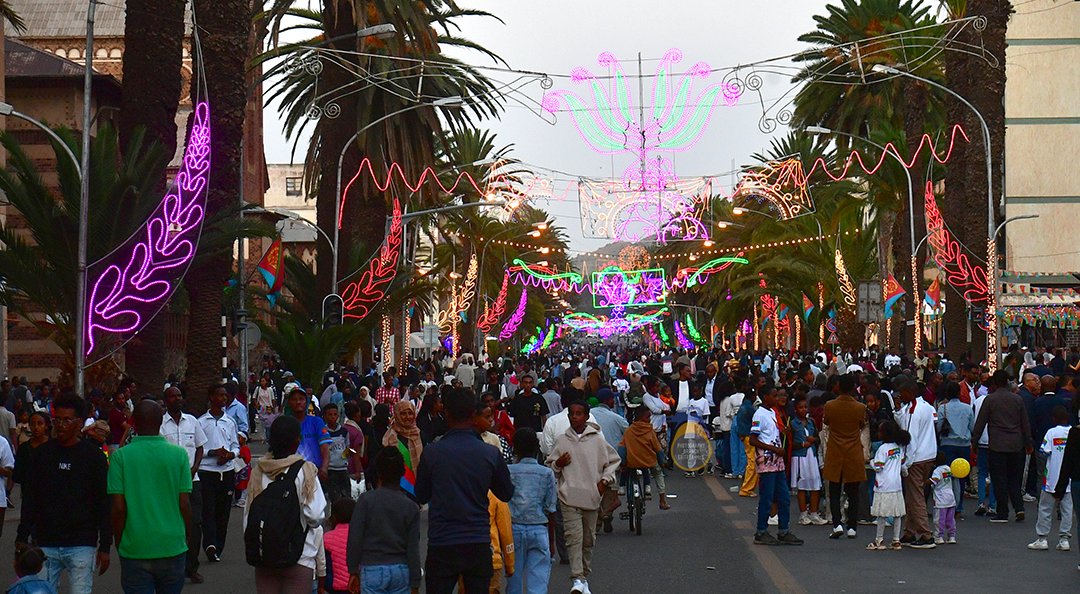
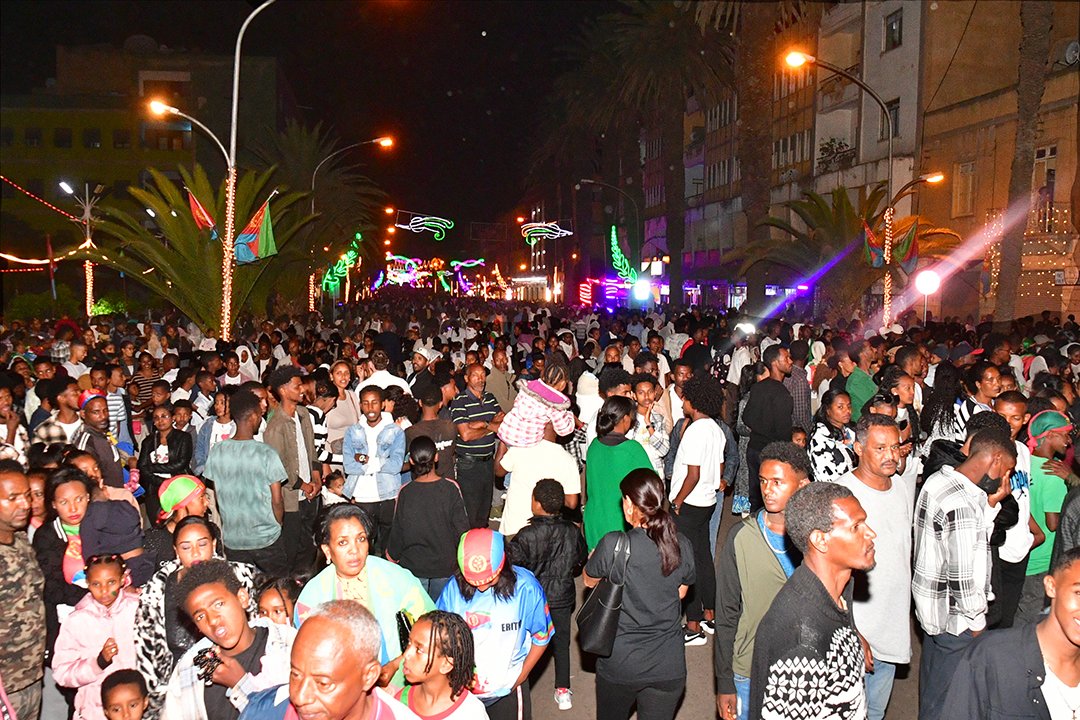
Residents of Asmara have poured, in their hundreds of thousands, on Liberation Avenue and Martyrs Street in celebration of #Eritrea's 35th Independence Anniversary for the last two nights in a row.
The jubilation, the fervor and passion of patriotism, vibrant as ever!
Both events broadcast live on Eri-Tv.
Happy Independence Day, Eritrea! 🇪🇷
Happy 35th Anniversary of our Independence (1991–2026).
To our brave people, defense forces, and government ,wishing unity, peace, and prosperity for generations to come. #Eritrea#IndependenceDay@hawelti
FROM THE ANNALS OF HISTORY
#Eritrea: the Long Road to Independence (Part II)
by Shabait Staff
(This second instalment in the series examines the dismantling of Eritrea’s UN-mandated federal autonomy under Ethiopian imperial rule and the events that ultimately pushed Eritreans toward struggle and armed resistance. While Part I explored the colonial foundations of the Eritrean state and the international decisions that denied Eritreans their right to self-determination, this chapter focuses on the systematic erosion of the Federal Arrangement, the intensification of repression, and the birth of the armed liberation struggle")
*"...Indeed, if Eritrea had first been denied decolonization in the 1940s, the international community’s silence during the years-long systematic dismantling of the 'Federation' convinced many Eritreans that armed struggle had become the only remaining path toward liberation and inviolable nationhood".
*"...For the Eritrean people, the armed struggle emerged not out of ideological extremism, but from the suppression of their right of decolonization, accumulated injustices and the systematic denial of basic political rights. As one scholar observed, the Eritrean revolution became 'the expression of the indignation of a people whose rights [were] flagrantly and ruthlessly suppressed.... Another wrote more succinctly: 'Three times denied their dreams, the Eritreans now had no other recourse than to take their destiny into their own hands".
https://t.co/d3AP4DaWYp
Opinion and Analysis
#Eritrea at 35: Honouring Independence, Building Partnership
by Ms. Nahla Valji, UN Resident Coordinator in Eritrea
*"...This month, Eritreans across the country and around the world celebrate 35 years of independence. Marked this year under the theme 'Our Resilience: Our Guarantee", it is a milestone that resonates with particular force for a young independent state. Independence was not handed to Eritrea. It was won through a long struggle of three decades. Because this history is still recent, and within the lived experience of a generation, every family and every community continues to carry some memory of the struggle – and the cost of freedom".
*"...For the United Nations, this anniversary carries special meaning. Eritrea is one of the younger Member States of the United Nations – following its internationally observed referendum and formal independence, Eritrea joined the United Nations in May 1993 as the 182nd Member State. That moment placed Eritrea’s flag among the nations of the world and affirmed a principle at the heart of the UN Charter. Every nation, regardless of size or history, has an equal place in the international community".
*"...This principle matters. Eritrea is not simply a country where the United Nations works – it is a sovereign Member State of the United Nations, with its own voice and role. It contributes to global discussions as an equal member of the international community, bringing its perspectives and priorities, shaped by a firm belief in national ownership and regional leadership".
https://t.co/fpFhI3h2Mg
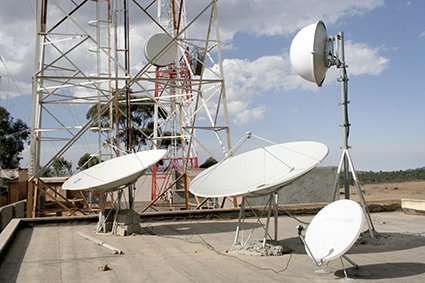
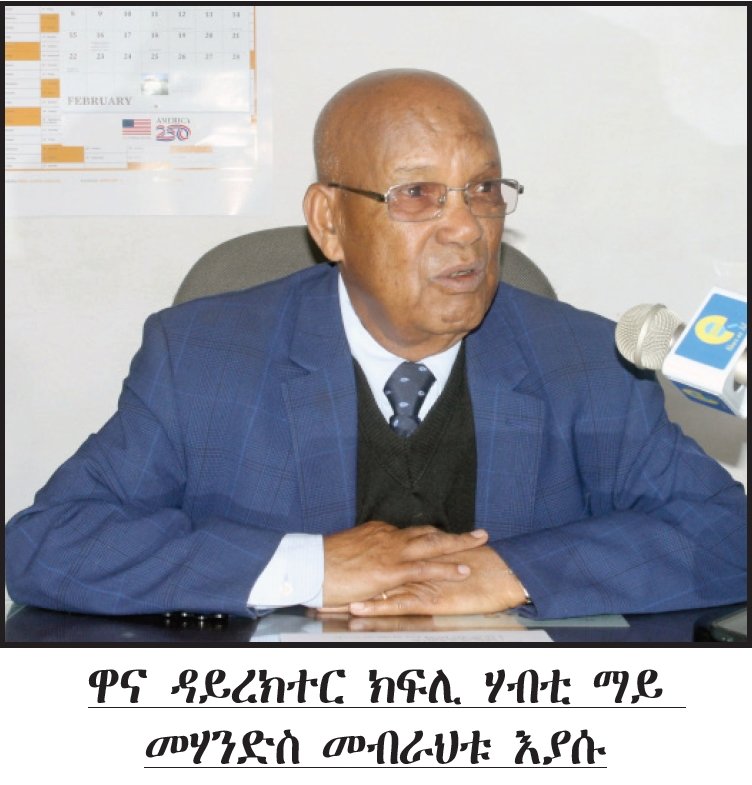
Arteries of Progress: #Eritrea’s Transport and Communications Sectors Drive National Development
By Habtom Tesfamichael - Paraphrased Report from extensive local media interview with Mr. Tesfaselassie Berhane, the Minister of Transport and Communications
*"...Over the three and a half decades since independence, Eritrea has undertaken major efforts to rebuild and modernize its transport and communication sectors, transforming them into essential foundations for national development, economic activity, and social integration. Emerging from a period of severe infrastructural depletion, the country pursued a strategic approach aimed at creating a more integrated national system capable of improving connectivity and ensuring equitable access to services throughout the nation".
*"...Overall, the development of Eritrea’s transport and communication sector reflects a long-term process of reconstruction and modernization aimed at strengthening national integration, expanding economic opportunities, and improving access to services. While challenges remain, continued investment and strategic planning have enabled important progress in connecting people and communities throughout the country".
https://t.co/FTthEGyGZH
#Eritrea: Statement by Ambassador Beyene Russom at the 13th World Urban Forum; Baku, Azerbaijan
"In Eritrea, our approach is based on integrated urban-rural development....As we move toward the midpoint of the New Urban Agenda, let us be clear: the future of urbanization in Africa and many nations globally depends on how we treat the link between cities and villages. Eritrea commits to advancing this integrated approach. We call on partners to support investments that connect rural and urban areas through infrastructure, services, and markets. Let us ensure that no community is left behind, whether in a megacity or a mountain village".
https://t.co/QauNW7BqVU
From the voice of struggle to the sound of freedom..... May 24, 1991 marked the rebirth of our Eritrea.
Glory to our martyrs and honor to our people who turned sacrifice into victory all for #Eritrea. 🇪🇷✊🏾
Archives from @ErdiAwet ⤵️
https://t.co/k8D7L5ouDz
@EriPrism@biniamb@EmbassyEritrea@AmbStesfamariam@hawelti@BeyeneRussom #EritreaShinesAt35 #HornOfAfrica #PeaceAndSecurity #EritreaPrevails #EritreanExcellence #EritreanUnity #EritreaMyLove
#GloryToOurMartyrs 🕯🕊
#AwetNHafash ✊🏾🇪🇷
The 🇪🇷n people have won. #May 1991!
To all Eritreans at home and abroad, congratulations on this long-awaited victory. To all who sacrificed n dreamed of this day for many years, this victory belongs to you.
Glory to the #martyrs
Victory to the #masses
https://t.co/SveGupgEdD
















![hawelti's tweet photo. FROM THE ANNALS OF HISTORY
#Eritrea: the Long Road to Independence (Part II)
by Shabait Staff
(This second instalment in the series examines the dismantling of Eritrea’s UN-mandated federal autonomy under Ethiopian imperial rule and the events that ultimately pushed Eritreans toward struggle and armed resistance. While Part I explored the colonial foundations of the Eritrean state and the international decisions that denied Eritreans their right to self-determination, this chapter focuses on the systematic erosion of the Federal Arrangement, the intensification of repression, and the birth of the armed liberation struggle")
*"...Indeed, if Eritrea had first been denied decolonization in the 1940s, the international community’s silence during the years-long systematic dismantling of the 'Federation' convinced many Eritreans that armed struggle had become the only remaining path toward liberation and inviolable nationhood".
*"...For the Eritrean people, the armed struggle emerged not out of ideological extremism, but from the suppression of their right of decolonization, accumulated injustices and the systematic denial of basic political rights. As one scholar observed, the Eritrean revolution became 'the expression of the indignation of a people whose rights [were] flagrantly and ruthlessly suppressed.... Another wrote more succinctly: 'Three times denied their dreams, the Eritreans now had no other recourse than to take their destiny into their own hands".
https://t.co/d3AP4DaWYp](https://pbs.twimg.com/media/HI6IOoeaEAAuFyF.jpg)