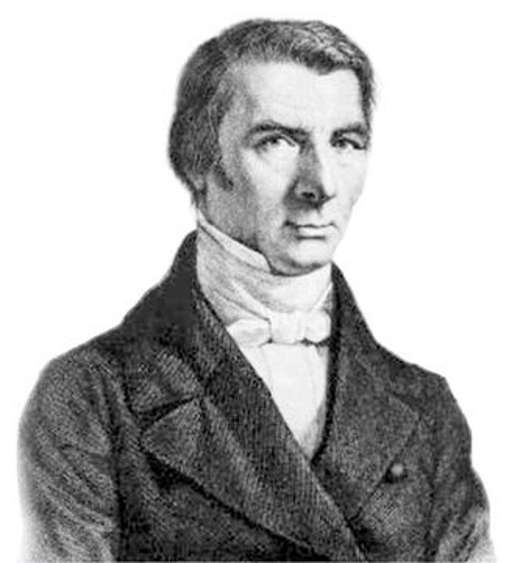
Frédéric Bastiat captured the essence of modern politics in a single sentence:
“The State is that great fiction by which everyone tries to live at the expense of everyone else.”
Once the state becomes the primary mechanism for distributing resources, politics stops being about protecting rights or creating the conditions for voluntary cooperation. It becomes a contest in which every group attempts to extract wealth from others through taxation, subsidies, regulation and welfare.
Farmers demand agricultural subsidies. Pensioners demand higher benefits. Students demand free tuition. Corporations demand bailouts and protection from competition. Each group frames its demands as a matter of justice or necessity, while ignoring that the money must come from someone else’s labour and property.
This creates a deeply corrosive dynamic. Instead of producing value through trade and innovation, people invest time and resources in political activity designed to redistribute existing wealth. The result is not greater prosperity, but higher taxes, expanding bureaucracy and a culture of dependency, victimhood and resentment.
The state transforms society into a zero-sum game. When everyone is encouraged to view government as a source of unearned benefits, the moral and practical foundations of a free society are steadily undermined. The fiction eventually collapses under the weight of its own contradictions.
VAR didn't review two clear fouls inside the Argentinian box (against Egypt players) before Enzo Fernández's goal. Why? A foul on Martínez overturned Egypt's second goal. Why does the treatment have to be so one-sided? This is completely unfair. FIFA, be ashamed. Be genuinely ashamed. This is Robbery. Egypt have been robbed.
Canada: Crying Over Spilt Milk in a Self‑Inflicted Stagnation
Canada’s elite have spent a quarter‑century turning a rich, opportunity‑dense economy into a slow‑growth, over‑levered cul‑de‑sac, and they still insist nothing is structurally wrong. There is no sense crying over spilt milk about past mistakes when the architects of this stagnation are still in charge and still in denial.
Canada did not just drift into secular stagnation; it embraced a kind of virtue socialism and an industrial policy anchored on climate change targets rather than productive capacity, competitiveness, or growth. An economy built on world‑class natural resources, strategic geography, and human capital has been deliberately downgraded into a housing‑addicted, low‑productivity balance sheet recession risk, and the people who did it still show up on panels calling this “resilience.”
For years, Canada’s comparative advantages in energy, resources, and industrial capacity were something to apologize for, regulate to death, or tax into oblivion, while policy and capital chased the illusion that you could mortgage and virtue‑signal your way to prosperity. The result is a country flirting with a liquidity trap, where even lower rates may barely move a real economy suffocated by over‑priced assets, under‑built productive capital, and households too damaged to borrow again.
The real scandal is not that Canada faces secular stagnation; it is that the elite engineered it, denied it, wrapped it in climate rhetoric, and now blame external shocks while the data scream that this is a made‑in‑Canada crisis.
To be clear, Canada’s problems are not the result of President Trump!
If Canada’s elite will not finally admit that decades of attacking its own strengths, worshipping its own bubbles, and treating industrial policy as a morality play have left the country one downturn away from a full balance sheet recession, then they are not guardians of the national interest, they are custodians of decline, and at this point, there really is no sense crying over spilt milk, only over the refusal to fix the mess they made.
Let me get this straight ... Canada is short 4-5 million homes and the gov is spending $3.2B on already built condos in the most expensive housing market in the world to save developers who donated to the liberal party?
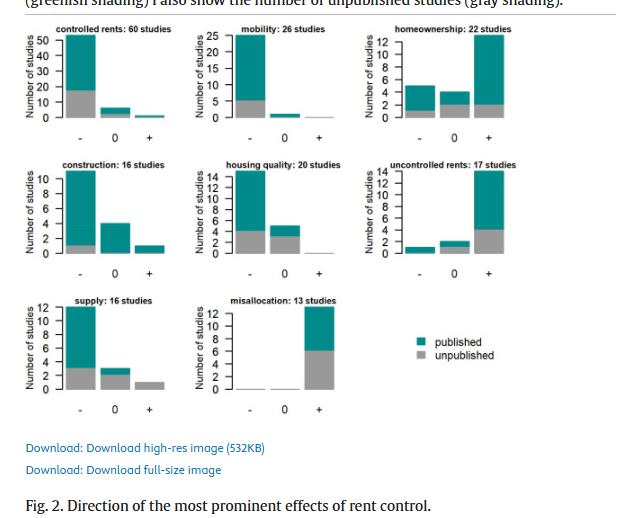
Je comprends pourquoi Radio-Canada devait embaucher des décrypteurs récemment. Ils doivent manquer du personnel pour lire cette méta-analyse dans Journal of Housing Economics en 2024.
Donc voici le résumé pour qu'ils puissent survivre jusqu'à ce que les décrypteurs soient "on staff".
1: Les loyers baissent (wow, surprise) selon la majorité des études.
2: La mobilité géographique diminue selon la majorité des études.
3: La qualité des logements assujettis au contrôle des loyers se dégrade selon la majorité des études.
4: Le loyer des unités non-contrôllées augmente selon la majorité des études.
5: La construction et l'offre baissent selon la majorité des études.
Ainsi, le résumé de litérature conclut ainsi (traduit par GPT): Je conclus que, bien que le contrôle des loyers semble être très efficace pour atteindre son objectif principal, soit de réduire les loyers pour les familles vivant dans des logements contrôlés, il entraîne aussi un certain nombre d’effets indésirables, notamment des loyers plus élevés pour les logements non contrôlés, une mobilité plus faible et une réduction de la construction résidentielle. Ces effets non intentionnels contrecarrent l’effet recherché et diminuent ainsi le bénéfice net du contrôle des loyers. Par conséquent, l’effet global des politiques de contrôle des loyers sur le bien-être de la société n’est pas clair.
J'ai très hâte de lire les faits rectifiés à Radio-Canada.
@Nick_Decap Developers make between 20-30% profit on new developments. The issue is the development costs. These condos acquired by the government worth 1.5 million, actually cost close to 1.1 million per unit to build, with almost 40% of the cost being Vancouver regional DCC costs.