For the 10th consecutive year, The Democratic Republic of the Congo is listed among the world's most neglected displacement crises, and now it is facing yet another public health emergency.
In eastern DRC, years of conflict have forced people to flee from their homes, with nearly one million people affected in Ituri Province alone. It is within this fragile context that the country is now confronting its 17th Ebola virus disease outbreak, with several of the outbreak's main epicentres located in Ituri. This convergence of conflict, displacement, and public health emergencies demands urgent and coordinated action, as this epidemic puts vulnerable populations at risk while placing additional strain on an already fragile health care system.
NRC teams have been operating across eastern DRC for more than two decades, and are on the ground in Ituri and the Kivus with education and WASH programming in support of the Ebola response.
Responding to Ebola should not come at the expense of responding to conflict related displacements, food insecurity, malnutrition, and other pressing humanitarian needs. The people of the DRC should not have to compete for lifesaving assistance simply because one emergency has captured international attention.
Behind every statistic are individuals, families, and communities whose resilience deserves not only recognition but meaningful support.
Global solidarity should not be selective. An outbreak anywhere is a reminder that health security everywhere depends on our collective commitment.
The people of the Democratic Republic of the Congo deserve the world's attention, partnership, and collective action.
Together with Danish Church Aid (DCA) and @RESCUEorg , we are providing urgent cash transfers, essential household items, specialised psychosocial support, safe water access and crucial supplies for hygiene and disease control.
Hygiene facilities are often inadequate and most do not have the financial means to survive on their own.
Through the DRC Humanitarian Fund’s support, NRC is working to save lives, assist survivors of violence and limit the spread of disease
Ebola is putting enormous pressure on already stretched local services in one of the most neglected crises on the planet.
Thousands of families in eastern #DRCongo live in overcrowded schools, homes and churches after being forced from their own homes due to violence.
The ongoing Ebola outbreak in #DRCongo is unfolding in communities already exhausted by years of conflict and repeated displacement.
It's now essential that donors ramp up efforts to ensure that the Ebola response moves faster than the disease itself.
https://t.co/zK0jLqwXMj
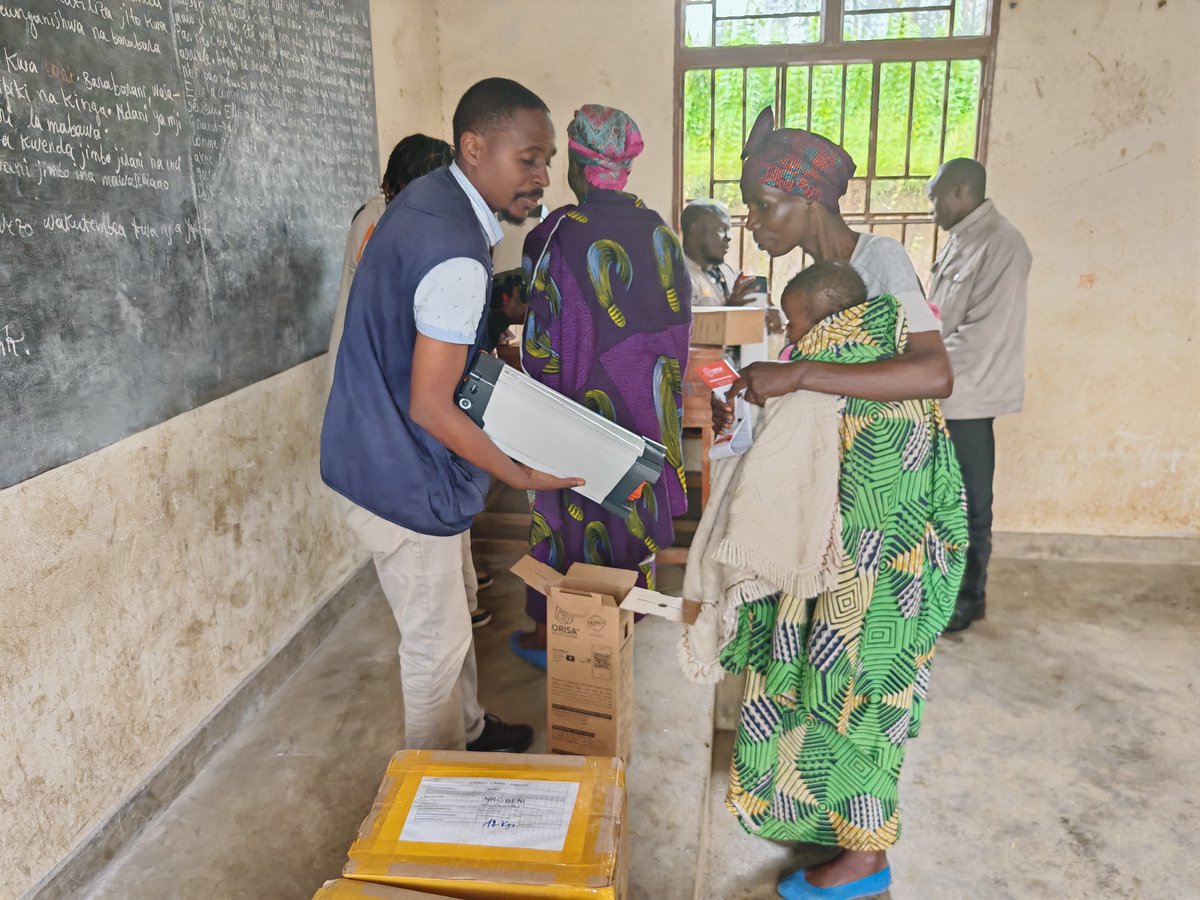
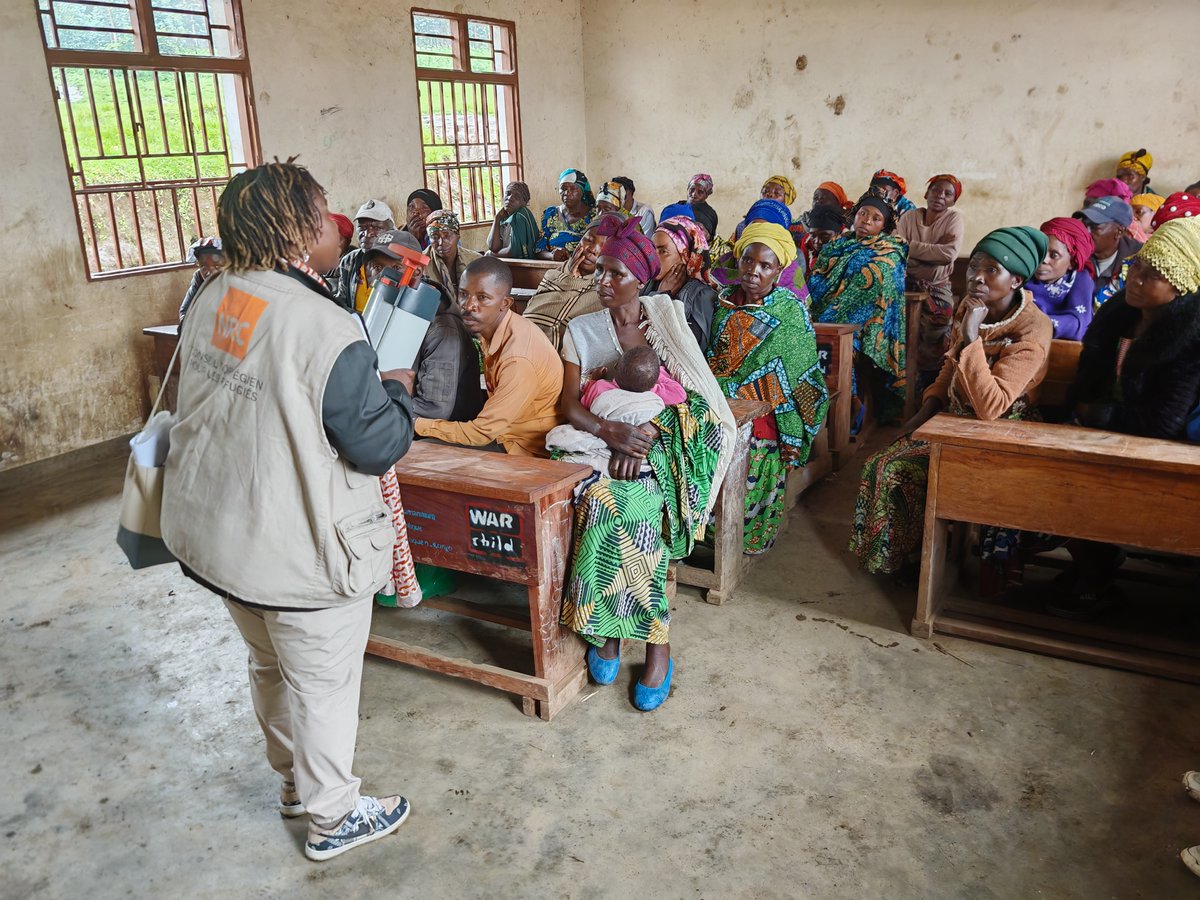
In parts of North Kivu, #DRCongo, access to safe drinking water is a major challenge for people returning to their homes. With support from the DRC Humanitarian Fund, we have distributed nearly 80 water filters to families, piloting solutions adapted to the volcanic landscape.
The people of Vunano village in eastern #DRCongo once lived peaceful lives on a mountainside overlooking Lake Kivu. That quiet ended abruptly when clashes erupted and the population was forced to flee. With support from the US Government, we helped them to rebuild their lives.
DR Congo has appeared on NRC's most neglected displacement crises list every single year for a decade.
Ten consecutive years.
A crisis the world has chosen not to respond to.
Today we publish our 2025 Neglected Displacement Crises Report.
https://t.co/zAydtQYJW8
Zawadi, 30, lost her husband and everything she owned when armed men attacked their home in eastern DR Congo.
The world knows of the brutal violence and displacement in the millions.
Yet the crisis is one of the most neglected in the world
https://t.co/NrnWb3a3ak
An Ebola outbreak has hit the Democratic Republic of Congo, one of the world’s most neglected crises.
In Ituri, NRC is scaling up Ebola prevention in schools and communities by installing handwashing facilities and distributing soap and other hygiene materials.
The 117.8 million people now violently displaced around the globe would constitute the world’s 13th largest country by population.
Larger than Egypt, Germany, or the UK.
This is a collective failure of humanity.
https://t.co/6ZDoql9zdg
Patient is among 1,100 young people attending vocational training in Ituri province, #DRCongo, as part of the Elimu Kwanza project supported by the European Union. She is enrolled in a sewing course, after dropping out of school because her parents couldn’t afford the fees.
In Ituri province, eastern #DRCongo, conflict is forcing entire schools to relocate. But committed teachers, parents and communities are continuing to provide education against the odds.
https://t.co/1BLdrp5rGn
In Kalungu, eastern #DRCongo, we supported 2,275 families with shelter kits so they could rebuild their homes, which were destroyed during clashes. Antoinette, a member of an indigenous Pygmy community, is happy now that her children can sleep peacefully at night.
In Kalungu, #DRCongo, thousands of families have returned to destroyed homes, after fleeing violence. We have distributed shelter kits to 2,275 families, with the support of the US Government.
Our shelter coordinator, Oscar shares his insights ⬇️
In #DRCongo, we are supporting more than 8,000 families displaced in Lemera, South Kivu province, with unconditional cash assistance. Thanks to the support from @FCDOGovUK.
Jeanne is among 1,100 young people receiving vocational training in Ituri province, #DRCongo through the Elimu Kwanza project, supported by the European Union. She has chosen to challenge traditional norms by studying to be a mechanic, a field once perceived as male-dominated.
We’re helping to improve access to safe water across #DRCongo. Last week, our staff joined forces with a local partner to strengthen our skills in water quality testing and treatment, an important step toward ensuring safer water for the communities we serve.
In North Kivu province, #DRCongo, people have returned to their homes after fleeing violence, only to find their local schools have been damaged. We are supporting the rehabilitation of classrooms to help students resume their studies, with support from @Sida.